Khao Yai National Park: Waterfalls, Hiking and Visiting Tips
Contents
Khao Yai lies about 200 kilometres northeast of Bangkok and mixes forest walks, waterfalls and wildlife watching.[1] Decide which activities you want before you arrange transport: there is no transport service inside the park, and some trails require a guide.[2][3]
For a day visit, choose one waterfall and one walk that fit your time and energy rather than trying to cover the whole park. An overnight stay makes an early start and the night safari easier to combine. Arrange transport between the entrance, the visitor centre, the trailheads and your accommodation before you set off.
Wildlife
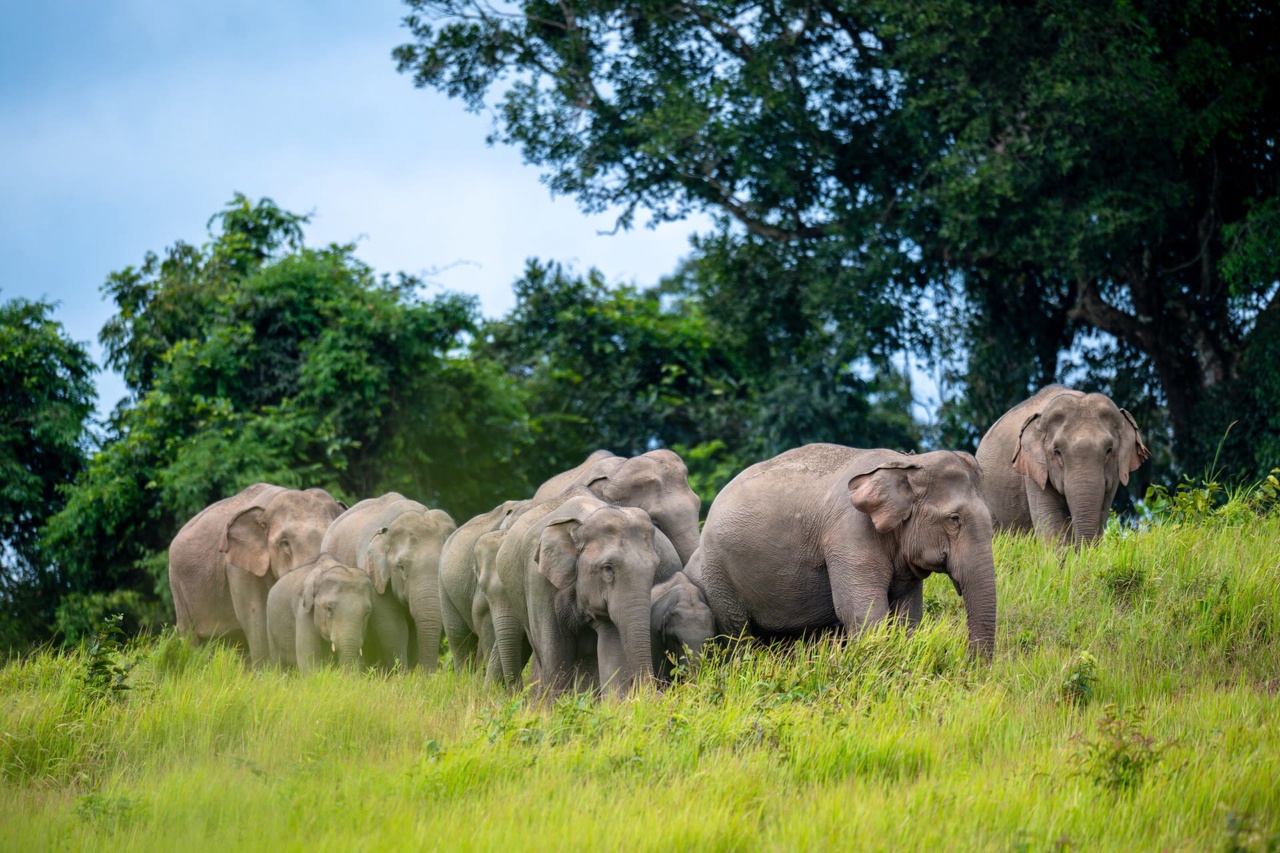
Frequently seen animals include Asian elephants, gaur, dhole, barking and sambar deer, white-handed and pileated gibbons and pig-tailed macaques. Elephants forage on grasslands and around salt licks, and may be walking along the road right in front of you. Sambar deer and barking deer are easy to find by day or night when they graze the open grassland at the forest's edge.[4] Bring binoculars: gibbons live near the tops of the trees, so be quiet and wear muted colours.[4] These are wild animals, so no trail or guide can promise a sighting. Watch from the permitted paths and never approach or feed them.
Things to Do
Offers are only loaded from GetYourGuide after you click. GetYourGuide can then process your IP address and set cookies. Privacy Policy
GetYourGuide partner offers. GoAsia may earn a commission if you book through these offers. Check whether tickets or transfers are included, and follow the attraction's official booking and admission rules.
Waterfalls
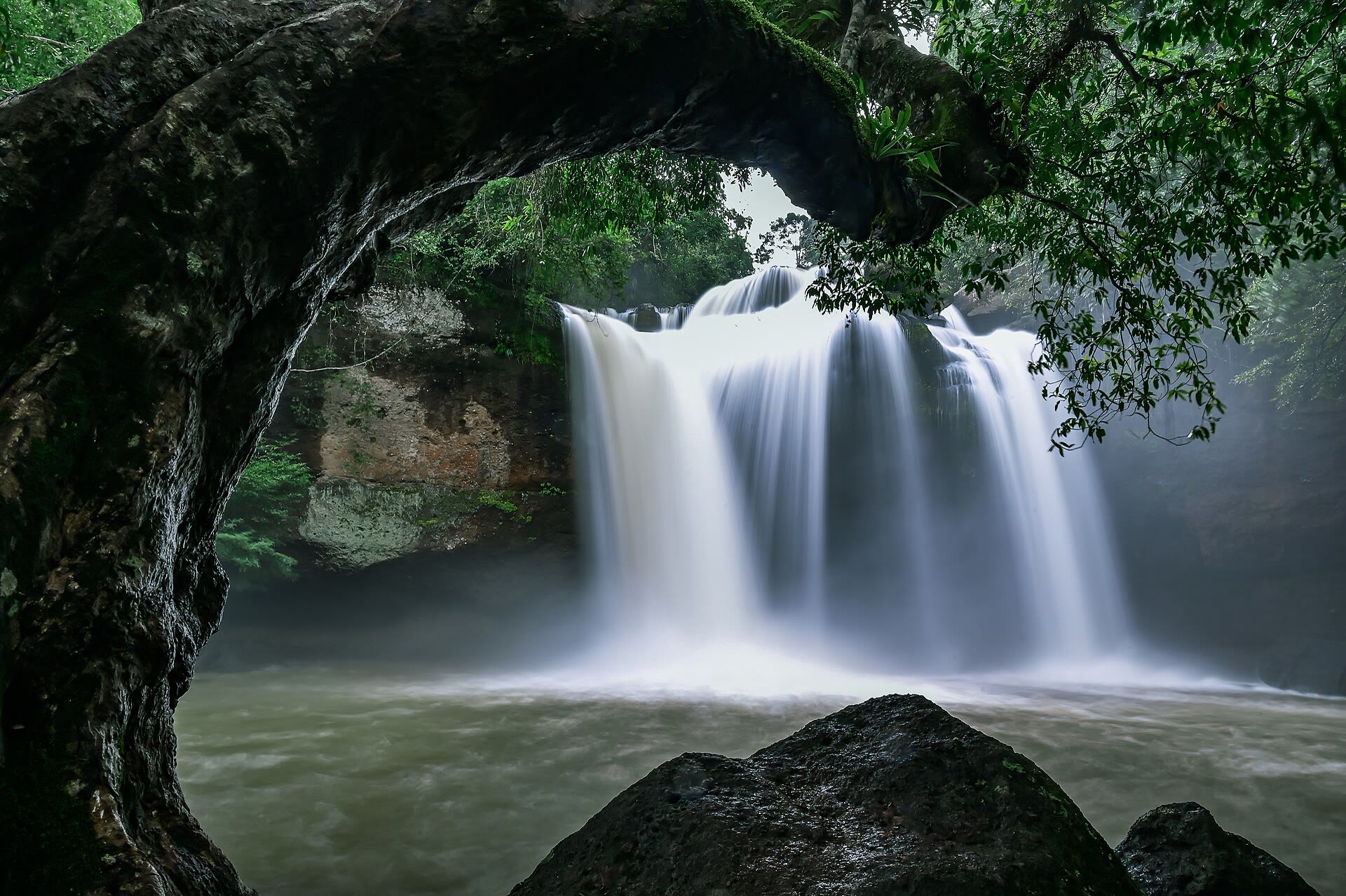
Haew Narok is a three-tier waterfall 150 metres high, on Highway 3077 at the 22-kilometre milepost, 22 kilometres from the Visitor Center. A walk of 1 kilometre from the car park leads to a staircase that descends 50 metres. Swimming is forbidden.[5]
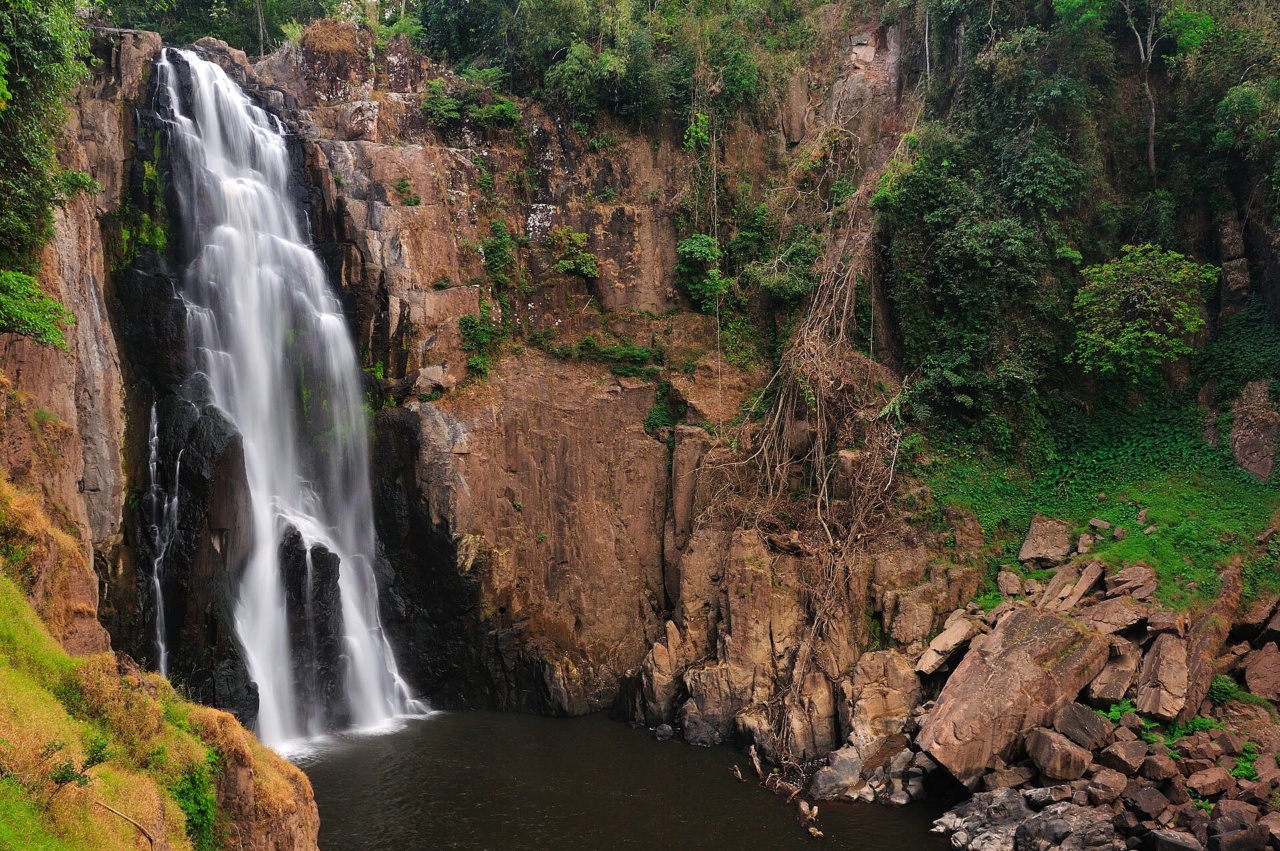
Haew Suwat is 25 metres tall and about 10 kilometres from the Visitor Center, with a walk of about 100 metres from the car park. Swimming is forbidden here too.[5]
Hiking trails
Register your chosen walk at the visitor centre to get permission to trek. A guide is mandatory on Trails 3, 4, 5 and 6.[3] The park's code of conduct for treks says never to trek on your own.[6]
| Trail | Distance | Estimated walking time | Guide requirement |
|---|---|---|---|
| 1: Visitor Center - Kong Kaew Waterfall | 1.2 km | 45 min to 1 h | Not necessary[3] |
| 7: Thai-American Friendship Trail | 2 km | 1.5 h | Not necessary[3] |
| 5: Dong Tiw - Nong Phak Chi | 5.5 km | 3 h | Mandatory[3] |
| 6: Visitor Center - Haew Suwat Waterfall | 8 km | 6 h | Mandatory[3] |
Trails 5 and 6 are one-way walks, so arrange your onward or return transport. Trail 1 and Trail 7 are circular and return you to the start.[3] Take enough drink, food and snacks for the walk, and do not swim at Haew Suwat.[6]
Night safari
Rangers run a night safari on a high-bed pick-up truck with a guide and powerful flashlights, along a 10-kilometre route that takes about one hour. There are two slots, 19:00 to 20:00 and 20:00 to 21:00. Reserve at the service desk of the Khao Yai Visitor Center before 18:00. The charge is THB 600 per vehicle, for no more than 8 people.[7]
Sightings are never guaranteed. Follow the rangers' instructions, stay quiet, do not feed animals and do not use flash photography or your own torch, since only the guide's torch is allowed. Taking your own car out to see animals at night is forbidden.[7]
Getting here and moving around
There are two entrances with a visitor centre: the Chao Por Khao Yai Shrine Visitor Center (Pak Chong entrance) in Pak Chong, Nakhon Ratchasima, and the Noen Hom Visitor Center in Prachinburi.[2] From Bangkok you can drive, or take a bus or train.[1]
By bus, take the Bangkok-Nakhon Ratchasima coach or a Bangkok-Pak Chong minivan to Pak Chong, then hire a taxi or take the Pak Chong-Khao Yai bus, which runs from 06:00 to 17:00 every 30 minutes for THB 15 and ends at the Chao Por Khao Yai Shrine Visitor Center. By train, take the northeastern line to Pak Chong station and a songthaew from Pak Chong Market. For Noen Hom, take the Bangkok-Prachinburi coach to the Naresuan Shrine Roundabout and a motorcycle taxi from there.[1]
No transport service runs inside the park, so the sights are far apart without your own wheels.[2] A rental car, a booked driver or a tour with park transport makes them manageable. Agree pickup points, waiting time, return transport and any admission or guide charges before you pay.
Costs and accommodation
Foreign visitors pay THB 400 per adult and THB 200 per child at the Noen Hom and Pak Chong entrances. Children are under 14. Vehicles pay THB 30 per four-wheel vehicle and THB 20 per motorcycle.[8] Guides, the night safari and accommodation cost extra.
Lam Ta Khong Campground is the regular campsite.[9] Camping space costs THB 30 per adult and THB 10 per child per night. A two-person tent costs THB 150 and a three-person tent THB 225 per night, and sleeping bags, blankets and mats are rented separately. Reserve through the park's online booking system, or turn up if the campground is not fully booked.[9]
Planning your visit
The park is open daily from 06:00 to 18:00.[2] The night safari has its own booking and runs in the evening.
A day trip from Bangkok is possible, but choose a limited itinerary: the park is about 200 kilometres away, and a long hike and the evening safari rarely fit into the same day. An overnight stay gives you more flexibility.[1]
Pick activities by the forecast and the park's current notices. Rain can make paths and steps slippery, and leeches are active in the rainy season. Bring a waterproof layer and warmer clothing for a cool evening.
- Prepare for leeches: Wear clothing that covers your arms and legs and dries quickly, shoes that protect your heels and ankles, and plastic leech socks in the rainy season.[6]
- Plan the evening return: Reserve and pay for the safari before 18:00, and arrange onward transport or accommodation. Do not go out on your own to look for animals after dark.[7]
Sources and background
Numbers in the text such as [1] refer to these sources.
- [1] Khao Yai National Park: Getting here: Pak Chong and Noen Hom entrances. Retrieved October 21, 2026.
- [2] Khao Yai National Park: Plan your visit: opening hours and park transport. Retrieved October 21, 2026.
- [3] Khao Yai National Park: Hiking: official trails, distances and guide requirements. Retrieved October 21, 2026.
- [4] Khao Yai National Park: Mammals: wildlife species and observation. Retrieved October 21, 2026.
- [5] Khao Yai National Park: Places to go: waterfalls and visitor access. Retrieved October 21, 2026.
- [6] Khao Yai National Park: Get ready for hiking: equipment and conduct. Retrieved October 21, 2026.
- [7] Khao Yai National Park: Night safari: booking, charges and wildlife rules. Retrieved October 21, 2026.
- [8] Khao Yai National Park: Park entry fees: visitor categories and vehicle charges. Retrieved October 21, 2026.
- [9] Khao Yai National Park: Camping: booking, space and equipment charges. Retrieved October 21, 2026.
Frequently Asked Questions
Frequently seen animals include Asian elephants, gaur, dhole, barking and sambar deer, white-handed and pileated gibbons and pig-tailed macaques. No trail, guide or safari can promise a sighting, so watch quietly from the permitted paths and never approach or feed the animals.
Foreign visitors pay THB 400 per adult and THB 200 per child under 14 at the Pak Chong and Noen Hom entrances, plus THB 30 per car or THB 20 per motorcycle. Guides, the night safari and accommodation cost extra.
Yes, but the park is about 200 kilometres from Bangkok, so choose a limited itinerary such as one waterfall and one short walk. A long hike and the evening safari rarely fit into the same day, and an overnight stay is more flexible.
It helps. No transport service runs inside the park, and the sights are far apart. A rental car, a booked driver or a tour with park transport makes them manageable. Agree pickup points, waiting time and return transport before paying.
Rangers drive a 10-kilometre route of about one hour in a high-bed pick-up truck with a guide and powerful flashlights. Slots run from 19:00 to 20:00 and from 20:00 to 21:00. Reserve at the visitor centre before 18:00. The charge is THB 600 per vehicle for up to 8 people. Sightings are not guaranteed, and you must not use flash or your own torch.
Choose by the forecast and the park's current notices. Rain can make paths and steps slippery and brings leeches in the rainy season. Bring a waterproof layer and warmer clothing for a cool evening.
Yes, in the rainy season. Wear clothing that covers your arms and legs, shoes that protect your heels and ankles, and plastic leech socks.
Yes, at Lam Ta Khong Campground. Camping space costs THB 30 per adult and THB 10 per child per night, and a two-person tent costs THB 150 or a three-person tent THB 225 per night. Reserve through the park's online booking system.