Chen Clan Ancestral Hall: plan a Guangzhou craft and museum visit
Contents
- 1. Reserve first: a sold-out date has no counter fallback
- 2. Opening, Tuesday closures and free dates
- 3. Understand the academy before reading the decoration
- 4. Look for different crafts, not just more carvings
- 5. Free explanations or a paid guide?
- 6. Arrival and practical access
- 7. Give the visit enough attention without overloading the day
- 8. Sources and background
- 9. Frequently Asked Questions
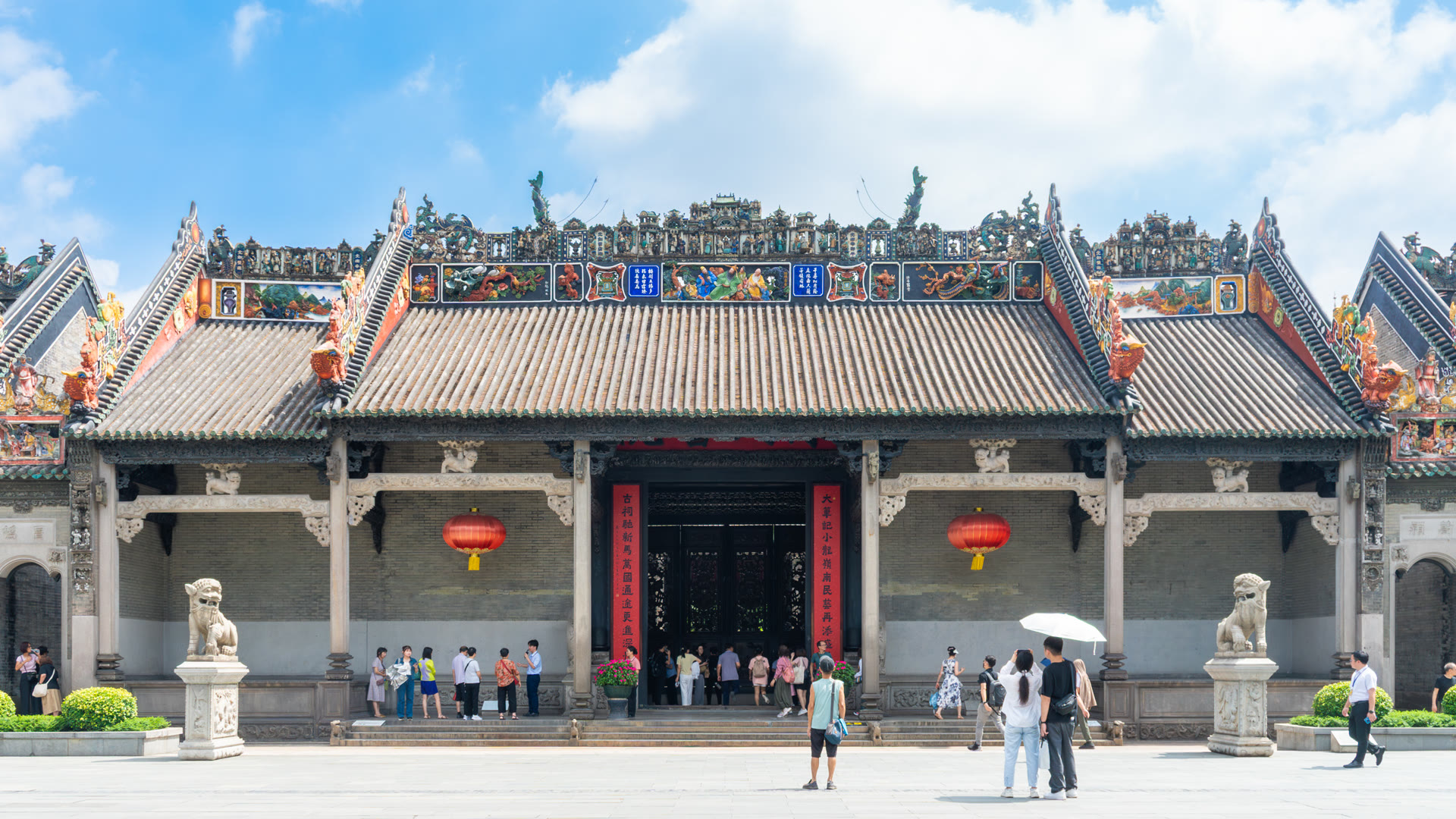
The Chen Clan Ancestral Hall, 陈家祠, also called Chen Clan Academy, 陈氏书院, is a place to study architectural decoration and Guangdong craft, not a sprawling palace visit. It houses the Guangdong Folk Arts Museum. Choose it if you enjoy looking closely at roof figures, carved surfaces and exhibitions rather than collecting a quick entrance photograph.
Our first recommendation is practical: secure admission before travelling. The museum's September 2026 notice requires advance online purchase for visitors outside its specified exceptions. Do not build your day around arriving at a counter and paying cash, and do not confuse a guide booking with an admission reservation.
Reserve first: a sold-out date has no counter fallback
The notice dated 17 September 2026 says tickets must be reserved and bought online beforehand. When the online allocation is sold out, there are no tickets left to sell on site. Its instructions use the museum's WeChat service account: the service tab, then the reservation and purchase function. Confirm that your order is successful, not merely that you have started a form.
The notice lists exceptions for certain children, older visitors and other qualifying groups with relevant documents. These are specific conditions, not a free-entry entitlement for every family or every foreign passport. Children under six must be accompanied by an adult, and an adult outside a free category still needs a ticket. Ask 020-81819653 about accepted identification, passport handling, payment and your category if the booking system does not make them clear.
Use the time slot actually booked. The published morning ticket-check window is 09:00 to 14:00; afternoon tickets are checked 12:00 to 17:00, extended to 17:30 from 15 April to 15 October. These overlapping entry windows are not two compulsory tour lengths. Arrive with time for queues. The notice says an unused ticket can be submitted for refund in the WeChat order section before 18:00 on the reserved visit date; do not assume an automatic refund after that deadline.
Things to Do
Offers are only loaded from GetYourGuide after you click. GetYourGuide can then process your IP address and set cookies. Privacy Policy
GetYourGuide partner offers. GoAsia may earn a commission if you book through these offers. Check whether tickets or transfers are included, and follow the attraction's official booking and admission rules.
Opening, Tuesday closures and free dates
| Published rule | Planning consequence |
|---|---|
| Tuesday closed, except statutory holidays | Check the holiday notice for your date rather than avoiding or choosing every Tuesday automatically |
| General website: 09:00 to 17:30; sales or entry end 17:00 | Closing time is not the last admission time |
| 2026 extension, 15 April to 15 October: closing 18:00, sales until 17:30 | Use the dated calendar and your actual reservation, not the unchanged general footer alone |
| Specified 2026 free dates | Free admission still requires the stated reservation procedure |
The official 2026 calendar explicitly states the Tuesday rule and seasonal extension. It lists free dates rather than a generic free weekday every month; for the remaining months, these include 14 October, 11 November and 16 December 2026. Special occupational days have separate documentary conditions. A free date does not mean unlimited walk-in capacity, and the calendar is not a promise for 2027.
The checked notices do not establish a selected-date general ticket price. Compare the final admission product, category and amount in Chinese yuan before paying. Ordinary admission, an optional guided service and any partner package are different products. A low starting tour price is not evidence that the museum entrance is included.
Understand the academy before reading the decoration
The museum's own history dates the organising committee to 1888 and completion to 1893, with Chen clans from 72 Guangdong counties contributing. It describes a shared ancestral institution that also provided lodging for contributing clans' members visiting Guangzhou for examinations and other business. Calling it an academy does not reduce that history to an ordinary school.
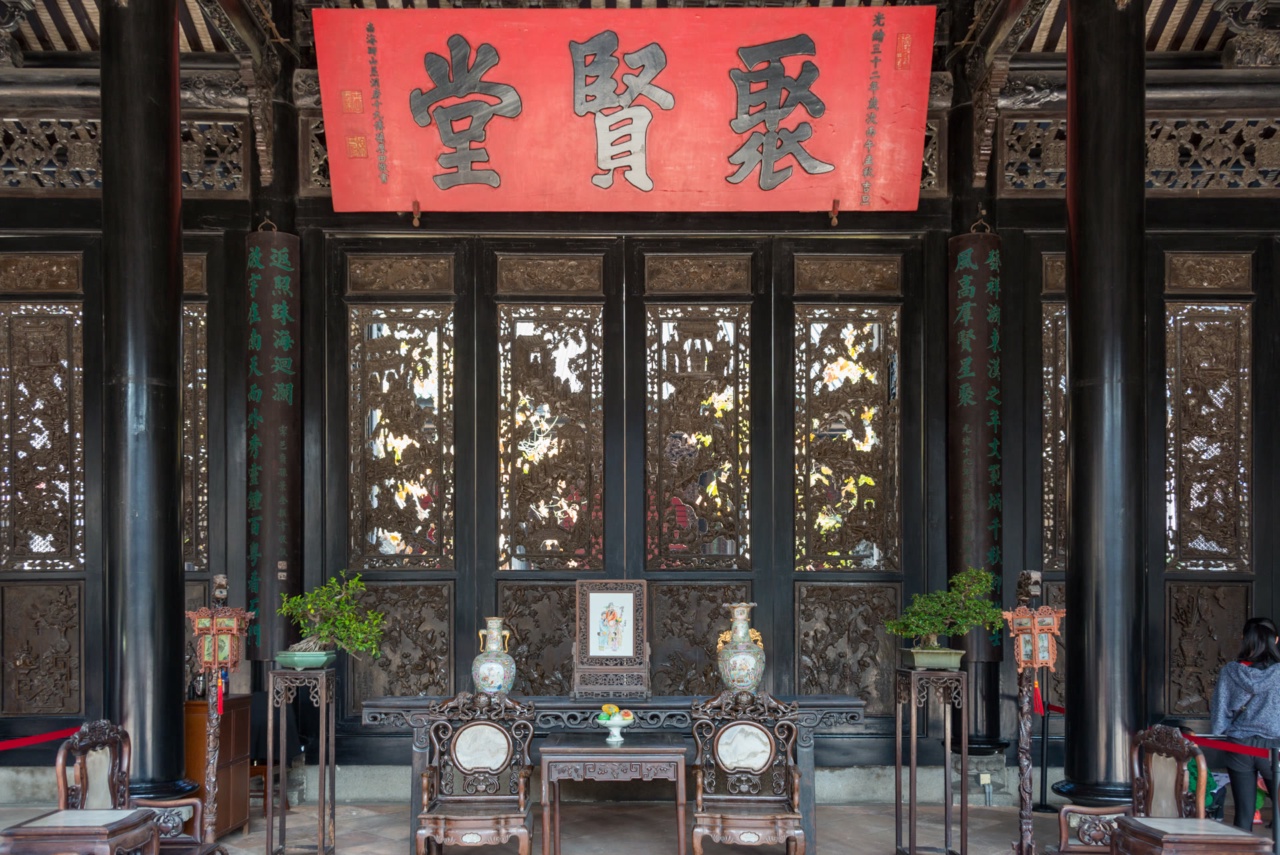
The buildings' uses changed over time. The museum history records the folk arts institution's establishment here in 1959, reopening in 1983 and the museum's renaming in 1994. Visit it as a protected historic compound and museum, not on the assumption that every room is an active ancestral worship space today.
Look for different crafts, not just more carvings
The museum's architectural overview identifies stone carving, brick carving, wood carving, plaster relief, ceramic sculpture, copper and iron casting, and painting. Look at how the material changes the result: rooftop figures and relief, carved wall panels, timber details and painted surfaces are not one interchangeable technique.
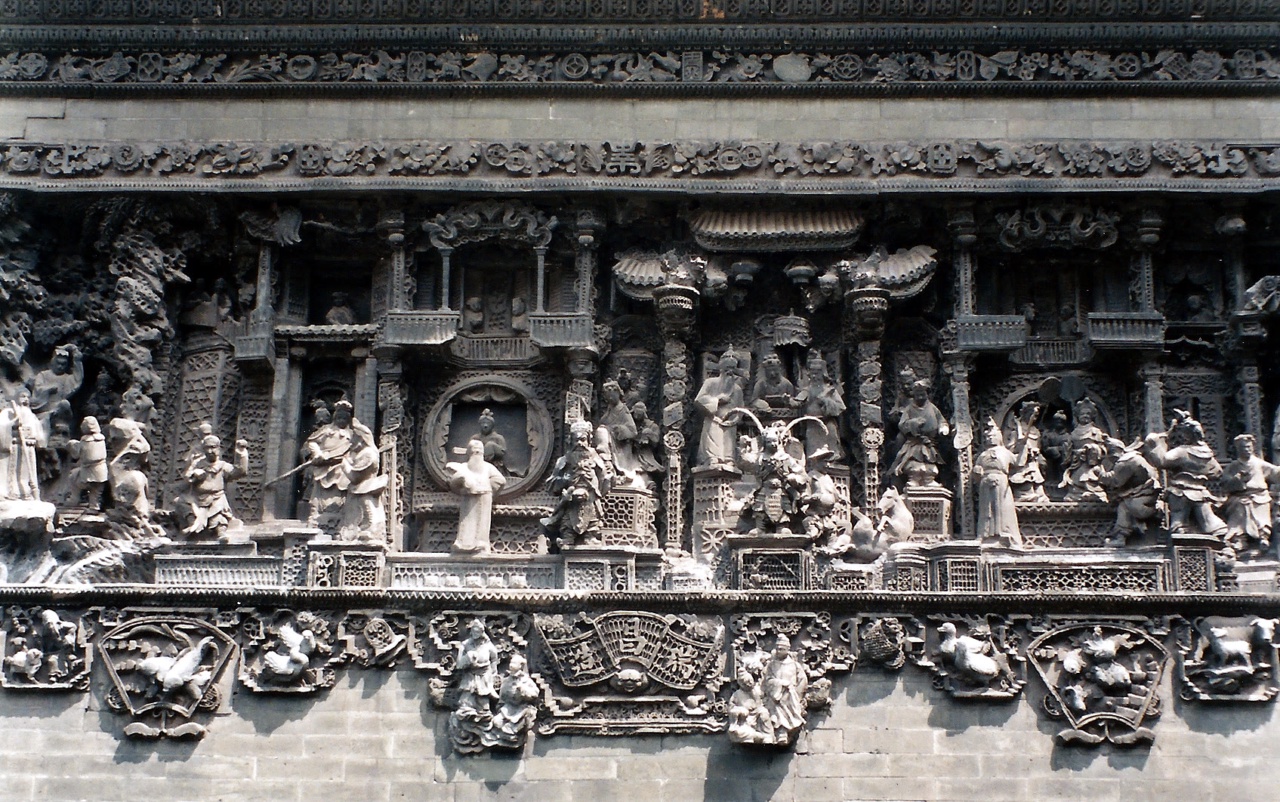
Its explanation connects decorative themes with auspicious patterns, legends and historical stories. Our suggested approach is to compare one roof scene, one carved panel and one interior detail, then use the exhibition labels to understand the subject. You do not need to identify every figure to enjoy the visit, and a close look is more useful than assuming every scene illustrates the same opera.
The current museum listings include contemporary Guangzhou painted porcelain, craft sculpture, detailed carving and Duan inkstones. Exhibitions and room access can change. The official services table describes permanent history, traditional craft and Lingnan architectural-decoration displays plus special exhibitions, with viewing included after museum admission. Do not assume every collection mentioned in an older travel article is on display on your date.
Free explanations or a paid guide?
| Choice | Published orientation | Confirm |
|---|---|---|
| Visit with labels at your own pace | Architecture and accessible exhibitions after admission | Current rooms, labels and your interests |
| Free museum explanation | Services table lists 10:00 and 16:00 on open days | Language, meeting point and limited on-site places, first come first served |
| Optional paid human guide | Notice effective 1 September 2026: from CNY 35 per person | Language, group size, starting threshold, schedule, exact total and admission inclusion |
The paid-guide notice says this service is voluntary. Its tariff attachment has different arrangements for Chinese, English and private groups; the starting price is not a universal English-tour price. Ask for the service you actually need and contact 020-81814559 for explanations. A free explanation's limited places are not a second admission reservation, and access to the museum does not guarantee a guide.
Arrival and practical access
Save both 陈家祠 and 广东民间工艺博物馆. The museum gives its location on Zhongshan Qilu (中山七路). A Guangzhou government station overview identifies the namesake metro station; use the current network planner and local exit signs for your accommodation-to-entrance journey. That older article is not a current exit map, so we do not name a guaranteed exit, train frequency or fare, or describe the building as literally above the station.
Allow for the walk between your exit and the visitor entrance, and keep the successful order and identification ready. If mobility matters, ask about the complete route through the entrance, thresholds and chosen galleries. The services table lists wheelchairs at the visitor centre, but that does not prove availability for your time or a step-free route to every room. Ask staff about photography and equipment rules instead of treating all courtyards and displays as unrestricted.
Give the visit enough attention without overloading the day
As an editorial planning allowance, start with one to two hours on site for a focused architecture and gallery visit, adding travel, entry and any guided service. That is not a measured average or a maximum: spend longer if the exhibitions interest you. Select a slot that fits daylight and the rest of your journey, without expecting a morning or weekday to guarantee fewer visitors.
A meal or another Guangzhou stop can follow, but map the real transfer and check that destination separately. We do not treat Shamian, food streets and the museum as one continuous short walk or promise every place is open. Use the China travel overview for the wider itinerary. A reserved visit with time to compare craft techniques is more useful than an overpacked half day that depends on unverified connections.
Sources and background
These sources support the topics listed below, not every statement or current price in this article.
- [1] Guangdong Folk Arts Museum: Museum website: visitor contacts, location and current exhibition listings. Retrieved October 6, 2026. Access, Culture, Opening hours
- [2] Guangdong Folk Arts Museum: 17 September 2026: mandatory advance booking, time slots and admission exceptions. Retrieved October 6, 2026. Admission, Registration, Opening hours
- [3] Guangdong Folk Arts Museum: Official 2026 calendar: Tuesday closures, extended hours and free admission dates. Retrieved October 6, 2026. Admission, Opening hours, Registration
- [4] Guangdong Folk Arts Museum: Museum site history: the Chen Clan Academy and its changing uses. Retrieved October 6, 2026. History, Culture
- [5] Guangdong Folk Arts Museum: Museum site stories: architectural decoration, craft techniques and narrative themes. Retrieved October 6, 2026. Culture, History
- [6] Guangdong Folk Arts Museum: 26 August 2026: optional human-guided services from CNY 35 per person. Retrieved October 6, 2026. Admission, Culture
- [7] Guangdong Folk Arts Museum: Official basic public cultural services table: free tours and exhibitions. Retrieved October 6, 2026. Culture, Access, Opening hours
- [8] Guangzhou Municipal Government: Guangzhou government heritage and station overview: Chen Clan metro station. Retrieved October 6, 2026. Transport, History
Frequently Asked Questions
Yes, unless you qualify for a specified documented exception. The museum’s 17 September 2026 notice requires advance online reservation and purchase. If online tickets sell out, no tickets remain on site. Confirm the successful order and booked entry slot before travelling.
The official 2026 calendar states Tuesday closure except statutory holidays. General hours are 09:00 to 17:30, with sales or entry ending at 17:00. From 15 April to 15 October 2026, closing extends to 18:00 and sales to 17:30. Check the dated notice and your ticket slot.
The checked notices do not verify a selected-date general admission amount. Check your category and final yuan price in the official booking process. Optional guides and partner packages are separate from admission unless the named product explicitly includes it. Published free dates still require reservation.
One to two hours on site is our starting planning allowance for architecture and galleries, not a guaranteed maximum or a measured average. Add transport, entry and any guided service. Stay longer if the displays interest you; a morning slot does not guarantee a quiet visit.
Compare rooftop ceramic and plaster decoration, carved stone, brick and timber, metal casting and painting. The museum connects many themes with auspicious patterns, legends and history. Use current labels and galleries rather than assuming every old collection description is still on display.
The official services table lists free explanations at 10:00 and 16:00 on open days, with limited on-site places and first-come participation. Confirm language and meeting point. Optional paid guides have separate terms; the published starting CNY 35 per person is not a universal English-tour price.
Use the current metro planner for Chen Clan station and save the museum’s Chinese name and Zhongshan Qilu (中山七路) location. Confirm the actual exit-to-entrance walk and any assistance through the chosen rooms. A nearby station or wheelchair service is not a guarantee of a step-free visit.