Heavenly Lake of Tianshan: plan a realistic day trip from Urumqi
Photo: 螺钉 / Wikimedia Commons, CC BY-SA 4.0
Contents
- 1. What Tianchi is, and which landscape you are visiting
- 2. Choose transport by what the offer actually includes
- 3. Costs: distinguish admission, shuttle and optional activities
- 4. Build the day around the return, not extra attractions
- 5. Weather, clothing and seasonal decisions
- 6. Passport checks and regional travel advice
- 7. Put Tianchi into a useful itinerary
- 8. Sources and background
- 9. Frequently Asked Questions
Tianchi, the Heavenly Lake of Tianshan, is a mountain-lake outing from Urumqi, not a promise of solitude or a short fixed-duration excursion. Choose it if lake and forest scenery are worth a travel day to you. If you need a precise return time, have an onward flight that day or want an independent wilderness trek, first check whether this managed scenic-area visit fits your plans.
Our planning recommendation is to keep a full day available, confirm both directions of your transfer and treat boats or higher viewpoints as optional. This is a scheduling recommendation, not an official tour duration. Separate the road journey to the visitor entrance from the scenic-area transfer and the time you actually want at the lake.
What Tianchi is, and which landscape you are visiting
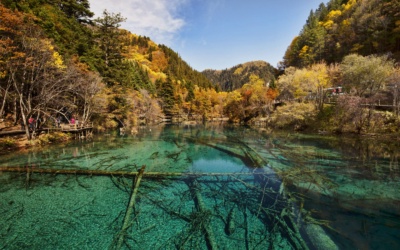
The Chinese tourism ministry's scenic-area profile places Tianchi in Fukang, Changji prefecture, Xinjiang, below Bogda Peak. It describes a glacial moraine lake at 1,910 metres above sea level, surrounded by spruce forest. That figure is lake altitude, not the height you climb during a visit. The ministry classifies the place as a national scenic area and a 5A attraction; calling it a remote or undeveloped national park would give the wrong impression.
UNESCO's Xinjiang Tianshan property comprises four components, including Bogda, rather than every place with Tianshan in its name. The contrast of mountain forests, lakes and snow-covered peaks with surrounding arid landscapes is the useful context here. A clear reflection or visible summit depends on conditions, not on the heritage designation.
Things to Do
Offers are only loaded from GetYourGuide after you click. GetYourGuide can then process your IP address and set cookies. Privacy Policy
GetYourGuide partner offers. GoAsia may earn a commission if you book through these offers. Check whether tickets or transfers are included, and follow the attraction's official booking and admission rules.
Choose transport by what the offer actually includes
| Arrangement | When it may suit you | Confirm before paying |
|---|---|---|
| Organised day tour or shared transfer | You want someone to coordinate the outward and return journey | Exact meeting point, stops, return time, language and ticket inclusions |
| Car with a driver | You want to agree a more flexible schedule for your group | Per-vehicle total, waiting time, parking, return collection and exclusions |
| Advertised tourist coach | An actual service fits your departure point and date | Confirmed operation, pickup pin, seats and the last usable return |
| Self-drive | You already have the appropriate Chinese driving permission and insurance | Rental eligibility, road conditions, parking and onward scenic-area access |
We have not verified a current public coach timetable, fare or pickup point for your date. Do not plan around an undated claim that a seasonal bus runs every morning. Ask for the actual Urumqi pickup address and return arrangement in writing. A transfer described as a Tianchi tour does not necessarily include admission, the scenic-area bus, a boat or lunch.
Nor do we promise a one-and-a-half-hour journey each way. Your hotel, traffic, checks and the chosen entrance affect the trip. Ask the provider for an estimate from your actual starting point, then allow separately for queues and internal transfers. A driver waiting outside does not control the scenic area's last descent service.
Foreign visitors are not automatically barred from driving. The National Immigration Administration's reference guidance describes applications for a temporary Chinese driving licence. FCDO driving advice also stresses Chinese driving permission and valid insurance. An overseas licence alone is not a completed local permission process. Confirm your eligibility and current application requirements with the relevant vehicle administration office before renting, rather than assuming a permit can be obtained on arrival for this excursion.
Costs: distinguish admission, shuttle and optional activities
| Dated official reference | Published price basis | What it does not establish |
|---|---|---|
| Admission, 1 April to 31 October | CNY 95 per person | Your confirmed 2026 fare or discount eligibility |
| Admission, 1 November to 31 March | CNY 45 per person | Today's operating status or available activities |
| Scenic-area shuttle | CNY 60 return | A road transfer from Urumqi or every internal extra |
| Arithmetic total of these reference items | CNY 155 or CNY 105 per person | An all-inclusive tour, boat ticket or selected-date purchase |
These figures come from a 2 September 2024 notice published by the Xinjiang tourism department, reread on 2026-10-06. They are a dated budget reference, not a newly verified 2026 tariff. Its admission and shuttle discounts have different eligibility rules; free admission does not automatically mean a free shuttle. Check your passenger category, documents and the current final amount in Chinese yuan.
The department's policy list also links a 2026 winter promotion for 1 February to 3 March: its free admission explicitly excluded the shuttle and required participation under the offer's terms. That period has ended. It is not evidence of free October admission or permanently free access.
Before booking, ask which ticket covers which journey, whether advance reservation is required, which identification and payment methods you can use, and what happens if conditions prevent your visit. We have not completed a foreign-passport checkout. Likewise, the old notice's two-day validity policy is not a current guarantee. Do not assume that you can walk up, pay cash and enter without a reservation.
Build the day around the return, not extra attractions
Start by confirming opening, last entry and the last usable downhill transfer. These are three different deadlines. Then work backwards from the agreed Urumqi return pickup. Do not use a general opening-hours claim as a boat timetable, a cable-car closing time or assurance that a longer path remains accessible.
For a first visit, make the lake and an open, designated lakeside route your core plan. Ask about the current transfer stop and the remaining walk, steps and surface. If a boat or higher viewpoint interests you, check its actual operation, separate price and the time needed to get back. We do not promise a complete shoreline loop, a particular vessel type, lift availability or quieter crowds simply by climbing higher.
If you need wheelchair access, easier boarding or a shorter walk, obtain details of the exact route and vehicle before buying. A developed scenic area is not automatically step-free. Overnight accommodation or a yurt experience also needs a specific operating property and reservation; do not arrive relying on a generic claim that rooms are available beside the lake.
Weather, clothing and seasonal decisions
Prepare for mountain conditions rather than only Urumqi's weather. Bring a warm layer, protection from wind or rain, suitable footwear, sun protection and the water or food your plan needs. Check the forecast and the day's access notices before departure. A seasonal price category is not a promise of mild weather or full services.
Winter scenery, boats, snow activities and higher paths are different products with different operating conditions. Do not infer that a winter promotion confirms a service is running now, or that summer guarantees good visibility. Follow closures and staff instructions; use only routes open for visitors. There is no reliable crowd-free clock time in the material reviewed.
Passport checks and regional travel advice
FCDO's Xinjiang advice describes extensive security and passport checks and risks of arbitrary detention, including heightened risks for some foreign travellers. Carry your passport, allow time for checks and do not photograph security personnel or installations. This is UK travel advice, not a Tianchi entry permit or a statement that every nationality faces identical conditions. Check your own government's advice and the current restrictions relevant to you before committing to a wider Xinjiang itinerary.
Save the provider's contact, the visitor entrance and the return meeting point before travelling. Confirm how you will pay and keep a backup method, without treating cash as a guarantee of admission. If access or weather changes, retain a land-based alternative in Urumqi rather than forcing a departure.
Put Tianchi into a useful itinerary
Use the China travel overview for the wider trip. A sensible Tianchi plan has a confirmed journey out and back, a clear ticket scope, an achievable lakeside visit and room for changing conditions. The scenery is the reason to go; an exact crowd pattern, a bundled activity list or a low headline fare is not a substitute for those basics.
Sources and background
These sources support the topics listed below, not every statement or current price in this article.
- [1] Ministry of Culture and Tourism: Ministry of Culture and Tourism: Tianchi scenic-area profile. Retrieved October 6, 2026. Nature, History
- [2] UNESCO World Heritage Centre: UNESCO: Xinjiang Tianshan and its four components. Retrieved October 6, 2026. History, Nature
- [3] Xinjiang Department of Culture and Tourism: Xinjiang tourism department: dated September 2024 admission and shuttle tariff. Retrieved October 6, 2026. Admission, Transport
- [4] Xinjiang Department of Culture and Tourism: Xinjiang tourism department: dated tourism-policy notices. Retrieved October 6, 2026. Registration, Admission
- [5] Xinjiang Department of Culture and Tourism: Official tourism account: February to March 2026 Tianchi promotion. Retrieved October 6, 2026. Admission
- [6] UK Foreign, Commonwealth & Development Office: FCDO: Xinjiang regional travel risks and passport checks. Retrieved October 6, 2026. Safety, Registration
- [7] UK Foreign, Commonwealth & Development Office: FCDO: driving requirements in China. Retrieved October 6, 2026. Transport, Safety
- [8] National Immigration Administration: National Immigration Administration: temporary driving licence reference guidance. Retrieved October 6, 2026. Transport
Frequently Asked Questions
Our planning recommendation is to keep a full day available, not to promise a fixed tour duration. Confirm the actual road journey from your pickup point, internal transfers and return meeting time. Keep onward flights or tight rail connections off this uncertain schedule.
A September 2024 official notice lists CNY 95 peak-season or CNY 45 winter/spring admission plus a CNY 60 return shuttle, giving reference totals of CNY 155 or 105. These are dated reference figures, not verified 2026 checkout amounts. Confirm the current fare, eligibility and optional extras.
No. The official February to March 2026 promotion explicitly excluded the shuttle, and it has ended. Admission, shuttle, Urumqi transfers, boats and other activities can have different terms. Check exactly what your own booking covers.
Use a coach only after confirming its actual departure, pickup point and return for your date. Foreign visitors may be able to apply for temporary Chinese driving permission, but an overseas licence alone does not establish eligibility. Confirm local permission, insurance and rental requirements before choosing self-drive.
No current service availability is guaranteed here. Check each activity, access route, last departure and weather restrictions. Make an open designated lakeside route the core of the day and add extras only if they fit your safe return.
Carry your passport and check relevant regional travel advice. Bring suitable layers, weather protection, walking shoes, sun protection and needed refreshments. Save your entrance and return meeting points, confirm payment and booking requirements, and follow closures and security instructions.