Hongya Cave, Chongqing: Views, Street Levels and Visit Planning
Contents
- 1. A modern landmark drawing on older Chongqing
- 2. Understand the two street levels before arriving
- 3. Choose the view that matches your photograph
- 4. Plan the lighting and the return, not just sunset
- 5. Metro, walking or a car drop-off
- 6. Eating, browsing and nearby Jiefangbei
- 7. Make the visit fit your evening
- 8. Sources and background
- 9. Frequently Asked Questions
Hongya Cave, or Hongyadong (洪崖洞), suits a Chongqing outing built around a riverfront view, distinctive hillside architecture and an optional meal. Decide first whether you want to photograph the whole facade from outside or explore the shops and terraces within. Those are different visits: the exterior view calls for a viewing position, while an interior visit adds entry arrangements and movement between street levels.
Before setting out, check the attraction's official notice for your date: the basic admission price, whether a reservation is required, and which identification and booking channel to use. Keep admission separate from restaurant bills, themed experiences and river cruises. Save any required confirmation before you travel, and check building opening hours and exterior lighting times separately.
A modern landmark drawing on older Chongqing
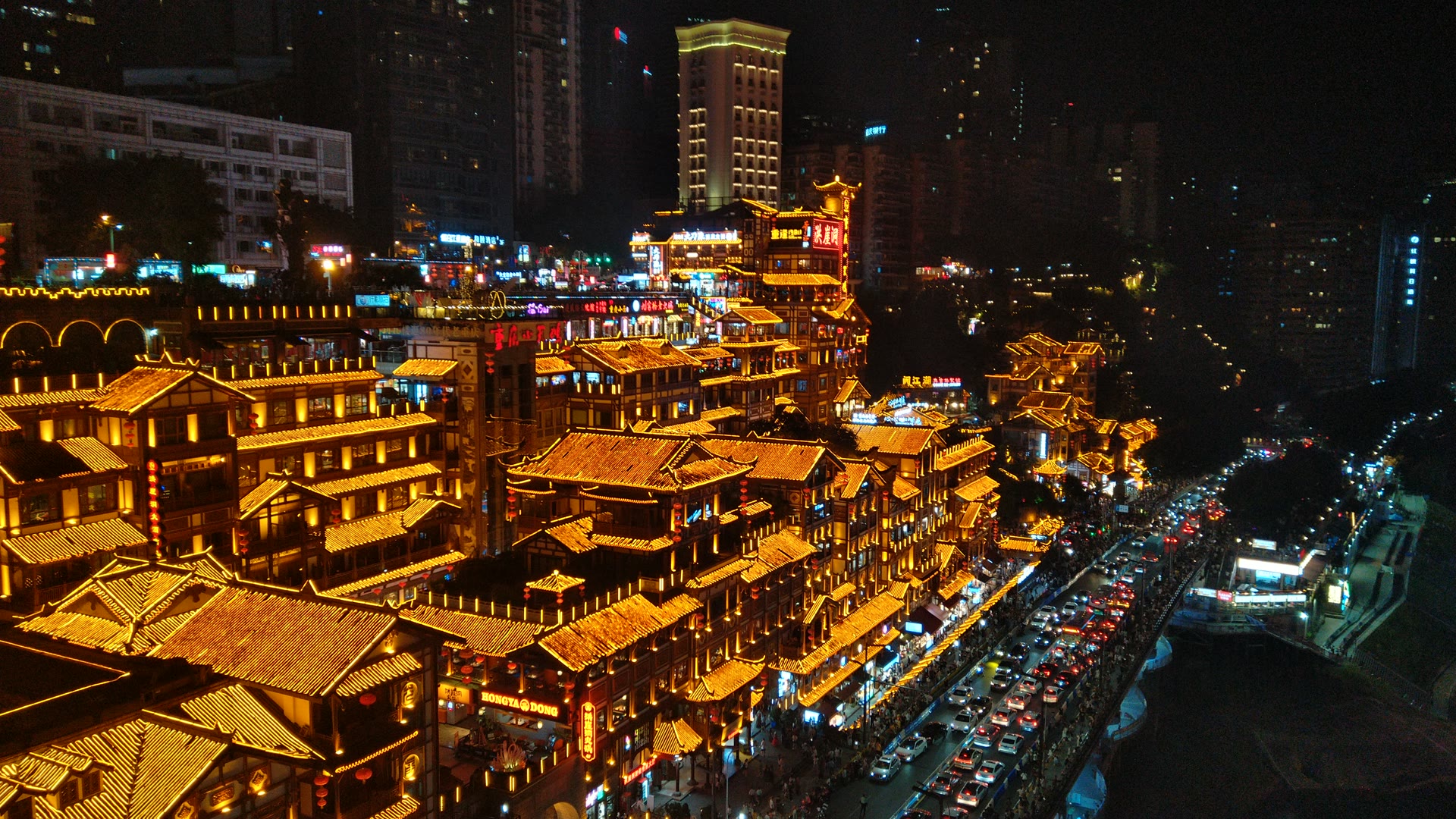
The present Hongya Cave folk-culture complex opened in 2006, according to Chongqing Culture Tourism Group. It stands on the Jialing River side of Yuzhong, Chongqing's central peninsula. Rather than planning a natural-cave excursion, come for a modern commercial and cultural attraction that recreates elements of the city's hillside streets.[1]
Its architecture draws on diaojiaolou, the stilt-house tradition associated with steep terrain. Look for projecting beams, decorated wooden details, carved corridors, archways and paths arranged along the slope.[2] The effect comes from layers of buildings and circulation routes fitted to a cliff, not simply from a single ornate frontage. This is a reconstruction of a regional building vocabulary, not an intact ancient timber town.
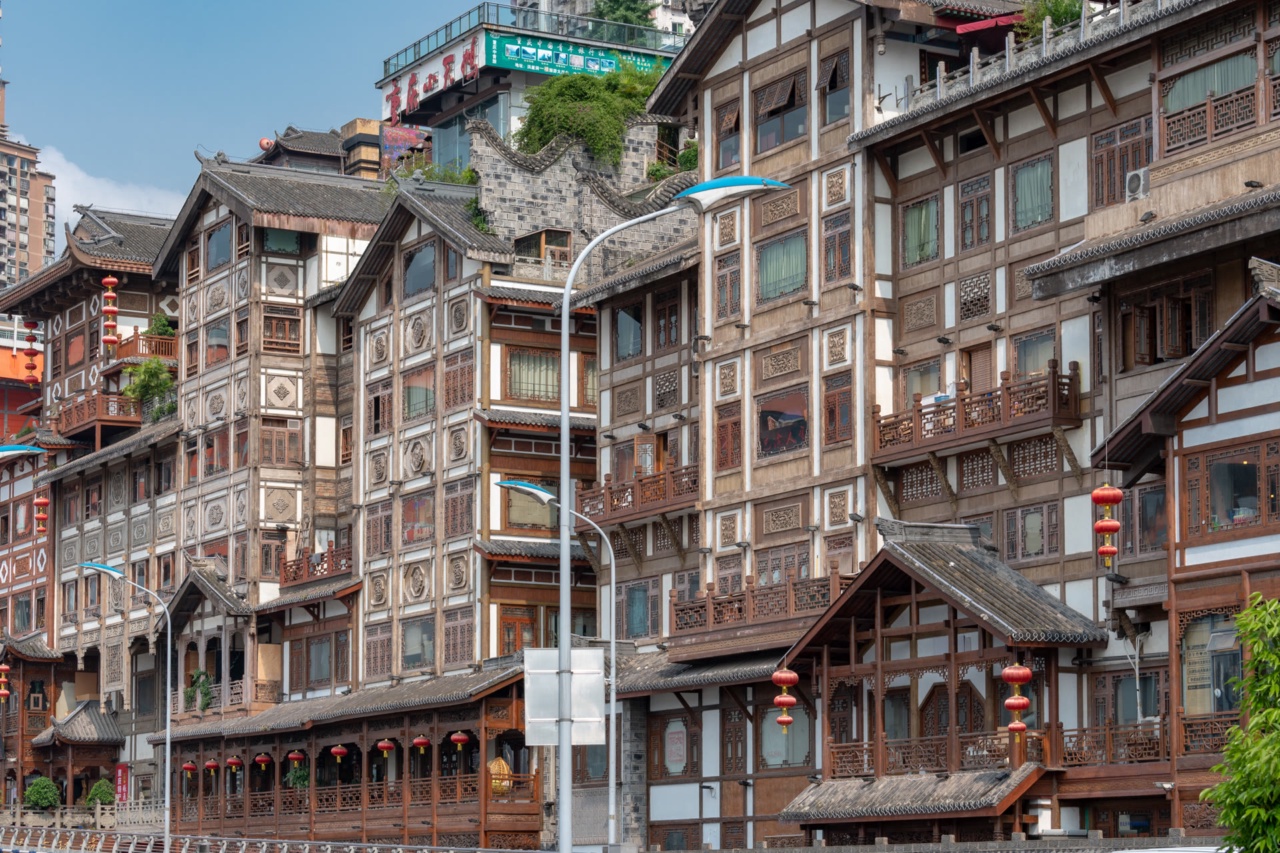
The group also describes Chongfeng 1980 (重逢1980), a themed area created in 2020 around everyday Chongqing life in the 1980s and 1990s.[1] It is a possible addition for visitors interested in urban nostalgia. Check its present opening and ticket terms separately if that experience, rather than the exterior, is your priority.
Things to Do
Offers are only loaded from GetYourGuide after you click. GetYourGuide can then process your IP address and set cookies. Privacy Policy
GetYourGuide partner offers. GoAsia may earn a commission if you book through these offers. Check whether tickets or transfers are included, and follow the attraction's official booking and admission rules.
Understand the two street levels before arriving
Use two names when reading your map: Cangbai Road (沧白路) for the upper arrival and Jialingjiang Binjiang Road (嘉陵江滨江路) for the lower riverside arrival. iChongqing's 2019 visitor feature identifies the top entrance from Cangbai Road and the first-floor address as 88 Jialingjiang Binjiang Road.[3] A street-level entrance can therefore put you high in the building rather than at its riverside base.
Set the destination to the street level you actually want. For an interior walk followed by a close view of the frontage, consider starting above and finishing below, subject to the route in use that day. For the facade alone, plan your viewing position first instead of entering the building just to reach a photo spot. Keep a screenshot of your arrival point and agree a meeting place with companions on the same level.
Allow for stairs, slopes and possible waits between levels. If you need a step-free visit, ask staff which entrance, lift and exit form a usable route on your date, including the way back to transport. Choosing one reachable viewpoint can be more practical than trying to cover the building, bridge and opposite bank in one circuit.
Choose the view that matches your photograph
From the lower riverside side, the facade rises above you, making this the choice for a close, upward-looking composition and architectural details. For a wider picture with water in front, consider the opposite bank around Chongqing Grand Theatre at Jiangbeizui (江北嘴). The tourism group's theatre report describes this outdoor setting together with Hongya Cave's lights and Qiansimen Bridge (千厮门大桥).[4] Reaching the opposite bank is a separate journey, not another floor of the complex.
The Qiansimen Bridge area offers another position to consider for the building and river together. Use only the pedestrian space permitted that day and keep the through route clear while taking photos. From terraces inside Hongya Cave, concentrate on the river and surrounding city: being inside the complex does not give you the same view of its full frontage.
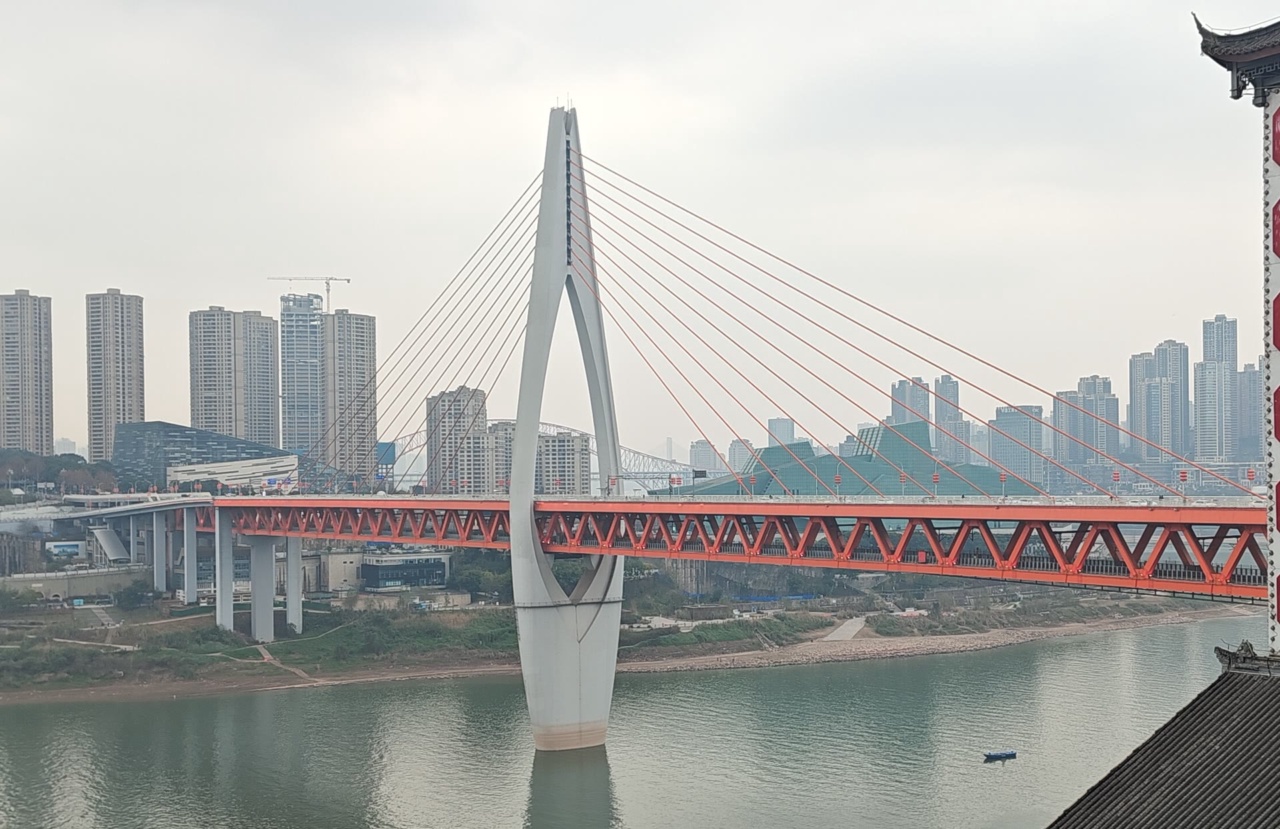
Choose one main viewing position and one alternative before walking. If a bridge approach or riverside path is restricted, follow the signed route rather than trying to recover a familiar social-media angle. A river cruise is a different option with its own operator, boarding point and ticket; confirm that its itinerary actually gives the view you want.
Plan the lighting and the return, not just sunset
For the illuminated facade, build your outing around the confirmed lighting window. Arriving while there is still daylight can help you identify the streets and choose a composition, but sunset alone does not establish when the lights will switch on. A daytime visit also lets you study the building details without making illumination the purpose of the trip.
Opening hours, last access to particular areas and exterior lighting are separate questions. Ask about all three if you are arriving late. For a busy holiday evening, leave room for managed pedestrian routes and a slower exit; do not fit a meal, a river crossing and a fixed departure into a tight interval.
Chongqing's Tourism Commission documented crowd-counting cameras, heat maps and announcements at Hongya Cave in 2018.[5] For today's visit, use staff directions and current local traffic notices to guide the route. Wear shoes suited to slopes and steps, take extra care on wet surfaces, and leave enough time to reach your chosen return station or pickup point.
Metro, walking or a car drop-off
Compare current public-transport routes via Xiaoshizi (小什字) and Linjiangmen (临江门), stations named in iChongqing's visitor feature.[3] Check the current line, exit and walking route to your selected upper or lower arrival rather than choosing a station solely by map distance. Include the last part on foot and the final service you need for the return.
For a taxi or booked car, give the driver the Chinese street name and confirm where stopping is permitted. A pickup at the upper street is a different destination from one at the river road. If you have walked to Jiangbeizui for the wider view, arrange the return from there instead of assuming you will finish back at Hongya Cave.
Eating, browsing and nearby Jiefangbei
The complex combines dining, entertainment and shops selling regional crafts.[1] Treat a meal as a choice within the outing, not an obligation attached to the view. Compare the menu and portion prices before ordering, ask about spice levels and ingredients, and agree an accepted payment method. For special dietary needs, discuss the broth and sauces as well as the main ingredients.
Jiefangbei (解放碑), with its monument and shopping streets in Yuzhong, is a useful city-centre stop to consider before or after Hongya Cave. Plot the walking route between the actual destinations, including the level change to the river if needed. A meal near Jiefangbei followed by one Hongya viewpoint is a different plan from exploring the complex and then crossing to the opposite bank.
Make the visit fit your evening
For a focused photo stop, allow for getting to one viewpoint, waiting for the lighting window and reaching your return transport. For a longer outing, add browsing or a meal, movement between levels and any river crossing or cruise boarding. This itinerary-based approach is more useful than treating a single visit duration as suitable for everyone.
Hongya Cave is especially appealing if you enjoy illuminated cityscapes and the way Chongqing builds around its slopes. Put the view you most want first, then add the interior or a themed attraction if time and access allow. An agreed return route matters as much as the place where you take the photograph.
To place Chongqing in a wider itinerary, use our China travel guide.
Sources and background
Numbers in the text such as [1] refer to these sources.
- [1] Chongqing Culture Tourism Group: Hongya Cave official group overview: modern complex and themed culture. Retrieved October 15, 2026.
- [2] Chongqing Culture Tourism Group: April 2025 description of Hongya Cave's reconstructed hillside architecture. Retrieved October 15, 2026.
- [3] iChongqing: 2019 Hongya Cave visitor feature: upper and riverside street locations. Retrieved October 15, 2026.
- [4] Chongqing Culture Tourism Group: November 2025 Grand Theatre report: Jiangbeizui and the Hongya Cave cityscape. Retrieved October 15, 2026.
- [5] Ministry of Culture and Tourism of China: June 2018 Chongqing tourism report on Hongya Cave crowd management. Retrieved October 15, 2026.
Frequently Asked Questions
A modern riverfront commercial and cultural complex in Yuzhong, opened in 2006. Its architecture recreates elements of Chongqing's hillside diaojiaolou buildings; plan an urban visit rather than a natural-cave tour.
Check the official access notice for your date for both the basic admission price and any reservation requirement. A free admission policy would not by itself mean booking is unnecessary. Themed experiences, meals and cruises have separate terms.
Cangbai Road (沧白路) is the upper orientation point; Jialingjiang Binjiang Road (嘉陵江滨江路) is the riverside one. Select the street level in your map and confirm the entrance in use, especially if you need a step-free route.
Choose the lower riverside side for a close upward view, or consider the opposite bank around Grand Theatre at Jiangbeizui for a wider composition. The Qiansimen Bridge area is another option when pedestrian access is permitted. Allow separate travel time to the opposite bank.
Use the current lighting notice or ask the attraction before leaving. Building opening hours and exterior illumination are different schedules; arriving at sunset does not guarantee that the facade is already lit.
Compare current routes via Xiaoshizi and Linjiangmen to your chosen street-level arrival. For a car, agree the upper or riverside destination and permitted stopping point. Plan return transport from where you will actually finish.
Build the allowance from your plan: arrival, one viewpoint and return for a photo stop; add interior browsing, a meal, level changes and a river crossing for a longer visit. Include a buffer before your next timed journey.
Yes, choose the combination that fits your evening. Check menu prices and payment before eating, plot the route to Jiefangbei, and book any cruise against its own boarding location, itinerary and schedule.