Li River Cruise: Sailing Through Guilin's Karst Wonderland to Yangshuo

Li River Cruise: Sailing Through Guilin's Karst Wonderland to Yangshuo

Last updated: June 9, 2026

The stretch of water between Guilin and Yangshuo is the kind of scenery that ends up on currency, scroll paintings, and a thousand desktop wallpapers. As your boat drifts downstream, jagged limestone peaks rise straight out of the riverbanks, water buffalo wade in the shallows, and bamboo groves frame fishing villages that look unchanged for generations. The view from one bend in particular, near the town of Xingping, is famous enough in China that it appears on the back of the 20 yuan note.

For most travelers, the Li River cruise is the headline attraction of any Guilin trip. It is a half-day journey that covers roughly 80 kilometers of the most photogenic karst landscape in the country, ending in the backpacker-friendly town of Yangshuo. But the experience is not as simple as showing up and buying a ticket. There are different boat classes, a seasonal water-level problem, luggage logistics to plan around, and a quieter raft-based alternative that some travelers prefer to the big tourist boats.

This guide walks through how the cruise actually works, what you see along the way, when to go, and how to fold it into a wider Guangxi itinerary so you arrive in Yangshuo ready to keep exploring rather than scrambling for a hotel.

What the Li River Cruise Actually Is

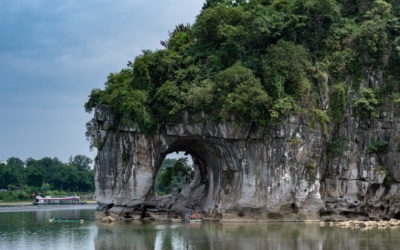
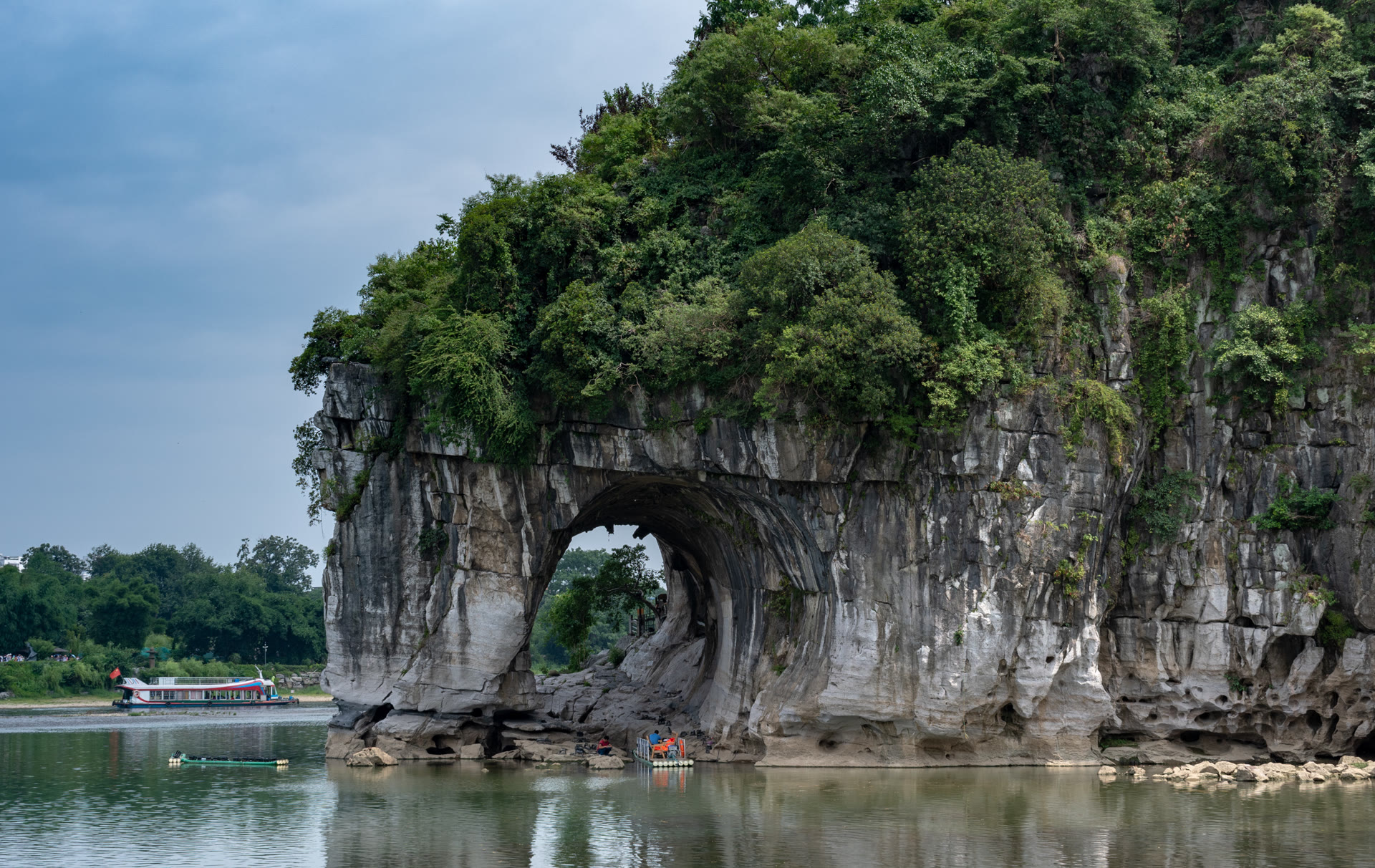
The classic Li River cruise is a one-way boat journey from a pier near Guilin downstream to Yangshuo. The river winds through Guangxi's karst belt, a landscape formed over millions of years as rainwater dissolved soft limestone into the dramatic conical and tower-shaped hills you see today. The most scenic concentration of peaks lies between the villages of Yangdi and Xingping, which is the heart of the cruise route.

The full trip on a standard tourist boat takes around four to four and a half hours, depending on water levels and traffic. Boats depart in the morning, usually grouped together, so you travel in a loose convoy of vessels. Along the way you pass named formations such as Nine Horses Fresco Hill, where guides claim you can count horses in the rock face, and the postcard scene around Xingping that matches the banknote image.

Crucially, the cruise is one-directional. You do not return by boat. Once you disembark in Yangshuo, you continue your travels by road or stay in town. This is why Yangshuo functions as the natural base for the second half of any Guilin region trip.

Things to Do

Why This Landscape Matters

Karst scenery exists in several parts of southern China and Southeast Asia, but the Guilin to Yangshuo corridor is the most iconic and the most accessible. The combination of a wide, slow-moving river and densely packed peaks creates layered views that change with every bend. Morning mist softens the hills into faded silhouettes, which is exactly the look that inspired centuries of Chinese landscape painting.

For international travelers, the appeal is partly the scenery and partly the rhythm of the journey. You spend hours moving slowly through a living rural landscape: fishermen on bamboo rafts, ducks herded along the shallows, farmers working terraced plots. It is a rare stretch of China where the pace genuinely slows down, and that contrast is part of what makes it memorable.

Choosing Your Boat: Large Cruise vs Bamboo-Style Raft

There are two broad ways to experience the river, and they suit different kinds of travelers.

Large tourist cruise boats

These are multi-deck vessels carrying many passengers, with indoor seating, an open top deck for photos, and an onboard lunch typically served as you sail. They run the full Guilin to Yangshuo route and are the standard option sold to most visitors. The advantage is comfort, shade, and covering the entire scenic stretch in one trip. The downside is crowds, fixed seating, and a somewhat packaged feel, with the boats often moving in a line.

Within this category, boats are usually graded into different classes, with higher tiers offering better seating, food, and air conditioning. Verify the class and what is included before booking, since the difference in onboard quality can be significant.

Bamboo-style rafts

The motorized rafts, often built to resemble traditional bamboo, are small and carry only a handful of passengers. These do not run the full Guilin to Yangshuo route. Instead they operate on shorter scenic segments, most famously around Xingping and between Yangdi and Xingping, which is widely considered the prettiest part of the river. Rafts sit lower to the water, get closer to the scenery, and feel far more intimate than the big boats. They are the better choice if your priority is photography and a quieter experience.

Many independent travelers skip the full cruise entirely and instead base themselves near Xingping, then take a short raft trip to capture the best views. This is cheaper, more flexible, and avoids the convoy atmosphere, though you trade away the long, leisurely full-river journey.

FactorLarge cruise boatBamboo-style raft
Route coveredFull Guilin to YangshuoShort scenic segments only
Trip lengthAbout 4 hoursRoughly 1 hour or less
Crowd levelHigher, group settingLower, small groups
Closeness to sceneryElevated decksLow and intimate
Best forComfort, full experiencePhotos, flexibility, budget
Ends in Yangshuo?YesNo, returns to start point

The Xingping Viewpoint

If there is one single spot to prioritize, it is the river scene at Xingping. This is where the famous 20 yuan banknote view sits, and the town itself is a pleasant old settlement with a relaxed, low-rise feel. You can reach the banknote viewpoint on foot or by a short climb from the town, and a raft trip along this section gives you the angles that most resemble the classic image.

Xingping makes a strong alternative base to both Guilin and Yangshuo. It is quieter, smaller, and surrounded by the best of the karst peaks. Travelers who want to slow down often spend a night here, walk the riverside trails, and take a sunrise or late-afternoon raft when the light is soft and the crowds thin out.

When to Go: Weather and Water Levels

The Guilin region has a humid subtropical climate, and timing affects both the scenery and whether the cruise runs at all.

Spring and autumn are generally the most comfortable seasons, with mild temperatures and a reasonable balance of clear days and atmospheric mist. The misty mornings that make the landscape look like a painting are most common in cooler, damper conditions, so do not assume a clear blue sky is the ideal cruise day; a little haze is part of the magic here.

Summer is hot, humid, and the wettest part of the year. Heavy rain can raise the river dramatically and, in extreme cases, disrupt or suspend sailings. The upside is lush green hills and full water levels.

Winter is cooler and quieter, with lower water levels. In the driest stretches, the upper part of the route between Guilin and Yangdi can become too shallow for the large boats. When that happens, cruises sometimes start further downstream, meaning you board at an intermediate pier rather than near Guilin. Always confirm the current departure point and whether the full route is operating before you commit, especially in the dry months.

Tickets, Departure, and How to Board

Cruises depart in the morning, and there is generally a single daily wave of sailings rather than hourly departures. Because of this, the cruise is a half-day commitment that locks in your morning. Tickets can be arranged through hotels, agents in Guilin, or booking platforms, and the price typically bundles the boat fare and an onboard lunch.

Boarding usually happens at a pier outside central Guilin, so you will need transport to reach the departure point, which may be included with an organized ticket or arranged separately. Foreign travelers should carry their passport, as it can be required for ticketing and boarding.

Treat published schedules, prices, and pier locations as things to verify close to your travel date. Departure points shift with water levels, and operational details change seasonally. A quick confirmation with your accommodation or ticket provider the day before avoids a wasted early start.

Luggage Logistics: The Detail Most Travelers Miss

This is the single most common planning mistake. The cruise is one-way and ends in Yangshuo, but you board near Guilin. If you are checking out of a Guilin hotel and moving on to Yangshuo, you need a plan for your bags.

Large cruise boats can usually accommodate luggage, but space and handling vary, and lugging heavy suitcases on and off a boat is awkward. The cleaner approach for many travelers is to base in Guilin, do the cruise as a day excursion, and either return to Guilin afterward or have luggage transferred to a pre-booked Yangshuo hotel. Some organized cruise packages include luggage transport to Yangshuo, which solves the problem neatly.

If you plan to take a raft instead of the full cruise, luggage is a non-issue, since rafts are short round trips. In that case you would travel to Yangshuo or Xingping by road with your bags first, then do the raft separately.

Plan this in advance rather than at the pier. Decide where you are sleeping that night, where your bags will be, and how they get there, before you book the cruise.

Arriving in Yangshuo

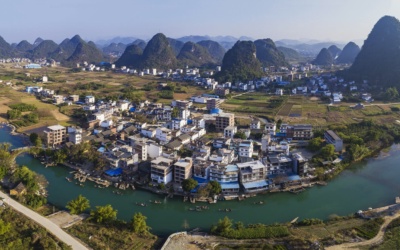
The cruise deposits you in Yangshuo, a town that has grown into the region's adventure and traveler hub. The central West Street area is touristy and busy, lined with bars, restaurants, and shops, but step a short distance out and you are surrounded by karst countryside ideal for exploring.

Yangshuo rewards a stay of a couple of days. Popular activities include cycling through the rice fields and villages, exploring the Yulong River area by raft, climbing or rock-climbing among the peaks, and visiting nearby caves and hot springs. Renting a bicycle or e-bike is one of the best ways to see the countryside at your own pace. After the structured pace of the cruise, this is where you regain flexibility.

Getting To and From the Region

Guilin is the main gateway, served by an airport and high-speed rail connections to major Chinese cities, which makes the region easy to slot into a longer China itinerary. Most travelers arrive in Guilin, do the cruise, and continue to Yangshuo.

Yangshuo itself is connected by a high-speed rail station, though it sits outside the town center and requires a transfer. There are also frequent buses between Guilin and Yangshuo by road, which is the practical way to backtrack if you based in Guilin and need to return, or to reach Yangshuo without the cruise. For onward travel after your visit, you can pick up rail or road connections from either Guilin or the Yangshuo station back to the wider network.

If you are mapping out a longer route through southern China, GoAsia.cc is a useful place to keep planning your Asia itinerary alongside other regional highlights.

Realistic Downsides to Expect

The Li River cruise is genuinely beautiful, but it is not a wilderness experience. The big boats travel in groups, the onboard lunch is functional rather than memorable, and vendors and hawking are part of the scene at piers and along some stretches. The famous views are stunning, but you will be sharing them with a lot of other people, especially during Chinese public holidays when crowds spike sharply.

Weather is the other variable. A heavily overcast or rainy day flattens the contrast that makes the peaks dramatic, and in the dry season a shortened route means you miss part of the best scenery. Neither of these ruins the trip, but managing expectations matters. If you want the postcard view above all else, the Xingping raft option in good light may satisfy you more than the full cruise on a gray day.

Practical Tips for a Smooth Cruise Day

  • Decide your base early. Either do the cruise as a Guilin day trip or arrange luggage transfer to Yangshuo before booking.
  • Carry your passport for ticketing and boarding.
  • Get to the top deck early for unobstructed photos; the best peaks come after the Yangdi to Xingping stretch.
  • Bring water, sun protection, and a light rain layer regardless of forecast, since weather shifts quickly.
  • Confirm the departure point the day before, especially in winter when low water can change where boats start.
  • Carry small cash for snacks, vendors, and raft fees, as not every small operator handles foreign cards.
  • If photography is your priority, consider basing in Xingping and taking a raft at sunrise or late afternoon instead of, or in addition to, the full cruise.
  • Build in at least one full day in Yangshuo afterward so the cruise is the start of your exploration, not the end of a rushed trip.

How to Fit It Into Your Trip

A comfortable plan is to spend a night in Guilin, take the morning cruise to Yangshuo, and spend two nights in or around Yangshuo cycling and exploring before moving on. Travelers short on time can compress this, but rushing the region undersells it. Those who prefer quiet over packaged experiences can skip the big cruise, head straight to Xingping, and use rafts and walking trails to enjoy the same scenery with fewer crowds.

However you structure it, the river journey works best as the centerpiece of a few unhurried days rather than a single boxed-off activity. The peaks reward slow travel, and the surrounding countryside is where the region's character really comes through.

Frequently Asked Questions

Should I take the full cruise or a bamboo raft?

Take the full large-boat cruise if you want the complete Guilin to Yangshuo journey with seating, shade, and lunch over about four hours. Choose a bamboo-style raft if you prioritize close-up scenery, photography, flexibility, and smaller crowds, but note that rafts only cover short scenic segments like the Yangdi to Xingping stretch rather than the whole route.

How much does the Li River cruise cost and what is included?

Prices vary by boat class and usually bundle the boat fare with an onboard lunch, while raft trips are sold separately and cost less. Higher boat classes offer better seating and food. Because rates change seasonally, confirm the current price, the boat class, and exactly what is included when you book through your hotel or a ticket provider.

How do I get to the cruise departure point from Guilin?

Boats typically leave from a pier outside central Guilin, so you need transport to reach it, which may be included with an organized ticket or arranged separately. Carry your passport for boarding. In the dry winter months, low water can move the departure point downstream, so confirm where boats are actually leaving from the day before.

What happens to my luggage since the cruise is one-way?

The cruise ends in Yangshuo but boards near Guilin, so plan your bags ahead. Either base in Guilin and treat the cruise as a day trip, or book a package that includes luggage transfer to a Yangshuo hotel. Handling heavy suitcases on and off the boat is awkward, so sort this out before you arrive at the pier.

When is the best time to do the cruise?

Spring and autumn offer the most comfortable temperatures and a good mix of clear and misty days. Summer is hot, humid, and rainy with full water levels but possible weather disruptions. Winter is cooler and quieter but can have low water that shortens the route, so check conditions before booking in the dry season.

Is the famous 20 yuan banknote view part of the cruise?

Yes, the banknote scene is on the river near Xingping, which the full cruise passes through. For the clearest match to the image, many travelers base in Xingping and take a short raft trip or walk to the viewpoint, especially in soft morning or late-afternoon light when crowds are thinner.

Do I need to stay in Yangshuo after the cruise?

You do not have to, but it is strongly recommended. Yangshuo is the natural base for cycling, rafting on the Yulong River, and exploring the karst countryside. Building in at least one full day there turns the cruise into the start of your exploration rather than a rushed standalone trip.