Saint Sophia Cathedral, Harbin: access and visit planning
Contents
Choose an architecture stop or an interior visit
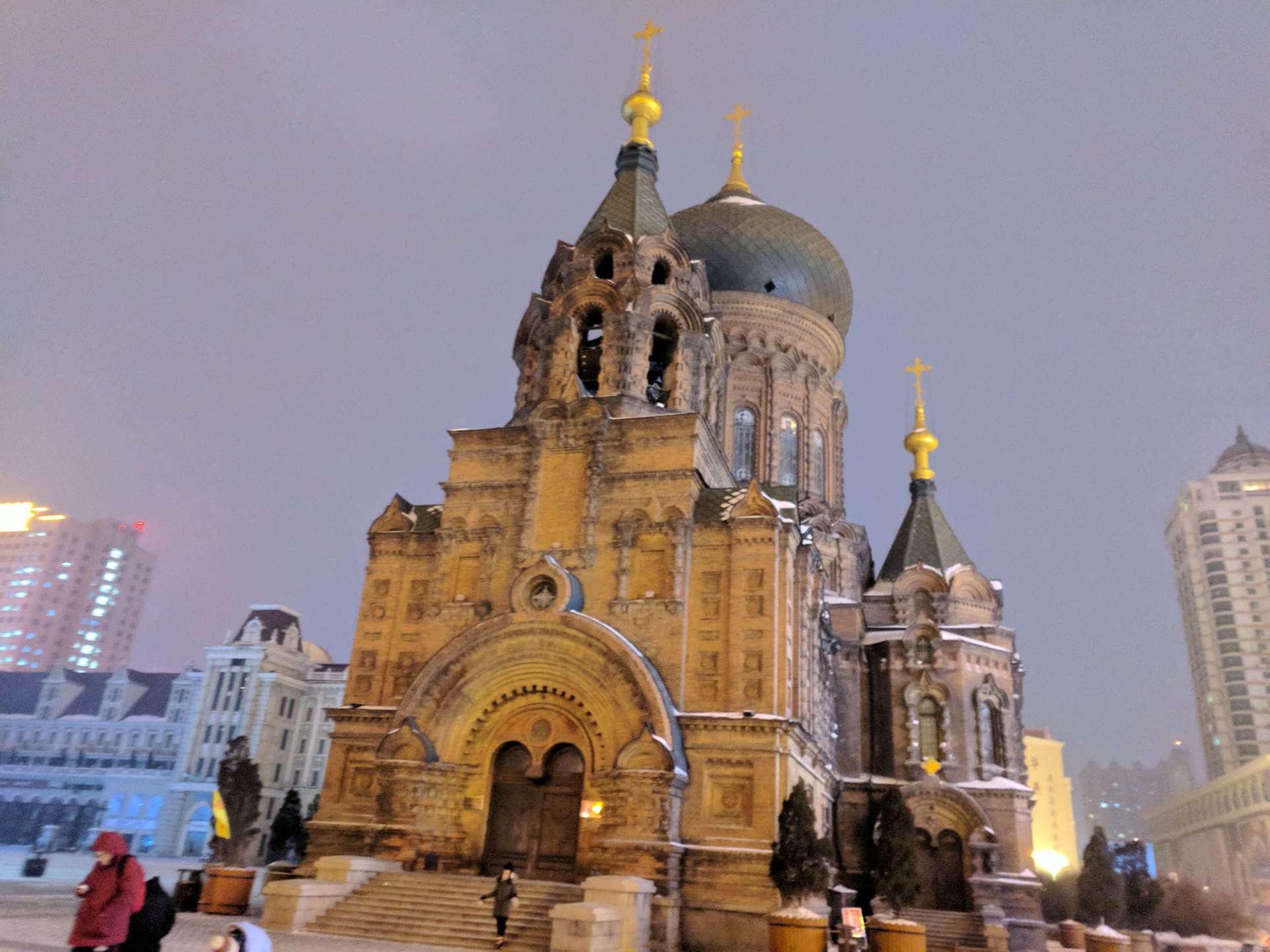
Saint Sophia Cathedral, 圣索菲亚教堂, is a Harbin architectural landmark with red brickwork and a green dome. The provincial tourism authority dates its origin to 1907 and describes its Byzantine style. Choose between viewing the architecture from the accessible public area and a separately confirmed interior visit. Do not assume that seeing the building outside gives access to everything inside.
Things to Do
Offers are only loaded from GetYourGuide after you click. GetYourGuide can then process your IP address and set cookies. Privacy Policy
GetYourGuide partner offers. GoAsia may earn a commission if you book through these offers. Check whether tickets or transfers are included, and follow the attraction's official booking and admission rules.
Interior use and restoration
Official provincial coverage in March 2024 described the cathedral as a music hall hosting instrumental performances and a watercolour exhibition during that winter season. That dated description is not a current performance calendar. The interior should not be presented simply as a permanently open architecture museum with a guaranteed collection of models and old photographs.
A tourism-department notice announced closure of the interior from 10 April 2025 for mural conservation. It stated that the square and other businesses would remain open during those works, and directed visitors to the official WeChat account 索菲亚景区 for reopening information; its enquiry number is 0451-87657197. The notice establishes that closure occurred, not that the interior is still closed today. Confirm the latest status before planning an indoor visit.
A later original China National Radio report dated 5 December 2025 announced reopening on 6 December after the mural work. It described a renewed exhibition with text, images and video, and planned immersive music performances. From 7 December it listed 8:30 to 21:00, with tickets through Meituan, Douyin or the entrance QR code. These are dated winter-season arrangements, not a verified schedule for every later visit. Confirm the present product and hours; the report did not publish an admission price.
Tickets and current access
Check the current official product before buying: which space you can enter, whether any performance or exhibition is included, the date and admission slot, price in yuan per person, and any document or discount conditions. A ticket sold by a third party is not proof of an unrestricted visit. The cited notices do not establish a current admission price, all-day opening hours or permanently free access to every part of the square. Paid photo sessions, guides and other optional services are separate spending choices.
How much time to allow
For planning, you could reserve around half an hour for an exterior photo stop and add time for your chosen walk. This is an allowance, not a measured guarantee. An interior event needs its actual schedule plus entry time. With limited time, prioritise the confirmed open area; do not plan an entire afternoon around an unconfirmed indoor ticket. Leave room for queues, weather and breaks.
Address and a Central Street walk
The tourism authority gives the address as 88 Toulong Street, Daoli District, 道里区透笼街88号. Its October 2023 citywalk route reaches Central Street via Zhaolin Street and Shitoudao Street, with about 15 minutes walking stated for that route. Use that as a dated orientation, not a promise for every starting point or walking speed. Check your actual pedestrian route and conditions. For metro, bus or taxi, confirm the current stop, exit, last mile and fare; the cited sources do not verify a present transport timetable or step-free journey.
Evening photography
The 2023 citywalk and 2024 provincial report describe evening lighting, but do not establish a permanent switch-on time or a nightly guarantee. If evening photography matters, check the current lighting and access arrangements and keep a daylight alternative. Use permitted viewpoints, avoid blocking pedestrians and follow staff instructions. Crowds and an unobstructed photograph cannot be predicted from those dated reports.
Prepare for the conditions
Prepare according to the actual forecast, not an idealised snowy photograph. In cold conditions, take suitable warm layers, gloves and footwear with grip, limit outdoor exposure and plan indoor breaks that are actually available. Keep your return route and phone charging arrangements in mind. Ice, poor weather or temporary barriers may change your walk. The cited tourism reports do not provide a current temperature forecast or certify an accessible, ice-free route.
Sources and background
These sources support the topics listed below, not every statement or current price in this article.
- [1] Ministry of Culture and Tourism of China: Dated 2022 architecture report: 1907 origin, red brickwork and green dome. Retrieved October 5, 2026. History, Culture
- [2] Heilongjiang Department of Culture and Tourism: April 2025 interior mural-restoration closure and official reopening enquiry channel. Retrieved October 5, 2026. Access, Opening hours, Registration
- [3] Heilongjiang Provincial People’s Government: Dated 2024 music hall, exhibition, lighting and visitor services report. Retrieved October 5, 2026. Culture, History, Access
- [4] Heilongjiang Department of Culture and Tourism: Official 2023 citywalk: cathedral history, Toulong Street address and Central Street route. Retrieved October 5, 2026. History, Transport, Access
- [5] China National Radio: Original December 2025 reopening report, renewed exhibition and dated winter operating arrangements. Retrieved October 5, 2026. Access, Culture, Opening hours, Registration
Frequently Asked Questions
For planning, you could reserve around half an hour for an exterior photo stop and add time for your chosen walk. This is an allowance, not a measured guarantee. An interior event needs its actual schedule plus entry time. With limited time, prioritise the confirmed open area; do not plan an entire afternoon around an unconfirmed indoor ticket. Leave room for queues, weather and breaks.
Check the current official product before buying: which space you can enter, whether any performance or exhibition is included, the date and admission slot, price in yuan per person, and any document or discount conditions. A ticket sold by a third party is not proof of an unrestricted visit. The cited notices do not establish a current admission price, all-day opening hours or permanently free access to every part of the square. Paid photo sessions, guides and other optional services are separate spending choices. A later original China National Radio report dated 5 December 2025 announced reopening on 6 December after the mural work. It described a renewed exhibition with text, images and video, and planned immersive music performances. From 7 December it listed 8:30 to 21:00, with tickets through Meituan, Douyin or the entrance QR code. These are dated winter-season arrangements, not a verified schedule for every later visit. Confirm the present product and hours; the report did not publish an admission price.
The tourism authority gives the address as 88 Toulong Street, Daoli District, 道里区透笼街88号. Its October 2023 citywalk route reaches Central Street via Zhaolin Street and Shitoudao Street, with about 15 minutes walking stated for that route. Use that as a dated orientation, not a promise for every starting point or walking speed. Check your actual pedestrian route and conditions. For metro, bus or taxi, confirm the current stop, exit, last mile and fare; the cited sources do not verify a present transport timetable or step-free journey.
The 2023 citywalk and 2024 provincial report describe evening lighting, but do not establish a permanent switch-on time or a nightly guarantee. If evening photography matters, check the current lighting and access arrangements and keep a daylight alternative. Use permitted viewpoints, avoid blocking pedestrians and follow staff instructions. Crowds and an unobstructed photograph cannot be predicted from those dated reports.
Official provincial coverage in March 2024 described the cathedral as a music hall hosting instrumental performances and a watercolour exhibition during that winter season. That dated description is not a current performance calendar. The interior should not be presented simply as a permanently open architecture museum with a guaranteed collection of models and old photographs. A tourism-department notice announced closure of the interior from 10 April 2025 for mural conservation. It stated that the square and other businesses would remain open during those works, and directed visitors to the official WeChat account 索菲亚景区 for reopening information; its enquiry number is 0451-87657197. The notice establishes that closure occurred, not that the interior is still closed today. Confirm the latest status before planning an indoor visit. A later original China National Radio report dated 5 December 2025 announced reopening on 6 December after the mural work. It described a renewed exhibition with text, images and video, and planned immersive music performances. From 7 December it listed 8:30 to 21:00, with tickets through Meituan, Douyin or the entrance QR code. These are dated winter-season arrangements, not a verified schedule for every later visit. Confirm the present product and hours; the report did not publish an admission price.
Prepare according to the actual forecast, not an idealised snowy photograph. In cold conditions, take suitable warm layers, gloves and footwear with grip, limit outdoor exposure and plan indoor breaks that are actually available. Keep your return route and phone charging arrangements in mind. Ice, poor weather or temporary barriers may change your walk. The cited tourism reports do not provide a current temperature forecast or certify an accessible, ice-free route.