Tham Chang Cave: Vang Vieng's Most Accessible Underground Adventure

Tham Chang Cave: Vang Vieng's Most Accessible Underground Adventure

Last updated: March 18, 2026

Most caves around Vang Vieng require a motorbike ride through rutted dirt roads and a scramble up a muddy hillside to reach. Tham Chang is the exception. Sitting just two kilometers from the town center and accessible entirely on foot, this limestone cave offers the easiest introduction to the karst underworld that makes Vang Vieng one of the most geologically dramatic destinations in Laos.

The name Tham Chang - sometimes spelled Tham Jang - translates to "Elephant Cave," named after a large stalactite formation inside that resembles an elephant. But the cave's history goes beyond geology. In the early nineteenth century, locals used these chambers as a defensive bunker against invading Yunnanese Chinese forces, and during the civil war the cave sheltered entire village populations. Today it draws visitors for a different reason: a compact but rewarding cave system, a natural spring-fed swimming pool at its base, and one of the best panoramic viewpoints over Vang Vieng's rice fields and karst peaks.

What to Expect Inside the Cave

Tham Chang is a two-level cave system with several interconnected chambers. The whole complex takes about 20 minutes to walk through at a comfortable pace, though you can easily spend longer examining the formations. Unlike many caves in the region, Tham Chang is well-lit with electric lighting that highlights the stalactites and stalagmites throughout. You do not need a headlamp or torch, though a phone light can help pick out details in dimmer corners.

The ceilings reach over four meters in the main chambers, so there is no crawling or squeezing required. Concrete stairs with metal handrails lead through the passages, making the cave accessible to visitors of most fitness levels. The path is sometimes slippery from moisture, so shoes with decent grip are important - flip-flops are not a good choice here.

Key Formations

The cave's stalactites and stalagmites have been forming for millions of years and display a range of shapes and colors. The namesake elephant-shaped stalactite is the most famous, but look for mineral deposits on the walls that create colorful patterns where water has deposited iron, calcium, and other minerals over the ages. The lighting inside casts these in shades of orange, cream, and grey that shift as you move through the chambers.

Some formations are labeled, but many are not. The second level contains some of the more impressive columns where stalactites and stalagmites have met and fused together over millennia.

The Viewpoint

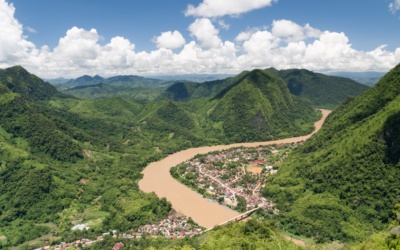
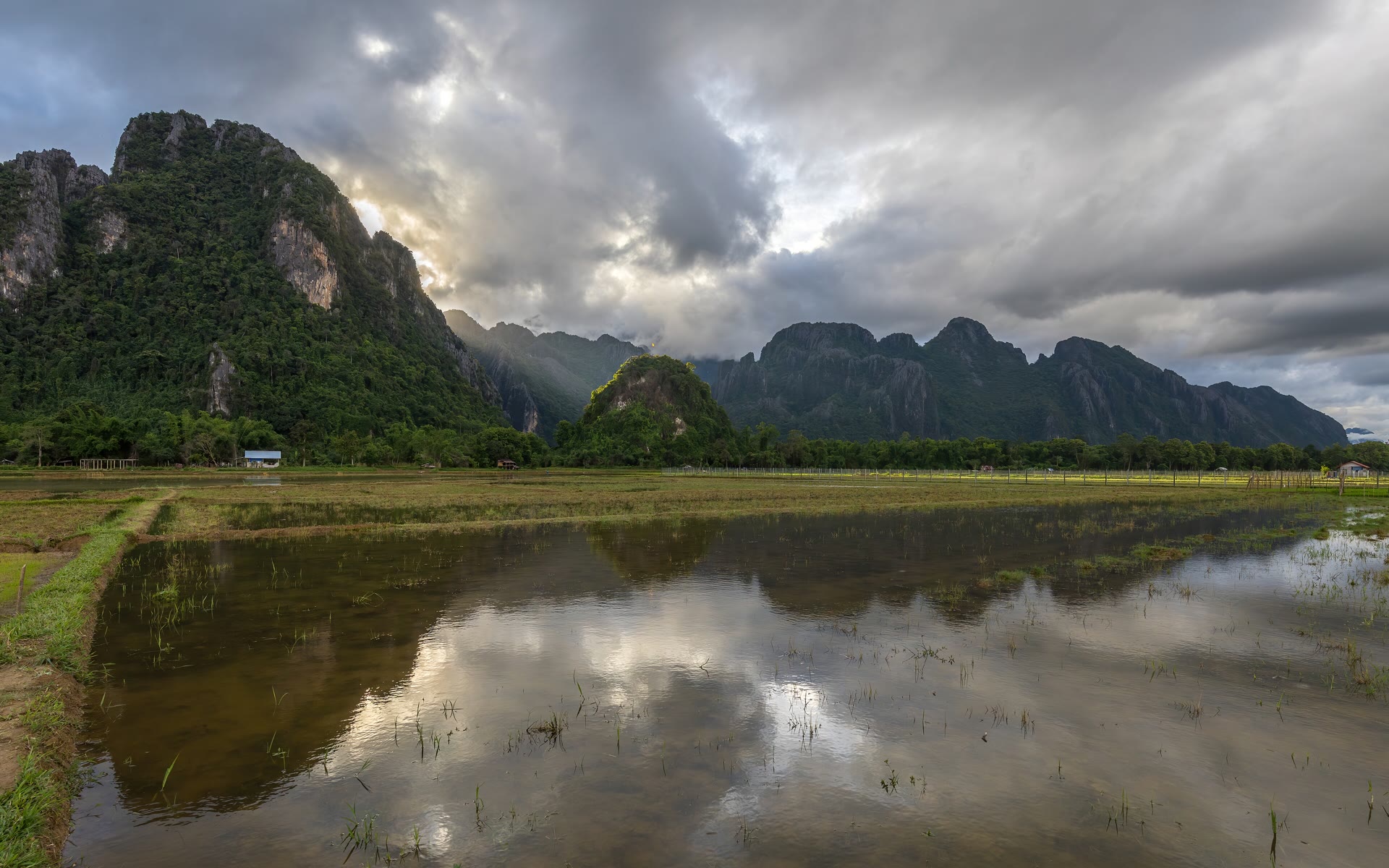
Before you enter the cave, the stairway up to the entrance rewards you with an expansive viewpoint over Vang Vieng. From the top of the steps, you can see the entire town spread out below, the Nam Song River winding through the valley, and the endless green rice paddies stretching east toward the karst limestone mountains. This view alone justifies the climb, and many visitors spend as much time photographing the panorama as they do inside the cave itself.

A secondary viewpoint inside the cave looks out through an opening in the rock face, framing the countryside from within the mountain - a striking perspective that most visitors find unexpectedly beautiful.

Things to Do

The Spring-Fed Swimming Pool

At the base of the cave entrance lies one of Vang Vieng's lesser-known swimming spots. A natural spring emerges from within the mountain, feeding a pool of remarkably clear turquoise water. The minerals dissolved in the water as it passes through the limestone give it the distinctive blue-green color that has made Vang Vieng's "blue lagoons" famous.

The pool is not large, but it is refreshing after the walk and the stairs. Wooden bridges cross over parts of the water, and there is a grassy area nearby where you can sit and dry off. The water is cool year-round, making this an especially welcome stop during the hot season from March to May. Swimming here is included in your entrance fee - no additional charge.

Getting There

Tham Chang is the only major cave attraction within walking distance of central Vang Vieng. The route takes you south through town to the Vangvieng Resort property. To reach the cave, you walk through the resort grounds, passing through an entrance gate where the first fee is collected.

StageFee
Resort entrance gate5,000 kip
Cave entrance15,000 kip
Total cost20,000 kip (approximately $1)

The walk from central Vang Vieng takes about 20 to 25 minutes at a relaxed pace. You can also rent a bicycle from any of the many shops in town for around 30,000 kip per day, which makes the trip quicker and lets you combine the cave with other nearby stops.

Opening Hours

DayHours
Monday - Friday8:00 AM - 11:00 AM, 1:00 PM - 4:00 PM
Saturday - Sunday8:00 AM - 4:00 PM (no midday break)

Note the midday closure on weekdays. If you arrive around noon on a weekday, you will find the gate closed and will need to wait until 1:00 PM. Plan accordingly - either go early in the morning or in the early afternoon. Weekend visitors have more flexibility with continuous hours.

Combining Tham Chang with Other Vang Vieng Activities

Tham Chang works well as a morning activity, leaving the afternoon free for Vang Vieng's other attractions. The town is a base for a remarkable range of outdoor adventures, and a day that starts with the cave can easily continue with one of these:

  • Blue Lagoon 2 - The closest of the blue lagoons to Tham Chang, roughly 5 kilometers further south. A motorbike or bicycle ride gets you there in 15 to 20 minutes. The lagoon offers deeper swimming and a more natural setting than the cave pool.
  • Tham Phu Kham Cave - A larger and wilder cave about 7 kilometers from town, famous for its bronze reclining Buddha and the original Blue Lagoon at its base. The access involves a steep, uneven climb, making it more challenging than Tham Chang.
  • Nam Song River tubing - Vang Vieng's signature activity. Tubing operators are concentrated along the river north of town. A morning cave visit pairs naturally with an afternoon float.
  • Kayaking - Several operators run half-day kayak trips on the Nam Song River that pass through stunning scenery between karst cliffs. Morning departures are most common.

For travelers exploring Laos more broadly, GoAsia.cc has additional guides to the country's top destinations and practical travel advice.

Tips for Visiting Tham Chang Cave

  • Wear proper shoes - The stairs to the cave entrance are steep and the cave floor can be wet and slippery. Closed-toe shoes or sport sandals with straps work best. Avoid flip-flops.
  • Bring swimwear - The spring pool at the base is worth a dip, especially in hot weather. Pack a small towel or quick-dry cloth since there are no facilities to rent one.
  • Visit early on weekdays - The cave is least crowded right at the 8:00 AM opening. By mid-morning, tour groups start arriving. Early visits also mean cooler temperatures for the walk.
  • Watch the weekday schedule - The midday closure from 11:00 AM to 1:00 PM catches many visitors off guard. Do not start walking over at 10:30 AM expecting a leisurely visit.
  • Bring small bills - Both the resort gate and the cave entrance are cash only. Have kip in small denominations ready. Neither booth reliably has change for large notes.
  • Combine with a bike rental - Renting a bicycle for the day lets you visit Tham Chang in the morning and pedal out to Blue Lagoon 2 or other nearby attractions in the afternoon without arranging separate transport.
  • Photography - Flash is not restricted inside the cave, but the electric lighting provides enough illumination for smartphone photos. The viewpoint outside the entrance is the real photography highlight - bring your best camera for the panoramic shots.
  • Manage expectations - Tham Chang is a compact, well-developed cave. It is not a wild spelunking adventure. Its value lies in accessibility, the viewpoint, the swimming pool, and the historical significance rather than in the scale of the cave itself.

Frequently Asked Questions

What makes Tham Chang Cave worth visiting in Vang Vieng?

Tham Chang is the most accessible cave near Vang Vieng, reachable on foot from the town center without a motorbike. Beyond the stalactite formations inside, it offers a panoramic viewpoint over the valley's rice fields and karst peaks, plus a natural spring-fed swimming pool at its base. The combination of cave, views, and swimming in one easy walk makes it a solid half-day activity.

How much does it cost to visit Tham Chang Cave?

The total cost is 20,000 kip (roughly $1), split into two payments: 5,000 kip at the resort entrance gate and 15,000 kip at the cave entrance. Swimming in the spring pool is included. Both payment points are cash only and kip is the only accepted currency.

How do I get to Tham Chang Cave from Vang Vieng town?

Walk south through Vang Vieng for about 20 to 25 minutes until you reach the Vangvieng Resort. The path to the cave goes through the resort grounds. You can also rent a bicycle in town for around 30,000 kip per day to make the trip faster. No tuk-tuk or motorbike is needed.

What are the opening hours for Tham Chang Cave?

On weekdays the cave opens from 8:00 AM to 11:00 AM and again from 1:00 PM to 4:00 PM, with a midday closure. On weekends it is open continuously from 8:00 AM to 4:00 PM. The weekday lunch break is easy to miss when planning, so time your visit accordingly.

Do I need special equipment or a guide to visit the cave?

No special equipment is needed. The cave has electric lighting, concrete stairs with handrails, and high ceilings throughout. A guide is not required as the path is straightforward. Just wear shoes with good grip since the surfaces can be slippery from moisture.

Can I swim at Tham Chang Cave?

Yes, a natural spring-fed pool at the base of the cave entrance has clear turquoise water where swimming is included in the entrance fee. The water is cool year-round and especially refreshing in hot weather. Bring your own swimsuit and towel as there are no rental facilities.

How does Tham Chang compare to Tham Phu Kham Cave?

Tham Chang is smaller but far more accessible - walkable from town with paved stairs inside. Tham Phu Kham is larger, wilder, and houses a bronze reclining Buddha, but requires a motorbike ride and a steep rocky climb. Choose Tham Chang for convenience and the viewpoint, or Tham Phu Kham for a more adventurous experience with the original Blue Lagoon.