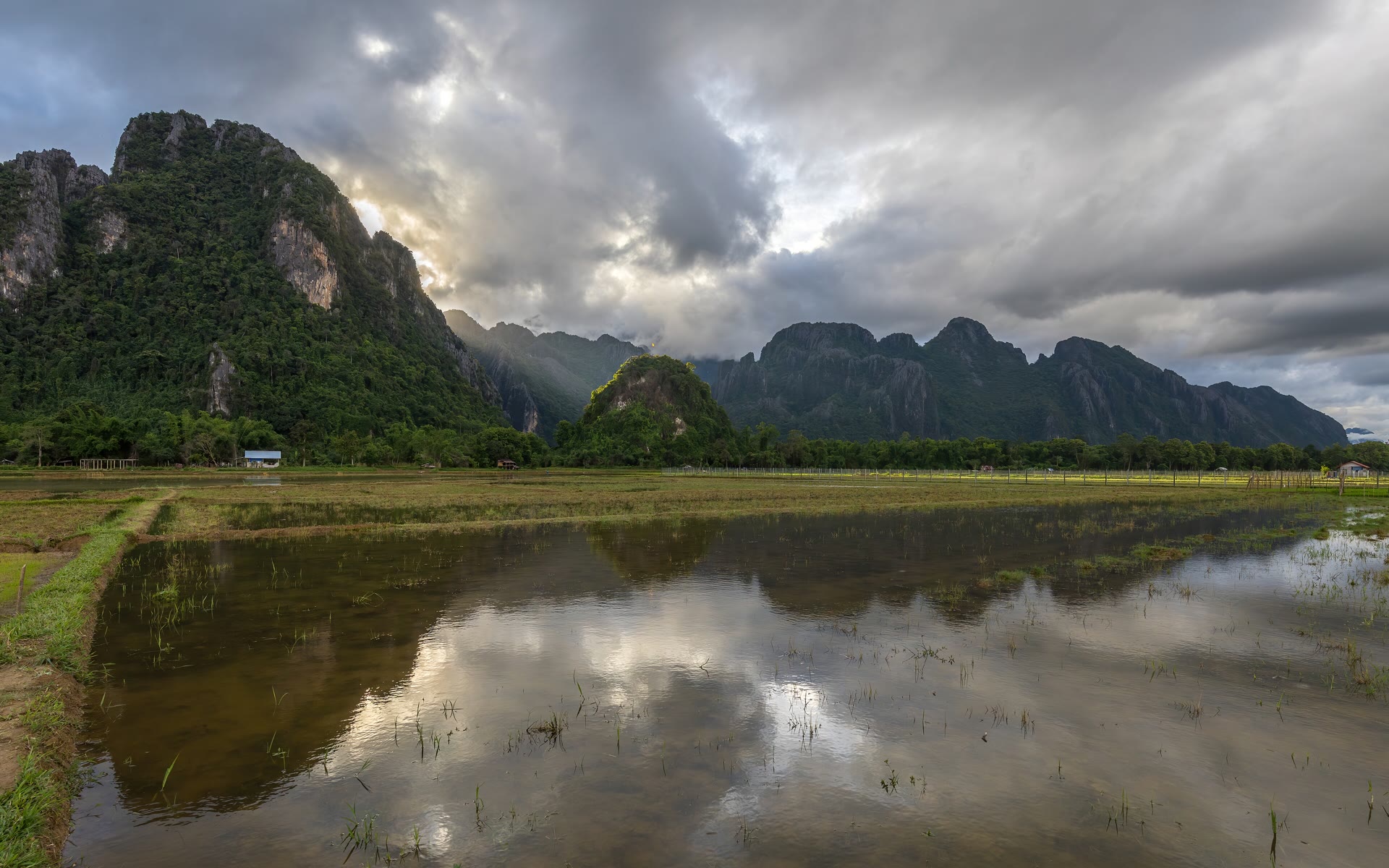
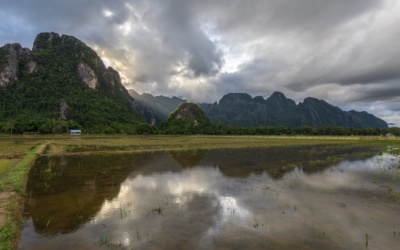
A small riverside town in central Laos cradled by dramatic limestone karsts, Vang Vieng has transformed from a notorious backpacker party stop into a legitimate adventure destination.
Limestone towers erupt from emerald rice paddies like the spine of some ancient creature, and the Nam Song River slices through it all with a lazy, green calm. Vang Vieng sits roughly halfway between Vientiane and Luang Prabang, and for years its reputation was defined by a single activity: floating down the river in an inner tube while getting obliterated at riverside bars. That era is largely over. The Lao government cleaned up the worst excesses, bars were shuttered, and what remains is a genuinely beautiful adventure town that still knows how to have a good time, just with fewer casualties.
Today Vang Vieng attracts a wider mix of travelers. Korean and Chinese tour groups arrive by the busload for the scenery. Backpackers still come for tubing, which persists in a tamer form. Rock climbers quietly work world-class routes on the karsts. Families kayak the river. And budget travelers use it as a decompression stop on the well-worn Vientiane-to-Luang-Prabang corridor. The town itself is small, dusty, and not particularly charming, but the surroundings are extraordinary, and that is the entire point.
Give Vang Vieng at least two full days and you will barely scratch the surface of caves, lagoons, viewpoints, and river activities. Stay longer if you climb or want to explore by motorbike. The town rewards those who get out of the center and into the karst landscape surrounding it.
Orientation and Neighborhoods
Vang Vieng is compact enough to walk end to end in fifteen minutes. The main road runs roughly north-south parallel to the Nam Song River on the western side. Almost everything you need, including guesthouses, restaurants, tour agencies, ATMs, and minimarts, lines this strip or the few lanes branching off it.
The densest cluster of accommodation, restaurants, and services. It is convenient but can feel touristy and a bit noisy. Budget guesthouses and hostels dominate here. This is where you will find the night market, tour booking offices, and most of the bars.
Riverside (West Side)
A handful of guesthouses and boutique hotels sit right along the Nam Song with direct river and karst views. Staying here costs a bit more but the scenery from your balcony at sunrise is worth every dollar. This area is quieter and more atmospheric than the center.
East of the River
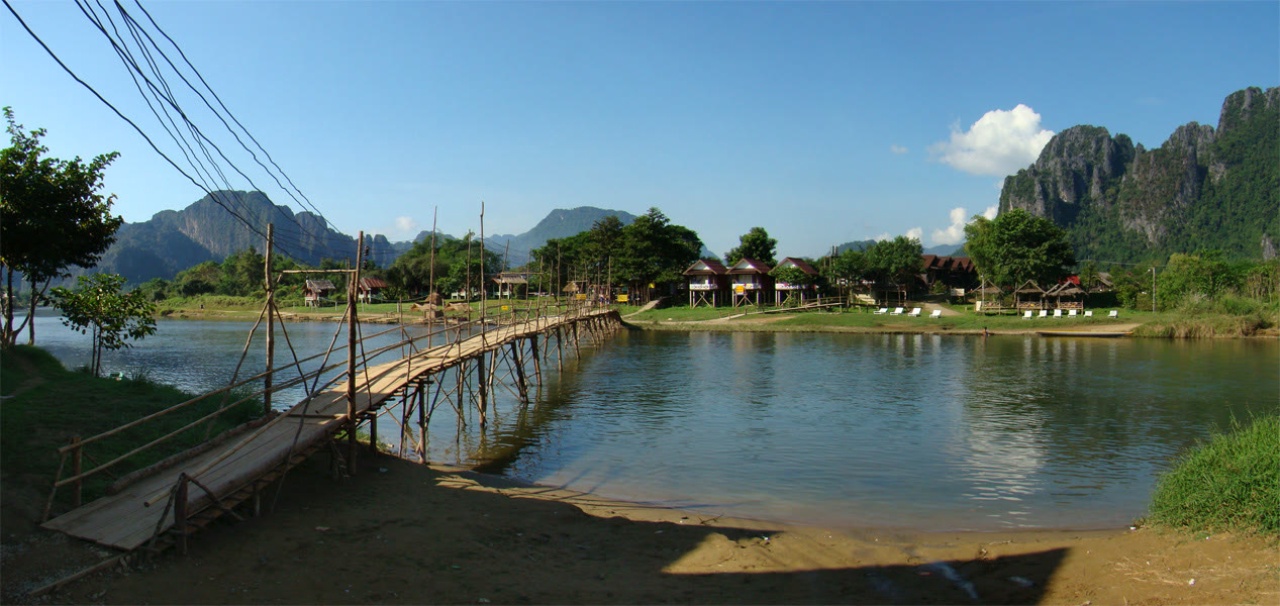
Cross the old wooden toll bridge (or the newer concrete bridge further south) and you enter a more rural landscape of rice paddies, scattered bungalow resorts, and the roads leading to the famous lagoons and caves. A few eco-lodges and mid-range resorts have opened on this side, offering peace and direct access to outdoor activities. You will need a bicycle or motorbike to get to town easily.
South of Town
The area around the new train station and along the road toward Vientiane has seen newer hotel development, including some higher-end options. It is quieter but removed from the riverside vibe.
For first-timers, staying in the town center or along the riverside west bank gives the best balance of convenience and atmosphere. If you prioritize tranquility and have your own wheels, the east side is lovely.
Things to Do
Offers are only loaded from GetYourGuide after you click. GetYourGuide can then process your IP address and set cookies. Privacy Policy
GetYourGuide partner offers. GoAsia may earn a commission if you book through these offers. Check whether tickets or transfers are included, and follow the attraction's official booking and admission rules.
Best Time to Visit
Vang Vieng has a tropical monsoon climate with three broad seasons. Each offers a different experience, and honestly, none is terrible.
Season
Months
Weather
Crowds
Notes
Cool and dry
Nov - Feb
Daytime around 25-28C, cool evenings (can drop to 15C). Clear skies.
High season, busiest
Best overall conditions for activities and views. Book accommodation ahead in December and January.
Hot and dry
Mar - May
Temperatures hit 35-40C. Hazy from agricultural burning in March and April.
Moderate
Burning season creates thick haze that ruins karst views. April is the hottest month. Lao New Year (Pi Mai) in mid-April is festive but chaotic.
Rainy
Jun - Oct
Daily afternoon downpours, high humidity, lush green landscapes.
Low season
River runs fast and brown, making tubing riskier. Caves may flood. But rice paddies are brilliant green and prices drop. September and October see the heaviest rain.
The sweet spot is November through early February. If you want the iconic green rice paddy photos without the rain, come in late October or November when fields are at peak lushness and the rains taper off. Avoid March and April unless you do not mind haze obscuring the karsts.
Vang Vieng has no airport. The two main gateways are Vientiane (roughly 150 km south) and Luang Prabang (roughly 230 km north).
By train: The Laos-China Railway transformed access to Vang Vieng. The train from Vientiane and the train from Luang Prabang are both short rides compared with the road. Passenger services on the Lao section average 10 train pairs a day (April 2026), and tickets can be booked in the LCR Ticket app. Trains can sell out in busy periods, so book ahead. The Vang Vieng train station is outside the town center, and tuk-tuks usually wait outside to take passengers into town, so agree on the price before you get in. You can find updated schedules and booking tips on GoAsia.cc.
By minivan or bus: Booking platforms list vans from Vientiane at about $9 to $10 for a trip of 1 hour 30 minutes to 4 hours, and vans from Luang Prabang at about $18 to $19 for 6 to 7 hours (October 2026). The road from Luang Prabang winds through the mountains. Motion sickness is common on this route, so sit in front and take medication if you are prone.
Getting Around Town
The town center is entirely walkable. For exploring the surrounding countryside, rent a bicycle (around $1 to $2 per day) or a semi-automatic motorbike (around $8 to $12 per day). Electric scooters are increasingly available for around $10 per day. Most roads to popular sites east of the river are paved or well-graded dirt, though some become muddy in the rainy season.
Tuk-tuks can be hired for specific trips (to the train station, lagoons, or caves) and typically charge $2 to $5 depending on distance and negotiation. There is no Grab or ride-hailing service in Vang Vieng. Shared songthaews (covered pickup trucks) run to some nearby villages but are not a practical way to sightsee.
Top Sights and Experiences
Must-Do Experiences
Tubing on the Nam Song River: Still the town's signature activity. You rent a tube from the main operator near the old market for around $5 to $7 (plus a refundable deposit). A tuk-tuk drops you upstream and you float back to town over two to three hours. A few riverside bars remain where you can stop for a Beer Lao. The current is gentle in dry season but picks up significantly during and after the rains. Always wear the provided life jacket. Best enjoyed from November to May when the water is calmer and clearer.
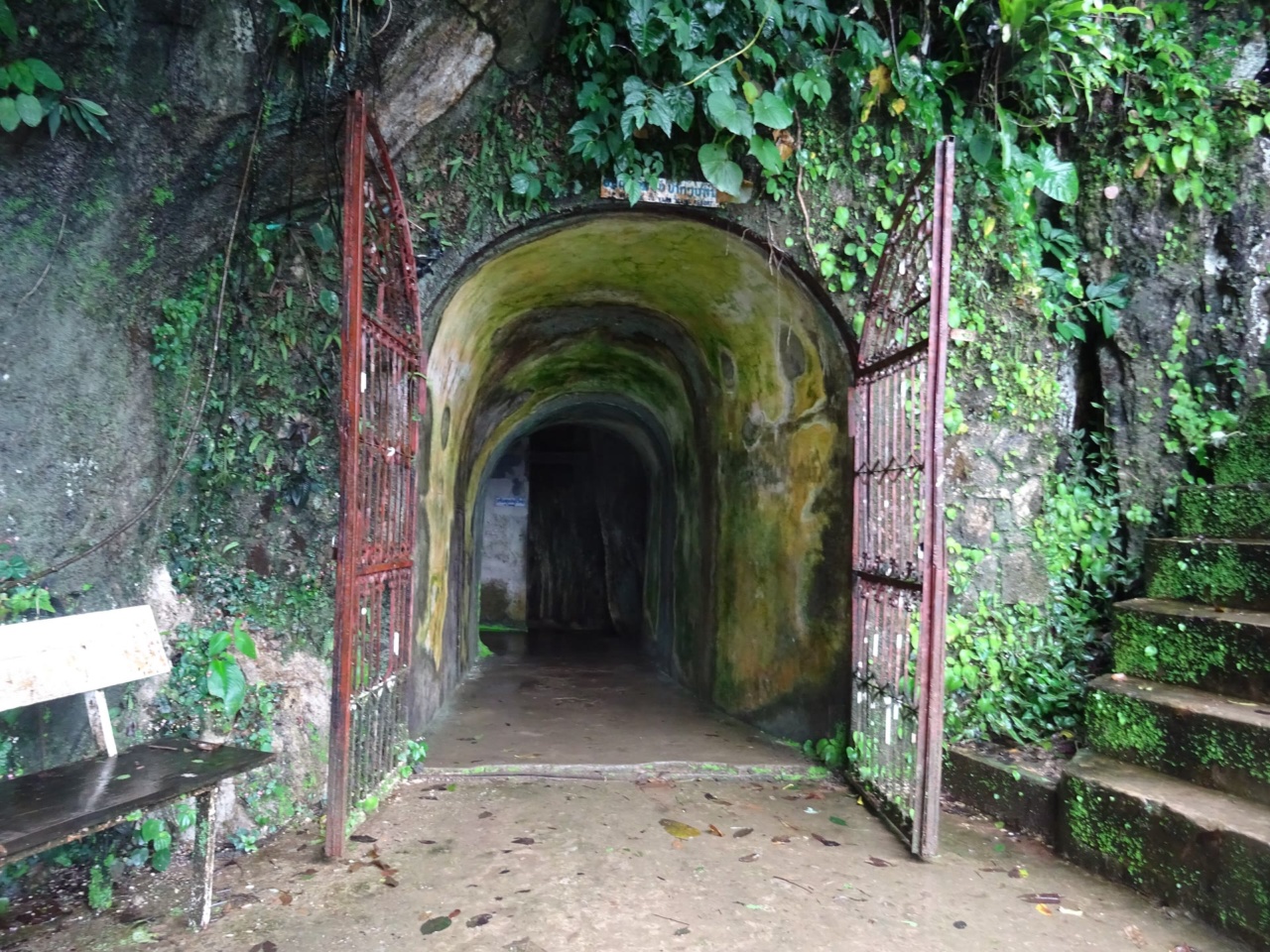
Tham Chang Cave: The most accessible cave, located just across the river south of town. A short climb up concrete steps leads to a large cavern with decent lighting and a viewpoint over the valley. Entry is around $2. It is touristy but the view alone justifies the visit. Allow 30 to 45 minutes.
Blue Lagoon 1 (Tham Phu Kham): About 7 km from town on a bumpy road, this is the most famous lagoon. The turquoise pool sits at the base of a cliff beneath Tham Phu Kham cave, which you can explore with a headlamp (bring your own or rent one at the entrance). The lagoon is genuinely beautiful but gets crowded by midday. Arrive before 9 AM for the best experience. Entry is around $1 to $2. The cave itself is steep and slippery; wear proper shoes, not flip-flops.
Pha Ngern Viewpoint: A steep 20 to 40 minute hike up a marked trail south of town rewards you with one of the best panoramic views in Laos: the Nam Song winding through karsts with the town below. There are actually three viewpoints at different heights. Viewpoint 1 is the easiest and most popular. Viewpoint 3 requires scrambling and is not for those afraid of heights. Entry is around $1. Go early morning or late afternoon for the best light and cooler temperatures.
Kayaking: Half-day guided kayaking trips on the Nam Song cost around $10 to $20 and offer a quieter, more immersive way to experience the river than tubing. You paddle past karst walls, through gentle rapids, and can stop at caves along the way. Most tours include a guide and basic lunch.
Lesser-Known Gems
Blue Lagoon 3: Further out than the famous Blue Lagoon 1 and far less visited. The water is often clearer and the setting more peaceful. Reachable by motorbike on a scenic dirt road through rice paddies. Entry around $1. Combine it with Blue Lagoon 4 (also called Poukham Lagoon) for a half-day motorbike loop.
Tham Nam (Water Cave): During dry season, you can pull yourself through this cave on a rope while floating in a tube through pitch-black water inside the karst. It is a unique and slightly eerie experience that takes about 20 minutes. Located near the Tham Chang area. Around $2 to $3 entry. A headlamp is essential. The cave closes when water levels are too high in rainy season.
Rock Climbing: Vang Vieng has over 200 bolted routes on limestone karsts ranging from beginner (5a) to expert (8b+). Several outfits in town offer half-day introductory climbing sessions for around $25 to $40, including gear and instruction. Experienced climbers can rent gear and go independently. The climbing here is genuinely world-class and dramatically underappreciated compared to Railay or Yangshuo.
Hot Air Balloon Rides: A tethered hot air balloon operates near the river and offers short rides (around 10 minutes) for approximately $10 to $15. It is not a full flight, but the aerial perspective of the karsts is spectacular, especially at sunset.
Overrated Attractions
Blue Lagoon 1 after 10 AM: The lagoon itself is beautiful, but by mid-morning it is packed with tour groups, the water gets churned up, and the atmosphere shifts from serene to chaotic. If you cannot arrive early, skip it for Blue Lagoon 3 instead.
The "Friends" and "Family Guy" bars: Vang Vieng still has restaurants that play reruns of Western TV shows on loop, a holdover from the party era. The food is mediocre Western fare at inflated prices. You are in Laos; eat Lao food instead.
Zip-lining tours: Several operators offer zip-line packages through the forest. They are fine but overpriced for what you get (around $30 to $50), and the equipment quality varies. If you have zip-lined elsewhere in Southeast Asia, this will not impress you. Spend that money on climbing or kayaking instead.
Food and Drink
Vang Vieng is not a food destination, but you can eat well if you know where to look. The town caters heavily to tourists, so you will find pizza, burgers, and Korean BBQ alongside Lao food. Seek out the Lao options.
Signature Dishes
Dish
Description
Where to Try
Typical Price
Laap
Minced meat (usually pork, chicken, or duck) with herbs, lime, fish sauce, and toasted rice powder. The national dish.
Local restaurants on side streets away from the main road
Around $2 to $3
Tam mak hoong
Spicy green papaya salad pounded in a mortar. Lao versions use padaek (fermented fish paste) and are funkier than Thai som tam.
Market stalls, local eateries
Around $1 to $2
Khao piak sen
Comforting rice noodle soup, similar to Vietnamese pho but with thicker, chewier noodles. Perfect breakfast.
Morning noodle shops near the market
Around $1 to $2
Ping kai
Grilled chicken marinated in lemongrass and garlic, served with sticky rice and a spicy dipping sauce.
Roadside grills, especially in the evening
Around $2 to $3
Khao niew (sticky rice)
The staple carb of Laos, served in small bamboo baskets. Eaten with your hands, used to scoop up everything.
Everywhere
Around $0.30 to $0.50
Beer Lao
The ubiquitous national lager. Crisp, light, and perfect after a day of activities. Also try the dark version.
Literally everywhere
Around $1 to $2 for a large bottle
Where to Eat
The morning market near the old bus station area is the best spot for cheap, authentic Lao breakfast. Look for noodle soup stalls, baguette sandwiches (a French colonial legacy, similar to Vietnamese banh mi), and fresh fruit shakes.
Riverside restaurants along the west bank offer the best atmosphere. Food quality varies, but several serve decent Lao dishes alongside the tourist menu. Ask for what locals are eating.
The night food stalls that set up along the main road in the evening offer grilled meats, papaya salad, and fried rice at rock-bottom prices. A full meal with a beer here costs around $3 to $4.
Korean restaurants have proliferated due to the large number of Korean tourists. If you want a break from Lao food, Korean BBQ is surprisingly authentic and reasonably priced at around $5 to $8 per person.
Price ranges: A budget meal at a local stall runs $1 to $3. A mid-range restaurant meal with drinks is $5 to $10. The few upscale options (mostly hotel restaurants) charge $15 to $25 per person.
Where to Stay
Budget (Under $15 per night)
Vang Vieng has a huge supply of hostels and basic guesthouses. Dorm beds in hostels run $4 to $8 per night and often include decent common areas and social vibes. Private rooms in basic guesthouses start at $8 to $15 with fan, hot water, and WiFi. Quality varies wildly, so check recent reviews. The town center has the highest concentration of budget options.
Mid-Range ($15 to $50 per night)
This is the sweet spot in Vang Vieng. For $20 to $40 you get a clean private room with air conditioning, a proper bathroom, and often a balcony. Riverside mid-range guesthouses offer stunning karst views for $30 to $50. Some properties east of the river in the bungalow-resort style offer great value with pool access and garden settings.
Upscale ($50 to $150+ per night)
A few boutique resorts and higher-end hotels have opened in recent years, particularly south of town near the train station and along the river. Expect pools, on-site restaurants, and polished service. Riverside villas with private balconies overlooking the karsts represent the top tier and run $80 to $150 per night. By Southeast Asian luxury standards, this is still very affordable.
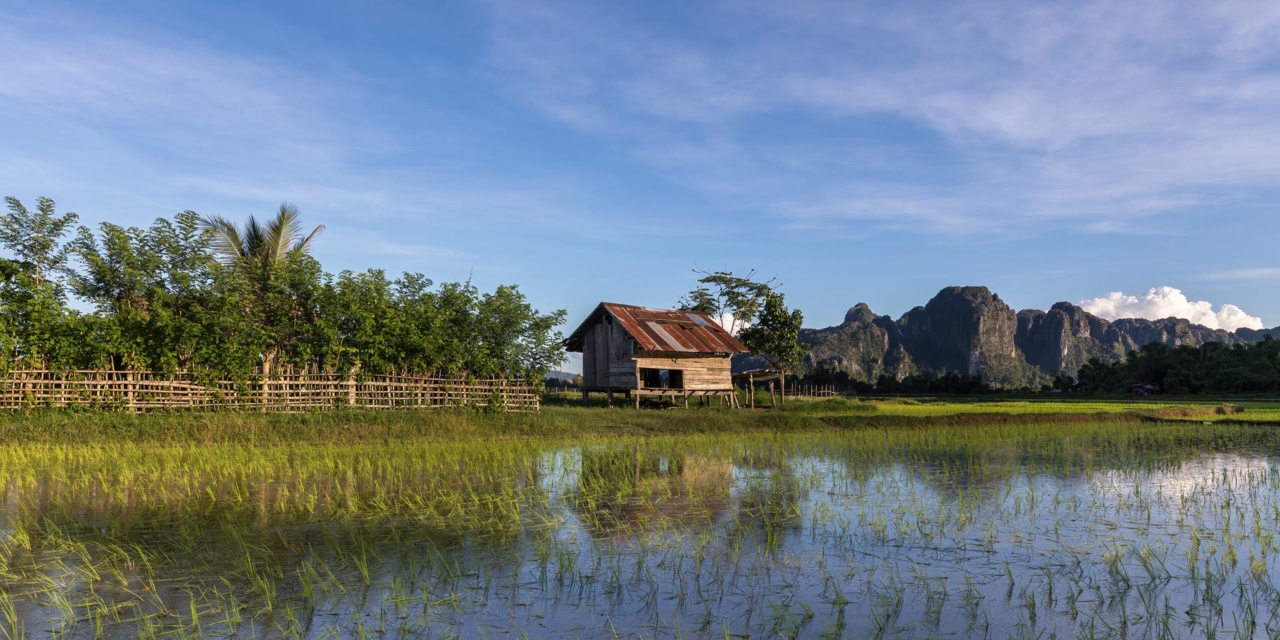
A unique option: some guesthouses east of the river offer simple bamboo bungalows set in rice paddies for $10 to $20. They are basic but the setting is magical, especially at sunrise when mist clings to the karsts.
Practical Tips
Safety: The biggest risks in Vang Vieng are self-inflicted. Drowning while tubing, motorbike accidents, and injuries in unlit caves are the main concerns. Always wear a life jacket when on the water. If you rent a motorbike, check the brakes and wear a helmet. Bring a proper headlamp (not just your phone) into caves. Petty theft is uncommon but do not leave valuables unattended on the riverbank while tubing.
Currency: Lao kip is the official currency, but Thai baht and US dollars are widely accepted in tourist areas. ATMs are available on the main road and dispense kip. Credit cards are accepted at some mid-range and upscale hotels but rarely at restaurants or shops. Carry cash for daily expenses.
Tipping: Not expected in Laos, but rounding up a bill or leaving a small tip for good service (10,000 to 20,000 kip, roughly $0.50 to $1) is appreciated.
SIM cards: Buy a tourist SIM at a phone shop on the main road for around $2 to $3 with a few gigabytes of data. Unitel and Lao Telecom have the best coverage. WiFi is available at most guesthouses and cafes but can be slow.
Language: Basic English is spoken in tourist-facing businesses. Outside the center, expect a language barrier. Google Translate with the Lao language pack downloaded offline is helpful. Lao script is not intuitive, so having a map with both English and Lao names is useful for showing tuk-tuk drivers.
Cultural notes: Laos is a Buddhist country. Dress modestly when visiting temples (cover shoulders and knees). Public displays of affection are frowned upon. Do not touch anyone's head. Remove shoes before entering homes and temples. The Lao people are exceptionally gentle and polite; returning that energy goes far.
Electricity: Laos uses a mix of plug types (A, B, C, E, and F). Bring a universal adapter. Power outages happen occasionally, especially in rainy season.
Scams: Vang Vieng is relatively scam-free compared to other Southeast Asian tourist towns. The most common issue is motorbike rental shops charging for pre-existing damage. Photograph the bike thoroughly before riding off. Some tour operators oversell their trips; book through your guesthouse or a recommended agency rather than the cheapest option on the street.
Day Trips
Vientiane (150 km south)
The Lao capital is an easy day trip by train. See Pha That Luang (the national symbol), Patuxai (the Lao Arc de Triomphe), and wander the Mekong riverfront at sunset. Vientiane is the most laid-back capital in Southeast Asia, which is either charming or underwhelming depending on your expectations. Worth it if you are not planning to spend separate time there.
Tham Phu Kham and the Outer Lagoons Loop
Rent a motorbike and spend a full day exploring the lagoons and caves east and north of town. Blue Lagoons 1, 2, 3, and 4 are all reachable, along with several caves and viewpoints. Pack lunch, bring water, and fill up on fuel before leaving town. The scenery on the ride itself, winding through rice paddies with karsts towering overhead, is half the reward.
Tham Jang and the Southern Karsts
Head south of town by bicycle or motorbike to explore less-visited caves and swimming holes. The landscape becomes more rural and you will pass through small villages where tourism has barely penetrated. No specific infrastructure, so bring supplies and be respectful of local communities.
Nam Ngum Reservoir (about 80 km south)
A large man-made lake surrounded by forested hills. You can take boat trips to islands, eat fresh fish at floating restaurants, and enjoy a completely different landscape from the karsts. It is a half-day trip by motorbike or hired car. Interesting but not essential unless you have extra time.
Pha Poak Viewpoint
About 12 km north of town, this relatively new viewpoint involves a steep hike through forest to a platform overlooking a vast karst valley. It is more challenging than Pha Ngern and far less crowded. Allow two to three hours round trip. Best in the morning when clouds fill the valleys below.
Sample 3-Day Itinerary
Day 1: River and Town
Morning: Arrive by train or bus. Check into your guesthouse and rent a bicycle. Ride to the morning market for khao piak sen (noodle soup) and a fruit shake. Cross the toll bridge to the east side and cycle through the rice paddies to get your bearings.
Afternoon: Go tubing on the Nam Song. Pick up your tube around 1 PM, get dropped upstream, and float back to town by 3:30 or 4 PM, stopping at a riverside bar for a Beer Lao along the way.
Evening: Shower off the river, then walk to the night food stalls for grilled chicken, papaya salad, and sticky rice. Watch the sunset over the karsts from a riverside restaurant.
Day 2: Caves, Lagoons, and Viewpoints
Morning: Rent a motorbike and head to Blue Lagoon 1 (Tham Phu Kham) by 8:30 AM before the crowds. Swim in the lagoon and explore the cave above it. Then ride onward to Blue Lagoon 3 for a quieter swim.
Afternoon: Return toward town and hike up Pha Ngern Viewpoint. Aim for Viewpoint 2 at minimum. Bring water and sunscreen. The hike takes 20 to 40 minutes up.
Evening: Treat yourself to a riverside dinner. Try laap and a Beer Lao Dark at one of the west bank restaurants. If you have energy, some bars in town have low-key live music or pool tables.
Day 3: Adventure and Departure
Morning: Choose your adventure: a half-day rock climbing session with a local operator, kayaking the Nam Song, or exploring Tham Nam (water cave) by tube. All can be booked the evening before through your guesthouse.
Afternoon: Return to town for a late lunch. If you are heading to Luang Prabang, catch an afternoon train. If heading to Vientiane, the short train ride gives you more flexibility. Pack a baguette sandwich from the market for the journey.
Budget Overview
Category
Budget
Mid-Range
Comfort
Accommodation
$5 - $10 (dorm or basic room)
$20 - $40 (private AC room, riverside)
$60 - $120 (boutique resort, pool)
Food
$5 - $8 (market stalls, local restaurants)
$10 - $18 (mix of local and tourist restaurants)
$20 - $35 (hotel restaurants, multiple courses)
Transport
$1 - $2 (bicycle rental)
$8 - $12 (motorbike rental)
$15 - $25 (private tuk-tuk, motorbike)
Activities
$5 - $10 (tubing, cave entries)
$15 - $25 (kayaking, multiple sites)
$30 - $50 (climbing, balloon, guided tours)
Daily Total
$16 - $30
$53 - $95
$125 - $230
Vang Vieng remains one of the best value adventure destinations in Southeast Asia. Even at the comfort level, you are spending a fraction of what similar experiences would cost in Thailand or Vietnam. The town punches well above its weight for outdoor activities, and the karst scenery is genuinely among the most dramatic in the region. Come for the tubing if you want, but stay for everything else.
Frequently Asked Questions
Is Vang Vieng worth visiting?
Absolutely. The karst scenery alone justifies a stop, and the range of outdoor activities (tubing, caving, climbing, kayaking, hiking) makes it one of the most action-packed small towns in Southeast Asia. It is no longer just a party destination and appeals to a much wider range of travelers now.
How many days do you need in Vang Vieng?
Two full days let you go tubing, visit a couple of caves and lagoons, and enjoy the viewpoints. Three days is ideal if you want to add kayaking, rock climbing, or a motorbike loop. Some travelers stay a week for the climbing alone.
Is Vang Vieng safe for tourists?
The town is quite safe and petty crime against tourists is uncommon. The main risks are adventure-related: drowning while tubing (especially in rainy season when the river runs fast), injuries in poorly lit caves, and motorbike accidents on unpaved roads. Use common sense, wear a life jacket when tubing, and bring a headlamp into caves.
What is the best time to visit Vang Vieng?
November through February offers dry weather, comfortable temperatures, and clear skies for the best karst views. October through early November can be stunning with lush green rice paddies, though some trails may be muddy. Avoid April and May if you dislike extreme heat.
Is tubing in Vang Vieng still a thing?
Yes, tubing is still the town's signature activity, but it is far tamer than its peak years. A few riverside bars remain and serve drinks, but the dangerous slides and swings are mostly gone. The float takes roughly two to three hours and is enjoyable even without heavy drinking.
Is Vang Vieng expensive?
It is one of the more affordable destinations in an already cheap country. Budget travelers can get by on around $25 to $35 per day including a dorm bed, local food, and one activity. Mid-range travelers spending $50 to $80 daily will be very comfortable.
Can you drink the tap water in Vang Vieng?
No, tap water is not safe to drink anywhere in Laos. Buy bottled water or bring a filter bottle. Most guesthouses provide complimentary bottled water, and refill stations are increasingly common in town.
How do I get from Vientiane to Vang Vieng?
The Laos-China Railway connects Vientiane with Vang Vieng station and is the fastest and most comfortable option. Booking platforms list vans at about $9 to $10 for a trip of 1 hour 30 minutes to 4 hours (October 2026). You can check transport options and schedules on GoAsia.cc.
Is English widely spoken in Vang Vieng?
English is spoken at a basic level in most guesthouses, tour agencies, and restaurants catering to tourists. Outside the tourist center, very little English is understood. Learning a few Lao phrases (sabaidee for hello, khop jai for thank you) goes a long way and is warmly received.
What food is Vang Vieng famous for?
Vang Vieng is not a culinary destination per se, but you will find excellent Lao staples like laap (minced meat salad), sticky rice, tam mak hoong (spicy papaya salad), and grilled fish from the river. The town also has a surprising number of Korean and Chinese restaurants catering to tour groups.
Sources and background
These sources support the topics listed below, not every statement or current price in this article.