Plan your bus travel in Laos with this practical guide covering routes, comfort classes, booking tips, and what to expect on mountain roads across the country.
The rumble of a bus engine echoing through limestone valleys, the scent of sticky rice drifting from a fellow passenger's woven basket, a sudden stop for water buffalo crossing a mountain road: this is bus travel in Laos. In a country where rivers were historically the main highways and railways remain limited, buses form the backbone of overland transportation. For travelers willing to embrace a slower pace and occasional unpredictability, the bus network offers an unfiltered window into one of Southeast Asia's most captivating landscapes.
Laos is a landlocked, mountainous nation where roads twist through dramatic terrain. Distances that look short on a map can translate into surprisingly long journeys, and that is precisely what makes bus travel here so memorable.
The Bus Network in Laos
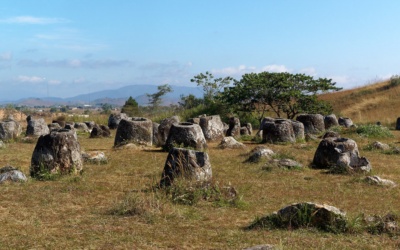
The primary bus corridor runs north-south, connecting Luang Prabang in the north to Vientiane in the center and onward to Pakse in the south. This is the most well-served axis, with multiple daily departures. Branch routes radiate outward to towns like Vang Vieng, Phonsavan (the Plain of Jars), Sam Neua in the remote northeast, and Luang Namtha in the northwest near the Chinese border.
Several bus stations serve different regions in each major city. Vientiane, for example, has separate terminals for different directions, so confirming which station your bus departs from is essential. Its Southern Long-Distance Bus Station normally runs more than 60 bus trips a day to the southern provinces, with the first buses leaving at 04:00 and the last departures around 21:00 to 22:00.[1] In Luang Prabang, buses to Nong Khiaw leave from the Northern Bus Station at 09:00, 11:00 and 14:00.[2] In smaller towns, the "bus station" might simply be a dusty lot near the morning market.
The main operators are a mix of state-run and private companies, and no single brand controls the network. For popular tourist corridors there are more frequent services and more comfortable options, while remote routes in provinces such as Phongsali or Attapeu may only have one departure per day, often leaving at the crack of dawn.
Classes and Comfort Levels
Bus travel in Laos generally falls into a few tiers, though the labels can be inconsistent.
Local Buses (Ordinary or Public Buses)
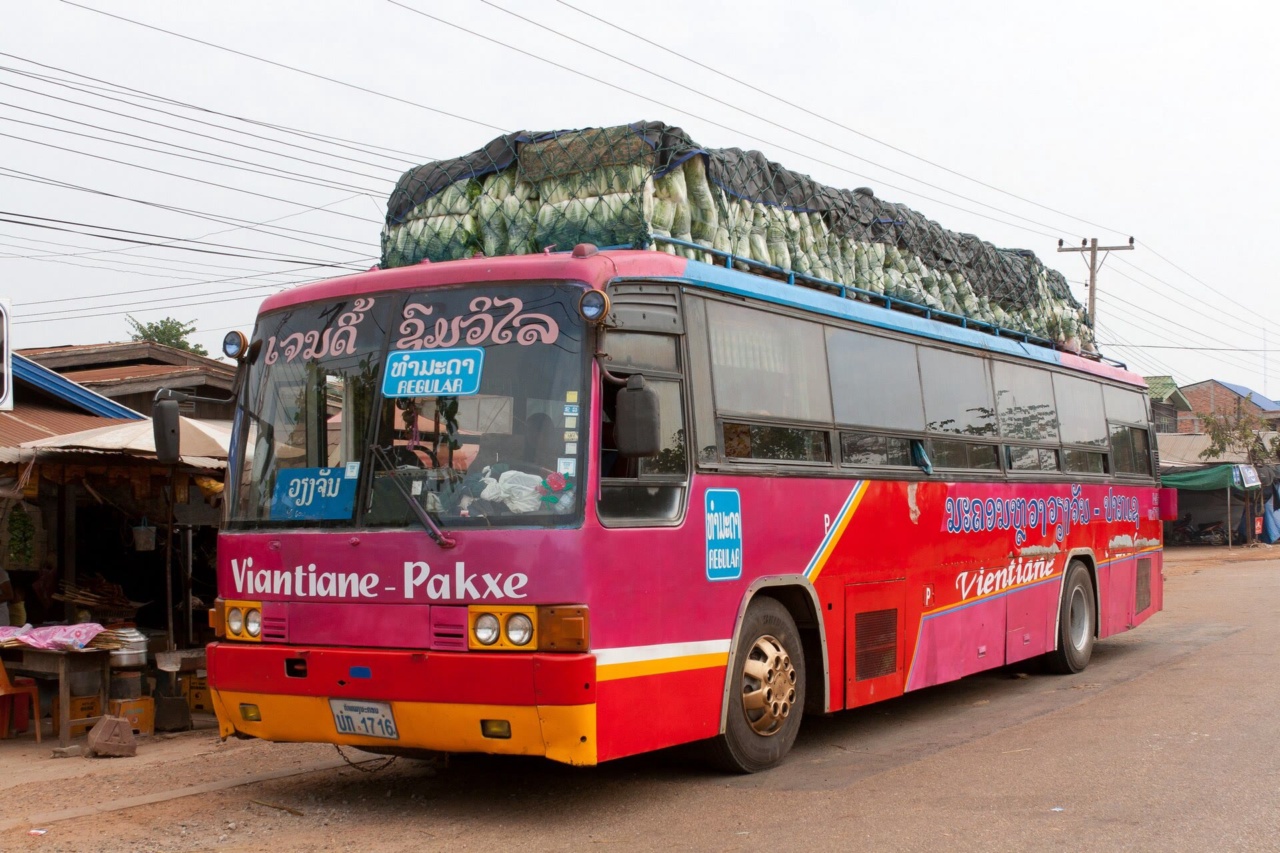
These are the most basic and affordable option. Expect older vehicles, thinly padded seats, open windows instead of air conditioning, and frequent stops to pick up passengers and cargo along the route. These buses are slow but connect even the smallest villages.
The term "VIP" in Laos should be taken with a grain of salt. These are typically newer coaches with reclining seats, air conditioning, and a designated luggage compartment. They run on major routes and make fewer stops. The air conditioning can be aggressively cold, so bringing a jacket or scarf is wise. At Vientiane's southern terminal, fares in April 2025 were 200,000 LAK (regular), 230,000 LAK (VIP2) and 250,000 LAK (VIP1) to Savannakhet, and 270,000 LAK, 300,000 LAK and 320,000 LAK to Pakse, unchanged since October 2023.[1] Check the current fare at the ticket counter.
Sleeper Buses
On long overnight routes such as Vientiane to Pakse, sleeper buses are available. On booking platforms, the Vientiane to Pakse sleeper bus leaves in the evening, takes from about 11 hours and costs about $22 to $30 (October 2026).[3] The beds are narrow and the ride can be bumpy on mountain roads, so light sleepers may want to bring earplugs.
Minivans and Songthaews
Minivans have become increasingly popular on shorter routes, offering faster travel times than full-sized buses. Vans are covered in our separate van guide for Laos. Songthaews, converted pickup trucks with bench seating in the back, cover rural routes where full buses do not venture. They depart when full, which can mean a long wait or a very crowded ride.
Booking and Tickets
For local and ordinary buses, tickets are almost always purchased at the bus station on the day of travel. Buses may leave earlier than scheduled if they are full, and during holiday rushes the Vientiane southern terminal advises arriving at least 2 hours before departure.[1] Outside holidays, arriving well ahead of departure is still wise, and for VIP and sleeper buses on major routes booking a day in advance is a good idea.
Guesthouses and travel agencies in tourist towns can arrange tickets and often include a transfer to the station for a small markup. This convenience is worth it if you are unfamiliar with the local terminal layout. Travelers looking to compare routes and options across Laos can also check GoAsia.cc to see available connections before heading to the station.
Lao kip is the standard currency at bus stations, so carry cash. Ask whether cards are accepted before you rely on them.
What to Expect on Board
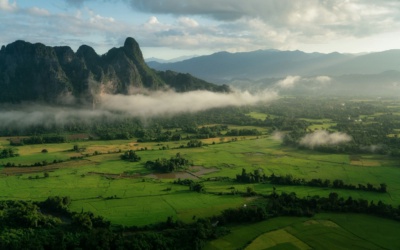
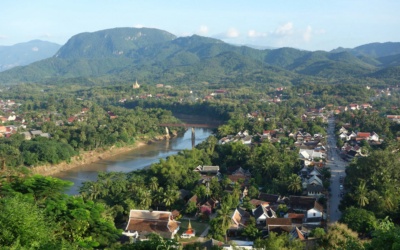
The journey is the destination in Laos. Routes through the northern mountains deliver some of Southeast Asia's most spectacular scenery: rice terraces clinging to steep hillsides, mist-shrouded peaks, rivers carving through deep gorges, and tiny villages where time seems suspended.
Journey times are often longer than expected. Between Vientiane and Luang Prabang, vans on booking platforms take from about 7 to 8 hours (October 2026).[4] Mountain roads in Laos are often in poor condition, and travel after dark significantly increases the risk of an accident.[5]
Food stops are built into longer routes. The bus will pull over at roadside restaurants where passengers pile out for bowls of noodle soup (feu) or plates of fried rice. These stops are brief, so eat quickly. Bringing your own snacks and water is always advisable. Vendors may also board the bus at stops, selling grilled meats on sticks, fresh fruit, and bags of sticky rice.
Luggage is stored underneath on VIP buses or strapped to the roof on local buses. Keep valuables in a daypack on your lap. Most buses have no Wi-Fi or charging, so a portable power bank and downloaded entertainment are useful for longer rides.
Lao passengers tend to be quiet and friendly. Smiling and a basic sabaidee (hello) go a long way. Motion sickness is common on mountain routes, so keep a bag handy.
Tips for Bus Travel in Laos
Dress in layers. VIP buses blast the air conditioning, while local buses with open windows can be dusty and warm. A light jacket, scarf, or sarong serves multiple purposes.
Bring motion sickness remedies. The winding mountain roads of northern Laos are beautiful but relentless. Ginger candies or medication can make a significant difference.
Carry cash in small denominations. Bus stations, roadside food stalls, and tuk-tuk drivers rarely have change for large bills.
Confirm your departure point. Cities like Vientiane have multiple bus terminals. Double-check which station your bus leaves from and allow time to get there.
Expect more delays in the rainy season. The rainy season normally runs from May to October, and flooding and landslides can disrupt road transport.[5]
Be patient and flexible. Buses in Laos do not always run on precise schedules. Departures may be delayed, routes may change, and breakdowns happen.
Learn a few Lao phrases. English is limited outside tourist centers. Knowing how to say your destination and "thank you" (khop jai) helps when buying tickets or communicating with drivers.
Watch your belongings. Petty crime can occur in tourist areas, so keep your daypack with you when the bus stops.[5]
Consider the new railway as a complement. The Laos-China Railway now connects Vientiane and Luang Prabang far faster than the road, with an average of 10 train pairs a day across the Lao section as of April 2026,[6] but buses still reach dozens of destinations the train cannot. Combining both modes gives you the widest access to the country.
Sources and background
Numbers in the text such as [1] refer to these sources.