Plain of Jars: Laos' Mysterious Megalithic Archaeological Site
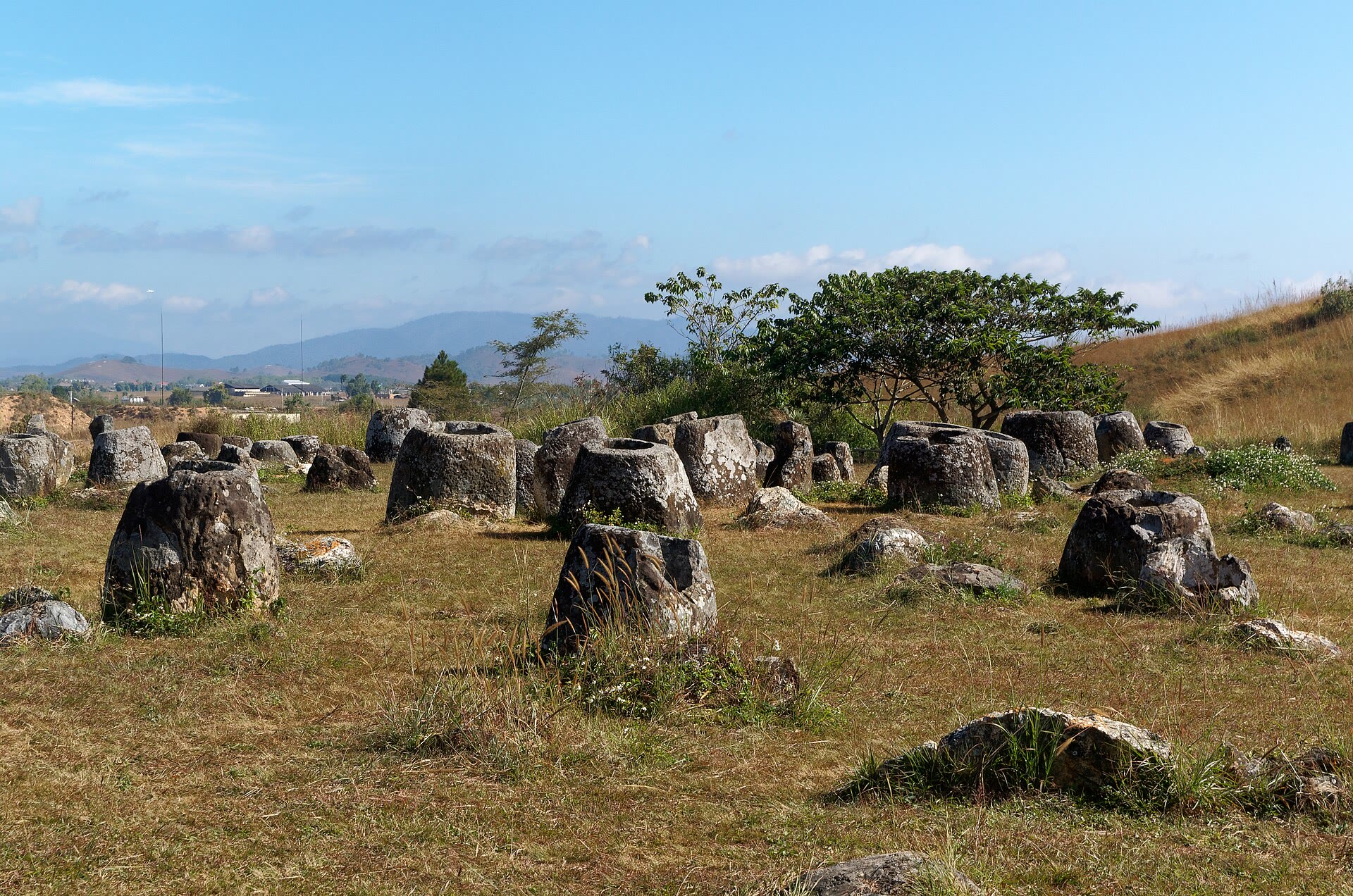
Scattered across the rolling highland plateau of Xieng Khouang province in central Laos, thousands of massive stone jars sit in clusters on grassy hillsides, some standing upright, others toppled on their sides, ranging from knee-height to nearly three meters tall and weighing up to 14 tons. Nobody knows exactly why they are there. Carved from sandstone, granite, and limestone between 500 BCE and 500 CE, these megalithic vessels are believed to be connected to ancient burial practices, but their precise purpose remains one of the great unsolved archaeological puzzles of Southeast Asia.
UNESCO inscribed the Plain of Jars as a World Heritage Site, recognizing 15 component sites across the plateau. For visitors, the experience goes beyond archaeology. The landscape itself is hauntingly beautiful, a vast, windswept plateau dotted with these enigmatic objects, and the region carries a sobering modern history as one of the most heavily bombed areas on Earth during the Secret War. Bomb craters sit alongside ancient jars, and the presence of unexploded ordnance (UXO) means that visitors must stay strictly within cleared and marked paths.
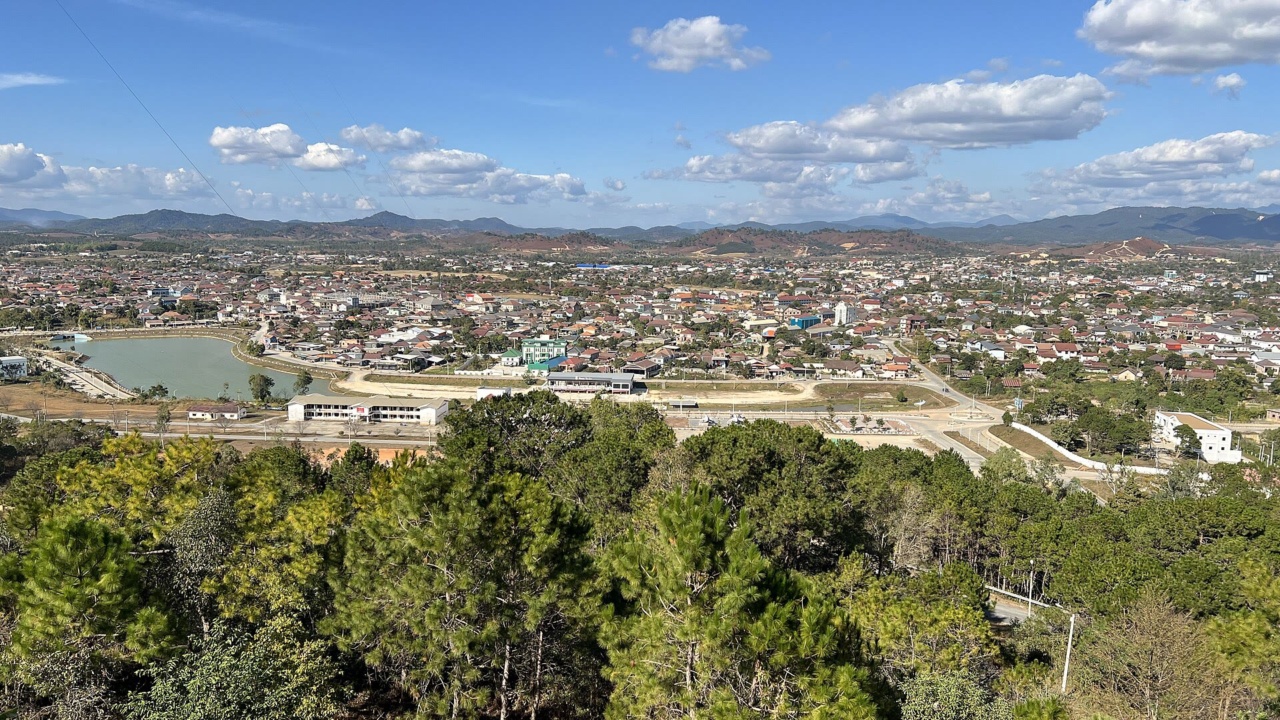
The gateway town of Phonsavan is the base for exploring the jar sites. It is not the easiest place to reach in Laos, requiring either a flight from Vientiane or a long bus journey, but the remoteness is part of what makes the Plain of Jars so compelling. This is one of the few major archaeological sites in Southeast Asia where you may find yourself virtually alone with the monuments.
The Jar Sites
Over 90 jar sites have been identified across Xieng Khouang province, containing more than 2,100 individual jars. Of these, seven sites are currently open to visitors, with Sites 1, 2, and 3 being the most accessible and popular.
Site 1 (Thong Hai Hin)
The largest and most visited site, located just 8 kilometers southwest of Phonsavan. Site 1 contains 334 jars spread across a gently sloping hillside, including the largest known jar, a massive vessel over 2.5 meters tall and weighing an estimated 14 tons. According to local legend, this giant jar was the victory cup of the mythical King Khoun Cheuang.
The site is well-maintained with walking paths, informative signboards, and a visitor centre at the entrance that provides valuable context on the archaeology and history. A cave on the hillside, its ceiling blackened by what may be ancient fire, was possibly used as a kiln or cremation chamber. Bomb craters and damaged jars throughout the site are stark reminders of the area's wartime bombardment. Allow 1-2 hours to explore thoroughly. Entry costs 15,000 LAK.
Site 2 (Hai Hin Phu Salato)
Located about 25 kilometers south of Phonsavan, Site 2 sits on two adjacent hilltops surrounded by rice paddies. With around 90 jars, it is smaller and much quieter than Site 1. The setting is arguably more photogenic, with the jars silhouetted against open skies and distant mountains. A small footpath leads between the two hills, passing through farmland. Site 2 receives far fewer visitors and often feels like a private encounter with these ancient objects. Entry is 15,000 LAK.
Site 3 (Hai Hin Lat Khai)
About 35 kilometers south of Phonsavan, Site 3 holds around 150 jars on a scenic hillside overlooking a valley. The site also features a number of stone discs, believed to be lids for the jars, and some jars with visible carved decorations, including a rare human figure. The walk up to the main cluster is short but offers excellent views. Like Site 2, it sees few visitors and has a peaceful, contemplative atmosphere. Entry is 15,000 LAK.
Other Open Sites
Sites 16, 23, 25, and 72 are also open to visitors but are further from Phonsavan and less frequently visited. They require arranging transport (typically a motorbike or car hire) and are best suited for travelers with more time who want to explore beyond the main three sites. These remote sites offer the most solitary experience and some contain unique jar formations not seen elsewhere.
Things to Do
The Mystery of the Jars
French researcher Madeleine Colani conducted the first systematic study of the jars in the 1930s, concluding they were connected to funerary practices. Subsequent excavations by Lao and international archaeologists have supported this interpretation, uncovering human remains, burial goods, glass beads, iron tools, and ceramics in the soil around the jars.
The current understanding is that the jars were likely used as part of a multi-stage burial process. Bodies may have been placed inside the jars for a period of decomposition or exposure, after which the bones were removed and buried in the surrounding ground. The stone discs found at several sites may have served as lids. However, many questions remain unanswered: who carved the jars, how were the largest ones transported to their current positions, and why were these specific hilltop locations chosen?
Some jars show evidence of having been quarried from sites several kilometers away, raising questions about the engineering capabilities of the Iron Age people who created them. The sheer number and distribution of jar sites across the plateau suggest a large, organized society with shared cultural practices over many centuries.
The Secret War and UXO
The Plain of Jars carries a deeply sobering modern history. During the Secret War (the covert US bombing campaign during the Vietnam War era), Xieng Khouang province was one of the most heavily bombed regions on Earth. Over 270 million cluster bombs were dropped on Laos, and approximately 80 million failed to detonate, leaving a lethal legacy of unexploded ordnance scattered across the landscape.
The effects are visible everywhere: bomb craters pock the hillsides between ancient jars, some jars have been shattered or displaced by explosions, and the occasional rusted bomb casing sits beside a path. At Site 1, trenches, foxholes, and anti-aircraft positions from the war are clearly visible alongside the prehistoric monuments.
UXO Safety
This is not theoretical danger. UXO still kills and injures people in Xieng Khouang province. As a visitor, you must follow these rules without exception:
- Never leave the marked paths. MAG (Mines Advisory Group) markers indicate cleared areas. The white side of the marker means safe; the red side means uncleared. Stay on the white side at all times.
- Do not touch any metal objects you find on the ground, no matter how harmless they look. Cluster bomblets can resemble tennis balls or small fruit.
- Stick to the seven open sites. Other jar sites exist but are not cleared and should not be visited.
MAG UXO Information Centre
The MAG UXO Information Centre in Phonsavan is essential context for understanding the Plain of Jars. Run by the British Mines Advisory Group, the centre documents the scale of the bombing campaign and the ongoing clearance effort through displays, photographs, and defused examples of UXO. Entry is free (donations welcome), and it is open daily from 10 AM to 8 PM. Visit before going to the jar sites to give the landscape the historical depth it deserves.
Getting to Phonsavan
| From | Transport | Duration | Cost (LAK) |
|---|---|---|---|
| Vientiane | Flight (Lao Airlines) | 30-40 minutes | 500,000-900,000 |
| Vientiane | Bus (VIP or local) | 10-12 hours | 150,000-200,000 |
| Luang Prabang | Bus | 7-8 hours | 120,000-170,000 |
| Vang Vieng | Bus | 7-8 hours | 100,000-150,000 |
The flight from Vientiane is the quickest option, with Lao Airlines operating 4-6 flights per week depending on the season. The bus journeys are long and on mountain roads that can be rough, but the scenery through the highlands is spectacular. From Luang Prabang, the bus route crosses some of the most dramatic mountain passes in Laos.
Getting Around the Jar Sites
Site 1 is close enough to Phonsavan to reach by tuk-tuk (about 30,000-50,000 LAK) or rented bicycle (20,000 LAK per day if you are fit enough for the 16 km round trip). For Sites 2 and 3, you will need a motorbike (100,000 LAK per day) or to join a tour.
Organized tours from Phonsavan covering Sites 1, 2, and 3 cost 150,000-250,000 LAK per person (depending on group size) and include transport, a guide, and entrance fees. Tours typically run as a half day or full day. A guide adds considerable value here, as the sites have limited signage beyond Site 1, and the historical and archaeological context greatly enriches the experience.
Practical Tips for Visiting the Plain of Jars
- Plan a minimum of two days in Phonsavan: one for the jar sites and one for the MAG centre, the local market, and the town itself. Three days allows you to visit the more remote sites and take in the broader plateau landscape.
- The best time to visit is November to February when the skies are clear and the plateau temperatures are cool (sometimes cold at night, down to 5-10 degrees Celsius). Bring a warm layer. The wet season (June to October) makes roads muddy and the landscape greener but foggier.
- Entrance to each jar site costs 15,000 LAK (about $0.75), payable at each site. The visitor centre at Site 1 is free.
- Bring water, sunscreen, and a hat. The jar sites are open and exposed with little shade, and the highland sun can be strong despite the cooler temperatures.
- Photography conditions are best in the early morning and late afternoon, when low-angle light creates dramatic shadows on the jars and the surrounding plateau.
- Phonsavan has basic but adequate accommodation, with guesthouses from 80,000 LAK per night and a few mid-range hotels around 200,000-400,000 LAK. The town has several restaurants serving Lao and Vietnamese food.
- The Plain of Jars is one of Laos' least-visited major attractions, which is part of its appeal. For more off-the-beaten-path destinations in Laos, explore GoAsia.cc.
Frequently Asked Questions
The Plain of Jars is a collection of over 2,100 megalithic stone vessels scattered across the highlands of Xieng Khouang province in Laos, dating from approximately 500 BCE to 500 CE. They are believed to be connected to Iron Age burial practices. UNESCO recognized 15 sites as a World Heritage Site for their unique archaeological and cultural value. The jars remain one of Southeast Asia's great unsolved archaeological mysteries.
Each jar site costs 15,000 LAK (about $0.75) to enter. A guided tour covering Sites 1, 2, and 3 costs 150,000-250,000 LAK per person including transport. Motorbike rental for self-guided visits is around 100,000 LAK per day. The MAG UXO Information Centre is free. Overall, the Plain of Jars is one of the cheapest major UNESCO sites to visit.
The base town is Phonsavan in Xieng Khouang province. Lao Airlines flies from Vientiane (30-40 minutes, 4-6 flights per week). Buses run from Vientiane (10-12 hours), Luang Prabang (7-8 hours), and Vang Vieng (7-8 hours). From Phonsavan, Site 1 is 8 km away and reachable by tuk-tuk, bicycle, or motorbike.
The seven open sites have been cleared of UXO by MAG and are safe to visit as long as you stay on the marked paths. White markers indicate cleared areas; red markers indicate uncleared zones. Never leave the designated paths, never touch metal objects on the ground, and do not visit unmarked jar sites. Following these rules, the sites are perfectly safe.
Two days is the minimum: one for visiting the main jar sites (1, 2, and 3) and one for the MAG UXO centre and exploring Phonsavan. Three days allows visits to more remote sites and a deeper appreciation of the plateau landscape. The long travel time to reach Phonsavan makes a single-day visit impractical.
Site 1 is essential as the largest with 334 jars, a visitor centre, and the most archaeological context. Sites 2 and 3 are smaller but far quieter and equally photogenic. Most visitors cover all three in a half day. If you have extra time, the more remote Sites 16, 23, 25, and 72 offer solitude and unique jar formations.
November to February offers the clearest skies and most comfortable temperatures, though evenings can be cold on the highland plateau (down to 5-10 degrees Celsius). The wet season from June to October brings lush green landscapes but muddy roads and fog that can obscure views. March to May is hot but dry with good visibility.