Buddha Park Vientiane: Sculptures and a Practical Visit Plan
Contents
- 1. Plan the visit before leaving town
- 2. Choose an arrival and a return
- 3. A modern garden with religious imagery
- 4. Start with the reclining Buddha
- 5. The pumpkin: an optional viewpoint
- 6. Look beyond the headline sculptures
- 7. What to bring and how to pace it
- 8. Do not confuse it with the Thai garden
- 9. Sources and background
- 10. Frequently Asked Questions
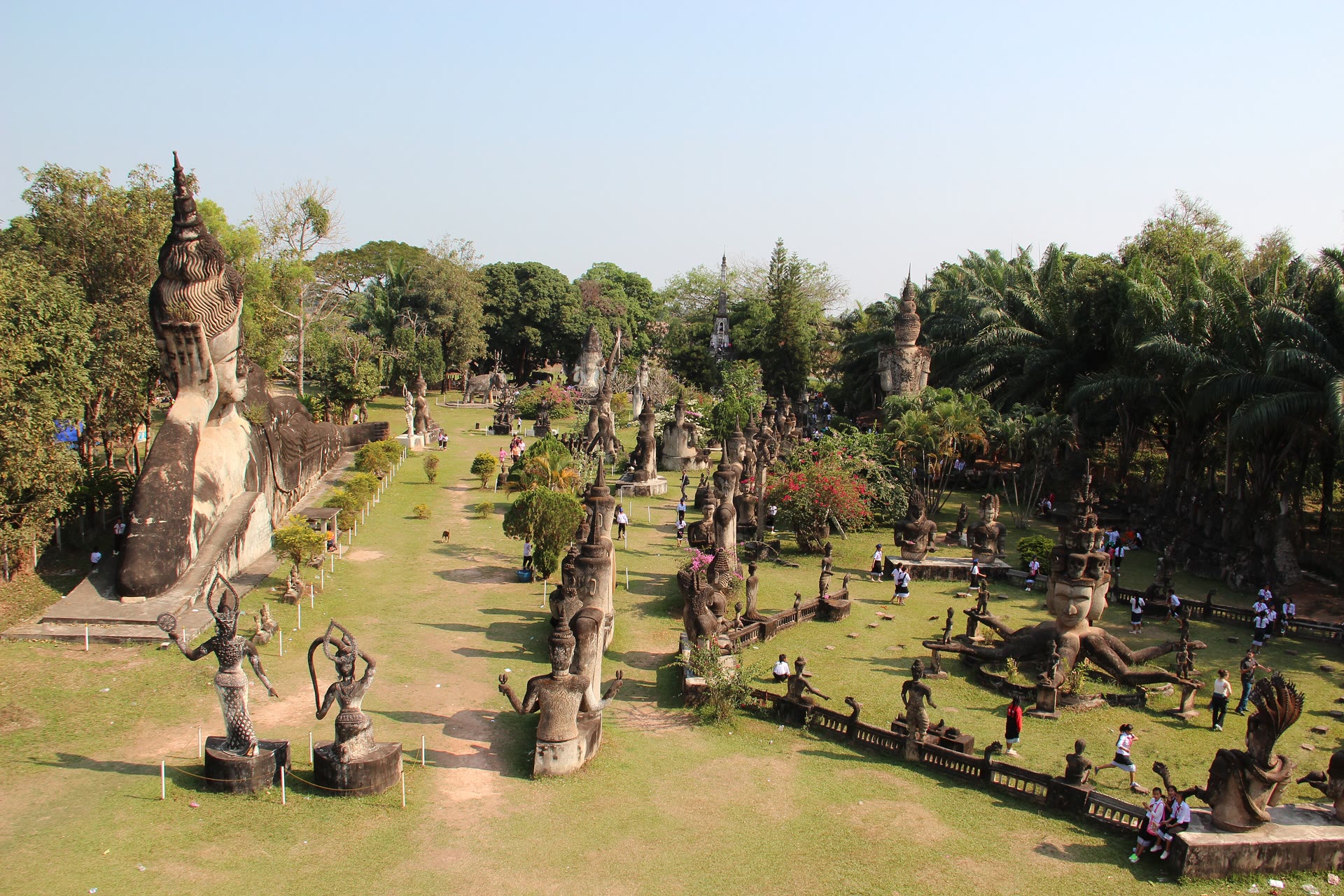
Choose Buddha Park if you want an outdoor sculpture garden rather than another temple interior. Xieng Khuan, “Spirit City,” stands on the banks of the Mekong about 24 kilometres beyond Vientiane, an hour from the city, and its more than 200 figures mix Buddhist and Hindu imagery.[1] Head for the big reclining Buddha, the pumpkin-shaped tower and the smaller sculptures; climbing is optional.
Plan the visit before leaving town
Allow about an hour each way from the city[1] and 1 to 2 hours in the garden, plus time for a meal. If your stay in Vientiane is short, weigh the trip against a city visit such as Wat Si Saket or Patuxai.
Entrance has been listed at LAK 5,000, with a possible LAK 3,000 camera fee.[1] Bring cash for the entrance and your driver, and do not count on an ATM at the park. Ask your driver or hotel for the current opening hours.
Things to Do
Offers are only loaded from GetYourGuide after you click. GetYourGuide can then process your IP address and set cookies. Privacy Policy
GetYourGuide partner offers. GoAsia may earn a commission if you book through these offers. Check whether tickets or transfers are included, and follow the attraction's official booking and admission rules.
Choose an arrival and a return
For a car or tuk-tuk, agree the pickup point, the total price, whether it is per person or per vehicle, the waiting time and the return destination before you set off. A round-trip quote only works if the return and any waiting charges are spelled out.
By public bus, ask at the bus station for the boarding point, the park stop, the fare and the last return before you pay. Talat Sao means Morning Market, not That Luang, so check the exact boarding point rather than going by the market name.
A rented motorbike suits you only if you can ride legally, with insurance and experience. Check the road, the helmet and the rental terms. On a bicycle, plan the full return distance, the weather and your water.
A modern garden with religious imagery
A Lao mystic built the park in 1958 with artisans who were no experts, drawing on their master's imagination and their skills in concrete and steel.[1] These sculptures are not remains of an ancient kingdom. Look at how their poses, faces and scale differ rather than treating every many-armed figure as the same deity.
Religious subjects deserve respect whether you come for the art or for photography. Follow local instructions on clothing, photography and conduct, and do not climb statues.
Start with the reclining Buddha
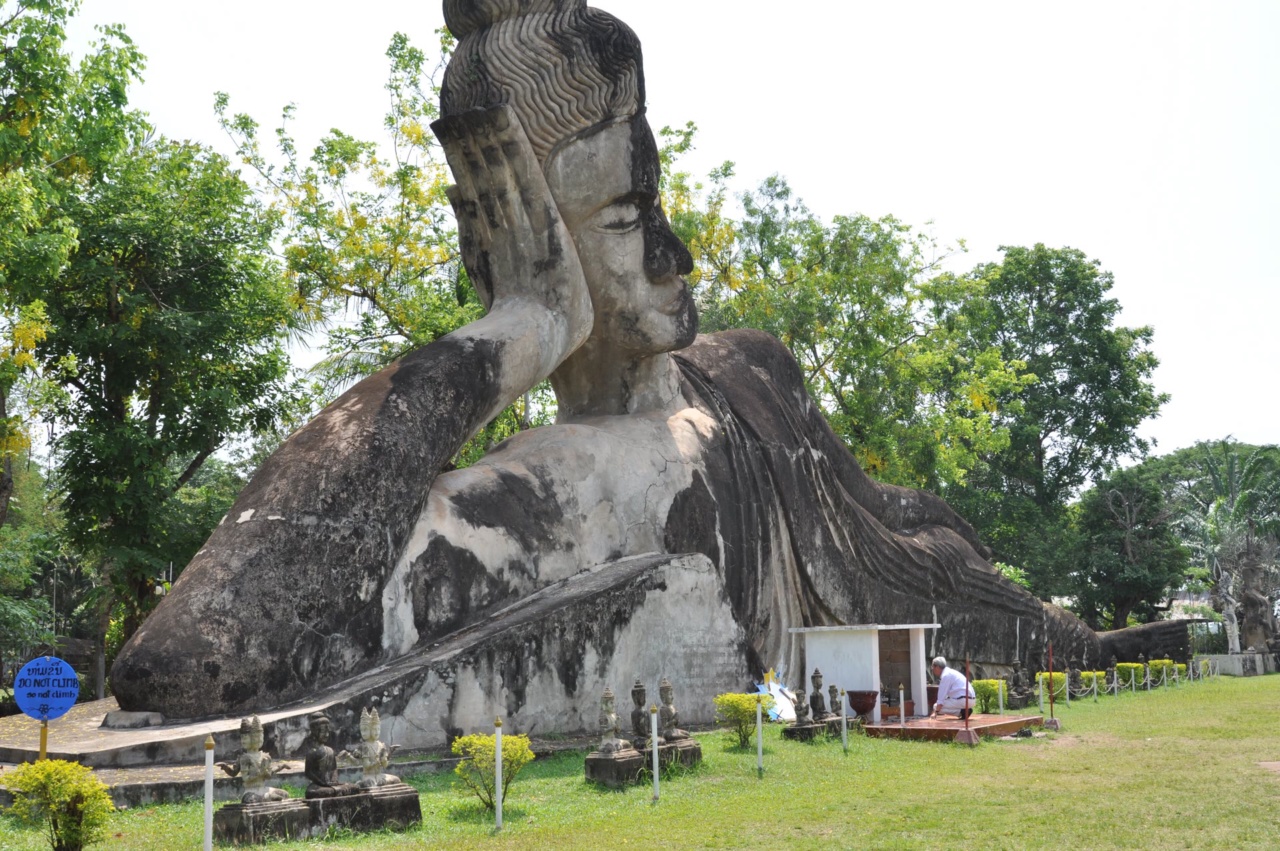
Start with the 40-metre reclining Buddha,[1] then compare its long horizontal form with the upright figures around the garden. Pause at the face, the posture and the scale before you move on to the smaller works.
The pumpkin: an optional viewpoint
The three-storey pumpkin-shaped structure recapitulates the ascent from hell to heaven as you climb to its summit.[1]
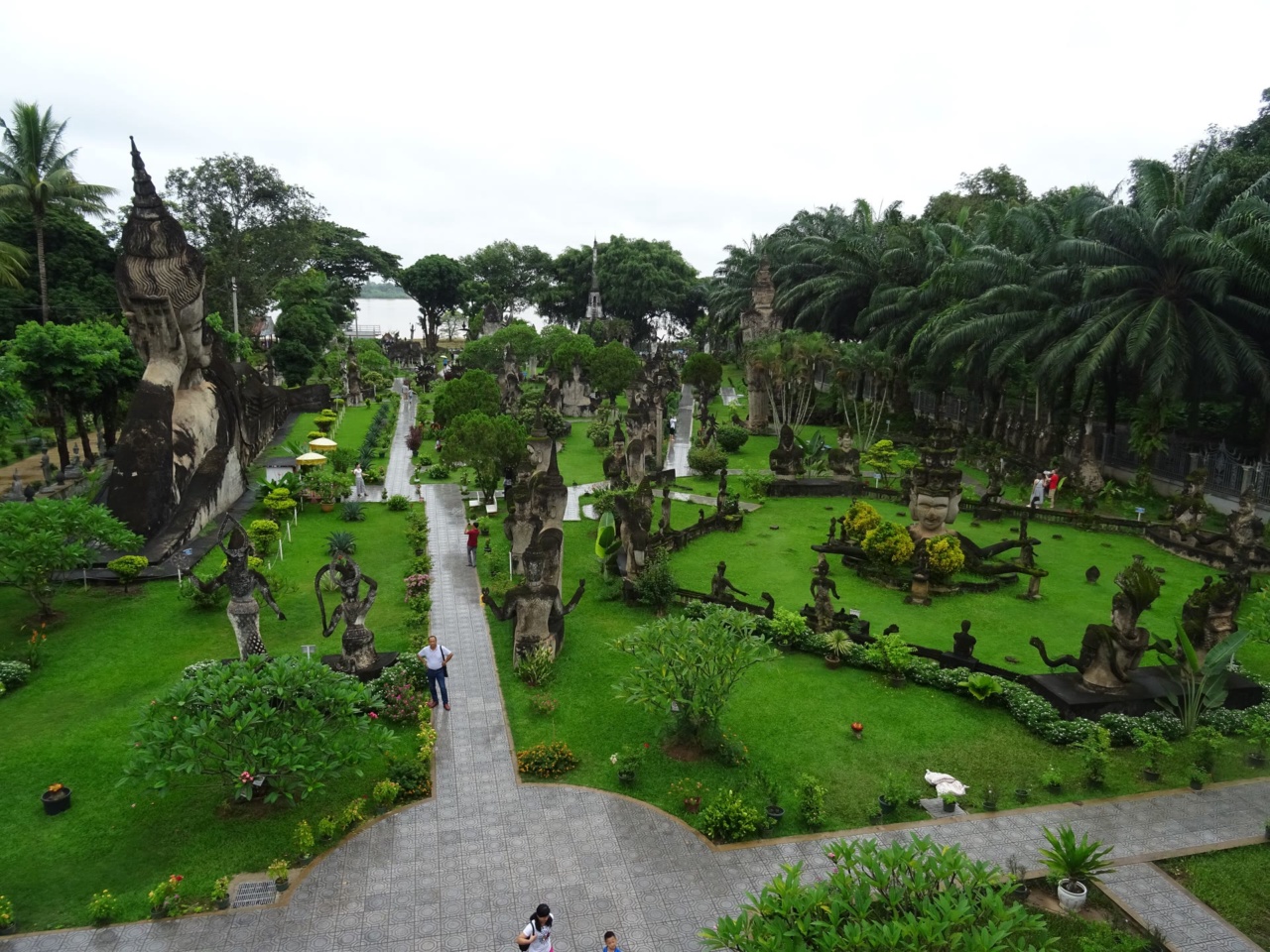
Ask whether the interior and the upper route are open that day. Check the steps and space against your mobility and footwear, and turn back if you need to. The garden is worth the visit even if you never reach the top.
Look beyond the headline sculptures
Among the 200-plus statues you will find emaciated monks and characters from Hindu mythology.[1] Compare the smaller Buddhist figures, animals and mythological characters with the large works, and use labels or a guide for interpretation rather than inventing identities. Agree any guide fee and language beforehand. Keep to the visitor paths and respect barriers, including near the river.
What to bring and how to pace it
Bring drinking water, sun or rain protection and shoes that suit the route you choose. Go in the morning if heat bothers you.
A simple sequence: the reclining Buddha first, a look at the pumpkin from outside to decide whether to climb, then a slower circuit of the smaller figures and a break before your driver returns. With children or limited mobility, keep the climb optional.
Do not confuse it with the Thai garden
Sala Kaew Ku, also written Sala Kaeo Ku, is a garden in Nong Khai, Thailand, created by the 20th-century Lao religious figure Bunleua. Its sculptures mix Buddhism and Hinduism, it is open 08:00 to 18:00, and entry costs 40 baht.[2] It is about 20 minutes by car from the centre of Nong Khai.[2] It is a separate destination in another country, not another entrance to Xieng Khuan.
Seeing both means crossing the border, so check the entry and re-entry conditions that apply to you and give each garden its own time. If you stay in Laos, Wat Si Saket makes an easy city add-on.
Sources and background
Numbers in the text such as [1] refer to these sources.
- [1] ASEAN Tourism, Visit Southeast Asia: Xieng Khuan: ASEAN tourism description of the sculptures and pumpkin structure. Retrieved October 20, 2026.
- [2] Tourism Authority of Thailand, Japan Office: Sala Kaeo Ku: the separate Buddhist and Hindu sculpture garden in Nong Khai. Retrieved October 20, 2026.
Frequently Asked Questions
Xieng Khuan is an outdoor sculpture garden beside the Mekong, about 24 km beyond Vientiane. A Lao mystic built it in 1958, and its more than 200 figures mix Buddhist and Hindu imagery.
Entrance has been listed at LAK 5,000, with a possible LAK 3,000 camera fee. Add your return transport and agree whether the quote is per person or per vehicle.
Take a car or tuk-tuk with an agreed return, or ask at the bus station for the exact boarding point, the park stop, the fare and the last return. The trip takes about an hour each way. Agree waiting time and any extra charges before you set off.
Allow 1 to 2 hours in the garden and about an hour each way from the city, plus time for a meal.
No. You can admire it from outside. Climb only if the route is open and the steps suit you; the garden is worth the visit without reaching the top.
Both. Treat the sculptures respectfully, dress with consideration and follow the rules on photography and behaviour.
No. Sala Kaew Ku is a separate garden in Nong Khai, Thailand. Visiting it means crossing the border.
Go in the morning for cooler hours, and plan your return with your driver so that you are not rushed.