
Contents
- 1. Getting Around Jaipur by Auto-Rickshaw
- 1.1 How to Negotiate
- 2. Getting Around Jaipur by Ride-Hailing Apps (Ola and Uber)
- 3. Getting Around Jaipur by Metro
- 4. Getting Around Jaipur by City Bus
- 5. Getting Around Jaipur by Cycle-Rickshaw
- 6. Getting Around Jaipur by Taxi and Private Car
- 7. Getting Around Jaipur on Foot
- 8. Getting Around Jaipur by Bike and E-Rickshaw
- 9. Comparing Your Options
- 10. Practical Tips for Getting Around Jaipur
- 11. Popular Routes and Destinations
- 12. Frequently Asked Questions
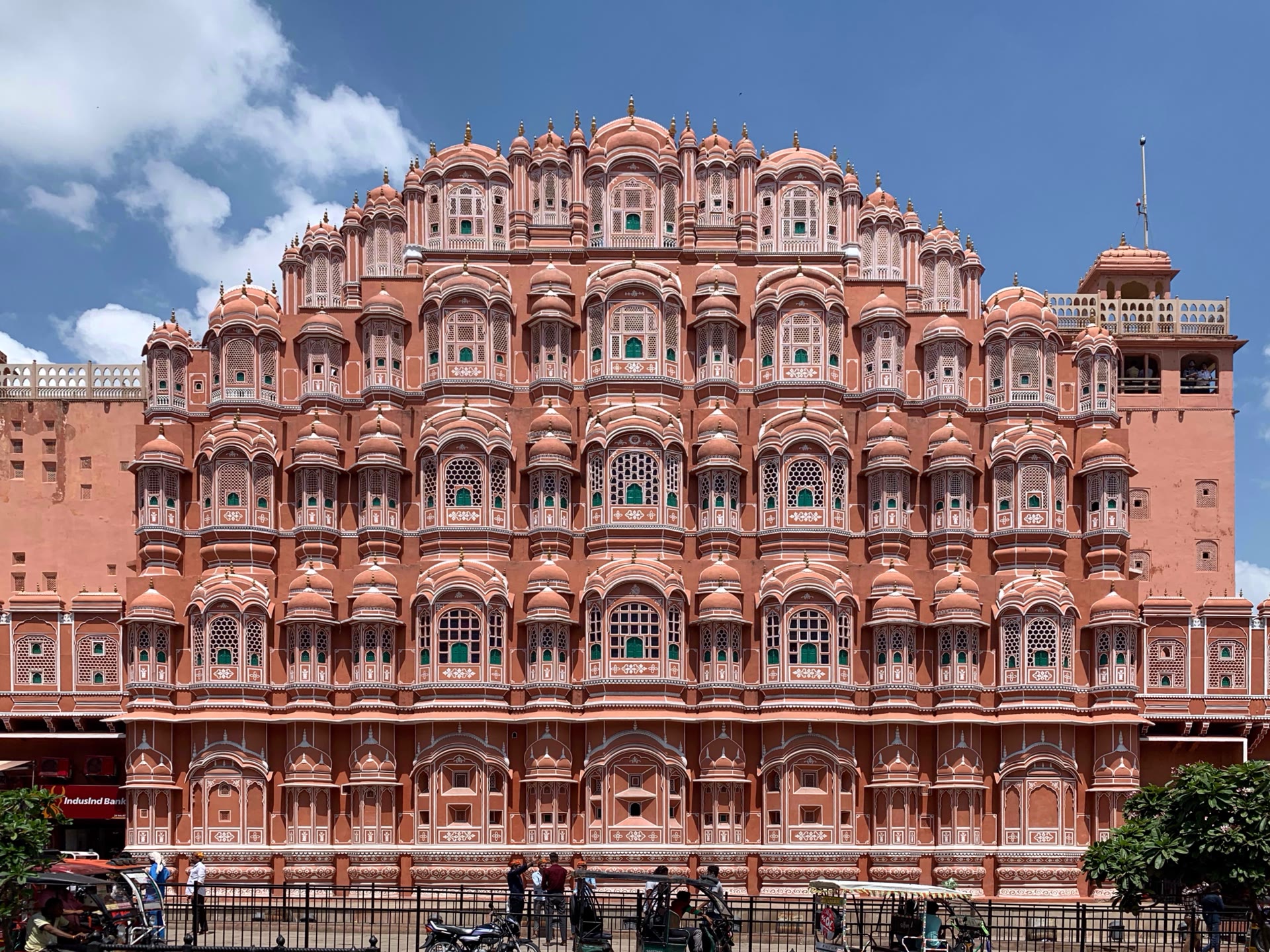
Jaipur moves at a pace that is entirely its own. Step outside your hotel in the Pink City and you will be greeted by a symphony of honking horns, the rattle of auto-rickshaws weaving through traffic, camels pulling carts alongside SUVs, and the occasional elephant lumbering down a side road near Amer Fort. It is chaotic, colorful, and deeply charming, but it demands a strategy if you want to get from Hawa Mahal to Nahargarh Fort without losing half your day.
The walled Old City is relatively compact, and many of its iconic landmarks sit within a few kilometers of each other. But Jaipur has sprawled well beyond those pink-painted walls, and distances between neighborhoods like C-Scheme, Malviya Nagar, Vaishali Nagar, and Amer can be significant. There is no single transport mode that solves everything here. Instead, you will likely mix auto-rickshaws, ride-hailing apps, the new metro line, and your own two feet depending on where you are headed. The good news: transport is remarkably cheap by global standards, and once you learn the local rhythm, getting around becomes part of the adventure.
Here is everything you need to know about moving through Jaipur like someone who actually lives here.
Getting Around Jaipur by Auto-Rickshaw
The auto-rickshaw is the undisputed king of Jaipur transport. These green-and-yellow three-wheeled vehicles are everywhere, available at virtually any hour, and can squeeze through gaps in traffic that no car could manage. For most travelers, auto-rickshaws will be the default way to hop between sights in the Old City and surrounding areas.
In theory, auto-rickshaws in Jaipur run on meters. In practice, most drivers will quote you a fixed price, especially if you look like a tourist. A short hop within the Old City, say from Hawa Mahal to the City Palace, should cost around 30 to 50 rupees (under $1). A longer ride from the Old City to C-Scheme or MI Road typically runs 80 to 150 rupees. A trip out to Amer Fort from the city center might cost 200 to 350 rupees depending on your bargaining skills.
How to Negotiate
Always agree on a price before you get in. If the quoted fare sounds too high, counter with roughly half and settle somewhere in the middle. Having a ride-hailing app open on your phone is a powerful negotiating tool: you can show the driver the app-estimated fare and use that as a baseline. Drivers at tourist hotspots and outside hotels tend to quote the highest prices. Walk 50 meters down the road and you will often find a much more reasonable offer.
Auto-rickshaws are best for distances under 10 kilometers. They are open-sided, so you will feel the heat, dust, and occasional splash from a puddle during monsoon season. Carry small bills; drivers rarely have change for 500-rupee notes.
Getting Around Jaipur by Ride-Hailing Apps (Ola and Uber)
Both Ola and Uber operate extensively in Jaipur, and they have genuinely transformed how visitors navigate the city. The biggest advantage is transparent, GPS-based pricing with no haggling required. You can book anything from a compact hatchback to an air-conditioned sedan, and even auto-rickshaws through the apps.
An Ola or Uber ride across the city, say from Malviya Nagar to the Old City, typically costs between 150 and 300 rupees ($2 to $4) for a standard car. The app-based auto-rickshaw option is usually 20 to 30 percent cheaper than negotiating one on the street, and you get the comfort of knowing the route is tracked.
Surge pricing kicks in during rush hours (roughly 9 to 11 AM and 5 to 8 PM), during rain, and around festival periods like Diwali or the Jaipur Literature Festival. At these times, an auto-rickshaw flagged on the street may actually be cheaper. Payment can be made by cash, UPI, or card through the app. Most drivers prefer cash or UPI payments.
One practical note: in the narrow lanes of the Old City, it can be difficult for app drivers to find your exact pin location. Drop your pin on a main road or a recognizable landmark rather than deep inside a bazaar.
Getting Around Jaipur by Metro
Jaipur Metro is India's sixth metro system, and while it is still limited in scope, it can be genuinely useful for certain routes. The operational line runs roughly north-south, connecting Mansarovar in the south to Badi Chaupar in the heart of the Old City, passing through Chandpole and the important junction of New Atish Market along the way.
The metro is clean, air-conditioned, and blissfully free of the chaos outside. Trains run every 10 to 15 minutes, and a single journey costs between 10 and 30 rupees depending on distance. You can buy tokens at station counters or use a rechargeable smart card for a small discount. The line is particularly handy if you are staying in the Mansarovar or Sindhi Camp area and want to reach the Old City without dealing with traffic.
The limitation is coverage. With only one operational line and a handful of stations, the metro does not yet connect to many tourist-heavy areas like Amer Fort, C-Scheme restaurants, or Jawahar Circle. Think of it as a useful shortcut for a specific corridor rather than a complete transport solution. An expansion is underway, but for now, you will likely use the metro for one or two legs of a larger journey and switch to an auto or Uber for the last mile.
Getting Around Jaipur by City Bus
Jaipur's public bus network, operated by JCTSL (Jaipur City Transport Services Limited), covers a wide area with routes connecting the Old City, Sindhi Camp bus terminal, Amer, Sanganer, and suburban neighborhoods. Fares are extremely low, typically 10 to 20 rupees for most routes.
That said, city buses in Jaipur are not the most tourist-friendly option. Route information is usually displayed in Hindi, buses can be extremely crowded during peak hours, and there are no real-time tracking tools. If you are an adventurous traveler comfortable with some uncertainty, buses offer an authentic local experience and connect to places like Amer Fort for a fraction of what an auto-rickshaw would cost. The bus from Chandpole or Hawa Mahal to Amer runs frequently and costs around 15 rupees.
Low-floor AC buses operate on select routes and are more comfortable, though less frequent. Sindhi Camp is the main bus hub, and you can ask locals or bus conductors for route guidance. They are generally helpful even if communication requires some creative gesturing.
Getting Around Jaipur by Cycle-Rickshaw
In the narrow lanes of the Old City, especially around Johari Bazaar, Tripolia Bazaar, and the area near Hawa Mahal, cycle-rickshaws remain a practical and atmospheric way to travel. These pedal-powered vehicles move slowly enough for you to absorb the sights, sounds, and smells of the bazaars while someone else does the navigating.
A short ride through the Old City lanes typically costs 20 to 50 rupees. Cycle-rickshaws are best for distances under two kilometers. They are not suitable for longer trips or routes involving main roads with heavy traffic. Negotiate the fare in advance, and be aware that some drivers will try to divert you to shops where they earn a commission. Politely decline if you are not interested.
Getting Around Jaipur by Taxi and Private Car
For day-long sightseeing or trips to destinations outside the city center, hiring a taxi or private car with a driver is a popular and surprisingly affordable option. Many hotels can arrange a car for the day, and local travel agencies offer packages covering major sights like Amer Fort, Jaigarh Fort, Nahargarh Fort, and Jal Mahal.
A full-day car hire (8 hours, around 80 kilometers) with an AC sedan typically costs 1,500 to 2,500 rupees ($18 to $30). This is excellent value if you are traveling with a companion and want the convenience of door-to-door service with air conditioning. Drivers often double as informal guides and can suggest lunch spots and lesser-known viewpoints.
For airport transfers specifically, expect to pay between $21 and $40 for a private transfer from Jaipur International Airport to the city center, with the journey taking around 20 minutes in normal traffic. You can also book Ola or Uber from the airport, which tends to be at the lower end of that range.
Getting Around Jaipur on Foot
Walking in Jaipur is rewarding but demanding. The Old City, bounded by its historic gates, is where walking makes the most sense. The stretch from Hawa Mahal to the City Palace, Jantar Mantar, and Johari Bazaar can all be covered on foot in a leisurely morning. The pink-painted buildings, the chaos of the bazaars, the smell of chai and street food - none of this translates through a car window.
Outside the walled city, walking becomes less practical. Distances grow, sidewalks are inconsistent or nonexistent, traffic does not yield to pedestrians, and the heat from March through October can be punishing. Carry water, wear sun protection, and do not attempt to walk along major highways like JLN Marg during peak traffic.
Early mornings are the best time to explore on foot. The air is cooler, the light is beautiful for photography, and the streets are comparatively calm before the city fully wakes up.
Getting Around Jaipur by Bike and E-Rickshaw
Electric rickshaws (e-rickshaws) have become increasingly common in Jaipur, especially on shorter routes around residential neighborhoods and market areas. They are cheaper than auto-rickshaws, typically charging 10 to 20 rupees per person for shared rides along fixed routes. They operate somewhat like informal minibuses, picking up and dropping off passengers along the way.
Renting a bicycle or motorbike is another option for confident riders. A few hostels and rental shops in the backpacker-friendly areas around MI Road offer bicycles for around 200 to 300 rupees per day and motorbikes for 500 to 800 rupees. Jaipur traffic is aggressive, and lane discipline is more of a suggestion than a rule, so this is only recommended if you have experience riding in Indian cities. An international driving permit is technically required for motorbike rentals.
Comparing Your Options
| Mode | Typical Cost | Duration | Best For |
|---|---|---|---|
| Auto-Rickshaw | 30-350 rupees ($0.50-$4) | Varies by distance | Short to medium hops, the quintessential Jaipur experience |
| Ola/Uber (Car) | 150-400 rupees ($2-$5) | Varies by distance | Air-conditioned comfort, longer distances, no haggling |
| Jaipur Metro | 10-30 rupees ($0.15-$0.40) | Fast on the north-south corridor | Mansarovar to Old City without traffic |
| City Bus | 10-20 rupees ($0.15-$0.25) | Slower, depends on route | Budget travel, reaching Amer Fort cheaply |
| Cycle-Rickshaw | 20-50 rupees ($0.25-$0.60) | Slow, short distances only | Exploring Old City bazaars at a relaxed pace |
| Private Car (Full Day) | 1,500-2,500 rupees ($18-$30) | All day | Multi-stop sightseeing, groups, fort circuit |
| Walking | Free | Depends on stamina and heat | Old City exploration, bazaar hopping, mornings |
| E-Rickshaw | 10-20 rupees ($0.15-$0.25) | Short fixed routes | Ultra-budget shared rides in local neighborhoods |
Practical Tips for Getting Around Jaipur
Apps to download: Install both Ola and Uber before you arrive. Ola tends to have slightly better coverage in Jaipur, but having both gives you options when one has surge pricing. Google Maps works well for navigation and bus route suggestions. Download an offline map of Jaipur in case you lose signal in the Old City's narrow lanes.
Cash is king: Carry plenty of small denominations, especially 10, 20, 50, and 100 rupee notes. Auto-rickshaw drivers, cycle-rickshaw wallahs, and bus conductors almost never have change for large bills. UPI payments (Google Pay, PhonePe, Paytm) are increasingly accepted, but you need an Indian bank account or an international UPI-linked service to use them.
- Rush hours are brutal. Avoid traveling between 9 and 11 AM and 5 and 8 PM if possible. Traffic around Chandpole Gate, MI Road, and the Ajmeri Gate area can come to a complete standstill.
- Beware of the "my friend's shop" scam. Some auto and cycle-rickshaw drivers will offer you a very cheap fare and then insist on stopping at gem shops, textile stores, or handicraft emporiums where they earn commission. Agree on a direct route before departing, and firmly decline detours.
- For Amer Fort, consider taking the public bus from the Old City (around 15 rupees) and booking an Ola or Uber for the return. The return is uphill in terms of pricing since drivers know tourists are stranded at the fort.
- Women traveling alone should use app-based transport after dark rather than flagging auto-rickshaws on the street. Both Ola and Uber have safety features including trip sharing and emergency buttons.
- If you are visiting during summer (April to June), prioritize air-conditioned transport. Temperatures regularly exceed 45 degrees Celsius, and an open auto-rickshaw ride across the city in the midday sun is genuinely exhausting.
Language tips: Most auto-rickshaw drivers speak basic Hindi and very little English. Having your destination written in Hindi on your phone, or showing the location on Google Maps, saves enormous confusion. Key phrases: "Kitna hoga?" (How much will it cost?), "Meter se chalo" (Go by meter), and "Seedha" (Straight ahead).
You can compare transport options and plan specific routes in Jaipur on GoAsia.cc to get a sense of costs before you arrive.
Popular Routes and Destinations
Jaipur Airport to City Center: Jaipur International Airport (JAI) sits about 13 kilometers south of the city center near Sanganer. A private transfer typically costs between $21 and $40 and takes around 20 minutes in normal traffic. Ola and Uber are available from the airport and usually fall at the lower end of that range ($10 to $15 for a standard car). Prepaid taxi counters inside the arrivals hall offer fixed-rate rides that eliminate haggling, though prices are slightly higher than app-based options. There is no direct metro connection to the airport.
Old City Circuit (Hawa Mahal, City Palace, Jantar Mantar, Johari Bazaar): These landmarks are all within walking distance of each other, clustered in the heart of the walled city. Start at Hawa Mahal and work your way through on foot. A cycle-rickshaw can cover the circuit for 50 to 100 rupees if your feet need a rest.
City Center to Amer Fort: Amer Fort is about 11 kilometers northeast of the Old City. An auto-rickshaw costs 200 to 350 rupees one way, while an Ola or Uber runs around 150 to 250 rupees. The public bus from near Hawa Mahal is the cheapest option at roughly 15 rupees. Allow 30 to 45 minutes for the journey depending on traffic.
Nahargarh Fort: Perched on the Aravalli Hills above the city, Nahargarh is best reached by taxi, Uber, or hired car. The winding road up is not suitable for auto-rickshaws. Expect to pay around 300 to 500 rupees for a round trip with waiting time. The sunset views from the fort are worth the fare.
Frequently Asked Questions
Use this guide to compare local transport in Jaipur. When bookable tickets are available, the booking tool shows current options and prices.
For most visitors, a combination of auto-rickshaws and ride-hailing apps like Ola and Uber works best. Use auto-rickshaws for short hops within the Old City and app-based rides for longer distances or when you want air conditioning. The Jaipur Metro is useful if your route falls along its north-south corridor.
Transport in Jaipur is very affordable. Auto-rickshaw rides typically cost 30 to 350 rupees ($0.50 to $4) depending on distance. Ola and Uber rides range from 150 to 400 rupees ($2 to $5) for most city journeys. The metro costs just 10 to 30 rupees per trip, and city buses are even cheaper at 10 to 20 rupees.
Public transport in Jaipur is generally safe during the day. The metro is clean and well-monitored with separate women's sections. Auto-rickshaws and buses are safe but can be crowded. At night, solo travelers, especially women, should prefer app-based rides with trip-sharing features over flagging transport on the street.
Yes, both Ola and Uber operate widely in Jaipur. You can book cars, auto-rickshaws, and even bike taxis through these apps. Ola tends to have slightly better availability in Jaipur. Both accept cash payment, which is useful for international travelers who may not have Indian digital wallets set up.
The Old City (walled city) is walkable, with major landmarks like Hawa Mahal, City Palace, and Jantar Mantar clustered within a small area. Outside the walled city, walking becomes impractical due to long distances, inconsistent sidewalks, and heavy traffic. Heat is also a major factor from March through October.
Always agree on a fare before getting in, and check the Ola or Uber app estimate for the same route as a benchmark. Walk away from the first driver who quotes a high price, as there are always more available nearby. Avoid auto-rickshaws parked directly outside major tourist sites and hotels, as they tend to charge the most.
The airport is about 13 kilometers from the city center. A private transfer costs between $21 and $40 and takes around 20 minutes. Ola and Uber are available at the airport and are usually cheaper. There is also a prepaid taxi counter inside arrivals that offers fixed-rate fares to eliminate haggling.
Guide prices and journey times are indicative, not live quotes. A booked package may include transfers and waiting time as well as the main journey. Check the selected offer, pickup point and current conditions before booking.