Erawan Shrine Bangkok: The Sacred Heart of Ratchaprasong

Erawan Shrine Bangkok: The Sacred Heart of Ratchaprasong

Last updated: March 18, 2026

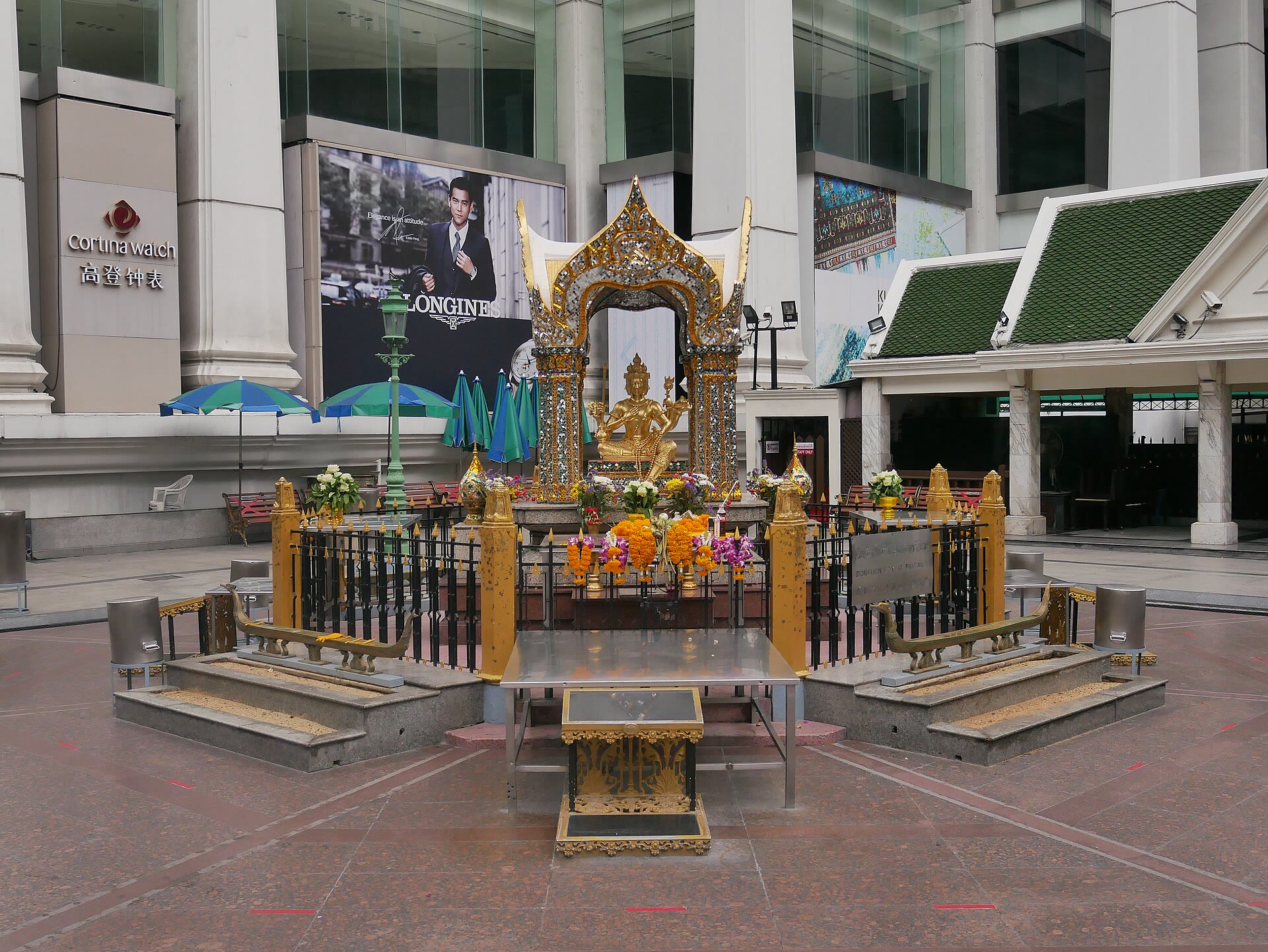
At one of Bangkok's busiest intersections, surrounded by luxury malls and five-star hotels, thousands of people kneel each day before a golden four-faced statue of the Hindu god Brahma. Office workers stop on their lunch break, tourists pause mid-shopping trip, and taxi drivers pull over for a quick prayer. The Erawan Shrine is not tucked away behind temple walls. It stands right on the pavement at the corner of Ratchadamri and Ploenchit roads, and that is precisely what makes it so extraordinary.

This compact open-air shrine draws more daily worshippers than many of Bangkok's grand temples. It is free to visit, open from early morning until late at night, and offers one of the most vivid glimpses into how Thais blend Hindu, Buddhist, and animist beliefs into the rhythms of everyday life. Forget the idea that spirituality in Bangkok exists only behind monastery gates. At Erawan, the sacred and the commercial coexist on the same city block.

The Story Behind the Shrine

The Erawan Shrine was built in 1956, and its origin story is pure Bangkok. Construction of the original Erawan Hotel (now the Grand Hyatt Erawan) was plagued by a string of disasters: structural collapses, worker injuries, and unexplained delays. The project seemed cursed. Desperate for a solution, the hotel's developers consulted a Brahmin astrologer named Luang Suwichan Phat Sathit, who concluded that the hotel's foundation had been laid on an inauspicious date. His remedy was to erect a shrine to Phra Phrom, the Thai representation of the Hindu creator god Brahma, to restore spiritual balance to the site.

The shrine was inaugurated on November 9, 1956. Almost immediately, construction problems ceased. The hotel was completed without further incident, and word spread that the new shrine possessed extraordinary power. Within months, locals were arriving in droves to make offerings and petition the four-faced deity for blessings. The shrine has been a pilgrimage site ever since.

Things to Do

Phra Phrom and the Four Faces

The central statue depicts Phra Phrom, the Thai interpretation of the Hindu god Brahma, the creator of the universe. The golden figure sits atop a pedestal, each of its four faces oriented toward a cardinal direction. Each face is believed to govern a different domain of life:

  • Front face (north): Career and success
  • Right face (east): Relationships and love
  • Back face (south): Wealth and fortune
  • Left face (west): Health and well-being

Worshippers typically pray to all four faces, walking clockwise around the statue and pausing at each one. Many Thais direct their main petition to the face associated with their most pressing need, while still paying respect to the other three. The current statue is a replacement, cast after the original was damaged in a vandalism incident. It was created by the Fine Arts Department using the finest bronze and covered in gold leaf.

How to Pray at the Erawan Shrine

You do not need to be Buddhist, Hindu, or Thai to pay your respects. Visitors of all faiths are welcome to participate, and the ritual is straightforward.

  1. Purchase an offering set from one of the vendors flanking the shrine. A standard set includes a garland of jasmine and marigold flowers, four incense sticks, and a candle. Sets cost 20 to 100 baht depending on size.
  2. Light the incense and candle at the shrine's designated lighting area.
  3. Begin at the front face of the statue (facing Ratchadamri Road). Place your hands together in a wai (prayer gesture), hold the incense between your palms, and make your prayer or wish silently.
  4. Place one incense stick at the front face, then move clockwise to each subsequent face, repeating your prayer and leaving one stick at each.
  5. After completing the circuit, place your garland on the shrine. Do not wear the garland around your neck. It is an offering to the deity, not a souvenir.
  6. If you wish, pour a small amount of holy water (available at the shrine) over your head or hands as a blessing.

The entire process takes only a few minutes. Watch how Thai worshippers do it first if you feel unsure. No one will judge you for being new to the ritual.

The Thai Dancers

One of the most captivating things about the Erawan Shrine is the classical Thai dance troupe stationed at the back of the plaza. These dancers are not a tourist performance. They are hired by worshippers who have had a prayer answered and wish to show gratitude to Phra Phrom.

The tradition works like this: when you make a wish at the shrine, you promise to return and commission a dance performance if the wish comes true. When it does, you come back, pay for a group of dancers (prices start around 260 baht for two dancers performing one song, up to 710 baht for eight dancers), and the troupe performs a traditional ram dance accompanied by live musicians playing Thai classical instruments.

The performances happen throughout the day, whenever someone hires the dancers. You might see a businesswoman in a designer suit watching intently as dancers in full traditional costume sway and gesture before the golden statue. These moments are genuinely moving, a window into personal devotion that plays out in one of the most commercial corners of Bangkok.

Visiting the Erawan Shrine

Opening Hours and Cost

DetailInformation
Opening hoursDaily, 6:00 AM - 11:00 PM
AdmissionFree
Offering sets20 - 100 baht ($1 - $3)
Thai dance commission260 - 710 baht ($7 - $20)
LocationCorner of Ratchadamri Road and Ploenchit Road, Pathumwan

How to Get There

  • BTS Skytrain: Chit Lom station (exit 8) is directly connected to the shrine via the elevated walkway. You can see the shrine from above before descending to street level. Alternatively, Ratchadamri station on the Silom line is a short walk away.
  • On foot: The shrine sits at the Ratchaprasong intersection, walkable from Siam Paragon, CentralWorld, and the Grand Hyatt Erawan hotel.
  • By taxi or Grab: Ask for "San Phra Phrom" (the Thai name) or simply "Erawan Shrine, Ratchadamri."

What Else Is Nearby

The Ratchaprasong area is Bangkok's premier shopping district. Within a five-minute walk of the shrine you will find CentralWorld (one of Southeast Asia's largest malls), Gaysorn Village, Amarin Plaza, and the Erawan Bangkok mall. The Siam BTS station and its cluster of malls (Siam Paragon, Siam Center, Siam Discovery) are one stop or a 10-minute walk away. For more ideas on what to explore in this area and across Bangkok, check GoAsia.cc for detailed guides.

Tips for Visiting the Erawan Shrine

  • Early morning or evening are best. The shrine is busiest between 11:00 AM and 3:00 PM when office workers and tour groups arrive. Early morning visits (before 8:00 AM) are quieter and cooler, while evening visits offer the shrine beautifully lit against the night sky.
  • Dress modestly. There is no strict dress code enforced, but covering shoulders and knees shows respect. Remove your hat when approaching the statue.
  • Do not point your feet at the statue. If you sit or kneel, tuck your feet behind you. Pointing the soles of your feet toward a sacred image is considered deeply disrespectful in Thai culture.
  • Garlands are offerings, not accessories. Do not wear the flower garlands. Place them on the shrine as intended.
  • Be mindful of worshippers. The shrine is a working place of worship, not a photo set. Take pictures respectfully and avoid walking between someone and the statue while they are praying.
  • Watch a dance performance. Even if you do not commission one yourself, stay a few minutes and observe. Performances happen regularly throughout the day and are free to watch.
  • Combine with a Ratchaprasong walk. There are actually several other smaller shrines along the Ratchaprasong intersection, including the Trimurti Shrine (popular for love prayers) and the Ganesha Shrine at CentralWorld. A walk between them takes about 20 minutes.

Frequently Asked Questions

What is the Erawan Shrine and why is it famous?

The Erawan Shrine is an open-air Hindu shrine at the Ratchaprasong intersection in central Bangkok, dedicated to Phra Phrom (the Thai representation of the Hindu god Brahma). It was built in 1956 to dispel bad luck during the construction of the Erawan Hotel and became famous for its perceived power to grant wishes. Today it draws thousands of worshippers daily from across Thailand and beyond.

Is there an entrance fee for the Erawan Shrine?

No, the shrine is completely free to visit. The only costs are optional: flower and incense offering sets range from 20 to 100 baht, and commissioning a traditional Thai dance performance starts at around 260 baht for two dancers.

How do I pray at the Erawan Shrine?

Buy an offering set from the vendors beside the shrine, light the incense and candle, then walk clockwise around the four-faced statue. At each face, hold the incense between your palms in a wai gesture, make your prayer silently, and place one incense stick. After completing the circuit, leave your flower garland on the shrine as an offering.

What are the opening hours of the Erawan Shrine?

The shrine is open daily from 6:00 AM to 11:00 PM. It is an outdoor shrine with no gates, so it remains accessible throughout these hours regardless of weather. Early morning and evening tend to be the least crowded times to visit.

What is the significance of the four faces of Phra Phrom?

Each of the four faces points toward a cardinal direction and governs a different aspect of life: career and success (north), relationships and love (east), wealth and fortune (south), and health and well-being (west). Worshippers typically pray to all four faces but may focus their main petition on the face most relevant to their needs.

What are the Thai dancers at the Erawan Shrine?

The dance troupe at the shrine performs classical Thai dance as a form of thanksgiving. When a worshipper's prayer is granted, they return and pay for a dance performance as gratitude to Phra Phrom. Prices range from 260 to 710 baht depending on the number of dancers. The performances happen throughout the day and are free to watch.

How do I get to the Erawan Shrine by BTS?

Take the BTS Skytrain to Chit Lom station and use exit 8, which connects to an elevated walkway overlooking the shrine. From there, take the stairs or escalator down to street level. The shrine is also a short walk from Ratchadamri station on the Silom line.

Is there a dress code for visiting the Erawan Shrine?

There is no enforced dress code since it is an open-air shrine on a public pavement, but dressing modestly with covered shoulders and knees is respectful. Remove your hat when praying. The atmosphere is relaxed, so you will not be turned away for casual clothing, but locals appreciate visitors who show cultural sensitivity.