Jiayuguan Pass: The Great Wall's Western Fortress on the Silk Road
Where the Ming Great Wall finally runs out of mountains and disappears into the Gobi, it ends not with a whimper but with one of the most complete fortresses in China. Jiayuguan Pass sits in a narrow gap between the snow-streaked Qilian Mountains and the dark Black Mountains, a tawny rampart of rammed earth and brick that for centuries marked the official western limit of imperial China. Beyond it lay the desert, the oasis chain of the Silk Road, and what Ming officials regarded as the edge of the civilized world.
For travelers crossing Gansu's Hexi Corridor, Jiayuguan is more than a photo stop. It is the most legible Great Wall site in the northwest, a fortress you can actually walk through gate by gate, plus a dramatic section of wall climbing a desert ridge and a cluster of painted tombs that bring the region's ancient life into focus. It also happens to sit almost exactly halfway between the rainbow rock landscapes of Zhangye and the dunes of Dunhuang, making it a natural break on the classic Silk Road run.
This guide covers what the pass actually is, how the fort is laid out, the satellite sights worth your time, the harsh desert climate to plan around, and how to fit it into a wider northwest China itinerary.
What Jiayuguan Pass Is and Why It Matters
Jiayuguan Pass, sometimes written Jiayu Pass, is a fortress complex built during the Ming dynasty as the westernmost stronghold of the Great Wall. Construction began in the late fourteenth century, and over the following decades it grew into a sophisticated defensive system of inner and outer walls, gate towers, a moat, and barracks. The popular nickname, the First and Greatest Pass Under Heaven, reflects its symbolic weight rather than its size: this was the gate that controlled traffic in and out of the empire along the Silk Road.
That role gives the site a layered significance. Militarily, it guarded the narrowest point of the Hexi Corridor, the strategic strip of arable land threading between mountain ranges that linked central China to Central Asia. Symbolically, passing west through Jiayuguan meant leaving home. Exiled officials and disgraced soldiers were sent through it, and travelers recorded the emotion of looking back at the gate before stepping into the desert. The Great Wall as a whole is inscribed on the UNESCO World Heritage list, and Jiayuguan is one of its best preserved western anchors.
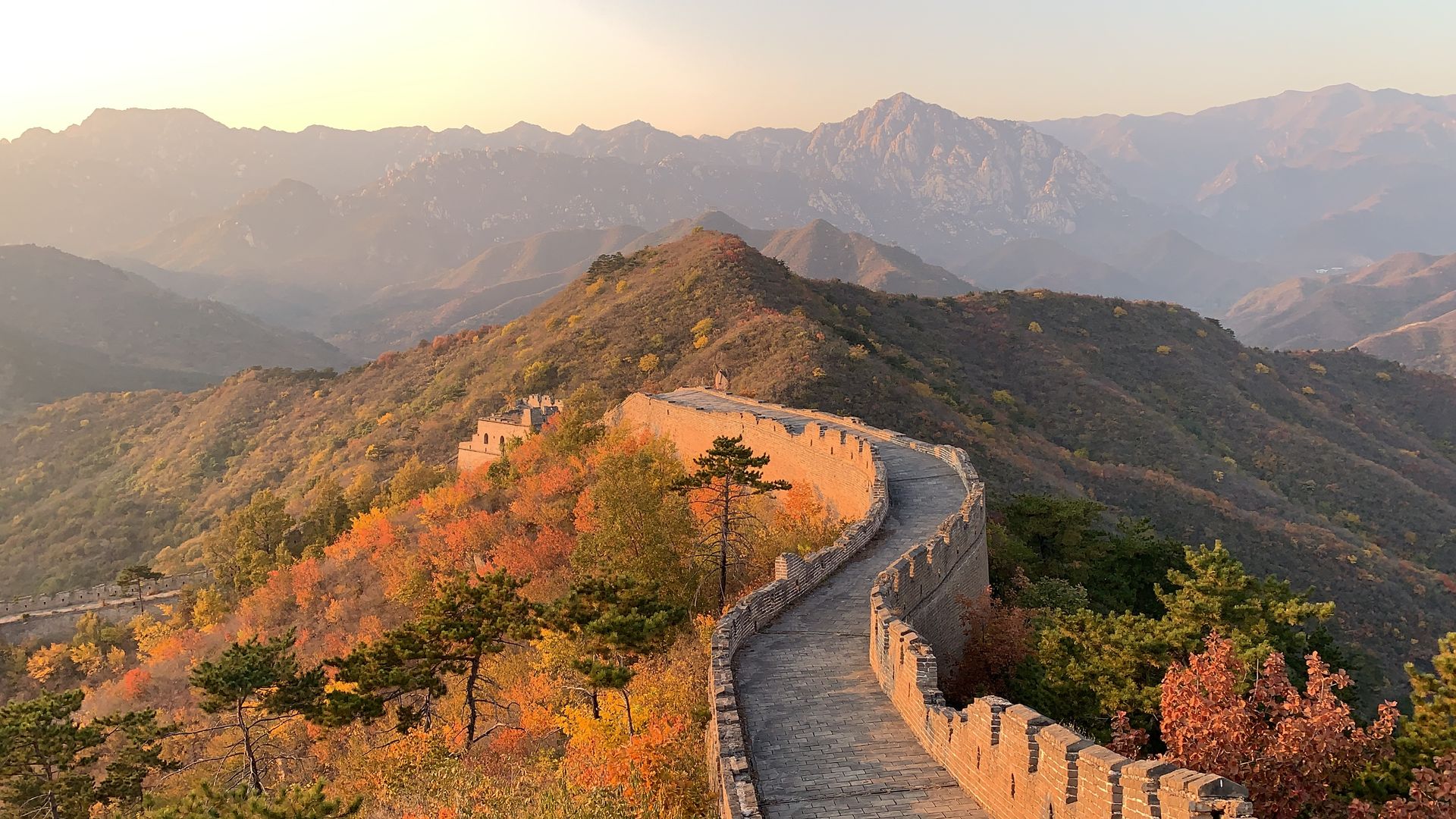
Unlike the famous wall sections near Beijing, which snake over green mountains, Jiayuguan's wall is made largely of rammed earth and brick, the color of the surrounding desert. The setting is stark and wide open, with the Qilian Mountains often capped in snow on the southern horizon. It is a very different Great Wall experience: less about hiking endless battlements and more about understanding how a frontier fortress functioned.
Things to Do
The Fortress Layout
The main fort is compact enough to explore on foot in a couple of hours, and walking it in sequence is the best way to grasp its design. The complex is built as nested rectangles, an inner fort surrounded by an outer wall, with gates aligned so that any attacker who breached the outer defenses would be funneled into killing zones.
The gates and towers
There are two main gates, the eastern Guanghua Gate and the western Rouyuan Gate, each crowned by a multi-storey wooden tower with upswept eaves. These towers are the iconic silhouette you will see in photographs, rising above the earthen ramparts against the desert sky. Between and around them sit defensive features worth slowing down for: the corner watchtowers, the arrow towers, and the urn-shaped barbicans that create a defended courtyard in front of each gate.
Inside the walls
Within the inner fort you can find a reconstructed governor's residence, a small theater stage, and a temple, all of which help imagine the garrison as a living settlement rather than a bare military post. Look for the famous single brick said to have been left over from construction, perched on a ledge above one of the gates. The story goes that the master builder calculated the exact number of bricks needed for the entire fortress and was challenged to prove his accuracy; the leftover brick became a legend about precision and was never moved.
Walking the ramparts
You can climb onto the walls and walk a circuit of the battlements, which gives the clearest sense of scale and sightlines. From up top you see how the fort commands the gap, with the mountains closing in on both sides. Allow time here, because the views explain the location far better than any plaque.
The Overhanging Great Wall
A few kilometers from the main fort, the Overhanging Great Wall is the site's most physically dramatic component and the one most travelers underestimate. Here a steep spur of the wall climbs sharply up the flank of the Black Mountains at a punishing angle, so steep in places that it appears to hang off the ridge. It was built to seal the gap on the northern side and prevent attackers from outflanking the main fortress.
The climb to the top is short but genuinely strenuous, a stairway of uneven steps rising fast in thin, dry air. The reward is a panoramic view back across the desert basin toward the main fort and the Qilian range, with the modern city of Jiayuguan spread out beyond. On a clear day it is one of the great vistas of the Hexi Corridor. Wear proper shoes, carry water, and pace yourself, especially in summer heat.
The Overhanging Wall is usually visited as a separate stop from the main fort, and the two are often combined on the same ticket or as part of a guided circuit. Confirm the arrangement when you arrive, since access and bundling can change.
The Wei-Jin Tombs
For travelers with an extra few hours and an interest in history, the Wei and Jin dynasty tombs outside Jiayuguan are an unusual and rewarding detour. These ancient brick tombs, scattered across a stretch of gravel desert, date from roughly seventeen centuries ago, long before the Ming fort existed. Their walls are covered in small painted bricks depicting daily life: farming, hunting, cooking, banqueting, herding, and travel along the trade routes.
The paintings are remarkable for their freshness and their everyday subject matter, offering a vivid window into life in the corridor during a turbulent period of Chinese history. One tomb is typically open to visitors, descended by a sloping passage, while many finds are displayed in an associated museum. The setting is bleak and quiet, far from the fortress crowds.
The tombs are some distance from the main fort and usually require a separate ticket and transport, so treat them as an optional add-on rather than part of the core visit. They suit travelers who want depth over checklists.
Tickets, Hours, and What to Verify
Jiayuguan's sights are managed as a cluster, and exact pricing, bundling, and opening times can change with the season and with policy updates. Treat the following as planning guidance and confirm current details locally or through a reputable booking source before you go.
- Combined versus separate tickets. The main fort and the Overhanging Great Wall are sometimes sold on a combined ticket and sometimes separately. The Wei-Jin tombs are generally a distinct ticket. Check which option matches your plan.
- Opening hours. Sites typically open in the morning and close in the late afternoon, with shorter hours in winter. Arrive early to beat both heat and tour groups.
- Identification. Bring your passport, as ticketing and entry in China frequently require ID for foreign visitors.
- Cashless payment. Mobile payment dominates China, so set up a working payment method in advance and carry some cash as backup.
Because operational details shift, the safest approach is to verify ticket prices and hours close to your travel date rather than relying on figures seen online months earlier.
The Desert Climate and When to Visit
Jiayuguan sits in a high desert basin, and the climate is extreme in both directions. This is the single biggest factor in planning a comfortable visit.
Summers are hot and intensely dry, with strong sun and almost no shade across the open ramparts and the exposed Overhanging Wall climb. Daytime temperatures can be punishing, and sunburn and dehydration are real risks. If you visit in summer, go early in the morning, carry plenty of water, and use a hat and high-factor sunscreen.
Winters are bitterly cold, with sharp winds sweeping off the mountains and across the desert, and short daylight hours. Spring and autumn are the most comfortable seasons overall, with milder temperatures and clearer air, though spring can bring dust and sandstorms blowing in from the desert that reduce visibility and make the wall climb unpleasant.
Whatever the season, expect dryness, wind, and big swings between sun and shade. Lip balm, eye protection, and layered clothing all earn their place in your day pack.
Climate quick reference
| Season | Conditions | Verdict |
|---|---|---|
| Spring | Mild, but risk of dust and sandstorms | Good, watch the wind |
| Summer | Hot, very dry, harsh sun | Go early, hydrate hard |
| Autumn | Mild, clear, stable air | Best overall |
| Winter | Very cold, windy, short days | For the hardy only |
Getting There and the Silk Road Route
Jiayuguan's appeal is partly its position on the Hexi Corridor, the natural highway of the ancient Silk Road. The town of Jiayuguan has a railway station on the busy Lanzhou to Urumqi corridor, served by both high-speed and conventional trains, and a small airport with domestic connections. For most independent travelers, the train is the practical choice.
The classic way to experience the pass is as a stop on a west-to-east or east-to-west sweep across Gansu. The most popular sequence pairs Jiayuguan with two famous neighbors:
- Zhangye, to the east, home to the vividly striped Danxia rainbow mountains and the giant reclining Buddha. Zhangye is a few hours away by train.
- Dunhuang, to the west, with the Mogao Caves and the towering Mingsha sand dunes beside Crescent Lake. Dunhuang is a longer leg, typically reached by train to the regional station and then onward transport, or by direct services depending on schedules.
A common and rewarding itinerary runs Lanzhou to Zhangye to Jiayuguan to Dunhuang, treating the corridor as a string of contrasting landscapes: rainbow rock, frontier fortress, and desert oasis. Jiayuguan typically warrants one full day on the ground, sometimes a second if you want the Wei-Jin tombs without rushing.
Within Jiayuguan itself, the fortress and its satellites are spread out and not walkable from the town center, so plan for taxis, ride-hailing, or a hired car for the day. Combining the main fort, the Overhanging Wall, and optionally the tombs into a single hired-car circuit is the most efficient approach. You can map out the wider corridor and connecting routes on GoAsia.cc as you build the rest of your Asia trip.
Practical Tips for Visiting Jiayuguan Pass
- Start at the main fort, then the Overhanging Wall. Do the cultural, slower walk through the fortress first while you are fresh, then tackle the steep wall climb. Reversing the order leaves you exhausted before the gates.
- Go early. Morning light is kinder for photography, temperatures are lower, and tour buses tend to arrive later. The fortress towers photograph beautifully against the mountains in the early hours.
- Hire transport for the day. Because the sights are scattered across the desert, a half- or full-day car arrangement saves enormous time and lets you add or skip the tombs as your energy allows.
- Carry more water than you think you need. The dry air dehydrates you faster than you notice, especially on the exposed ramparts and the Overhanging Wall stairs.
- Mind the wind. Hats blow off, dust gets everywhere, and sandstorm days can scrub the Overhanging Wall climb entirely. Have a flexible plan.
- Set up mobile payment and bring your passport. Both are practical necessities for ticketing, transport, and food in this part of China.
- Allow a buffer day. Train schedules across the corridor are frequent but not infinitely flexible. Building in slack avoids a frantic dash if a connection is full.
Honest Limitations and Tradeoffs
Jiayuguan is a single major fortress plus a couple of satellite sights, not a sprawling network you can wander for days. Travelers expecting the dramatic green-mountain wall hikes of the Beijing region may find the earthen desert wall less photogenic at first glance, even if it is more historically coherent. The site can also feel reconstructed in places, with restored towers and tidied surroundings, which dilutes the raw frontier atmosphere some visitors hope for.
The town itself is a working industrial city, not a charming old quarter, so do not expect a picturesque base. Plan to use it functionally: arrive, see the pass, and move on. Summer heat and spring dust can genuinely spoil a visit, so timing matters more here than at many sights. And because Jiayuguan sits between two heavyweight attractions, Zhangye's rainbow mountains and Dunhuang's caves and dunes, some travelers find it the quieter middle act rather than the headline. That is fine if you frame it correctly: it is the historical and symbolic heart of the corridor, best appreciated by those who care about the Silk Road story, not just the scenery.
For travelers who do engage with that story, standing on the western rampart and looking out toward the desert where China once ended is a quietly powerful moment, and one the more famous wall sections cannot offer.
How Long to Spend
Most independent travelers should budget one full day in Jiayuguan, arriving the evening before by train and departing the following evening or the next morning. That allows a relaxed morning at the main fort, midday at the Overhanging Great Wall, and a flexible afternoon for the Wei-Jin tombs or a slower pace. If you are tight on time, the fortress and the Overhanging Wall alone can be done in a single half day, with an onward train the same evening, though that leaves little room for error.
Within a broader Gansu trip, two nights in Jiayuguan are comfortable but rarely essential. The town is a transit hub more than a destination, so the right answer depends on how deep your interest in Silk Road and Great Wall history runs.
Frequently Asked Questions
Plan one full day on the ground for a comfortable visit covering the main fort and the Overhanging Great Wall, with time to spare for the optional Wei-Jin tombs. If you are rushed, the fortress and Overhanging Wall alone can be done in a half day. Most travelers stay one or two nights in town as a transit base.
The main fort and the Overhanging Great Wall are sometimes sold on a combined ticket and sometimes separately, while the Wei-Jin tombs almost always require their own ticket. Pricing and bundling can change with the season, so verify current arrangements when you arrive or through a reliable booking source before your trip.
Jiayuguan has a railway station on the Lanzhou to Urumqi line served by high-speed and regular trains, plus a small domestic airport. The fortress and its satellites are spread across the desert and not walkable from the town center, so hire a taxi, use ride-hailing, or arrange a car for the day to link the sights efficiently.
Autumn offers the most stable weather, with mild temperatures and clear air, and spring is good apart from the risk of dust and sandstorms. Summer is hot and harshly dry, so go early and carry plenty of water, while winter is bitterly cold and windy with short days. Avoid sandstorm conditions if possible, as they can spoil the Overhanging Wall climb.
Jiayuguan sits roughly midway between the rainbow Danxia mountains of Zhangye to the east and the Mogao Caves and sand dunes of Dunhuang to the west. A popular route runs Lanzhou to Zhangye to Jiayuguan to Dunhuang along the Hexi Corridor, treating each stop as a contrasting Silk Road landscape. The towns are connected by frequent trains.
No. Jiayuguan's wall is built largely of rammed earth and brick in stark desert terrain, rather than the stone battlements snaking over green mountains near Beijing. The experience focuses on understanding a complete frontier fortress and its Silk Road role, with one steep wall climb at the Overhanging section, rather than long scenic hikes.
They suit travelers interested in ancient history rather than those chasing landmark photos. The tombs feature vivid painted bricks showing daily life from around seventeen centuries ago, predating the Ming fort entirely. They require a separate ticket and additional transport, so add them only if you have spare time and genuine curiosity about the region's past.