Patuxai, Vientiane: the victory arch and city viewpoint
Contents
Patuxai, also spelled Patuxay, is Vientiane's victory monument on Lanexang Avenue. Its arch recalls Paris's Arc de Triomphe, but the towers, mythical figures and painted ceilings make it unmistakably Lao. Come for the architecture at ground level, and climb the stairs if you want a panorama of the city.
Ground-level visit or viewpoint climb?
| Choice | What it offers | Good to know |
|---|---|---|
| Architecture from ground level | The arches, Lao decoration and painted ceilings beneath them | Walk through all four arches and look up |
| Stair climb to the viewpoint | A panorama across Vientiane[1] | Open daily 08:00 to 17:00, so arrive well before closing[1] |
| Park and exterior photographs | The monument as a whole, with the fountain and gardens in front | A good place to rest, get some air and watch the city go by[2] |
If city views are your priority, climb in clear weather and leave time to come down before closing. If stairs are not for you, the decoration of the arches and the open space around the monument still make the stop worthwhile.
Things to Do
Offers are only loaded from GetYourGuide after you click. GetYourGuide can then process your IP address and set cookies. Privacy Policy
GetYourGuide partner offers. GoAsia may earn a commission if you book through these offers. Check whether tickets or transfers are included, and follow the attraction's official booking and admission rules.
History: a memorial with Lao architectural identity
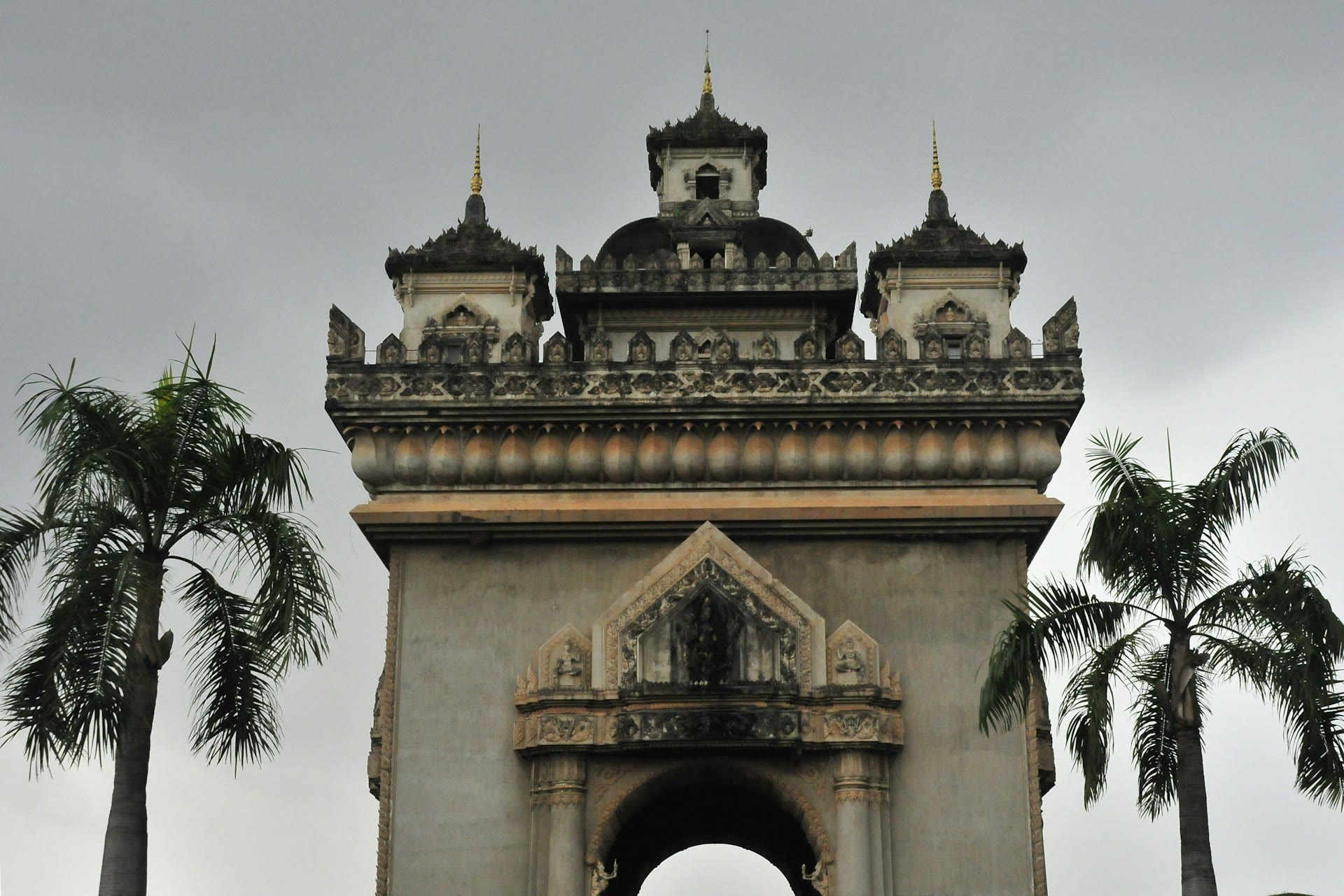
Patuxai, meaning Victory Gate, was built between 1957 and 1968 in memory of the Lao soldiers who died in World War II and in the war of independence from France.[2] It is a little taller than its Parisian counterpart, has four gates rather than two and is covered in distinctly Lao designs.[2]
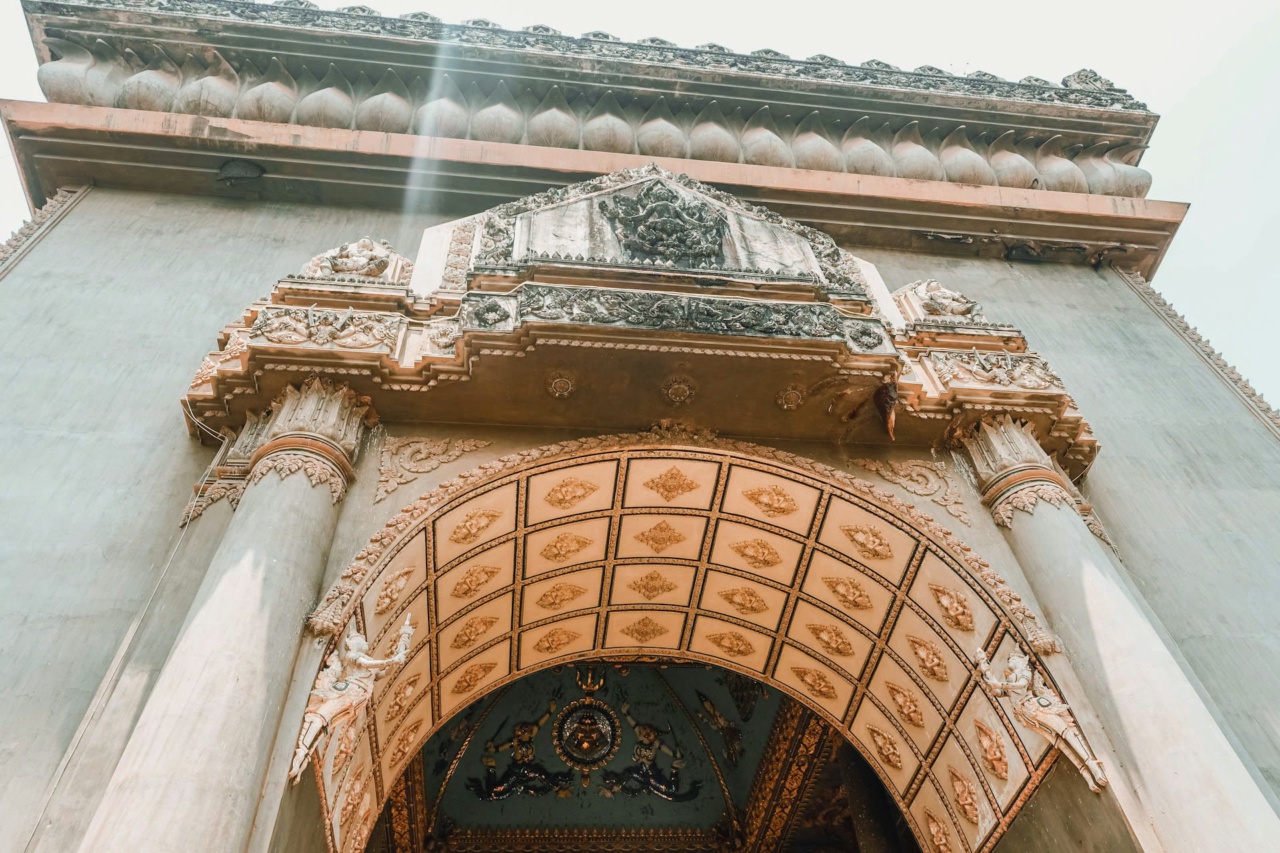
Look for the four arched passageways and the five towers on top: one at each corner and a fifth, higher one in the centre, all in traditional Lao style, decorated with flower motifs and topped with golden finials.[2]
What to notice beneath the arches
The exterior carries traditional Lao motifs: Buddhist symbols, Hindu deities and apsaras, the female spirits of clouds and waters.[2] The ministry also points to Kinnaly, the mythical bird-woman.[1] These details set the monument apart from its Parisian model: the overall arch form is European, the decorative language is Lao.
Pause beneath an arch and look upward. The ceilings show Hindu gods such as Brahma and Vishnu and mythical creatures including the bird-woman Kinnaree and the three-headed elephant Erawan.[2] They are easy to miss if you simply walk through, and you do not need to climb to see them.
If you climb, use the panorama to understand the city's layout: the wide avenue below, the government buildings, the green of the park. Views depend on the weather and the levels that are open.
Admission and hours
Patuxai is open daily from 08:00 to 17:00, and admission is 30,000 LAK per person (figures from the ministry's listing, last updated in April 2025).[1] Prices in kip are what counts, so bring cash in the local currency.
Wear shoes with a good grip for the stairs, bring water and give yourself time to descend before closing.
Transport and a pause in the park
Patuxai stands on Lanexang Avenue, also written Lane Xang, a circular main road lined with government offices, ministries and temples, which makes it an easy orientation point.[2] From your hotel, check the walking route and the crossings, as traffic on the avenue is heavy.
If you take a tuk-tuk, agree the total vehicle price, the number of passengers, waiting time and any return trip before you set off. If you hire a bicycle, check its condition and the rental period first.
The park in front is where Vientiane residents come to relax, get fresh air and exercise, with a fountain at the centre.[2] Next to the monument, the old Ministry of Justice area was scheduled for redevelopment as a park with a garden, food stall, souvenir shop and public toilets in 2024,[2] so expect some changes to paths and areas around it.
Combine Patuxai with other Vientiane stops
Patuxai is one of the ten popular attractions in Vientiane, alongside temples such as Wat Si Saket and Pha That Luang.[2] Pha That Luang is the Vientiane stupa, not Phousi Hill in Luang Prabang. Visit the temples after Patuxai and dress modestly for them: shoulders and knees covered.
At souvenir stalls, compare the item, quality and price before you buy.
The Laos overview helps connect this city visit with onward travel.
Sources and background
Numbers in the text such as [1] refer to these sources.
- [1] Tourism Marketing & Promotion Department, Ministry of Culture and Tourism: Vientiane Capital: Patuxay (Victory Monument). Retrieved October 21, 2026.
- [2] Lao News Agency (KPL): Patuxay to be renovated (24 May 2024). Retrieved October 21, 2026.
Frequently Asked Questions
Patuxai, also written Patuxay, is a victory monument on Lanexang Avenue in Vientiane. It was built between 1957 and 1968 in memory of Lao soldiers. Its four arches and five towers combine a triumphal-arch form with Lao motifs and ceiling paintings.
Admission is 30,000 LAK per person, and the monument is open daily from 08:00 to 17:00. These figures come from the Ministry of Culture and Tourism's listing, last updated in April 2025.
Yes. The exterior, the Lao decoration and the painted ceilings beneath the arches are an architectural visit in themselves, and the park in front is a pleasant place to pause.
The climb is by stairs, so it suits visitors who are comfortable with a staircase. If stairs are difficult for you, enjoy the arches, ceilings and park from the ground instead.
Check the route from your own hotel on foot, or take a tuk-tuk. For a tuk-tuk, agree the total vehicle price, the number of passengers, waiting time and the return trip before you leave.
A panorama across Vientiane. Weather and the levels that are open affect the view, so choose a clear day.
Only if you arrive before the monument closes at 17:00. If you are late, enjoy the exterior and the park instead.