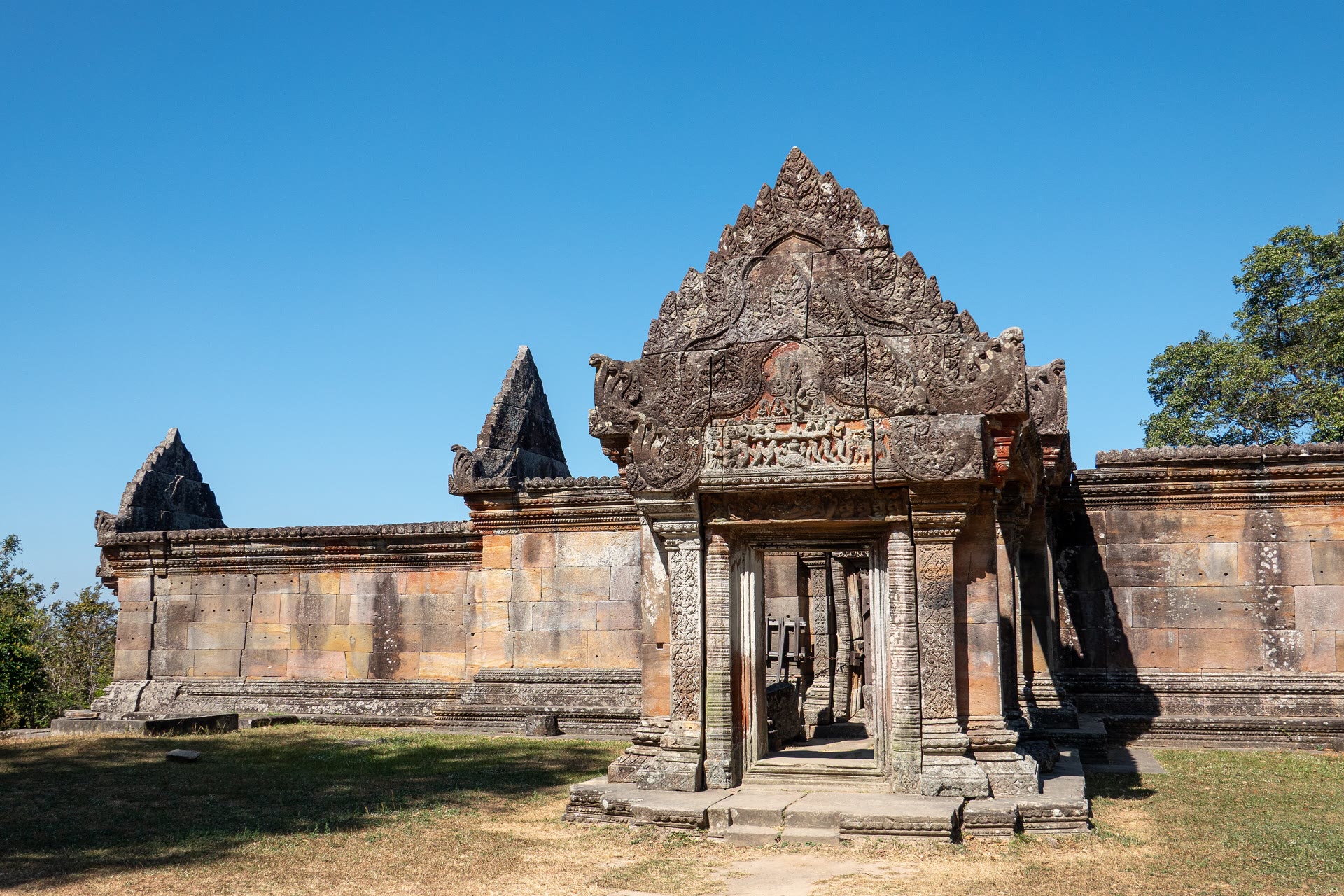
Preah Vihear: Cambodia's Clifftop Temple on the Thai Border
Perched on a 525-meter cliff at the edge of the Dangrek Mountains, Preah Vihear Temple commands one of the most dramatic settings of any ancient monument in the world. Below the cliff, the Cambodian plain stretches endlessly toward the horizon. Above, the temple's sanctuaries climb the ridge in a sequence of carved gopuras (entrance pavilions) connected by an 800-meter ceremonial causeway. It is a place where Khmer architecture and raw geology merge into something genuinely breathtaking.
Preah Vihear sits on the border between Cambodia and Thailand, and this location has made it one of the most politically contested temples in Southeast Asia. A long-running territorial dispute has led to military clashes, an International Court of Justice ruling, and periods of restricted access. Before planning a visit, always check the current situation, as access from the Cambodian side has been intermittently affected by border tensions. When it is open, however, Preah Vihear offers an experience unlike anything at Angkor: a remote, uncrowded, and profoundly atmospheric temple that rewards the effort of getting there.
History
The origins of Preah Vihear trace back to the 9th century, when a hermitage was established on the mountaintop. The temple as it exists today was built primarily during the reigns of Suryavarman I and Suryavarman II in the 11th and early 12th centuries, though construction and modification spanned several Khmer kings over roughly 300 years.
The temple is dedicated to Shiva and served as a royal pilgrimage site. Its mountain setting was deliberate: in Hindu cosmology, mountains represent Mount Meru, the home of the gods, and building a temple on a natural peak amplified this symbolic connection. The Dangrek ridge provided both the spiritual elevation and the natural defensive position that made the site ideal.
Unlike the temples of Angkor, which were abandoned and consumed by jungle, Preah Vihear has remained relatively well-known throughout Cambodian history, partly because of its spectacular visibility from the plains below. The temple was inscribed as a UNESCO World Heritage Site in 2008, recognized for its outstanding architecture and its exceptional adaptation to its natural environment.
The Border Dispute
Preah Vihear's location on the border has made it a flashpoint for Cambodian-Thai tensions. In 1962, the International Court of Justice ruled that the temple belonged to Cambodia. However, the surrounding land remained contested. When UNESCO listed the temple in 2008, the dispute intensified, leading to military standoffs and armed clashes between the two countries' forces in 2008, 2009, and 2011.
In 2013, the ICJ reaffirmed its ruling, declaring the promontory around the temple to be Cambodian sovereign territory. The situation has been mostly calm since, but periodic tensions mean that access can be restricted without notice. The temple is accessible only from the Cambodian side; the Thai border crossing at the cliff edge has been closed for years.
Things to Do
Architecture and Layout
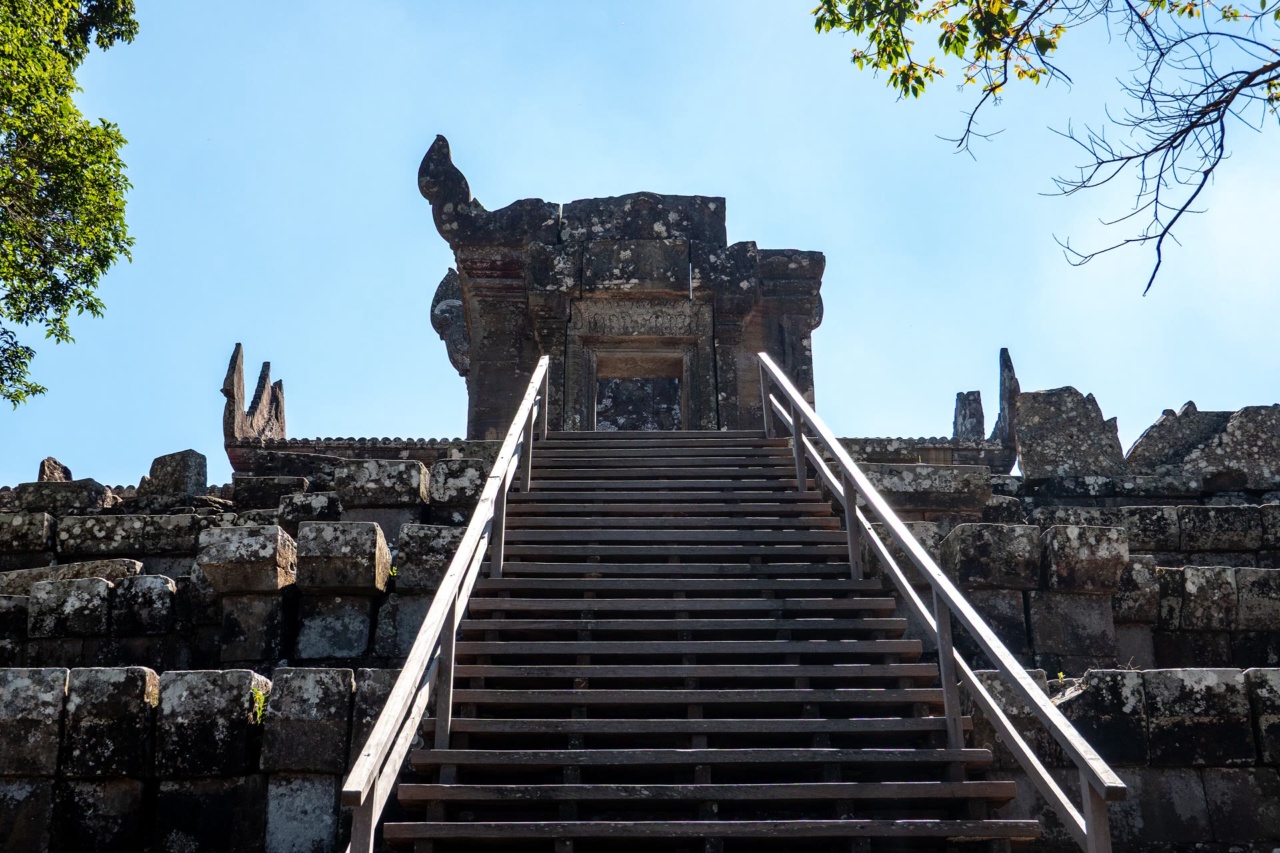
Preah Vihear is unique among Khmer temples in its layout. Instead of the conventional rectangular plan with an east-facing orientation, the temple is built along a linear north-south axis running 800 meters up the mountainside. Visitors ascend through a series of five gopuras (monumental entrance buildings), each marking a transition to a higher, more sacred level.
The Five Gopuras
- Gopura V (northernmost): The lowest and first entrance, featuring a cruciform plan and naga (serpent) balustrades. This marks the beginning of the ceremonial approach.
- Gopura IV: Connected to Gopura V by a long causeway with carved boundary stones. Features carved lintels depicting scenes from Hindu mythology.
- Gopura III: A larger structure with galleries and well-preserved pediments showing Shiva and other deities. The carvings here are among the finest at the site.
- Gopura II: Features galleries with windows and carved columns. The transition from this level to the final gopura marks a significant increase in elevation.
- Gopura I (southernmost): The main sanctuary at the cliff's edge. This is the spiritual heart of the complex, containing the central shrine. Behind it, the cliff drops away dramatically to the Cambodian plain far below.
The processional approach, climbing through increasingly elaborate structures toward the cliff-edge sanctuary, creates a powerful sense of ascent from the earthly to the divine. The architects used the natural slope of the mountain to choreograph this spiritual journey in a way that no flat-ground temple could achieve.
Carved Details
The quality of Preah Vihear's stone carving rivals Angkor Wat. Lintels above doorways depict scenes from Hindu mythology, including the Churning of the Ocean of Milk, Shiva dancing, and Krishna lifting Mount Govardhana. The pediments feature intricate foliate patterns and mythological narratives carved in deep relief. The stone used is a fine-grained sandstone that has weathered remarkably well given the temple's exposed mountain location.
The View
The view from the southern cliff edge of the temple is the payoff for the long journey to get here. The Cambodian lowlands extend to the horizon in a vast, flat expanse of forest, farmland, and scattered villages. On clear days, you can see for over 100 kilometers. The cliff drops nearly vertically, and the sense of height and space is extraordinary.
This panorama was not incidental to the temple's design. The sanctuary was placed at the cliff edge precisely to command this view, positioning the worshipper between heaven and earth at the moment of arrival at the holiest point. No photograph fully captures the scale of the vista or the vertigo of standing at the edge.
Getting to Preah Vihear
Reaching Preah Vihear requires more planning than most Cambodian temples. The site is remote, roughly 245 kilometers from Siem Reap and 418 kilometers from Phnom Penh.
From Siem Reap
The most common approach is a day trip or overnight excursion from Siem Reap. The drive takes approximately four hours each way on mostly paved roads. Options include:
| Transport | Cost (approx.) | Notes |
|---|---|---|
| Private car/driver (day trip) | $120-180 | Long day (12+ hours), split cost with other travelers |
| Organized tour | $60-100/person | Often combined with Koh Ker temple |
| Bus to Sra'em + moto | $15-25 total | Budget option, requires overnight in Sra'em |
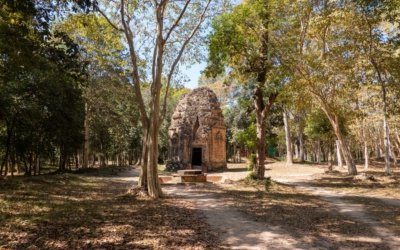
Many tours combine Preah Vihear with Koh Ker, a dramatic pyramid temple roughly halfway between Siem Reap and Preah Vihear. This combination makes the long drive more worthwhile and fills a full day.
Getting Up the Mountain
From the ticket office at the base, the road up the mountain is steep and unpaved. Visitors must hire a motorcycle ($5) or pickup truck ($25) with a driver to reach the top. Private vehicles are not permitted on the mountain road. The ride takes about 15-20 minutes and is an adventure in itself, switchbacking up the densely forested mountainside.
Entrance Fee
Admission to the temple is $10 per person. A passport or ID is required at the ticket office. The motorcycle/pickup fee to ascend the mountain is separate.
Visiting Tips
- Check access before you go. Due to the border dispute, access can be restricted without notice. Check with your hotel, a local tour operator, or recent traveler reports before committing to the trip. When open, the temple is accessible daily from approximately 7:30 to 17:30.
- Start early. If day-tripping from Siem Reap, leave by 6:00 to arrive mid-morning. This allows time for the temple visit and the return drive before dark.
- Bring water and food. Facilities at the temple are minimal. A few basic food stalls operate near the ticket office at the base, but nothing is available at the temple itself. Carry at least two liters of water per person.
- Wear sturdy shoes. The causeway and stairs are uneven, and the cliff edge has minimal safety barriers. Good footwear with grip is essential, especially if the stone is wet.
- Combine with Koh Ker. The pyramid temple of Prasat Thom at Koh Ker is roughly on the route between Siem Reap and Preah Vihear. Visiting both in one day makes the long drive significantly more worthwhile.
- Consider staying overnight. The town of Sra'em, about 40 kilometers south, has basic guesthouses. Staying overnight allows a more relaxed visit and the chance to see the temple in early morning light without the pressure of a long return drive.
- Be careful at the cliff edge. The southern edge of the temple drops hundreds of meters with minimal or no fencing. Keep a safe distance, especially on windy days or if the stone is wet. This is a genuine safety concern, not a formality.
- Bring sun protection. The temple compound is largely exposed with limited shade. A hat and sunscreen are essential.
Preah Vihear is not a convenient temple visit. The long drive, the remote location, and the access uncertainties make it a genuine expedition. But for travelers who make the effort, it offers something the crowded temples of Angkor cannot: a masterpiece of Khmer architecture in a setting of staggering natural drama, experienced in near-solitude. For more on planning temple itineraries in Cambodia, GoAsia.cc has comprehensive guides.
Frequently Asked Questions
Preah Vihear is an 11th-century Hindu temple dedicated to Shiva, built along an 800-meter axis on a 525-meter cliff in the Dangrek Mountains on the Cambodian-Thai border. It is a UNESCO World Heritage Site recognized for its exceptional architecture, carved stone ornamentation, and dramatic adaptation to its mountain setting.
Temple admission is $10 per person with ID required. Additionally, visitors must hire a motorcycle ($5) or pickup truck ($25) to ascend the steep mountain road from the ticket office. If hiring a private car from Siem Reap, the day trip costs $120-180, or $60-100 per person on an organized tour.
The temple is about 245 kilometers from Siem Reap, a four-hour drive each way. Most visitors hire a private car and driver for a day trip ($120-180, shareable) or join an organized tour ($60-100 per person), often combined with Koh Ker temple. Budget travelers can bus to Sra'em and hire a moto from there.
Access to Preah Vihear can be restricted without notice due to the ongoing border dispute between Cambodia and Thailand. Always check current conditions with your hotel, a local tour operator, or recent traveler reports before making the trip. When open, visiting hours are approximately 7:30 to 17:30 daily.
The temple sits on the border between Cambodia and Thailand in the Dangrek Mountains. The International Court of Justice ruled the temple belongs to Cambodia in 1962, and reaffirmed this in 2013. However, surrounding land remains contested, leading to military standoffs and intermittent access restrictions. The temple is accessible only from the Cambodian side.
For temple enthusiasts, absolutely. The clifftop setting, the 100-kilometer views over the Cambodian plain, the quality of the carvings, and the near-solitude offer an experience completely different from Angkor. Combining the visit with Koh Ker temple makes the long drive more rewarding. It is not for casual sightseers who prefer convenience.
The temple itself requires 1.5 to 2 hours to walk the full 800-meter causeway through all five gopuras and enjoy the cliff-edge views. Including the mountain ascent and descent, plan 2.5-3 hours at the site. A day trip from Siem Reap including driving takes 12 or more hours total.
When open to visitors, the temple area itself is safe. The main hazard is the cliff edge at the southern end, which has minimal safety barriers and drops hundreds of meters. Exercise extreme caution near the edge, especially in wet conditions. Check the security situation regarding the border dispute before traveling.