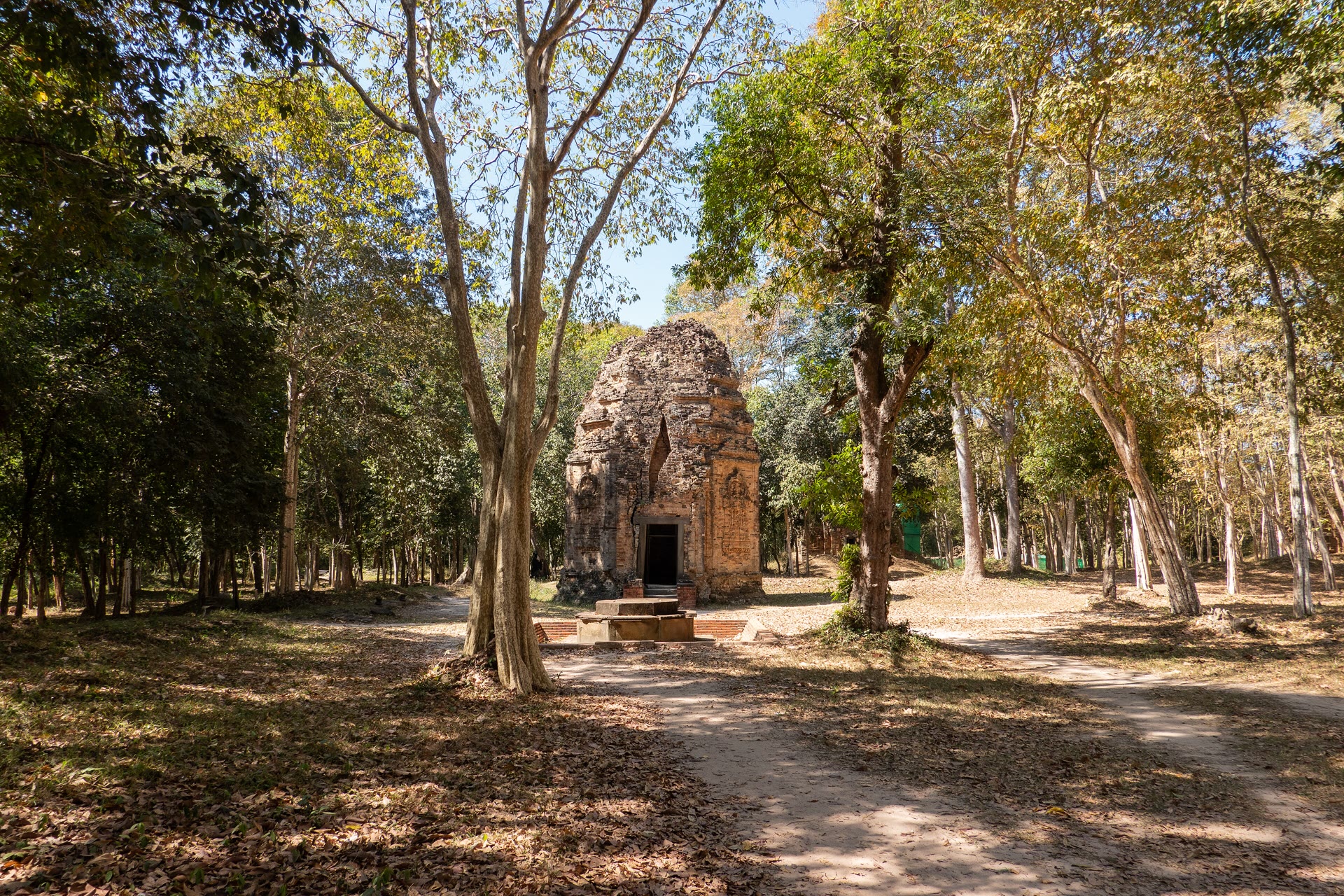
Sambor Prei Kuk: Cambodia's Pre-Angkorian UNESCO Temple Complex
Centuries before the first stone of Angkor Wat was laid, a civilization was already building elaborate brick temples in the forests of what is now Kampong Thom province. Sambor Prei Kuk - meaning "the temple in the richness of the forest" - was the capital of the Chenla Empire, one of the predecessor states of the Angkorian kingdom. Its temples date from the 7th century, making them roughly 500 years older than Angkor Wat, and they represent the earliest large-scale brick architecture in Southeast Asia.
Inscribed as a UNESCO World Heritage Site in 2017, Sambor Prei Kuk contains more than 100 temples scattered through a forest setting that feels genuinely remote despite being only a few hours from Siem Reap. Among these ruins are ten octagonal temples - a form found nowhere else in the region - and some of the finest pre-Angkorian carved sandstone decoration in existence. The artistic style developed here became the template for everything that followed in Khmer architecture, making Sambor Prei Kuk the place where the aesthetic language of Angkor was born.
Despite its significance, Sambor Prei Kuk sees a fraction of the visitors that the Angkor temples receive. On a quiet weekday, you might have entire temple groups to yourself, walking through forest paths with nothing but birdsong and the sound of your own footsteps on the leaf-covered ground. For travelers who have seen the Angkor temples and want to understand what came before - or simply want to experience ancient ruins without the crowds - Sambor Prei Kuk is one of the most rewarding archaeological sites in Cambodia.
History of Sambor Prei Kuk
The site has been identified as Ishanapura, the capital of the Chenla Empire. Chenla was a Hindu-Buddhist kingdom that emerged in the 6th century and eventually consolidated control over much of mainland Southeast Asia before fragmenting and being succeeded by the Angkorian Empire.
King Isanavarman I, who reigned from approximately 616 to 637 CE, established Ishanapura as his capital and is believed to have built the main temple complex (Group N). An inscription at the site dated to 627 CE confirms construction during his reign. The temples were dedicated primarily to Shiva, though Buddhist elements appear in later additions.
The city was the center of a substantial urban area, enclosed by a double-walled compound spanning roughly 1,000 acres. At its height, Ishanapura was one of the most important cities in mainland Southeast Asia. After the rise of Angkor in the 9th century, the capital shifted northwest and Sambor Prei Kuk gradually fell into disuse, eventually being reclaimed by the forest.
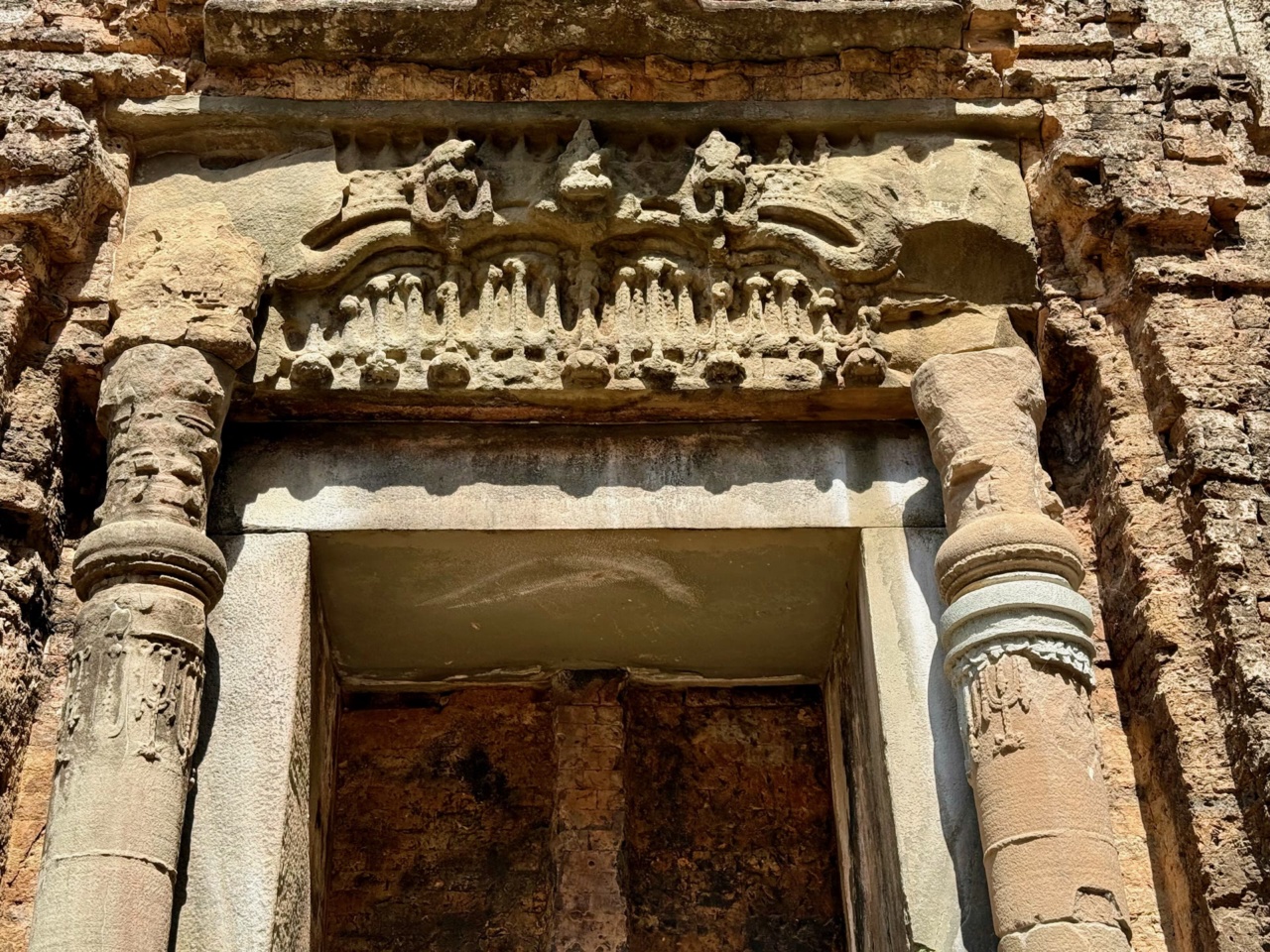
The decorative style developed at Sambor Prei Kuk - characterized by intricate carved lintels, colonnades, and medallions on brick walls - became known to art historians as the "Sambor Prei Kuk Style" and is recognized as the foundation of all subsequent Khmer artistic traditions. Every carved devata and ornamental lintel at Angkor Wat traces its artistic lineage back to what was first created here.
Things to Do
The Three Temple Groups
Sambor Prei Kuk's temples are organized into three main clusters, designated Group N (North), Group C (Central), and Group S (South). Each has its own character and highlights. Walking between all three groups covers roughly 6 to 7 km of forest trails.
Group N - Prasat Sambor
The northern group is considered the main temple complex and the most historically significant. Prasat Sambor, the central sanctuary, dates from the 7th century and was dedicated to Shiva. The group is enclosed within a rectangular wall and contains several brick towers in varying states of preservation. The carved lintels and door frames here display some of the finest pre-Angkorian stone carving in Cambodia, with scenes of gods, mythical creatures, and ornamental foliage that anticipate the more elaborate work at Angkor centuries later.
Group S - Prasat Yeah Puon
The southern group contains 22 sanctuaries enclosed within a double wall, built during the reign of Isanavarman I (approximately 600 to 635 CE). Five of its temples are octagonal - a unique architectural form found only at Sambor Prei Kuk. These octagonal towers are the site's most distinctive structures and a major reason for its UNESCO inscription. The buildings are constructed from brick, laterite, and sandstone, and several retain intricate carved decoration on their exterior surfaces. Some of the brick carvings show flying palaces (miniature architectural scenes carved in relief), a motif that became a hallmark of later Khmer art.
Group C - Prasat Tao (The Lions' Temple)
The central group is named after the lion sculptures that once guarded its central sanctuary, Prasat Boram. This is the newest of the three main groups, with some structures dating to the 9th century. The lions themselves are now largely eroded, but the nickname stuck. Group C has a slightly different feel from the other two, with larger trees growing among and through the brick structures and a more overgrown, atmospheric setting. The level of tree integration here is reminiscent of Ta Prohm at Angkor, but without any of the crowds.
Getting to Sambor Prei Kuk
Sambor Prei Kuk is located in Kampong Thom province, about 30 km northeast of Kampong Thom town and roughly 200 km from Siem Reap.
| From | Transport | Duration | Cost |
|---|---|---|---|
| Siem Reap | Private car/taxi | 2.5 - 3 hours | $60 - $80 round trip |
| Kampong Thom | Tuk-tuk | 45 min - 1 hour | $15 - $20 round trip |
| Kampong Thom | Motorbike rental | 45 min | $5 - $8/day |
| Phnom Penh | Bus to Kampong Thom + tuk-tuk | 3 - 4 hours total | $8 bus + $15 tuk-tuk |
From Kampong Thom, follow National Highway 6 north for 5 km, then continue on NH62 toward Preah Vihear for 11 km. A laterite sign marks the right turn, and a sealed road leads 14 km to the temple entrance and parking area. The road is in good condition and navigable by any vehicle.
Sambor Prei Kuk also works as a convenient stop between Siem Reap and Phnom Penh, as Kampong Thom sits roughly midway between the two cities on NH6. Breaking the overland journey with a temple visit makes the long drive much more interesting.
Admission and Guides
- Entrance fee: $10 for foreign visitors.
- Local guides: Available through the community-based organization Isanborei. Half-day guides cost $6, full-day guides $10. Guides gather near the old entrance at Prasat Sambor and are knowledgeable about the site's history and architecture.
- Opening hours: The site is open daily from approximately 7:00 AM to 5:30 PM.
- Facilities: Clean restrooms near the main group. A few local vendors sell drinks, snacks, and packaged nuts near the entrance and parking area. There are no restaurants on site - eat before arriving or bring food.
How to Explore the Site
The three main temple groups are connected by forest trails totaling about 6 to 7 km. You have several options for getting around.
- Walking: The most immersive way to experience the site. Allow 3 to 4 hours to see all three groups at a comfortable pace. The trails are flat and well-maintained, though shade is plentiful so the walk is manageable even in warm weather.
- Bicycle: Some visitors bring bicycles or rent them in Kampong Thom. Cycling between groups is pleasant and saves time.
- Motorbike or car: You can drive between the groups on connecting roads if walking is not practical. Parking is available near each group.
Most visitors start at Group N (Prasat Sambor), which is closest to the main entrance and parking area, then continue to Group C and Group S. A guide will help you spot the most important carvings and architectural details that are easy to overlook without expert knowledge.
Tips for Visiting Sambor Prei Kuk
- Hire a local guide. At $6 for a half day, the community guides are excellent value. They point out carved details you would walk past, explain the historical significance of each group, and support the local community directly. The UNESCO listing was partly achieved because of local community efforts to protect and promote the site.
- Bring insect repellent. The site is in a forested area, and mosquitoes can be persistent, especially in the rainy season and during early morning or late afternoon visits.
- Visit between Siem Reap and Phnom Penh. Rather than making a dedicated trip, consider stopping at Sambor Prei Kuk while traveling overland between Cambodia's two main cities. Kampong Thom is a natural lunch stop on the route, and the detour to the temples adds about two to three hours to the journey. GoAsia.cc has guides covering both Siem Reap and Phnom Penh to help plan the rest of your route.
- Wear sun protection and bring water. Some sections between the temple groups are exposed to direct sun, and there are limited places to buy drinks on site. A hat, sunscreen, and at least a liter of water per person are recommended.
- Go on a weekday. The site is already quiet compared to Angkor, but weekday visits are especially peaceful. You may share the temples with only a handful of other visitors - or none at all.
- Look closely at the brick carvings. Unlike the sandstone carvings at Angkor, many of the decorative elements at Sambor Prei Kuk are carved directly into the brick walls. The flying palace motifs - miniature architectural scenes showing celestial buildings - are particularly remarkable and easy to miss if you are not looking for them.
- Stay overnight in Kampong Thom if possible. While a day trip from Siem Reap is feasible, spending a night in Kampong Thom allows you to visit the temples in the early morning when the light is soft and the forest is most alive. Kampong Thom has simple but comfortable guesthouses for $10 to $25 per night.
- Be aware of landmine history. The area around Sambor Prei Kuk was affected by conflict, and while the main temple trails and visitor areas have been thoroughly cleared and are completely safe, do not wander off marked paths into unmarked forest areas.
Frequently Asked Questions
Sambor Prei Kuk is a UNESCO World Heritage Site in Kampong Thom province, Cambodia, containing over 100 pre-Angkorian temples dating from the 7th century. It was the capital of the Chenla Empire (Ishanapura) and represents the oldest large-scale brick architecture in Southeast Asia. The artistic style developed here became the foundation for all subsequent Khmer art, including that of Angkor Wat.
The entrance fee is $10 for foreign visitors. Community-run guides are available for $6 (half day) or $10 (full day), and are well worth the small cost. Transport from Kampong Thom by tuk-tuk runs $15 to $20 round trip. A full day trip from Siem Reap by private car costs $60 to $80.
The easiest base is Kampong Thom town, about 45 minutes from the site by tuk-tuk. From Siem Reap, the drive takes 2.5 to 3 hours. The site also works well as a stopover between Siem Reap and Phnom Penh, since Kampong Thom is roughly midway on National Highway 6.
Allow 3 to 4 hours to walk through all three main temple groups at a comfortable pace. The trails between groups total about 6 to 7 km. If driving between groups, you can see the highlights in 2 to 3 hours. Add travel time from your base - a full morning or afternoon is ideal.
Ten of the temples at Sambor Prei Kuk have an octagonal floor plan, a design found nowhere else in Southeast Asian temple architecture. Five of these are in Group S (Prasat Yeah Puon). Their unique form was a key reason for the site's UNESCO World Heritage inscription and represents one of the most distinctive architectural innovations of the pre-Angkorian period.
Yes, though it makes for a long day with roughly 5 to 6 hours of driving round trip. A private car costs $60 to $80. A better option is to stop on the way between Siem Reap and Phnom Penh, or to stay overnight in Kampong Thom for an early morning visit when the light and atmosphere are at their best.
Sambor Prei Kuk is approximately 500 years older than Angkor Wat and uses brick rather than sandstone as its primary material. The temples are smaller in scale but significant for their unique octagonal designs and the foundational artistic style they established. The experience is also radically different - far fewer visitors, dense forest setting, and a sense of genuine discovery that the crowded Angkor complex cannot offer.