Angkor Wat: Tickets, Temple Highlights and Visit Planning
Contents
- 1. Tickets and Passes
- 2. The Sunrise Experience
- 3. Exploring Angkor Wat Itself
- 3.1 The Bas-Relief Galleries
- 3.2 The Upper Sanctuary
- 3.3 The Libraries and Courtyards
- 4. Must-Visit Temples Beyond Angkor Wat
- 4.1 Bayon (Angkor Thom)
- 4.2 Ta Prohm
- 4.3 Preah Khan
- 4.4 Banteay Srei
- 4.5 Beng Mealea
- 5. Suggested Itineraries
- 5.1 One Day (Essential Highlights)
- 5.2 Three Days (Comprehensive)
- 6. Getting Around the Park
- 7. Practical Tips for Your Visit
- 8. When to Visit
- 9. Sources and background
- 10. Frequently Asked Questions
For a first temple day, prioritize Angkor Wat, Bayon and Ta Prohm with a midday rest. Choose your pass by the number of days you will actually visit, arrange transport separately and buy the official ticket ahead of a sunrise start. Bakan opens later than the lower galleries, and Beng Mealea needs a separate coverage check.
Tickets and Passes
Children under 12 enter free; you may be asked for a passport as proof of age.[1] Everyone else needs an Angkor Pass. Children under 12 may not climb the Upper Tower.[2]
| Pass Type | Price | Validity |
|---|---|---|
| 1-Day Pass | $37[3] | Single day |
| 3-Day Pass | $62[3] | Any 3 days within 7 days |
| 7-Day Pass | $72[3] | Any 7 days within 30 days |
Prices are per paying visitor, in US dollars. Choose a one-day pass for one temple day, or a three-day pass if you will return within its seven-day window. The seven-day pass allows more repeat visits within 30 days. Transport, guides and meals are separate.
Buy through the official Angkor Enterprise website or its Road 60 ticket office.[1] Three-day and seven-day passes require a photo; one-day tickets do not.[1] The ticket counter is open 5:30 AM to 5:00 PM, which is separate from temple opening hours.[3] A one-day ticket for tomorrow, bought after 4:45 PM, is also valid for that evening's sunset.[1] Select the intended date before paying and save the ticket offline for an early start.
Things to Do
Offers are only loaded from GetYourGuide after you click. GetYourGuide can then process your IP address and set cookies. Privacy Policy
GetYourGuide partner offers. GoAsia may earn a commission if you book through these offers. Check whether tickets or transfers are included, and follow the attraction's official booking and admission rules.
The Sunrise Experience
Sunrise gives you the towers in silhouette and a cooler start to the walk. Angkor Wat is open from 5:00 AM to 5:30 PM, while the Bakan upper sanctuary opens later.[2] The park ticket window runs from 5:00 AM to 6:30 PM, but not every temple or level is open for that whole period.[3]
Agree your pickup time with the driver based on the hotel location, ticket arrangements and the season's sunrise time. Allow for the entry check and walk from the drop-off area. Follow the open approach toward the western front of the temple; a torch is useful before dawn.
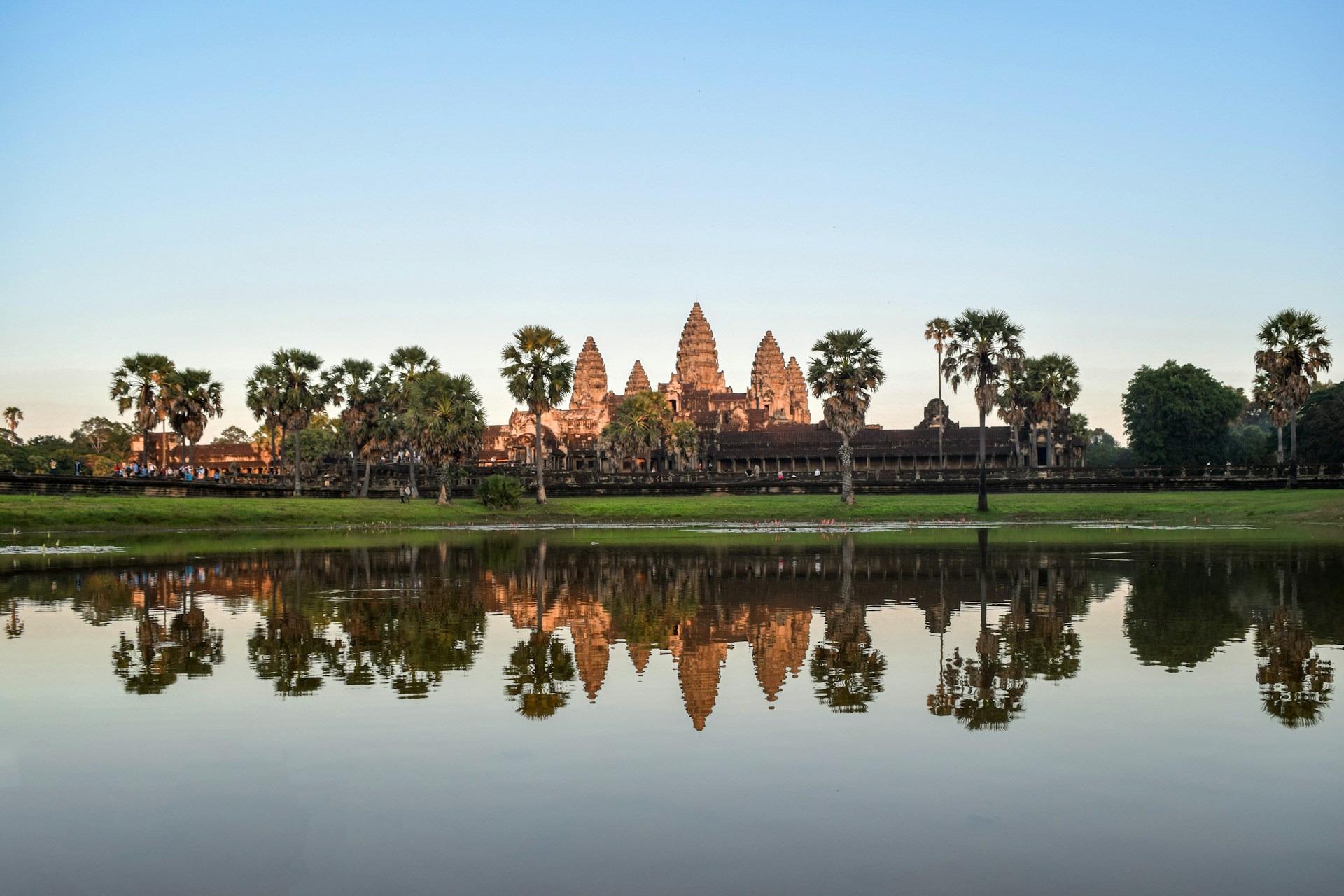
- Northern reflection pool: A familiar view of the towers across the water. The reflection depends on water level, wind and your position, and popular mornings can be crowded.
- Southern library area: An alternative angle from the forecourt. Choose an accessible spot that leaves the paths clear; historic stonework is not seating or a climbing platform.
After sunrise, continue through the open lower galleries rather than expecting immediate access to every level. Take breakfast and a rest before the next temple if needed. Clouds can hide the sun, and popular mornings are busy.
Exploring Angkor Wat Itself
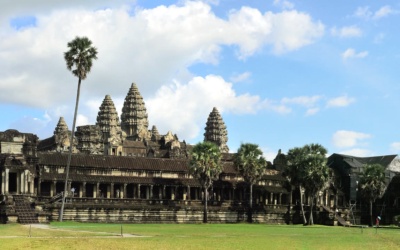
Angkor Wat was built in the 12th century under King Suryavarman II and originally dedicated to Vishnu. Construction is estimated to have taken about 30 years.[2] Its west-facing approach, moat and five-tower silhouette make its scale immediately apparent. The temple later became a Buddhist pilgrimage site and remains a place of worship, so a visit should leave space for both the architecture and the people using it.
Angkor Wat is the centerpiece of a much larger landscape: an archaeological park of approximately 400 square kilometers, with forests, temples, reservoirs and canals from the Khmer capitals of the 9th to 15th centuries.[4] One day can cover a few major temples; several days allow time for the galleries and quieter corners without fitting every stop into a single circuit.
Allow around three to four hours for an unhurried Angkor Wat visit, including galleries and rest stops. Adjust this to your pace and to whether you climb Bakan.
The Bas-Relief Galleries
The lower galleries contain a substantial cycle of historical and mythological reliefs. The panels are about two meters high and cover more than 1,000 square meters.[2] Four useful stops are:
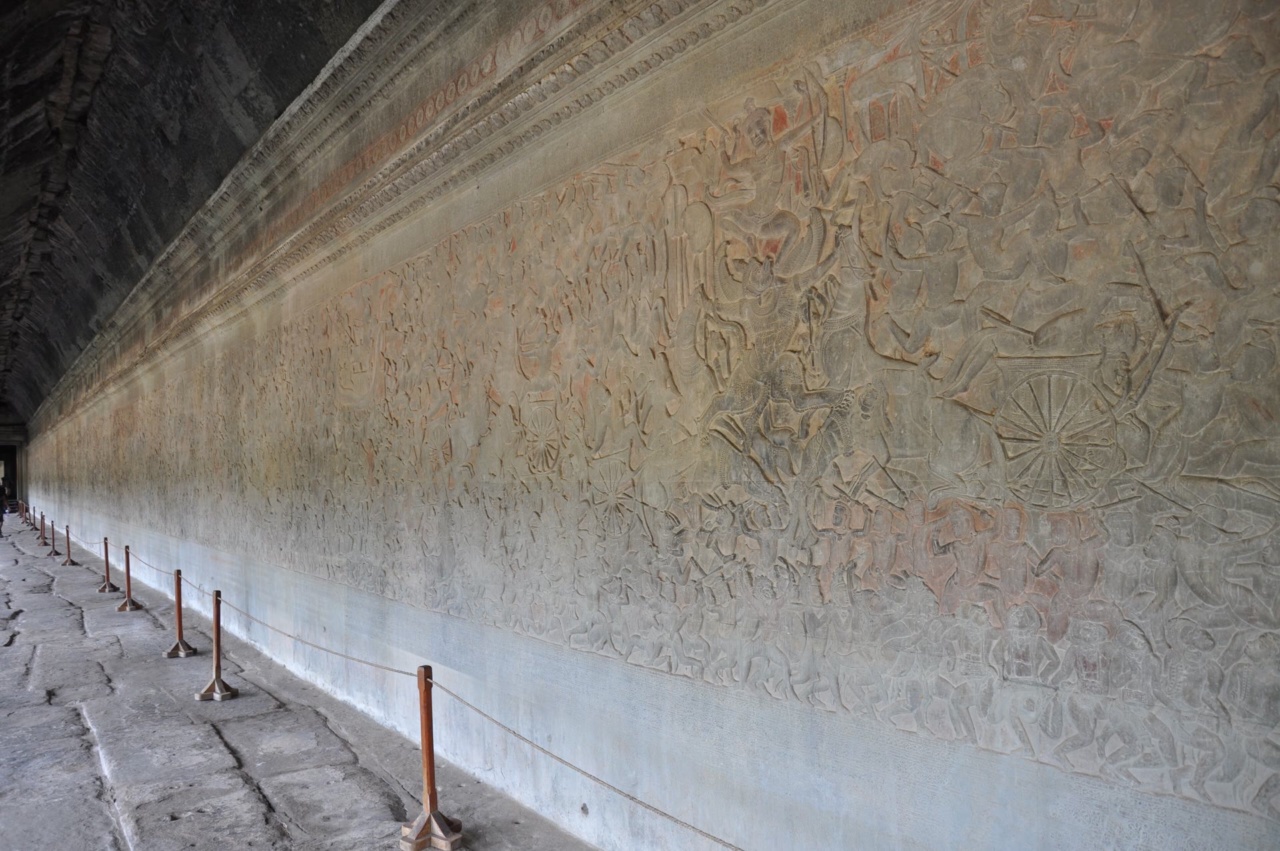
- Churning of the Sea of Milk: East gallery, southern section. Gods and demons pull the serpent Vasuki around Mount Mandara to obtain the nectar of immortality.[2]
- Battle of Kurukshetra: West gallery, southern section. The Pandava and Kaurava clans fight in a scene from the Mahabharata.[2]
- Suryavarman II's procession: South gallery, western section. The king and his entourage connect the temple's imagery to its royal founder.[2]
- Heavens and Hells: South gallery, eastern section. The relief shows 37 heavens and 32 hells, with punishments in the lower registers.[2]
An anticlockwise walk from the west brings these panels into a convenient sequence. The anticlockwise direction and the west-facing temple are linked to Brahmanic funerary ritual.[2]
The Upper Sanctuary
Bakan is the upper sanctuary, reached by steep steps. It is open 7:40 AM to 5:00 PM and closed on Buddhist holy days. Children under 12 and pregnant visitors may not climb.[2] A November 2023 APSARA report describes controlled visitor numbers and short visits, so expect a wait.[5] Follow the signs and staff instructions; the lower galleries are a fine alternative if climbing does not suit you.
The Libraries and Courtyards
The forecourt library buildings and the cruciform gallery called Preah Poan are worth more than a passing glance. Preah Poan's name refers to the Thousand Buddhas; its inscriptions and remaining images record the temple's later Buddhist life.[2] These spaces help explain how a royal Vishnu temple became a pilgrimage site, rather than serving only as backdrops for photographs.
Must-Visit Temples Beyond Angkor Wat
Choose additional temples for their different architecture and stories, rather than treating every stop as compulsory.
Bayon (Angkor Thom)
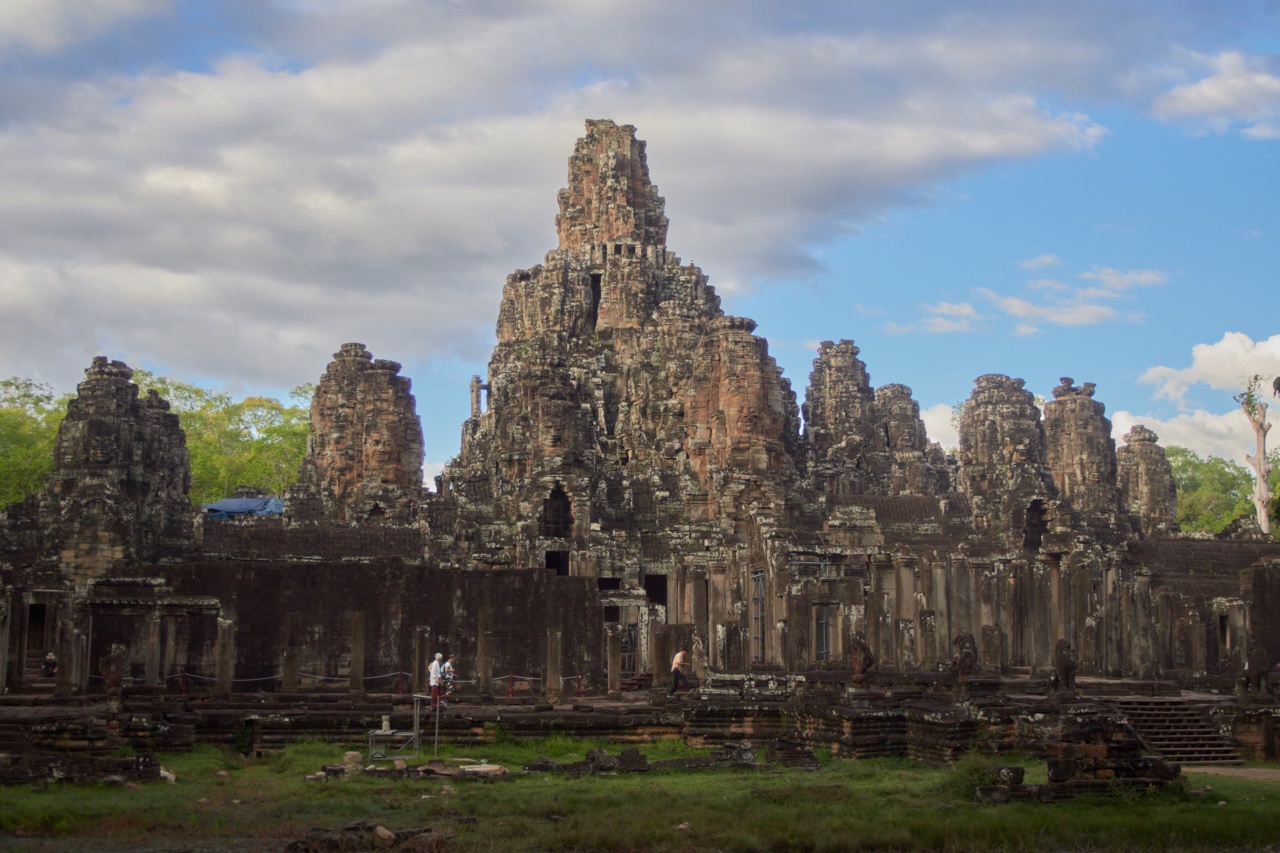
Bayon stands at the center of Angkor Thom and was the state temple of Jayavarman VII, built in the late 12th or early 13th century.[6] Its face towers contrast with Angkor Wat's ordered layout. The reliefs also show historical, mythological and everyday scenes. Plan one to two hours and follow the accessible route; not every upper area is open. It is open 7:30 AM to 5:30 PM.[6]
Ta Prohm
Ta Prohm, originally Rajavihara, was dedicated in 1186 under Jayavarman VII, with his mother associated with the image of Prajnaparamita.[7] Its trees and stone galleries are the main draw, but the site is actively stabilized and restored. It is open 7:30 AM to 5:30 PM; allow one to one-and-a-half hours.[7] Follow the marked route, keep off roots and masonry, and look for the Hall of Dancers as well as the famous tree views.[7]
Preah Khan
Preah Khan was built under Jayavarman VII to honor his father. Successive rectangular galleries surround a Buddhist sanctuary, with Hindu shrines and later additions revealing a layered religious history.[8] Add it to a second day if you enjoy corridors, doorways and a slower architectural visit. Allow at least an hour.
Banteay Srei
Banteay Srei is a 10th-century temple primarily dedicated to Shiva, consecrated in 967. Its smaller buildings and red sandstone support exceptionally detailed decorative carving. It lies about 25 kilometers northeast of the main temple group.[9] Plan a separate half-day outing and agree the extra driving with your driver.
Beng Mealea
Beng Mealea has a separate one-day ticket at USD 10, valid from 6:00 AM to 6:30 PM.[3] Ask Angkor Enterprise whether your Angkor Pass covers it before you commit to the longer outing, and budget the ticket separately until confirmed. Use the open walkways and keep off collapsed stonework.
Suggested Itineraries
One Day (Essential Highlights)
- Early morning: Sunrise at Angkor Wat if you want the early start, then the lower galleries and breakfast.
- After 7:40 AM: Bakan only if open and suitable for your group; otherwise continue through the lower levels.
- Later morning: Bayon and the accessible Angkor Thom route.
- Midday: Lunch and a shaded rest, with time for the return drive if you choose to go back to town.
- Afternoon: Ta Prohm. Add another stop only if the group still has energy.
- Optional late finish: Discuss a sunset stop with the driver using that day's closing time and sunset time. A 4:00 PM arrival is not the sunset itself.
Three Days (Comprehensive)
Use the first day for Angkor Wat, Bayon and Ta Prohm. On a second temple day, choose the Grand Circuit around Preah Khan, Neak Pean and Ta Som. Reserve the third for Banteay Srei, a return to a favorite temple, or a separately planned Beng Mealea outing after checking its ticket coverage. The three-day pass can be used on nonconsecutive days within seven days, leaving room for a rest day.[3]
Getting Around the Park
The distances between temple groups make a driver convenient, while cycling suits visitors comfortable with a longer ride in tropical heat. Separate the vehicle booking from guiding and admission so you can compare like-for-like quotes.
- Tuk-tuk: Agree the circuit, sunrise pickup, waiting time, return trip and any outer-temple supplement in advance. A driver is not automatically a licensed guide.
- Bicycle or e-bike: Check the rental condition, route distance and, for an e-bike, range and charging. A short route with breaks is more realistic than copying a full vehicle itinerary.
- Car with driver: Useful for air conditioning, groups or longer outings. In October 2026 Siem Reap Tuk Tuk offered a sunrise car-and-driver tour at USD 35 per group of one to three, or USD 75 with an English-speaking guide. Both exclude passes and meals.[10]
- Scooter: You can rent and ride a scooter to visit the temples.[1] Before renting, confirm your licence, insurance, permitted route and current access rules. Use a helmet and choose a driver if you are not comfortable on local roads.
Practical Tips for Your Visit
- Clothing: Wear a shirt covering the shoulders and clothing covering the knees from the start.[11] Do not rely on a loose scarf to satisfy Bakan's dress checks.
- Water and heat: Carry drinking water, arrange refills with your driver and stop in shade when needed.
- Footwear: Grippy shoes help on uneven stone and steep or wet steps. Keep to open paths and barriers.
- Respect: Leave reliefs, roots and masonry untouched, give worshipers and monks space, and take litter away. APSARA asks visitors not to give money to children.[12]
- Guide booking: Confirm licence, language, meeting point, duration and what the price includes. A guide is particularly useful for the relief stories; independent visitors can use a map and choose fewer stops.
Keep the pass price, vehicle or tour price, guiding, meals and any outer-site admission as separate budget lines.
When to Visit
November to February is generally the cooler, drier part of the year and is a practical first choice if heat affects your pace. March to May is hotter; June to October is wetter.[13] During wet weather, allow time for showers and slippery paths; avoid exposed areas during thunderstorms.
Sources and background
Numbers in the text such as [1] refer to these sources.
- [1] Angkor Enterprise: Ticket photographs, dates and visitor conditions. Retrieved October 20, 2026.
- [2] APSARA National Authority: Angkor Wat: history, reliefs, visiting hours and Bakan access. Retrieved October 20, 2026.
- [3] Angkor Enterprise: Ticket prices and validity periods. Retrieved October 20, 2026.
- [4] UNESCO World Heritage Centre: Angkor. Retrieved October 20, 2026.
- [5] APSARA National Authority: Bakan: November 2023 visitor controls and access restrictions. Retrieved October 20, 2026.
- [6] Angkor Enterprise: Bayon: historical context and published visiting hours. Retrieved October 20, 2026.
- [7] APSARA National Authority: Ta Prohm: history, conservation and visiting hours. Retrieved October 20, 2026.
- [8] Angkor Enterprise: Preah Khan: history and architectural layout. Retrieved October 20, 2026.
- [9] Angkor Enterprise: Banteay Srei: dedication, location and architecture. Retrieved October 20, 2026.
- [10] Siem Reap Tuk Tuk: VIP sunrise tour: the operator's group prices, inclusions and exclusions. Retrieved October 20, 2026.
- [11] Angkor Enterprise: Angkor visitor code, clothing and monument protection. Retrieved October 20, 2026.
- [12] APSARA National Authority: APSARA visitor information and respectful temple visits. Retrieved October 20, 2026.
- [13] World Meteorological Organization: Siem Reap: monthly climate averages and current official weather forecast. Retrieved October 20, 2026.
Frequently Asked Questions
Allow roughly three to four hours for a slower Angkor Wat visit. One day can combine it with Bayon and Ta Prohm; several days give more time for the Grand Circuit or Banteay Srei. A three-day pass has a seven-day window. Check Beng Mealea coverage separately.
A one-day pass is USD 37 per paying visitor, three days within seven days USD 62, and seven days within 30 days USD 72. Transport, guides, meals and separately ticketed sites cost extra. Compare vehicle prices per group with pass prices per person.
Book a tuk-tuk or car from your hotel and agree the actual circuit, waiting and return trip. Cycling is an option if the distance and heat suit you. The ticket office on Road 60 is a separate stop; obtain an official ticket in advance for sunrise.
It is a good choice for tower silhouettes and a cool, early start. Angkor Wat opens at 5:00 AM; arrange your pickup for your hotel and the season. Bakan opens later. Clouds can hide the sun.
Wear clothing covering shoulders and knees, with shoes that grip uneven steps. Do not rely on a scarf as your only cover. Follow the local dress checks, and note that children under 12 and pregnant visitors cannot climb Bakan.
You can visit independently. A licensed guide adds context to the reliefs and history. Agree the language, duration and total fee before booking; a vehicle driver does not necessarily provide guiding inside temples.
Prioritize Angkor Wat, Bayon and Ta Prohm, with a lunch and rest break. Include Bakan only when open and suitable. Sunset is optional and depends on the day's access, closing time and your energy.
November to February is generally cooler and drier, March to May hotter and June to October wetter. Check the forecast for your dates and allow for showers, heat and slippery stone.