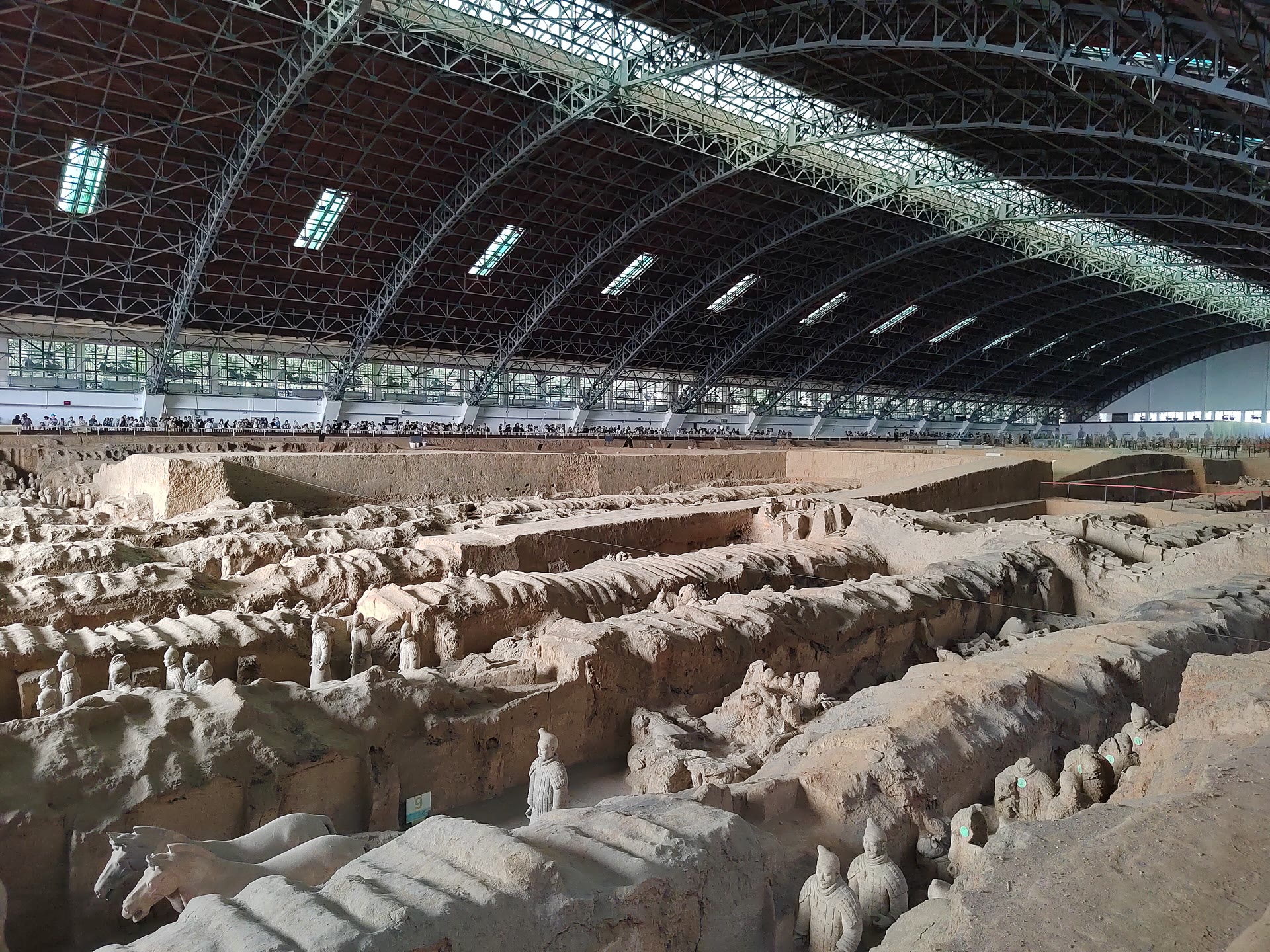
Xian served as the capital of China for more than a dozen dynasties, including the Zhou, Qin, Han, and Tang, and the Shaanxi History Museum is the single best place to make sense of that long imperial story. Where the Terracotta Army shows you one spectacular slice of one emperor's ambition, this museum walks you through thousands of years of statecraft, religion, art, and daily life across the region that once sat at the heart of Chinese civilization.
The collection is vast, polished, and arranged in a roughly chronological flow, which makes it unusually approachable for visitors who arrive knowing little about Chinese dynasties. Bronze ritual vessels, Tang gold and silver, painted ceramics, and tomb murals are presented with context rather than dumped behind glass. For many travelers it is the visit that finally ties Xian's scattered ancient sites into one coherent picture.
The catch is access. The museum is enormously popular with domestic visitors, free general admission means demand far outstrips capacity, and entry is controlled by advance reservation. Walking up without a plan is the most common way to be turned away at the gate. This guide explains what the museum holds, how to actually get inside, and how to give it the time it deserves.
What the Shaanxi History Museum Is
The Shaanxi History Museum is the provincial museum of Shaanxi and one of the most important museums in China. It opened to the public in the early 1990s in a purpose built complex on the south side of Xian, designed in a Tang dynasty inspired architectural style with grey tile roofs and a symmetrical courtyard layout. The building itself is meant to evoke the imperial grandeur of the region's history.
Its holdings number in the hundreds of thousands of objects, drawn from the Guanzhong plain and the broader Shaanxi region. Because this area was the political center of so many dynasties, the artifacts are not provincial leftovers but often national treasures. The permanent galleries trace prehistory through the Zhou, Qin, Han, Wei, Jin, Northern and Southern dynasties, Sui, and Tang, with the Tang material being a particular highlight given that Xian, then called Chang'an, was the cosmopolitan capital of the Tang empire.
The museum matters because it provides the connective tissue between Xian's headline attractions. After you have seen the warriors at the Terracotta Army, the city walls, and the Tang dynasty pagodas, the museum explains who built them, why, and what life looked like across the centuries in between. It rewards a visit either early in your Xian trip, as an orientation, or near the end, to consolidate what you have seen.
Things to Do
The Collections Worth Your Time
The main exhibition is organized in a chronological sequence that you can follow without backtracking. If your time is limited, focus your energy on a handful of strengths rather than trying to read every label.
Bronze Age and Zhou Ritual Vessels
The early galleries hold bronze ceremonial vessels from the Shang and Zhou periods, many cast with inscriptions and intricate taotie motifs. These were objects of ritual and political power, used in ancestor worship and feasting by the ruling elite. The craftsmanship and scale of some pieces make clear how advanced metalworking was thousands of years ago.
Qin and Han Material
The Qin gallery connects directly to the era of China's first unified empire and the famous tomb complex of its first emperor. You will see terracotta figures and other Qin artifacts here, which complement a separate trip to the Terracotta Army site. Han dynasty objects show a maturing imperial culture, including funerary art and everyday items that illustrate how people lived under a long lasting dynasty.
Tang Dynasty Gold, Silver, and Murals
For most visitors the Tang collection is the emotional peak. Chang'an was one of the largest and most cosmopolitan cities in the world during the Tang period, a terminus of the Silk Road where Persian, Central Asian, and East Asian influences mixed. The gold and silver work, the elegant tri-color glazed ceramics known as sancai, and the painted tomb murals capture an era of wealth and openness. The murals, recovered from royal tombs, depict court life, processions, and foreign envoys with a vividness that still feels immediate.
Special and Premium Exhibitions
The museum has hosted separately ticketed special exhibitions, sometimes featuring particularly precious Tang treasures or themed displays. These often carry their own admission fee separate from the free general galleries, and reservation rules can differ. Check what is currently on offer when you book, because the highlight pieces can rotate and some of the most famous objects may sit in a premium hall.
Reservations and How to Actually Get In
This is the part that trips up the most travelers, so plan it carefully. General admission to the permanent galleries is free, but the museum controls visitor numbers through a daily quota and an advance online reservation system. The free tickets are released on a rolling basis ahead of time and are frequently claimed within minutes, especially for weekends, holidays, and peak travel seasons.
Reservations are typically made through the museum's official channels, which in China usually means a WeChat mini program or an official booking platform. You select a date and a time window, and you register using passport details for foreign visitors. Because the interface is primarily in Chinese and the tickets vanish quickly, independent travelers should treat booking as a task to attempt the moment the relevant date opens, rather than something to handle on arrival.
Several practical realities to keep in mind:
- Book as early as the system allows. Set a reminder for the exact day and time slots are released. If you wait until you arrive in Xian, you may find nothing available for your travel dates.
- Bring the passport you booked with. Entry and security checks match your reservation against your identity document, so carry the same passport you registered.
- Premium exhibitions may require a separate paid ticket. If a particular treasure hall interests you, confirm whether it is included or extra, and reserve it alongside your general entry.
- Have a backup. If free slots are sold out, look into whether a paid special exhibition ticket or an official guided arrangement can secure entry. Reputable local guides sometimes include museum access as part of a tour, which can be a fallback if the self-booking route fails.
Because reservation policies, release timing, and pricing for special halls change, verify the current rules through official channels shortly before your trip rather than relying on older travel reports. The principle that you must reserve ahead is stable, but the exact mechanics are not.
How Much Time to Budget
The single biggest mistake visitors make is rushing. People squeeze the museum into a half hour gap between other sights, sprint through, and leave with a blur of bronze and gold. The collection rewards patience.
For a focused but satisfying visit, plan on two to three hours inside. If you are genuinely interested in Chinese history and want to read interpretive panels and linger over the Tang murals, half a day is not excessive. If you have only an hour, accept that you are doing a highlights pass and head straight for the Tang gallery and the Zhou and Qin bronzes.
| Visitor type | Suggested time | Strategy |
|---|---|---|
| Quick highlights | 1 hour | Tang gold and murals, key bronzes, then exit |
| Standard visit | 2 to 3 hours | Full chronological sequence at a steady pace |
| History enthusiast | Half day | Permanent galleries plus any premium exhibition |
Getting There and the Setting
The museum sits in the southern part of Xian, in the same general district as the Big Wild Goose Pagoda and the Tang themed cultural area. This location is the reason the museum pairs so naturally with those sights.
Xian has a clean and expanding metro system that is the easiest way for independent travelers to reach the area without dealing with traffic. Confirm the closest current metro station and walking route when you plan, since lines and station names are best checked on a live map app. Taxis and ride hailing are widely used and inexpensive within the city, and most drivers will recognize the museum's Chinese name, so having it saved on your phone in Chinese characters helps enormously.
The museum forecourt and surrounding district are pleasant, with space to wait before your time slot. Arrive a little ahead of your reserved window to clear the security and ticket check, which can involve a queue even with a reservation during busy periods.
Pairing It With Big Wild Goose Pagoda and More
One of the best things about the museum's location is how easily it slots into a logical day in southern Xian. The Big Wild Goose Pagoda, a Tang dynasty Buddhist landmark associated with the monk Xuanzang and his return from India with Buddhist scriptures, is a short distance away. Visiting both on the same day creates a coherent Tang focused itinerary: see the artifacts and murals of Tang Chang'an in the museum, then walk to a surviving Tang monument that those same emperors and monks knew.
The wider district around the pagoda includes landscaped plazas, fountains, and the Tang themed entertainment streets that come alive in the evening. A practical sequence is to reserve a morning or early afternoon museum slot, spend your two to three hours inside, then move on to the pagoda and the surrounding area, ending with a meal or an evening stroll once the crowds in the cultural zone are at their liveliest.
If you are organizing a multi day Xian trip, this southern cluster works well as one full day, with the Terracotta Army and the eastern outskirts as a separate day, and the city center, ancient walls, and Muslim Quarter as another. For broader help shaping a China itinerary around Xian, GoAsia.cc has wider planning resources for travel across Asia.
Crowds, Timing, and Seasonal Caveats
Because admission is free and the museum is famous, it is busy. Domestic tour groups, school groups, and families fill the galleries, and the Tang highlights in particular can develop dense clusters of visitors around the most celebrated objects.
To improve your experience:
- Avoid national holidays. Major Chinese public holidays bring enormous domestic travel volumes, and museum reservations during these periods are the hardest to secure and the most crowded if you do.
- Target an early or late slot. The first time window after opening tends to be calmer, and late afternoon can thin out as tour groups move on.
- Weekdays beat weekends. If your schedule is flexible, a midweek visit is noticeably more pleasant.
- Let groups pass. When a large tour group floods a gallery, step into an adjacent room and return a few minutes later. The crowds move in waves.
Seasonally, Xian gets hot and humid in summer and cold in winter, but the museum is indoors and climate controlled, so weather affects your comfort getting there more than the visit itself. Spring and autumn are the most comfortable times to combine indoor museum time with outdoor sights like the pagoda grounds.
Practical Tips for a Smooth Visit
- Carry your passport. It is both your reservation ID and a general necessity for entry and security at major Chinese sites.
- Save the Chinese name and address. Show it to taxi drivers or use it in a ride hailing app to avoid confusion.
- Consider an audio guide or app. The labeling includes some English, but interpretation varies. A good audio guide turns rows of objects into a story, which is worth it for the Tang and bronze galleries.
- Pack light. Large bags must usually be checked, and security screening is standard. Travel with a small bag to move through quickly.
- Photography rules vary by hall. General galleries often allow photos without flash, while premium exhibitions may restrict it. Watch for signage.
- Stay hydrated and pace yourself. Museum fatigue is real across this much material. Take a short break midway rather than pushing through and remembering nothing.
- Have a translation app ready. Useful for navigating the booking system, reading occasional Chinese only signage, and asking staff questions.
Honest Downsides to Expect
The museum is genuinely excellent, but it is not a frictionless experience. The reservation system is the recurring complaint among international travelers, and it can be frustrating to plan a trip around a free attraction whose tickets are essentially a lottery against domestic demand. Some visitors only realize this after arriving in Xian, when it is too late to book for their dates.
Inside, the crowds around the best objects can break the mood, and the volume of material is overwhelming if you try to absorb everything. The premium special exhibition split also means the most famous single treasures may not be in the free galleries, so the truly iconic pieces can cost extra and require their own booking.
None of this should deter you. Treat the reservation as a serious planning task rather than an afterthought, accept that you will not see every object, and the museum delivers one of the most rewarding cultural experiences in Xian.
Is It Worth It
For anyone with even a passing interest in Chinese history, yes. Xian's surface attractions are impressive on their own, but they make far more sense after you have walked through the chronological sweep of dynasties on display here. The Tang murals and gold work alone justify the visit, and the museum frames the entire reason Xian matters as a former imperial capital.
The price of entry, in effort rather than money, is the reservation. Plan it early, give yourself two to three unhurried hours, and pair it with the Big Wild Goose Pagoda for a tidy and meaningful day in southern Xian.
Frequently Asked Questions
Yes. General admission is free but capped by a daily quota, and tickets must be reserved online ahead of time. They are released on a rolling schedule and often sell out within minutes for popular dates, so book the moment your travel date opens rather than waiting until you arrive in Xian.
General admission to the permanent galleries is free, but you still need a reservation. Special or premium exhibitions, which sometimes hold the most famous treasures, may require a separate paid ticket. Confirm the current pricing and which halls are included when you book.
The museum is in southern Xian near the Big Wild Goose Pagoda area. The metro is the easiest option, with taxis and ride hailing also cheap and convenient within the city. Save the museum's Chinese name and address on your phone to show drivers.
Plan two to three hours for a satisfying visit. A rushed half hour does the collection no justice. If you only have an hour, head straight for the Tang gold, silver, and tomb murals plus the Zhou and Qin bronzes.
Yes, and it is one of the best pairings in Xian. Both sit in the same southern district, so you can spend the morning in the museum's Tang galleries and then walk to the Tang era pagoda nearby. Together they make a coherent half to full day itinerary.
Carry the passport you booked with, since it is checked against your reservation at entry. Pack a small bag because large ones may need to be checked, and arrive a little before your time slot to clear security. A translation app and an audio guide both make the visit smoother.
Choose a weekday and target the earliest time slot after opening or a late afternoon window. Avoid major Chinese public holidays, when reservations are hardest to get and the galleries are most crowded. When a tour group floods a room, step aside and return a few minutes later.