Stone Forest Shilin: Walking Yunnan's Petrified Limestone Maze Near Kunming

Stone Forest Shilin: Walking Yunnan's Petrified Limestone Maze Near Kunming

Last updated: June 9, 2026

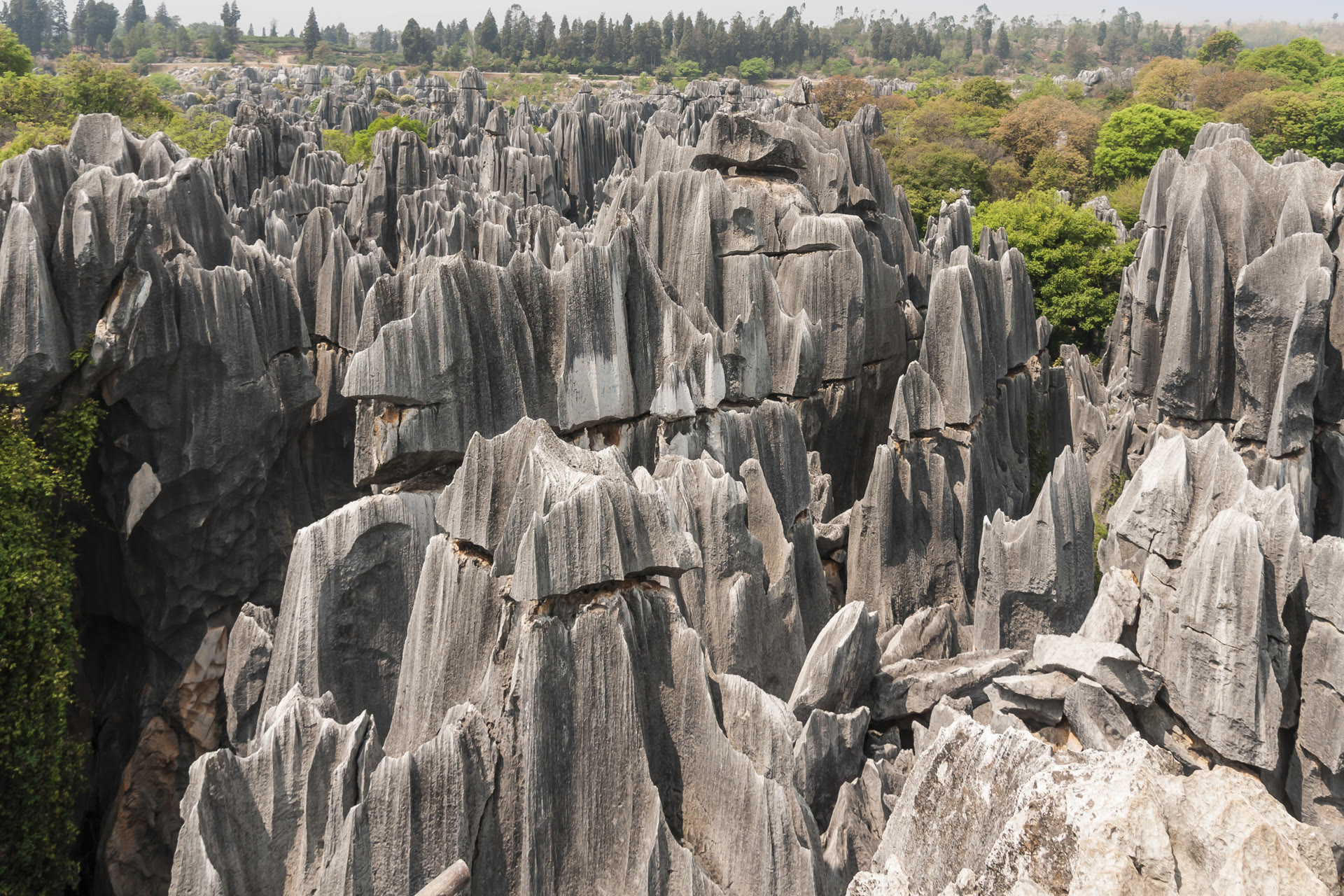
Roughly 90 kilometers southeast of Kunming, a forest made entirely of stone rises out of the Yunnan plateau. The Stone Forest, known in Chinese as Shilin, is a sprawling field of grey limestone pillars, some of them taller than a building, packed so densely that paths twist between them like the corridors of a natural labyrinth. Standing among them, it is easy to understand why the site became one of China's most photographed natural landscapes.

These karst towers formed over hundreds of millions of years as ancient seabed limestone was uplifted, then slowly dissolved and sculpted by rain and groundwater. The result is a terrain that looks half geological accident and half sculpture garden. Shilin is one of the headline components of the South China Karst, a UNESCO World Heritage property that protects some of the finest karst scenery on Earth.

For independent travelers based in Kunming, Shilin is one of the easiest and most rewarding day trips in Yunnan. It pairs dramatic scenery with straightforward logistics, and it offers a window into Yi minority culture, since the surrounding county is home to the Sani branch of the Yi people. This guide covers how to get there, how to navigate the scenic area, when to go to dodge the worst crowds, and where to point your camera.

What the Stone Forest Actually Is

Shilin is a classic example of pinnacle karst, a landscape where soluble bedrock has weathered into freestanding columns rather than caves or sinkholes. The stone here is grey limestone, and the tallest pillars reach around 30 meters. Up close, the surfaces are fluted, pitted, and razor-edged, the signature of slow chemical erosion by slightly acidic rainwater seeping along cracks in the rock over geological time.

The protected area is large and divided into several distinct zones. The two most visited are the Greater Stone Forest and the Lesser Stone Forest, which sit close together and form the core sightseeing circuit. Beyond them lie outlying sections such as Naigu Stone Forest and underground caves, which see far fewer visitors and require more time and separate access. Most day-trippers focus on the main twin forests, which is where the iconic scenery and the famous photo spots are concentrated.

The inscription of the South China Karst on the World Heritage list recognized Shilin alongside other karst sites across southern China for the global significance of the landscape. That status means the core area is managed for conservation, with paved paths, viewing platforms, and stairways guiding visitors through the formations.

Things to Do

Why It Matters

Shilin earns its reputation on two fronts. Geologically, it is a textbook display of how water shapes limestone over immense spans of time, and the density and height of the pinnacles make it one of the most concentrated stone forests anywhere. Culturally, it is deeply tied to the Sani people, a subgroup of the Yi minority, whose legends animate the rocks. The most famous tale is that of Ashima, a Sani heroine said to be embodied in one of the formations, and her name and image appear throughout the area.

This combination of natural drama and living minority culture is part of what makes Yunnan such a rewarding region. Shilin is often the first stop for travelers building a longer Yunnan itinerary, and it sets the tone for a province defined by spectacular terrain and ethnic diversity. If you are mapping out a wider route through southwest China, GoAsia.cc is a useful place to keep planning the rest of your trip.

Getting There From Kunming

The Stone Forest is an easy day trip from Kunming, and there are several ways to reach it. The two main options are high-speed rail and bus, with private cars and tours filling in for travelers who want door-to-door convenience.

By high-speed train

The fastest option is the high-speed rail. Trains run from Kunming to Shilin station and cover the distance in roughly 20 to 30 minutes, a dramatic improvement over road travel. From the train station you still need a local bus or taxi to cover the remaining distance to the scenic area entrance, so budget extra time for that final leg. Check current schedules and book in advance during holidays, as seats sell out on popular departures.

By bus

Long-distance and tourist buses also serve Shilin from Kunming's east bus station and other terminals. The road journey typically takes around 90 minutes to two hours depending on traffic and the exact route. Buses are cheaper than the train but slower and more weather-dependent. Confirm the drop-off point, as some buses go to the town of Shilin rather than directly to the scenic gate.

By car or tour

Hiring a car with driver or joining a day tour removes the transfer headaches and is worth considering if you are short on time or traveling as a group. The tradeoff is cost and, with group tours, a fixed pace and possible shopping stops. Independent travelers who value flexibility usually prefer the train plus a local taxi.

OptionApprox. travel timeBest forWatch out for
High-speed train20 to 30 min plus transferSpeed and reliabilityExtra leg from station to gate
Bus90 min to 2 hrBudget travelTraffic, drop-off location
Car or tourAround 90 minConvenience, groupsCost, possible tour stops

Tickets and Entry

Shilin charges an admission fee for the main scenic area, and there is usually an optional internal shuttle or sightseeing cart for moving between zones and from the gate to the core forest. Prices and policies change, so verify the current entrance fee, opening hours, and whether the shuttle is included or separate before you go. Many visitors find the walk from the gate manageable on foot, but the cart saves energy if you want to spend more time inside the formations.

Bring identification, since China's ticketing and entry systems for major attractions often require it. If you are buying tickets online through Chinese platforms, having a way to pay locally and a Chinese-language-capable phone or travel companion helps. During major Chinese public holidays the site can hit capacity limits, so arriving early or pre-booking is wise.

The core circuit through the Greater and Lesser Stone Forests is well marked, with paved walkways, stairs, and signposts. The terrain involves a fair amount of climbing up and down between pillars, squeezing through narrow gaps, and crossing small bridges, so wear comfortable shoes with grip. Surfaces can be slick after rain.

A typical visit to the main twin forests takes two to four hours at a relaxed pace, longer if you wander the quieter peripheral trails or stop frequently for photos. The most concentrated and dramatic scenery is in the Greater Stone Forest, where the tallest pinnacles cluster around small pools and viewpoints. The Lesser Stone Forest is gentler and home to the Ashima rock, the formation tied to the Sani legend.

Suggested route

  • Enter and head first to the central viewing area of the Greater Stone Forest, where you can climb to an elevated platform for a sweeping overview of the pinnacle field.
  • Descend into the maze and follow the marked paths through the densest cluster of columns and around the famous Sword Peak Pond, the small lake that mirrors the stone.
  • Cross to the Lesser Stone Forest to see the Ashima rock and the open meadows that contrast with the tightly packed Greater forest.
  • If you have extra time and energy, explore quieter outlying trails that branch off from the main loop, where crowds thin dramatically.

Getting briefly lost among the pillars is part of the experience and entirely safe, since paths loop back and signage points to exits. Keep an eye on the time if you have a return train booked.

Crowd Timing

Shilin is enormously popular with domestic tourists, and crowds are the single biggest factor that can shape your experience. The narrow passages between pillars become bottlenecks when tour groups arrive in waves, and the best photo spots can be crammed with people during peak hours.

To minimize crowds, arrive as close to opening time as possible. The early window before the day tours from Kunming roll in is the quietest and also offers softer light. Late afternoon, after the bulk of group tours have departed, is a second good window. Avoid major Chinese public holidays such as National Day and the Spring Festival period, when the site can be overwhelmed. Weekdays are calmer than weekends.

The deeper you walk into the peripheral trails, the fewer people you will encounter. Tour groups tend to cluster around the central viewpoints and the Ashima rock, so a short detour onto a less obvious path often buys you near solitude among the stone.

Yi and Sani Cultural Context

The Stone Forest sits in an autonomous county that is home to the Sani people, a branch of the Yi, one of China's larger ethnic minorities. Sani culture is woven into the visitor experience here, from the Ashima legend to performances, handicrafts, and traditional dress you may encounter around the scenic area.

The story of Ashima, a beautiful and strong-willed Sani woman, is the cultural anchor of the site, and her name appears on a rock formation said to be her petrified figure. Local guides and signage retell the legend, and during certain festivals the area hosts Sani song, dance, and torch celebrations. If your visit coincides with the Torch Festival, a major Yi event held in summer, you may see bonfires, music, and traditional games in the surrounding villages.

Be respectful when photographing local people in traditional dress. Some vendors and performers expect a small payment for posed photos, so ask first. Buying handicrafts directly from Sani artisans is a meaningful way to support the local community, though prices in the tourist zone are negotiable and worth comparing.

Best Photo Spots

Shilin is a photographer's playground, and a few locations consistently deliver the most striking images.

  • The main overview platform in the Greater Stone Forest gives the classic wide shot of countless pinnacles stretching to the horizon. Come early for clean light and fewer heads in the frame.
  • Sword Peak Pond offers reflections of the towering stone in still water, one of the most iconic compositions at the site. Calm mornings produce the sharpest mirror effect.
  • Narrow passages between pillars create dramatic vertical frames where light filters down from above. These corridors photograph well in soft, overcast conditions that reduce harsh shadows.
  • The Ashima rock in the Lesser Stone Forest is the cultural icon and a popular portrait backdrop.
  • Elevated stairways and bridges let you shoot down into the labyrinth, giving a sense of depth and scale that ground-level shots miss.

For the best light, the golden hours shortly after opening and before closing are ideal. Midday sun creates strong contrast that can wash out the grey limestone, while overcast days actually flatter the muted tones of the rock. A wide-angle lens captures the scale of the pinnacle fields, while a longer lens isolates individual formations and textures.

Practical Tips for Visiting Shilin

  • Start early. The first hour after opening offers the best combination of light, cool temperatures, and thin crowds. It is the single most valuable habit for a good visit.
  • Wear proper footwear. The circuit involves stairs, uneven stone, and narrow gaps. Sturdy shoes with grip make a real difference, especially when surfaces are damp.
  • Carry water and sun protection. Shade is limited on the open viewpoints, and Yunnan's high-altitude sun is strong. A hat, sunscreen, and water are worth the pack weight.
  • Pack a light layer. Kunming and Shilin sit at elevation, and mornings can be cool even in warmer months. Afternoons heat up, so dress in layers.
  • Budget the transfer time. If you take the high-speed train, remember the leg from Shilin station to the scenic gate. Factor it into both arrival and departure planning.
  • Verify hours and fees before you go. Opening times, ticket prices, and shuttle policies can change. Confirm current details rather than relying on old information.
  • Bring ID and a payment method. Chinese attractions often require identification for ticketing, and mobile payment dominates locally. Having cash as backup is sensible for international visitors.
  • Mind the time on your return train. It is easy to lose track of time in the maze. Set an alarm if you have a fixed departure booked.

How Much Time to Allow

Most travelers visit Shilin as a half-day or full-day trip from Kunming. The core twin forests take two to four hours to explore comfortably. Add round-trip transport, station transfers, and a meal, and a relaxed itinerary fills a full day even with the fast train.

If you want to see the quieter outlying sections such as Naigu Stone Forest or the nearby caves, you will need to stay longer or even overnight in the town of Shilin. For the average independent traveler, the main scenic area delivers the essential experience, and a focused half day there is enough to come away satisfied.

Realistic Downsides

Shilin is spectacular, but it is worth setting expectations. It is one of Yunnan's most commercialized natural sites, and the heavy domestic tourism means crowds, group flags, megaphones, and bottlenecks at peak times. The infrastructure can feel theme-park-like in places, with paved paths and managed viewpoints rather than wild exploration.

The grey limestone, while dramatic, can look monotone under flat midday light, and some visitors find the scenery less varied than they hoped after a couple of hours. The cultural elements, while genuine, are also packaged for tourism in the core zone. None of this undermines the geological wonder of the place, but going in with realistic expectations, arriving early, and venturing onto the quieter trails will give you a far better experience than a midday group-tour visit.

Combining Shilin With the Rest of Yunnan

Shilin works best as one piece of a broader Yunnan trip. Kunming, the provincial capital and your likely base, has its own attractions and serves as the transport hub for the region. From there, popular onward destinations include Dali, Lijiang, and the dramatic landscapes farther north and west. Because Shilin is so close to Kunming and easily reached by fast train, it slots neatly into the start of an itinerary before you head deeper into the province.

If your time in Yunnan is limited, a single day at Shilin combined with a day or two exploring Kunming makes an efficient introduction. Travelers with more time can use Shilin as the opening act of a multi-week journey through one of China's most scenically rich and culturally diverse provinces.

Frequently Asked Questions

How much time do I need to visit the Stone Forest?

The core Greater and Lesser Stone Forests take two to four hours to explore at a relaxed pace. Including transport from Kunming, station transfers, and a meal, plan on a half day to a full day. If you want to see outlying sections like Naigu Stone Forest, allow more time or consider staying overnight in Shilin town.

How much does it cost to enter and are shuttles included?

Shilin charges an admission fee for the main scenic area, and an internal shuttle or sightseeing cart is often available, sometimes separately. Prices and policies change, so verify the current entrance fee and whether the shuttle is included before you go. Bring identification and a local payment method, since many Chinese attractions require ID and favor mobile payment.

What is the best way to get to Shilin from Kunming?

The fastest option is the high-speed train, which reaches Shilin station in around 20 to 30 minutes, after which you take a local bus or taxi to the scenic gate. Buses from Kunming take 90 minutes to two hours and cost less. A private car or day tour offers door-to-door convenience but costs more and may include shopping stops.

When is the best time to visit to avoid crowds?

Arrive as close to opening time as possible to beat the day tours from Kunming, which gives you the quietest paths and the softest light. Late afternoon is a second good window after most groups leave. Avoid major Chinese public holidays such as National Day and Spring Festival, and choose weekdays over weekends when you can.

Is the Stone Forest difficult to walk through?

The main circuit is paved and well signposted, but it involves stairs, narrow passages, and uneven stone, with some climbing up and down between pillars. Wear comfortable shoes with grip, especially after rain when surfaces get slick. The walking is moderate and manageable for most people, though it is not fully accessible in the densest sections.

What is the cultural significance of the area?

The Stone Forest sits in a county that is home to the Sani people, a branch of the Yi ethnic minority. The famous Ashima rock is tied to a Sani legend about a strong-willed heroine, and you may encounter traditional dress, handicrafts, and performances. If you visit during the summer Torch Festival, expect bonfires, music, and celebrations in the surrounding villages.

Can I combine Shilin with other Yunnan destinations?

Yes. Shilin is close to Kunming, the provincial transport hub, making it an ideal first stop before heading to Dali, Lijiang, and points farther north. A day at Shilin plus a day or two in Kunming makes an efficient start, and travelers with more time can continue deeper into Yunnan from there.