Victoria Peak Hong Kong: Tram, Bus, Viewpoints and Tickets
Contents
Choose Victoria Peak for a view across Hong Kong’s city and harbour when visibility allows. Start with three decisions: whether the tram ride matters to you, whether you want a paid deck or the free Peak Galleria deck, and how much walking fits your day. A bus journey with a viewpoint visit can suit a smaller budget; a tram ticket buys a different transport experience, not guaranteed better weather or a queue-free trip.
Know which viewpoint you are visiting
The Peak is a mountain of about 552 metres on Hong Kong Island, not one viewing platform. The Peak Tower, Sky Terrace 428, Peak Galleria and surrounding walks are separate places near the visitor area. Hang Lung’s current guide confirms free entry to Peak Galleria’s third-floor observation deck, with access potentially adjusted for weather or events. Sky Terrace 428 is a separately ticketed outdoor platform. A free deck does not mean transport or every attraction is free.
The Peak Tram began operating in 1888 between Central and the hillside area. The Hong Kong Tourism Board explains that it originally served Peak residents. Around Lugard Road, the landscape and historic buildings provide another reason to leave the shopping complexes. Victoria Peak Garden is reached uphill via Mount Austin Road or the indicated trail; it is an additional outing, not part of every deck visit or the mountain summit itself.
Things to Do
Offers are only loaded from GetYourGuide after you click. GetYourGuide can then process your IP address and set cookies. Privacy Policy
GetYourGuide partner offers. GoAsia may earn a commission if you book through these offers. Check whether tickets or transfers are included, and follow the attraction's official booking and admission rules.
Choose the journey up
The Peak Tram leaves the Central terminus on Garden Road for the Peak Tower. The operator currently lists 07:30-23:00 for the tram and 08:30-22:00 for Sky Terrace 428, checked on 5 October 2026. Their hours are not interchangeable. Check the current last admission and return arrangements for your selected product. You can choose a single tram journey and another method for the other direction rather than automatically buying a return.
Citybus route 15 links Central and the Peak; its current route table lists HK$13 per adult in either direction, checked on 5 October 2026. The tourism board gives Exchange Square as an approach to bus 15 or X15 and Two ifc for green minibus 1. These are different services, not interchangeable fares or timetables. Check the operator’s actual departure point, destination and last service. A taxi can suit a group, but neither taxi nor bus guarantees a faster or queue-free trip; compare the complete fare and traffic conditions.
Tickets and boarding are different
The table gives the operator’s published adult prices per person, checked on 5 October 2026. A tram-only ticket does not include Sky Terrace. The Special Combo includes one Sky Terrace admission with either a single or return tram journey. Child, senior and concession rules differ; confirm your category, date, product and any promotional conditions. The published disability concession requires the specified Hong Kong CRR registration card and an eligible on-arrival purchase, not any disability document worldwide.
| Adult ticket per person | Single journey | Return journey or admission |
|---|---|---|
| Peak Tram only | HK$82 | HK$116 |
| Tram plus one Sky Terrace admission | HK$146 | HK$182 |
| Sky Terrace only | - | HK$80 |
The operator says ordinary online timeslot tickets manage visitor flow but do not provide priority boarding. Queue time depends on visitor numbers; an advance purchase is not a fixed wait guarantee. Dedicated priority products are different and have their own conditions. Save the e-ticket and check non-refundable terms and date-change restrictions before paying. An Octopus card can pay at on-site counters but is not direct gate entry. Do not assume every app or payment method works for every booking.
The Peak Circle Walk
The Hong Kong Tourism Board describes the Peak Circle Walk as a 3.5-km loop, with about an hour as its walking example. Allow extra time for views, rests and your own pace. Lugard Road and Harlech Road are the named sections around the Peak; use the official map and signs to keep to the intended loop rather than continuing onto a longer route. Family-friendly descriptions are not a guarantee that every path is stroller-ready or step-free. Check the actual section and any closures if access matters.
Daylight, city lights and weather
Check Hong Kong Observatory’s Peak weather photos before going up. The east-facing camera normally takes a picture every five minutes, but a recent image is not a forecast or proof of the view from every deck. The tram operator does not guarantee visibility in adverse weather and may suspend tram or terrace service for weather, maintenance or emergencies. Follow current warnings and crowd-control instructions. Rain clearing, a particular season or a purchased ticket cannot guarantee clear views.
For both daylight and city lights, plan an arrival before sunset and leave room for the transition. The exact lead time depends on transport, queues, your walk and that day’s sunset, not a universal 60-90 minutes. Keep the return journey separate in your plan: do not assume late-night bus, taxi or tram availability is easier. About three to four hours can be a planning example for transport, a walk and time at a viewpoint, not a guaranteed complete visit.
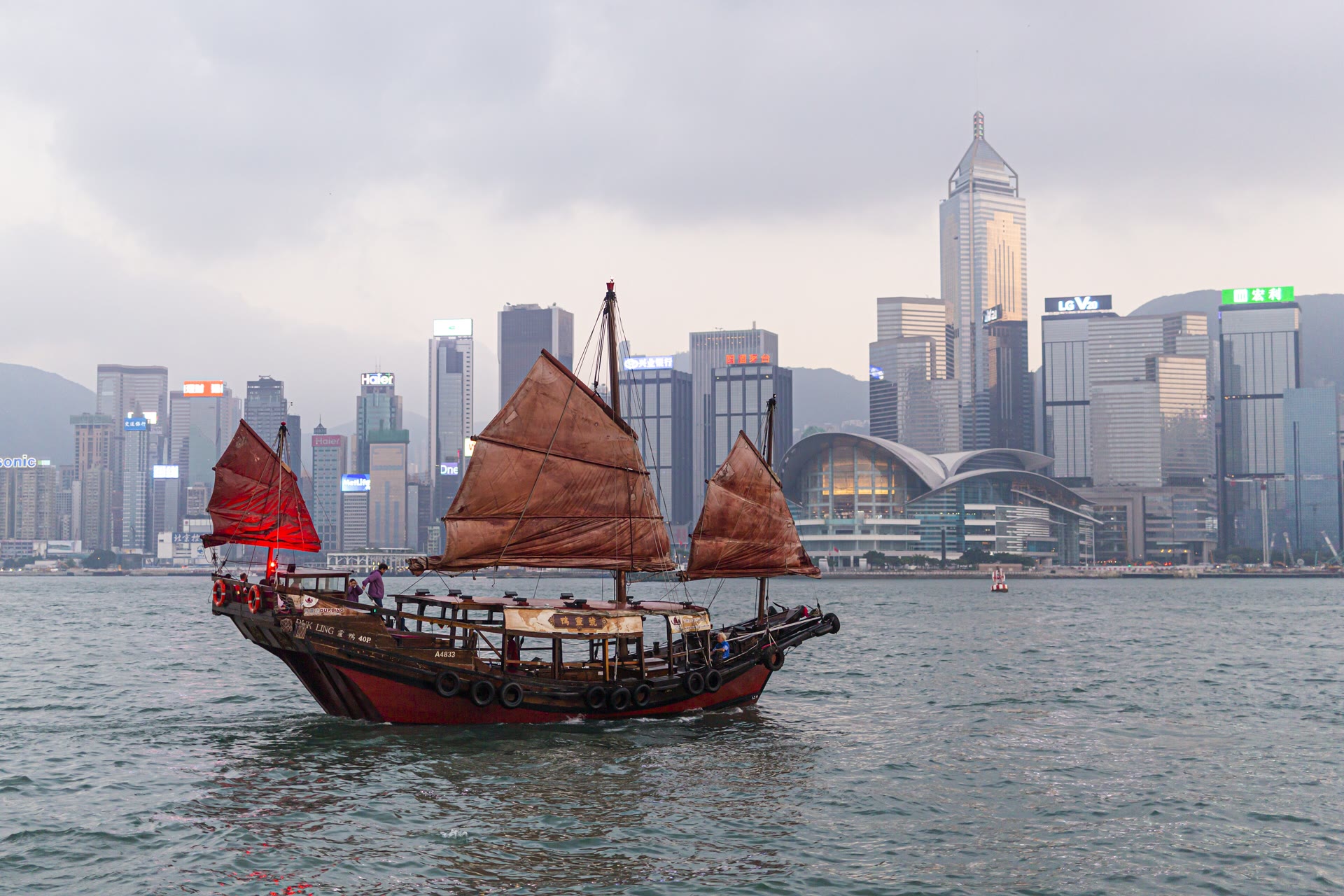
Daylight helps you read the harbour and city layout; after dark, the buildings and harbour lights create a different scene. Neither is automatically better. Choose according to the view you want, current visibility and your return options. Spending longer to see both is optional, not a condition for a worthwhile visit.
Practical checks before setting off
Bring water and comfortable shoes, and choose the length of your walk to match weather and energy. The tram FAQ requires strollers to be folded and no wider than 66 cm when folded, and says luggage storage is not available in its stations or the Peak Tower. Tripods and lighting equipment are not allowed in the tram, Peak Tower or Sky Terrace under the operator’s stated rules. Ask about the current accessible route if needed. Indoor food or attractions are optional; compare menus and admission instead of assuming every Peak restaurant is expensive or every city meal cheaper.
Sources and background
These sources support the topics listed below, not every statement or current price in this article.
- [1] The Peak Hong Kong: Current Peak Tram, Special Combo and Sky Terrace prices and separate operating hours. Retrieved October 5, 2026. Admission, Opening hours, Transport
- [2] The Peak Hong Kong: Ticket FAQ: ordinary timeslots, payment, strollers, closures and visibility. Retrieved October 5, 2026. Admission, Registration, Safety, Access
- [3] Hong Kong Tourism Board: Peak Circle Walk: 3.5-km loop, named stops and transport approaches. Retrieved October 5, 2026. Access, Transport, History, Culture
- [4] Hang Lung Malls, Peak Galleria: 2026 Peak Galleria guide: free third-floor observation deck and weather-dependent access. Retrieved October 5, 2026. Access, Admission, Culture
- [5] Citybus: Route table: route 15 adult fare, distinct from X15 and route 15C. Retrieved October 5, 2026. Transport
- [6] Hong Kong Observatory: Victoria Peak east-facing current weather photos. Retrieved October 5, 2026. Safety, Nature
- [7] Hong Kong Government, Hong Kong Fun in 18 Districts: The Peak: mountain, 1888 tram, separate viewpoints and Peak Garden approaches. Retrieved October 5, 2026. History, Culture, Access
Frequently Asked Questions
For both daylight and city lights, plan an arrival before sunset and leave room for the transition. The exact lead time depends on transport, queues, your walk and that day’s sunset, not a universal 60-90 minutes. Keep the return journey separate in your plan: do not assume late-night bus, taxi or tram availability is easier. About three to four hours can be a planning example for transport, a walk and time at a viewpoint, not a guaranteed complete visit.
The Peak is a mountain of about 552 metres on Hong Kong Island, not one viewing platform. The Peak Tower, Sky Terrace 428, Peak Galleria and surrounding walks are separate places near the visitor area. Hang Lung’s current guide confirms free entry to Peak Galleria’s third-floor observation deck, with access potentially adjusted for weather or events. Sky Terrace 428 is a separately ticketed outdoor platform. A free deck does not mean transport or every attraction is free. The table gives the operator’s published adult prices per person, checked on 5 October 2026. A tram-only ticket does not include Sky Terrace. The Special Combo includes one Sky Terrace admission with either a single or return tram journey. Child, senior and concession rules differ; confirm your category, date, product and any promotional conditions. The published disability concession requires the specified Hong Kong CRR registration card and an eligible on-arrival purchase, not any disability document worldwide.
The Peak Tram leaves the Central terminus on Garden Road for the Peak Tower. The operator currently lists 07:30-23:00 for the tram and 08:30-22:00 for Sky Terrace 428, checked on 5 October 2026. Their hours are not interchangeable. Check the current last admission and return arrangements for your selected product. You can choose a single tram journey and another method for the other direction rather than automatically buying a return. Citybus route 15 links Central and the Peak; its current route table lists HK$13 per adult in either direction, checked on 5 October 2026. The tourism board gives Exchange Square as an approach to bus 15 or X15 and Two ifc for green minibus 1. These are different services, not interchangeable fares or timetables. Check the operator’s actual departure point, destination and last service. A taxi can suit a group, but neither taxi nor bus guarantees a faster or queue-free trip; compare the complete fare and traffic conditions.
For both daylight and city lights, plan an arrival before sunset and leave room for the transition. The exact lead time depends on transport, queues, your walk and that day’s sunset, not a universal 60-90 minutes. Keep the return journey separate in your plan: do not assume late-night bus, taxi or tram availability is easier. About three to four hours can be a planning example for transport, a walk and time at a viewpoint, not a guaranteed complete visit.
Check Hong Kong Observatory’s Peak weather photos before going up. The east-facing camera normally takes a picture every five minutes, but a recent image is not a forecast or proof of the view from every deck. The tram operator does not guarantee visibility in adverse weather and may suspend tram or terrace service for weather, maintenance or emergencies. Follow current warnings and crowd-control instructions. Rain clearing, a particular season or a purchased ticket cannot guarantee clear views.
The Hong Kong Tourism Board describes the Peak Circle Walk as a 3.5-km loop, with about an hour as its walking example. Allow extra time for views, rests and your own pace. Lugard Road and Harlech Road are the named sections around the Peak; use the official map and signs to keep to the intended loop rather than continuing onto a longer route. Family-friendly descriptions are not a guarantee that every path is stroller-ready or step-free. Check the actual section and any closures if access matters. Bring water and comfortable shoes, and choose the length of your walk to match weather and energy. The tram FAQ requires strollers to be folded and no wider than 66 cm when folded, and says luggage storage is not available in its stations or the Peak Tower. Tripods and lighting equipment are not allowed in the tram, Peak Tower or Sky Terrace under the operator’s stated rules. Ask about the current accessible route if needed. Indoor food or attractions are optional; compare menus and admission instead of assuming every Peak restaurant is expensive or every city meal cheaper.
Daylight helps you read the harbour and city layout; after dark, the buildings and harbour lights create a different scene. Neither is automatically better. Choose according to the view you want, current visibility and your return options. Spending longer to see both is optional, not a condition for a worthwhile visit.