Wat Pho Bangkok: Reclining Buddha, Chedis and Visit Planning
Contents
Choose Wat Pho for the reclining Buddha, royal chedis and the history of Thai public learning. Start with the sculpture, then choose the galleries and chedis or leave more time for the inscriptions. Its gilded sculpture, tiled monuments, covered galleries and stone inscriptions reward a visit beyond the best-known hall. Thai massage is an optional separate service to arrange around your sightseeing, not something you need to book to experience the monastery.
Its formal name is Wat Phra Chetuphon Wimon Mangkhalaram Rajwaramahawihan.[1] South of the Grand Palace in the Rattanakosin area, it occupies a useful place in an old-city itinerary, but it remains a religious site rather than an extension of the palace. Choose the parts you want to explore instead of trying to fit every nearby attraction into one morning.
The Reclining Buddha
The reclining Buddha is 46 metres long and 15 metres high, measured from the base to the topknot. The temple's account of the sculpture describes a brick-and-stucco structure finished with lacquer and gilding, not a solid-gold statue. It calls the posture the Lion Sleep position.[2]

Look closely at the soles of the feet: each is five metres long and three metres high. Mother-of-pearl inlay depicts 108 auspicious symbols.[2] Following the sculpture along the hall gives you different views of these details; a single photograph need not be the aim of your visit. Keep the passage clear for worshippers and other visitors.
Things to Do
Offers are only loaded from GetYourGuide after you click. GetYourGuide can then process your IP address and set cookies. Privacy Policy
GetYourGuide partner offers. GoAsia may earn a commission if you book through these offers. Check whether tickets or transfers are included, and follow the attraction's official booking and admission rules.
Royal Chedis and Covered Galleries
The four royal chedis provide a different way to appreciate the temple’s scale and craftsmanship. They commemorate the first four Chakri kings: green for Rama I, white for Rama II, yellow for Rama III and dark blue for Rama IV.[3] Glazed ceramic decoration gives each a distinctive surface as well as a recognizable colour.
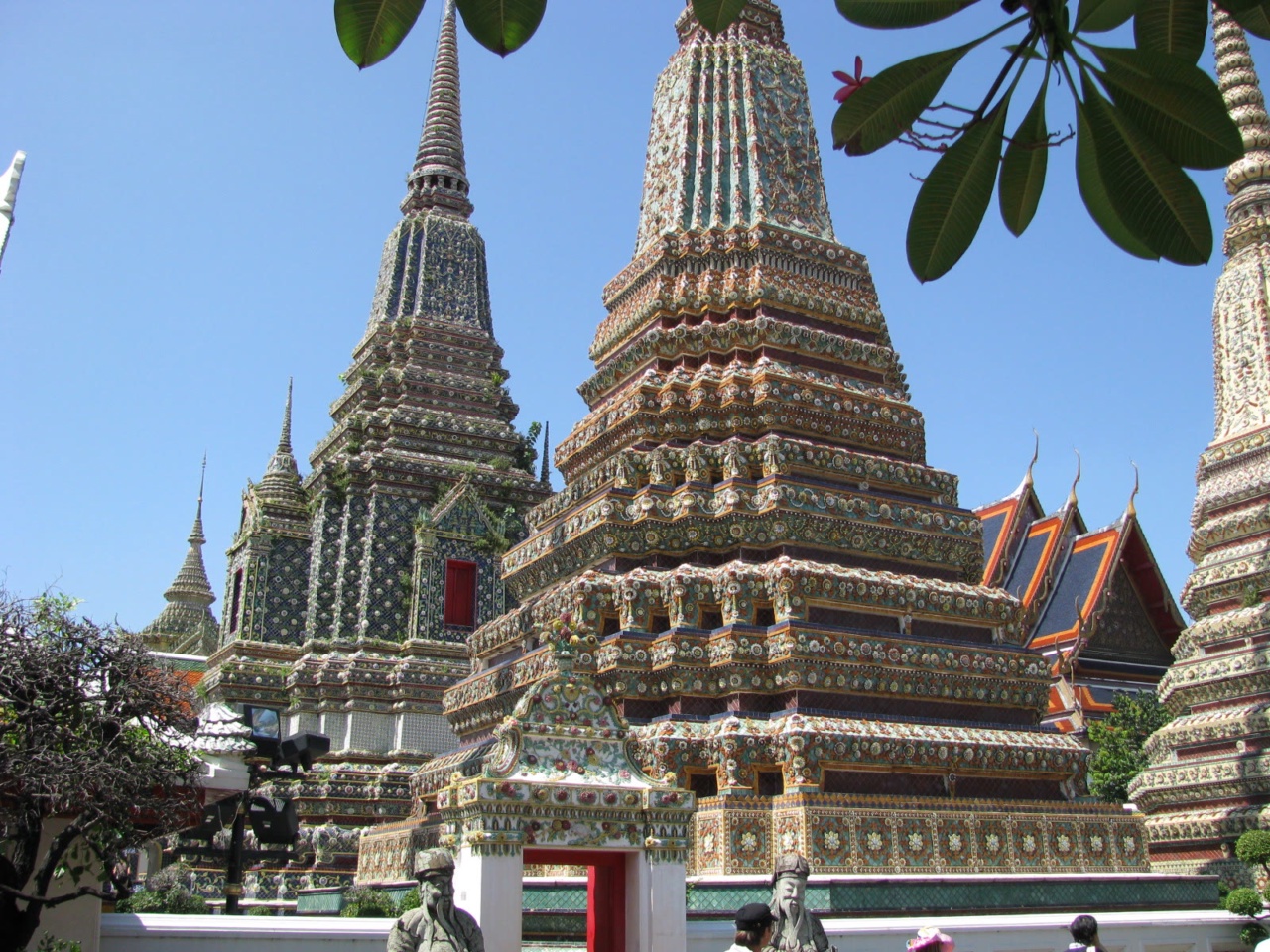
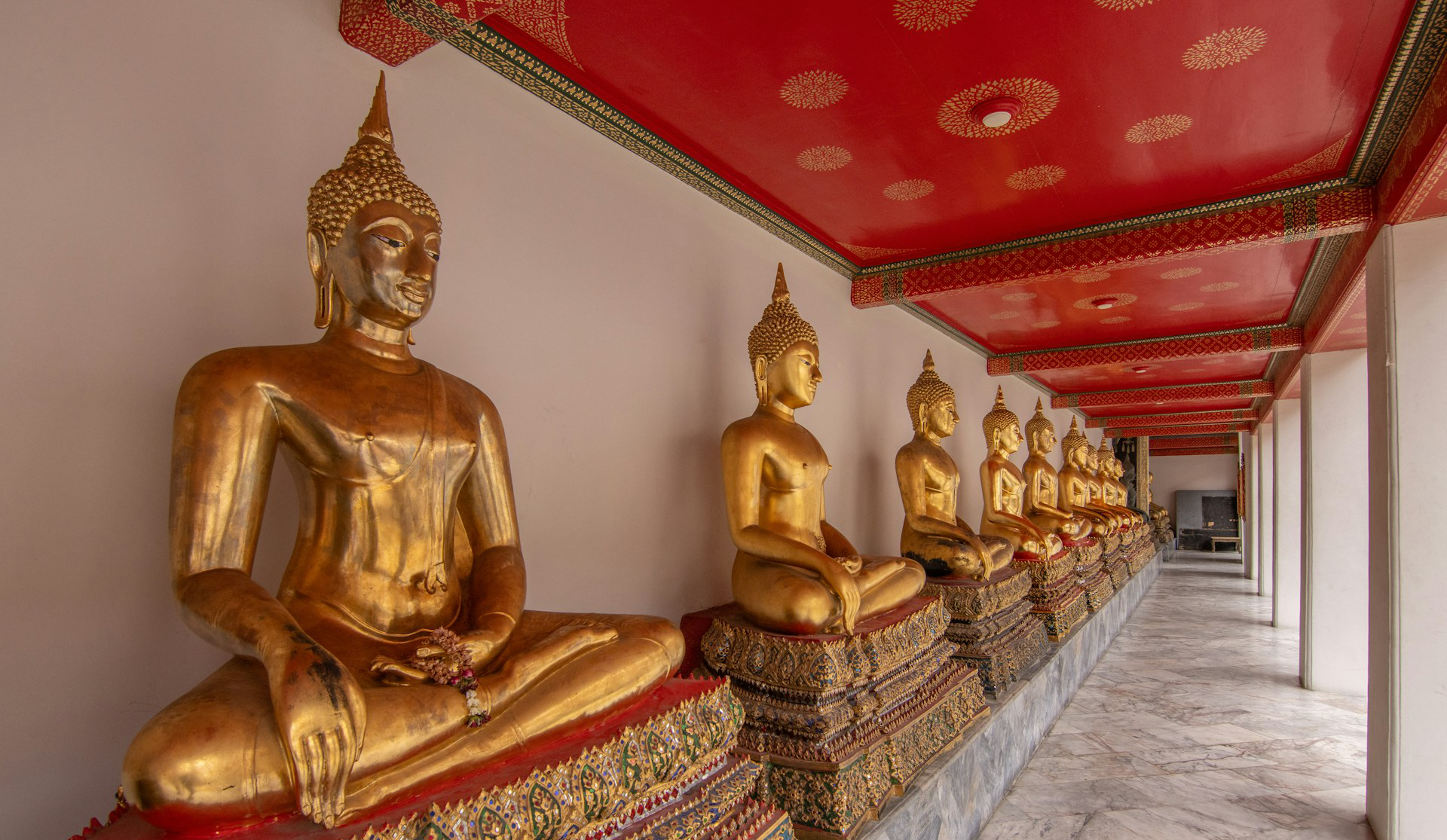
Continue to Phra Rabieng, the double cloister around the principal worship hall. The temple lists 150 Buddha images in the inner gallery and more than 244 in the outer gallery, brought from northern provinces during Rama I’s reign.[4] These are sculpted images rather than paintings; compare their forms without treating the passage as a guarantee of an empty or silent gallery.
Inscriptions and a Living Monastery
Wat Pho developed from an older monastery. The temple history records Rama I's order for restoration in 1788 and a celebration in 1801. Rama III's later expansion helped make the complex a place for preserving arts and knowledge. Chetuphon Road separates the sacred quarter from the monks' residential quarter; follow signs and staff guidance for visitor access.[1]
The epigraphic archives contain 1,431 stone inscriptions made between 1831 and 1841, covering religious and secular subjects for public education. UNESCO registered them in Memory of the World in 2011.[5] This recognition concerns the documentary collection, not a World Heritage designation for the whole temple. The inscriptions give context to Wat Pho's association with traditional medicine and learning.
Admission and Published Hours
The temple's dedicated visit-plan page, reviewed on 6 October 2026, lists admission at 300 THB, free entry for children under 120 cm tall, and operating hours of 08:00 to 19:30.[6] Use that visitor page as the starting point for your budget and check it again before travelling, especially around religious events. Ask the temple about any other concession, last entry and restrictions affecting your visit.
| Item | Published visit-plan guidance |
|---|---|
| Admission | 300 THB[6] |
| Children | Free below 120 cm in height[6] |
| Operating hours | 08:00 to 19:30[6] |
| Before setting off | Confirm the day’s entry arrangements and any building restrictions |
Some other published pages still show shorter hours or an older admission fee. For a late visit, confirm the current arrangements with the temple rather than relying on the history page or an older destination guide. Bring your own drinking water and plan any separate service charge without assuming it is included in admission.
Clothing and Religious Etiquette
Wear clothing that covers your shoulders and knees, and choose trousers or a long skirt rather than shorts. Bring your own suitable clothing instead of depending on a borrowed coverup. Remove your shoes before entering religious buildings and use the shoe shelves as instructed.[6]
Keep your voice and behaviour respectful. Do not climb onto Buddha images, and follow restrictions for spaces reserved for monastic rites. The temple specifically asks women not to enter areas set aside for monks’ rites or make physical contact with monks or novices.[6] Local signs and staff instructions take priority over a sightseeing route.
Optional Thai and Foot Massage
Massage is an optional addition to the visit, not a condition for experiencing Wat Pho. The temple’s visitor page lists Thai massage and foot massage at the same rates and gives service hours of 08:00 to 19:30.[6] Choose the service and duration that suit your plans; ask about availability and booking before allowing time for it.
| Duration | Thai massage | Foot massage |
|---|---|---|
| 30 minutes | 340 THB | 340 THB[6] |
| 60 minutes | 520 THB | 520 THB[6] |
| 120 minutes | 1,040 THB | 1,040 THB[6] |
Balm and plai-oil treatments have separate published rates.[6] Confirm the price and the available appointment for the particular service you choose. Keep a flexible sightseeing plan if an appointment is unavailable, and budget for treatment separately from admission.
Getting There and Choosing a Day Plan
Wat Pho’s address is 2 Sanam Chai Road, Phra Nakhon.[7] For rail access, the published AM2026 destination guide identifies Sanam Chai MRT station, Exit 1.[8] Check the onward street route and the temple entrance you intend to use rather than depending on a fixed three-minute walk.
Road access is also possible. If you prefer a river approach, check the boat operator’s actual stop list and the relevant pier or cross-river connection for your day. In particular, establish whether your service reaches Tha Tien or requires another approach via Tha Chang or Wat Arun, rather than assuming every express service stops beside the temple.[7] Agree any taxi or tuk-tuk charge before the trip.
For a focused visit, start with the reclining Buddha, then choose the royal chedis and galleries or the inscriptions. Allow extra time if you want all three areas or a massage appointment. This is a planning choice, not a crowd forecast: the first hour, late afternoon and the final hours are not guaranteed to be quiet.
The Grand Palace and Wat Phra Kaew are separate attractions nearby, while Wat Arun is across the Chao Phraya. Check their own admission and access arrangements before combining visits. For the wider journey, see our Thailand guide.
Sources and background
Numbers in the text such as [1] refer to these sources.
- [1] Wat Pho: History of Wat Pho. Retrieved October 18, 2026.
- [2] Wat Pho: Phra Buddha Saiyas: the Reclining Buddha. Retrieved October 18, 2026.
- [3] Wat Pho: Phra Maha Chedi Si Rajakarn: the four royal chedis. Retrieved October 18, 2026.
- [4] Wat Pho: Phra Rabieng: cloisters and Buddha images. Retrieved October 18, 2026.
- [5] UNESCO: Epigraphic Archives of Wat Pho. Retrieved October 18, 2026.
- [6] Wat Pho: Visitor information and massage rates. Retrieved October 18, 2026.
- [7] Wat Pho: Travel to Wat Pho. Retrieved October 18, 2026.
- [8] Thailand Government (AM2026): Wat Pho: visitor guide. Retrieved October 18, 2026.
Frequently Asked Questions
Its gilded reclining Buddha is 46 metres long and 15 metres high. The royal chedis, covered Buddha galleries and stone inscriptions are also central to the visit, alongside the monastery’s tradition of learning and Thai massage.
The dedicated temple visit-plan page lists 300 THB, free entry for children below 120 cm, and 08:00 to 19:30 operating hours. Confirm your day’s arrangements before travelling and ask about any other concession, last entry and building restrictions. Bring your own drinking water.
The AM2026 destination guide names Sanam Chai MRT station, Exit 1. Road access is possible, and a river approach depends on the service and pier operating on your day. Check the onward route and stop list; no fixed walking time, ferry fare or taxi charge is guaranteed.
The temple lists Thai and foot massage at 340 THB for 30 minutes, 520 THB for 60 minutes and 1,040 THB for 120 minutes, with separate rates for other treatments. Service hours are listed as 08:00 to 19:30. Confirm the chosen service, price, availability and booking procedure before planning around it.
Cover your shoulders and knees and avoid shorts. Bring suitable clothing, remove shoes before entering religious buildings and follow the shoe-shelf instructions. Respect areas reserved for monastic rites; free coverup loans are not promised.
Choose a time within the confirmed visitor hours that fits your day, allowing for Bangkok’s heat and time in each building. A focused route can cover the reclining Buddha and selected chedis or galleries; add time for inscriptions and any booked massage. No particular hour is guaranteed to be uncrowded.
The epigraphic archives, comprising 1,431 inscriptions from 1831 to 1841, were registered in UNESCO’s Memory of the World in 2011. That documentary recognition is not a World Heritage designation for the whole temple.
No. Wat Pho and the Grand Palace with Wat Phra Kaew are separate sites. Wat Arun is another separate temple across the river. Plan their tickets, opening arrangements and connections individually rather than assuming one combined admission or an automatic three-temple morning.