Wat Arun in Bangkok: temple visit and river access
Contents
- 1. See the prang, decoration and ordination hall
- 2. Opening and admission
- 3. Choose the approach that matches your starting point
- 4. Know the river boat lines
- 5. Combine nearby temples without rushing
- 6. Dress and behave for a religious site
- 7. Separate a river view from temple entry
- 8. Sources and background
- 9. Frequently Asked Questions
Come to Wat Arun for the porcelain-studded prang that sparkles above the Thonburi bank of the Chao Phraya. If you are already visiting Wat Pho, the short ferry from Tha Tien takes you straight across the river to it. Give the temple one to two hours, plus the boat rides and a rest in the shade, and add the Grand Palace and Wat Pho only if you have a full day.
See the prang, decoration and ordination hall
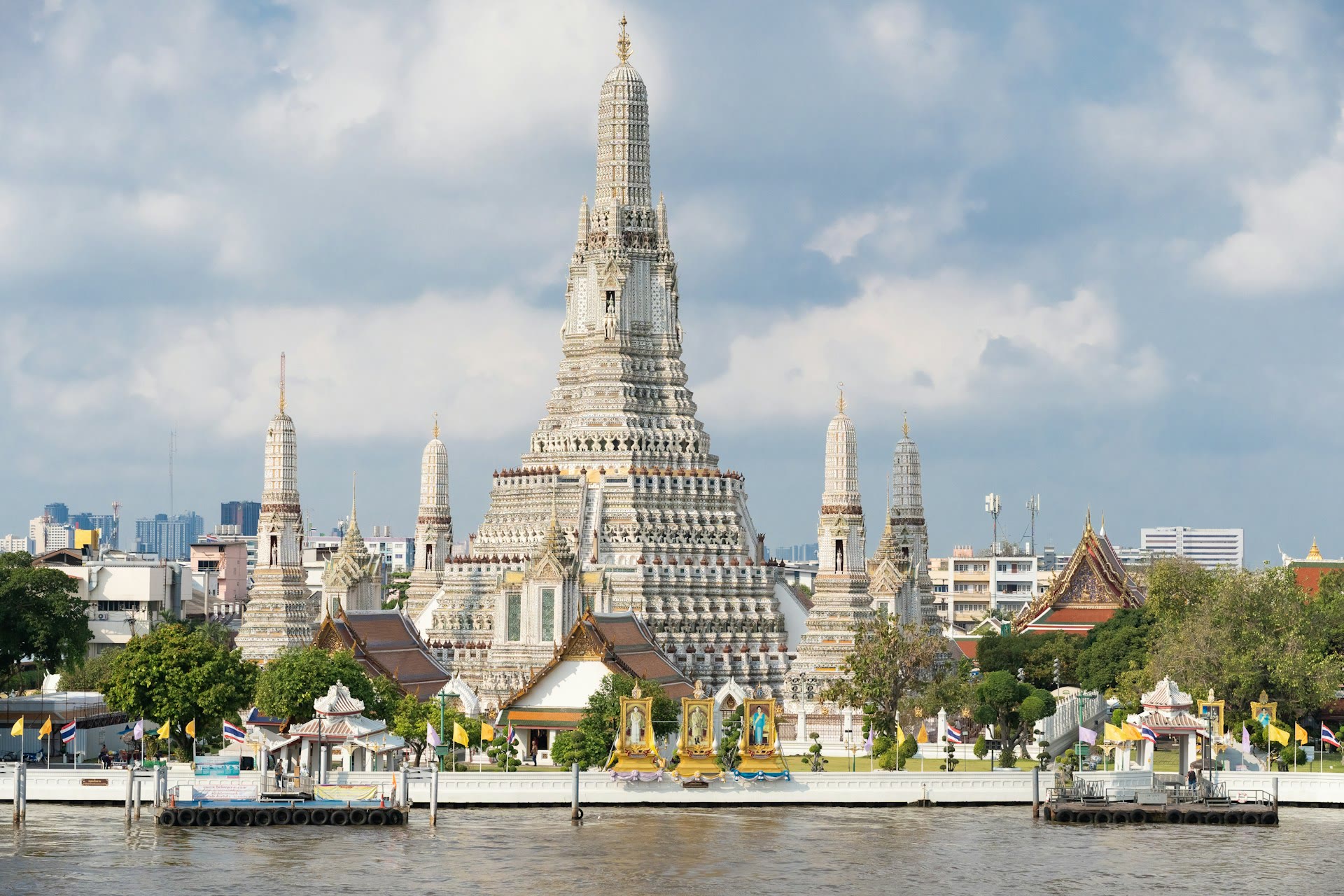
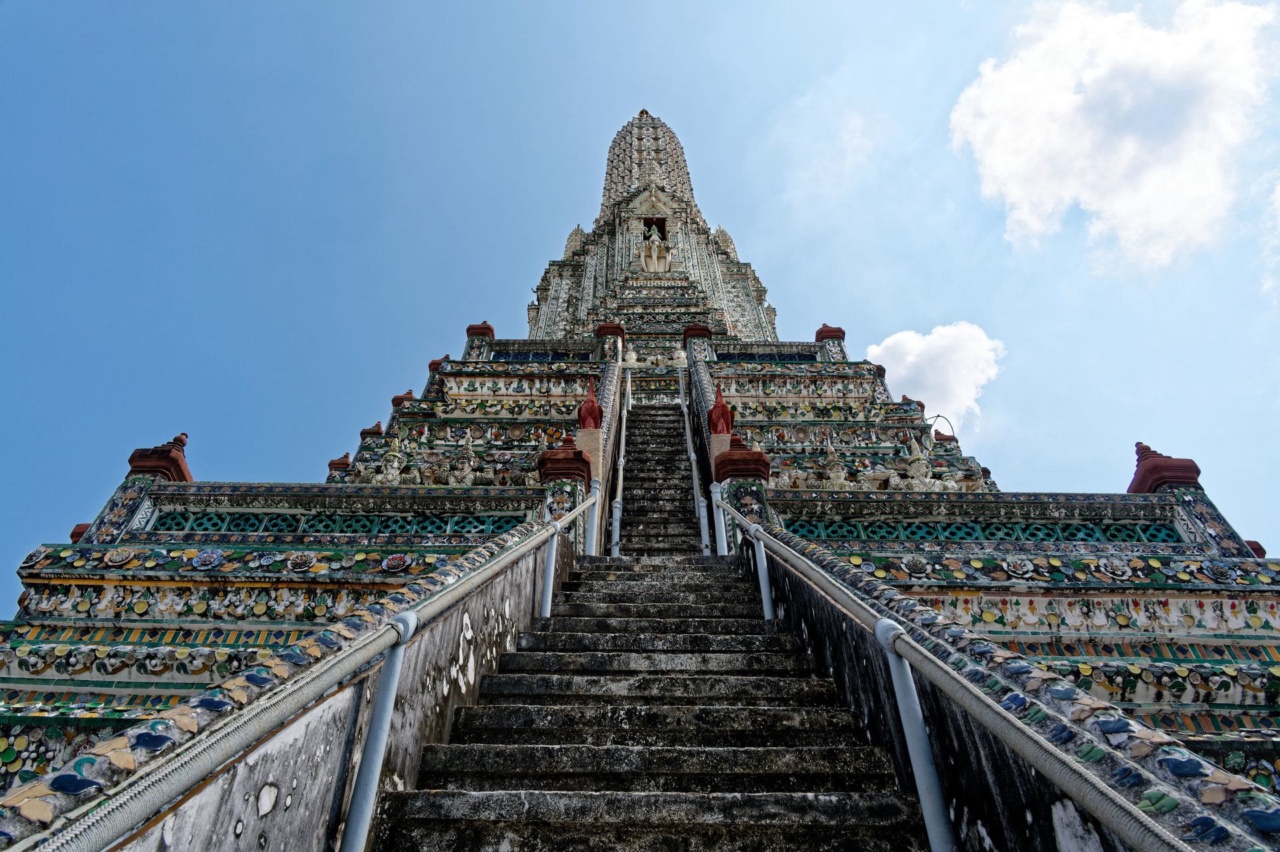
Wat Arun, known in English as the Temple of Dawn, has stood on Arun Amarin Road directly opposite Wat Pho since the Ayutthaya period. It became a royal temple when the Thonburi king made it part of his palace precinct, and it once housed the Emerald Buddha.[1] Its great pagoda was begun under Rama III and finished under Rama IV, and it reaches 82 metres.[1]
The central prang is covered in Chinese porcelain tiles and Benjarong shards that glitter in the sun. In the ordination hall, stucco work shows giant guardians, swans, lions and ceramic flowers.[2] Look at the details up close, then cross to the opposite bank for the view of the whole tower. Keep worship spaces clear and follow the signs and staff on hall access and photographs.
Things to Do
Offers are only loaded from GetYourGuide after you click. GetYourGuide can then process your IP address and set cookies. Privacy Policy
GetYourGuide partner offers. GoAsia may earn a commission if you book through these offers. Check whether tickets or transfers are included, and follow the attraction's official booking and admission rules.
Opening and admission
| Detail | Information |
|---|---|
| Opening | Daily 08:00 to 18:00[1] |
| Foreign-adult admission | 200 THB[1] |
| Location | Arun Amarin Road, Bangkok Yai, Thonburi bank[1] |
| Contact | 02 891 2185[1] |
The Tourism Authority of Thailand lists 200 THB for a foreign adult. An older government guide dated 15 August 2025 still shows 100 THB and free entry for Thai nationals, so bring the higher amount.[1][2] Parking and restrooms are available.[1]
Choose the approach that matches your starting point
| Starting situation | A practical approach |
|---|---|
| Near Wat Pho or on the MRT | Sanam Chai Exit 1, walk to Tha Tien and cross by ferry[2] |
| Already travelling along the river | Get off a Chao Phraya Express Boat at Wat Arun Pier[2] |
| Road travel or arranged driver | Park at the lot in front of the temple; mornings and evenings are quieter on the roads[2] |
City buses 1, 3, 25, 32, 44, 47, 53, 82, 508 and 512 also reach Tha Tien, where you take the ferry.[2] Allow for the walk to the pier, waiting and boarding: a single boat fare is not the whole trip from your hotel.
Know the river boat lines
The Chao Phraya Express Boat publishes a schedule valid from 6 October 2026 with flat fares by line: Orange 19 THB, Yellow 24 THB and Red 33 THB. The Green Yellow line costs 17 THB from Pakkret to Nonthaburi, 24 THB from Nonthaburi to Sathorn and 36 THB for the whole route from Pakkret to Sathorn.[3] Check the timetable image for the line, direction and stops you need. Express boats, tourist boats, the cross-river ferry and private charters are separate tickets.
Combine nearby temples without rushing
Wat Arun and Wat Pho stand on opposite banks, and the Grand Palace is a separate visit on the Rattanakosin side. Choose one main temple if time is short. For all three, plan a large part of the day with a ticket and opening hours for each. Start with the site that closes earliest or needs a timed ticket, then group your visits by riverbank. Our Thailand travel overview helps you place Bangkok in the wider itinerary.
Dress and behave for a religious site
Dress respectfully: no shorts, sleeveless tops, bare shoulders or flip-flops. Bring a hat, sunscreen and an umbrella, and remove your shoes where asked.[2] Take the steps only where visitors are allowed and where you feel safe. Be wary of anyone who tells you the temple is closed and sends you elsewhere. Check with the temple itself.[2]
Separate a river view from temple entry
Early morning and sunset are the best hours for light on the prang.[2] A view from the opposite bank after the temple closes is a different plan from a visit: the grounds are not open just because the tower is lit. For an evening river view, arrange your return transport in advance.
Sources and background
Numbers in the text such as [1] refer to these sources.
- [1] Tourism Authority of Thailand: Wat Arun: official temple background, opening hours and foreign-adult admission. Retrieved October 22, 2026.
- [2] Thailand 2026 Annual Meetings Team: Wat Arun: architecture, visitor preparation and road or river access; older conflicting tariff. Retrieved October 22, 2026.
- [3] Chao Phraya Express Boat: Boat service: October2026 fare display and current operating notices. Retrieved October 22, 2026.
Frequently Asked Questions
Its riverside prang is covered in porcelain and Benjarong shards, and the ordination hall has guardian figures and ceramic flowers. It is a royal Buddhist temple that goes back to the Ayutthaya period and once housed the Emerald Buddha, so the visit is more than a riverside photograph.
The Tourism Authority of Thailand lists 200 THB for a foreign adult. An older government guide still shows 100 THB, so bring the higher amount. Transport and other attractions are separate.
No. You can cross by ferry from Tha Tien after Sanam Chai MRT Exit 1, or get off a Chao Phraya Express Boat directly at Wat Arun Pier. By car or taxi you can park at the lot in front of the temple.
Use only the visitor areas that are open on the day and follow the staff. The most spectacular views of the whole tower are from the opposite bank.
Wear respectful clothing: no shorts, sleeveless tops, bare shoulders or flip-flops. Bring suitable clothes and shoes with you.
The temple is open daily from 08:00 to 18:00. Arrive with enough time to look around before closing.
Yes, but each has its own ticket and opening hours, and the sites are on both sides of the river. Group your stops by bank and plan a large part of the day for all three.
No. An evening view from the opposite bank is not the same as entering the temple, which closes at 18:00. Arrange your return transport in advance.