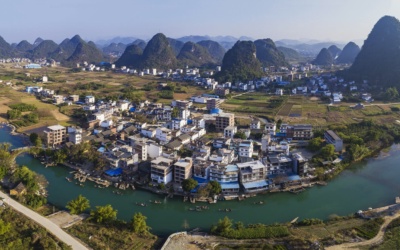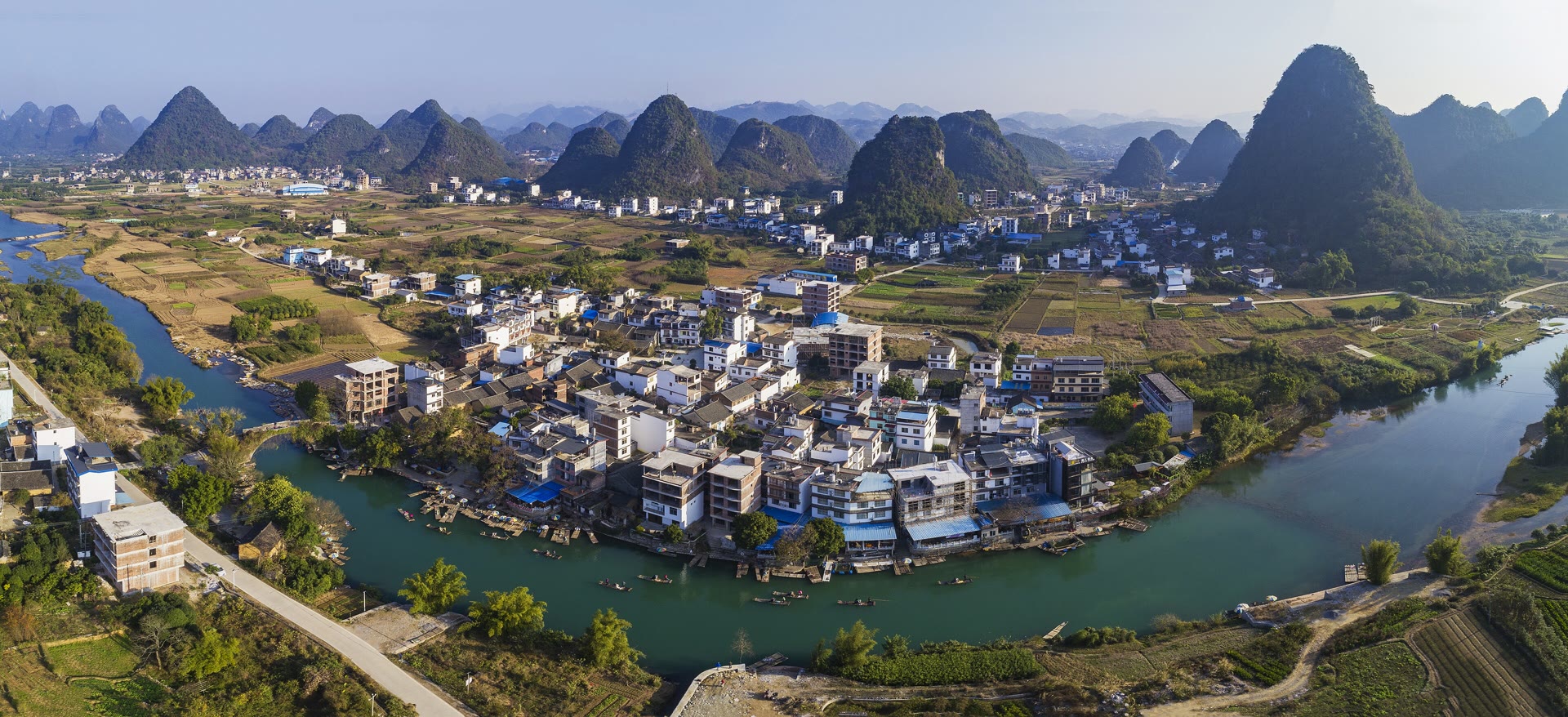
The towers of limestone that rise around Yangshuo look like something painted onto silk, and that is no accident. This stretch of Guangxi has been the subject of Chinese landscape art for centuries. What surprises most first-time visitors is how easy it is to get inside that scenery rather than just photograph it from a tour boat. A bicycle, a quiet riverside lane, and an afternoon are all you really need.
Yangshuo town itself, with its neon-lit West Street and souvenir stalls, is not the reason to come. The countryside is. Within ten minutes of pedaling out of town you reach a patchwork of rice paddies, pomelo orchards, water buffalo, and villages where the karst peaks crowd in on every side. The Yulong River, a gentler tributary of the famous Li River, threads through it all and offers the most rewarding slow travel in the region.
This guide focuses on how to experience that landscape independently: where to cycle, how to handle the rivers and Moon Hill, where to base yourself, and how to time your days so you avoid both the worst heat and the densest crowds.
Where Yangshuo Sits and Why It Matters
Yangshuo is a county town in northeastern Guangxi, roughly 65 kilometers downstream from Guilin along the Li River. Most travelers arrive in Guilin first, either by high-speed train or by air, then transfer to Yangshuo. The classic approach is the Li River cruise from Guilin, which ends near Yangshuo and delivers you straight into the heart of the karst.
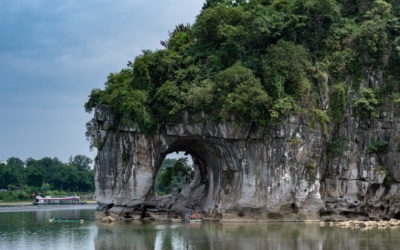
The reason Yangshuo has become the anchor for exploring this region is flexibility. Guilin is a larger city with its own scenic spots, but Yangshuo puts you on the edge of open countryside. You can wake up, rent a bike, and within minutes be cycling between peaks that resemble the ones on the back of the 20 yuan banknote. That note, in fact, depicts a view of the Li River near Xingping, a short trip from Yangshuo.
The landscape is a textbook example of tower karst, formed over millions of years as rainwater dissolved soft limestone, leaving behind steep isolated peaks. The result is one of the most distinctive terrains on Earth, and the flat valley floors between the towers are exactly what make cycling here so pleasant.
Things to Do
Cycling the Countryside
Cycling is the signature way to experience Yangshuo, and for good reason. The valleys are mostly flat, distances are manageable, and you control the pace. Bike rental shops cluster around town and most guesthouses can arrange one. Standard city bikes, mountain bikes, and electric bikes (e-bikes) are all available. Expect modest daily rates; confirm the price, check the brakes and tires before you leave, and photograph any existing damage so there is no dispute on return.
For travelers who are not confident cyclists or who want to cover more ground, an e-bike or a scooter is a reasonable option. Scooters can usually be rented without the formal paperwork foreigners might expect, but ride defensively and slowly. Note that driving any motorized vehicle in China technically requires a Chinese license, and enforcement varies. Weigh that before you rent a scooter rather than a pedal bike.
The Yulong River Route
The Yulong River valley is the most beloved cycling area and the one to prioritize if you only have a day. A sealed and partly traffic-free path runs alongside the river, passing rice fields, small villages, and a series of old stone bridges. The Yulong Bridge (Dragon Bridge) and the Fuli area are common landmarks. The scenery here is softer and more intimate than the wider Li River, with peaks reflected in still water and farmers working the fields by hand.
A typical loop from Yangshuo town out along one bank of the Yulong and back along the other takes roughly half a day at a relaxed pace, longer if you stop often. You can extend it or shorten it as you like. Carry water, sun protection, and small cash for snacks, water buffalo photo fees, or roadside fruit. Pomelos and oranges are local specialties depending on the season.
Other Rides Worth Doing
Beyond the Yulong, the lanes toward Gaotian, Jima, and the area around Moon Hill offer good half-day rides. The general principle is simple: get off the main roads and onto the small concrete farm tracks. These narrow lanes carry little traffic, wind through villages, and consistently deliver better views than the highways. A paper map or an offline navigation app helps, since signage in English is limited and it is easy to lose your sense of direction among the peaks.
The Yulong River and Bamboo Rafts
Floating the Yulong River on a bamboo raft is the iconic Yangshuo activity beyond cycling. These are flat rafts, traditionally made of bamboo but now often PVC tubes, poled or motored along calm stretches of the river. Sections are divided by small weirs that the rafts slide over, producing a brief splash that delights passengers. The experience is gentle and scenic rather than thrilling.
Rides are sold in sections, and prices are negotiable and inconsistent, so agree on the price, the route, and the duration before you board. Operators sometimes try to extend the route or add fees mid-trip, so be clear up front. Mornings tend to be calmer and less crowded; midday can become a procession of rafts at popular put-in points. If you want the photogenic version with mist and soft light, go early.
The larger Li River cruise between Guilin and Yangshuo is a separate, more expensive experience on a big motorized boat. It is worth doing once for the dramatic stretch near Xingping, but it is a different kind of trip: passive, scheduled, and busy. The Yulong raft is the more relaxed, countryside-scale version.
Moon Hill
Moon Hill is a karst peak with a large natural arch through its upper section, shaped like a crescent moon. A stepped path climbs to the arch and viewpoints beyond it, rewarding the effort with sweeping views over the surrounding valley. The climb is steep in places and takes roughly half an hour up at a steady pace, more in heat.
There is an entrance fee, which is modest but worth confirming locally as it can change. Go early in the day to beat both the heat and the crowds, and bring water since the climb is exposed in parts. Moon Hill is also a well-known rock climbing area, and you may see climbers on the surrounding cliffs.
Be prepared for persistent vendors near the base who sell drinks and may follow visitors partway up. A polite but firm no is usually enough. Combining Moon Hill with a Yulong River ride and some cycling makes a full, satisfying day.
Villages and Slower Highlights
The villages scattered through the valleys are part of the appeal. Xingping, on the Li River north of Yangshuo, is the most famous: an old town with a riverside setting that frames the 20 yuan banknote view. You can reach Xingping by bus and then walk or take a short raft ride to the classic viewpoint. It gets busy with day-trippers, so early morning or late afternoon is best.
Smaller settlements such as Fuli, known historically for its painted fans and old streets, and the many unnamed hamlets along the Yulong reward unhurried wandering. These are working agricultural communities, not theme parks. Be respectful when photographing residents, ask before pointing a camera at someone, and remember that the fields and courtyards are people's homes and livelihoods.
Where to Stay
One of the best decisions you can make in Yangshuo is to base yourself in the countryside rather than in the center of town. Numerous rural guesthouses sit among the rice fields, especially in the Yangshuo countryside near the Yulong River and around Gaotian. Waking up to peaks outside your window and cycling straight from your door is far better than the noise of West Street at night.
Town-center options are convenient for arrival, restaurants, and transport, but the area around West Street is lively and loud well into the evening. If you are a light sleeper or have come for the scenery, choose a guesthouse a few kilometers out. Many offer bike rental, breakfast, and help arranging activities, and hosts can point you to the quieter lanes. Trade-offs include needing transport for evening dining and occasionally basic facilities, so read recent reviews and confirm whether the property is reachable by the route you plan to use.
| Base location | Best for | Trade-offs |
|---|---|---|
| West Street area | Nightlife, dining, easy transport | Noise, crowds, less scenery |
| Yulong River countryside | Scenery, cycling, quiet | Need transport for town, fewer dinner options |
| Xingping | Li River views, old town charm | Day-tripper crowds, farther from Yangshuo |
When to Visit
Yangshuo is a year-round destination, but the experience changes with the seasons. Spring brings green fields and a chance of mist that makes the karst look ethereal, though it can be wet. Late spring and early summer is the rainy season, when rivers run high and the rafting may be affected, but the landscape is at its most lush. Autumn is widely considered the most comfortable: drier, warm but not extreme, with clear skies and harvested rice fields. Winter is cool and can be damp, with fewer crowds but greyer scenery.
Avoid Chinese national holidays if you can. During major holiday periods the area fills with domestic tourists, prices rise, and the rivers and viewpoints become crowded. Outside those windows, weekdays are noticeably quieter than weekends.
Avoiding the Crowds
The single most useful crowd strategy in Yangshuo is timing. West Street is busiest in the evening, when it transforms into a loud strip of bars, restaurants, and souvenir shops. If you want to see it, walk through in the late morning when it is relatively calm, then spend your evenings out in the countryside or having a quiet dinner away from the center.
For the scenery, the rule is the same everywhere: go early. The Yulong River, Moon Hill, and Xingping viewpoints are all far more pleasant before the tour groups arrive, usually mid-morning. Cyclists who start at dawn often have the lanes nearly to themselves and catch the best light. Late afternoon is a second window as day-trippers head back toward Guilin.
Getting There and Around
Most travelers reach the region via Guilin, which has a major railway station served by high-speed trains and an international airport. From Guilin, regular buses run to Yangshuo and take roughly an hour and a half. There is also a high-speed rail station serving the Yangshuo area, though it sits some distance from the town and requires onward transport. The romantic option is the Li River cruise from Guilin, which terminates near Yangshuo.
Within Yangshuo, the countryside is best covered by bicycle or e-bike as described above. For trips to Xingping or other outlying spots, local buses and shared vans run from the Yangshuo bus station, and taxis or ride-hailing are available for direct transfers. Distances are short, so getting around is rarely difficult once you understand the basic routes. For broader regional itinerary planning across China and Southeast Asia, GoAsia.cc is a useful place to map out how Yangshuo fits with your other stops.
Practical Tips for Cycling the Karst
- Ride defensively. Rural roads carry scooters, trucks, tour buses, and farm vehicles, and local driving habits can be unpredictable. Stay alert at intersections, keep right, and assume vehicles will not yield. The dedicated riverside paths are safer than the highways.
- Start early. Beat the heat and the crowds by heading out soon after breakfast. Midday sun in summer is intense, and shade is limited in open fields.
- Carry water and small cash. Many roadside stalls and small fees are cash only. Mobile payment apps dominate in China but are difficult for foreigners to set up, so keep some yuan in small notes.
- Use offline maps. English signage is sparse and the lanes branch confusingly. Download an offline map before you ride so you can find your way back.
- Confirm prices in advance. Whether renting a bike, taking a bamboo raft, or buying entrance to Moon Hill, agree on the amount and what it includes before committing. This prevents the common mid-trip upsell.
- Protect against sun and rain. The weather can shift quickly. A light rain layer in the wet season and strong sun protection year-round are both worth packing.
- Respect the working landscape. These are farms and villages where people live and work. Do not trample crops for photos, and ask before photographing residents.
Realistic Downsides
Yangshuo is not a hidden secret, and you should set expectations accordingly. It is well established on the domestic tourist circuit, which means commercialization, touts, and crowds at the famous spots. West Street can feel like a tourist trap, and some rafting operators and vendors are pushy. The 20 yuan banknote viewpoint at Xingping draws long queues of people waiting to pose with the same prop.
The way to enjoy the area is to lean into its strength, which is the open countryside, and to treat the busiest attractions as quick stops rather than the main event. Spend your time on the bike, in the small villages, and on the quiet stretches of river, and Yangshuo lives up to the paintings. Treat the town center as your supply base and your scenery as the destination, and you will have the better trip.
Frequently Asked Questions
Two to three days lets you cycle the Yulong River, climb Moon Hill, visit Xingping, and still have unhurried time among the villages. One full day covers the highlights but feels rushed. Staying at a countryside guesthouse rather than in town makes a short trip far more rewarding.
Bicycle rental is inexpensive on a daily basis, with e-bikes and scooters costing more. Bamboo raft rides are sold in negotiable sections, and Moon Hill charges a modest entrance fee. Prices change and vary by operator, so confirm the amount and what it includes before you commit, and carry small cash.
Most travelers reach Guilin first by high-speed train or air, then take a bus to Yangshuo in about an hour and a half. A scenic alternative is the Li River cruise from Guilin, which ends near Yangshuo. A high-speed rail station also serves the area but sits outside town and needs onward transport.
The valleys are flat and the dedicated riverside paths are pleasant, but the main roads carry unpredictable scooter, truck, and bus traffic. Ride defensively, stay on the smaller farm lanes where possible, start early to avoid heat and crowds, and check your bike's brakes before setting out.
Visit the famous viewpoints and rivers early in the morning before tour groups arrive, and walk West Street in the calmer late morning rather than at night. Stay at a guesthouse in the countryside a few kilometers from town so your evenings are quiet and you can cycle straight into the scenery.
Autumn is generally the most comfortable, with drier weather and clear skies. Spring is green and atmospheric but wetter, and summer brings heat and the rainy season, which can affect rafting. Avoid major Chinese national holidays, when crowds and prices peak across the region.
Scooters and e-bikes are widely available and rental shops often do not ask for formal documents. However, legally driving a motorized vehicle in China requires a Chinese license, and enforcement varies. If you are not comfortable with that risk or with local traffic, a pedal bicycle is the simpler and safer choice.