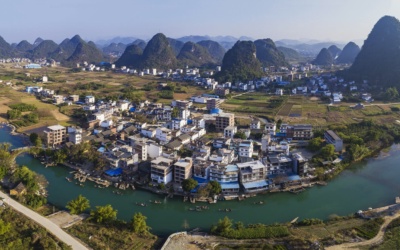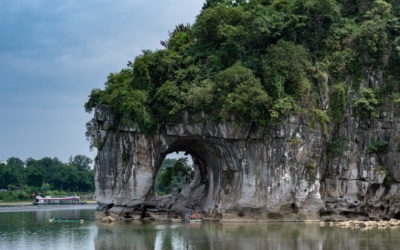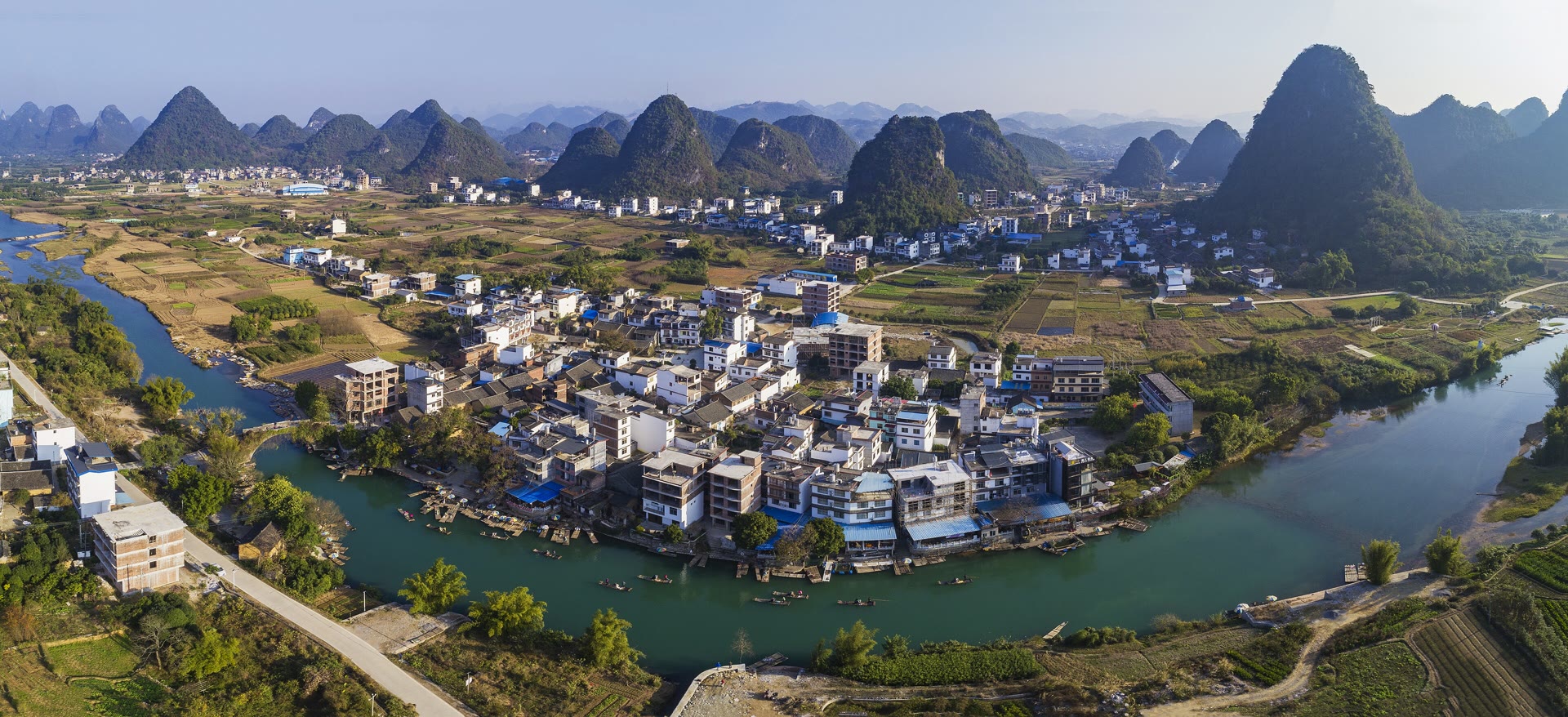
The Yulong River is the Li River's smaller, gentler sibling. While most visitors to Yangshuo flock to the famous Li River cruise, the Yulong winds quietly through a tighter cluster of karst peaks, rice paddies, and stone bridges where life moves at the pace of a slow current. It is the landscape people imagine when they picture rural Guangxi: jade-green water, water buffalo in the shallows, and farmers tending fields beneath limestone towers that rise like teeth from the plain.
What makes the Yulong special is access. You do not need a big tour boat or a ticketed cruise to experience it. You can drift down a short stretch on a bamboo-style raft, cycle the riverside lanes between villages, or simply walk a section and stop wherever a bridge or bamboo grove catches your eye. It is intimate, low-key, and far easier to do on your own than the headline Li River trip.
This guide explains how the Yulong differs from the Li River, how the raft segments actually work, how to combine rafting with cycling, when to go based on water levels, and where the best photo stops are. The goal is to help you build a half-day or full-day plan that fits an independent traveler rather than a packaged tour.
What the Yulong River Actually Is
The Yulong River (Yulong He) is a tributary of the Li River that flows through the countryside west and southwest of Yangshuo town in Guangxi province. It is shallow, slow, and narrow compared to the broad Li River. Along its course are several low weirs, small dams that create gentle drops where rafts slide down with a satisfying splash. These weirs are part of why the rafting experience here feels playful rather than scenic-but-passive.
The river is lined with classic karst scenery. Two of the most photographed landmarks sit along it: Yulong Bridge (Yulong Qiao), an old stone arch bridge dating back centuries, and Fuli Bridge, another graceful stone span. Villages such as Jima and Chaoyang serve as common raft launch and exit points, and the lanes connecting them are flat and rideable.
The key thing to understand is that the Yulong is a countryside river, not a transport route. There are no large cruise vessels here. The experience is built around small bamboo rafts (today usually made of PVC pipes molded to look like bamboo, with a couple of chairs and a sun umbrella), cycling, and walking.
Things to Do
Yulong River Versus the Li River: Don't Confuse Them
This is the single most common point of confusion for first-time visitors, so it is worth being clear.
| Feature | Li River | Yulong River |
|---|---|---|
| Scale | Wide, major river | Narrow countryside tributary |
| Typical experience | Large motorized cruise boat from Guilin to Yangshuo | Short bamboo-style raft, cycling, walking |
| Trip length | Several hours, often a full day with transfers | 30 minutes to 2 hours on the water, flexible |
| Crowds | High, especially the famous cruise | Lower, more rural feel |
| Independence | Usually ticketed and scheduled | Easy to arrange on the spot or by bike |
| Famous image | The 20-yuan banknote view near Xingping | Stone bridges, paddies, weir drops |
If your goal is the iconic banknote panorama, that is the Li River near Xingping, not the Yulong. If your goal is a slower, greener, more hands-on countryside outing close to Yangshuo, the Yulong is the better fit. Many travelers do both on separate days.
How the Bamboo Rafting Works
Yulong rafting is organized in segments rather than one long continuous journey. The river is divided into upper and lower sections, and each raft typically covers one stretch between two points, with a rafter poling and steering from the back. You sit in chairs at the front, and the ride includes drifting through flat water plus a few weir drops where the raft tips down a small step and water splashes up.
The two broad options are usually described as:
- Upper section: Often launched near the Yulong Bridge area, running through some of the most scenic and less developed stretches. This is the more photogenic, peaceful option for many travelers.
- Lower section: Closer to areas like Gongnong Bridge or the stretches nearer Yangshuo, sometimes busier and more developed.
A single segment commonly lasts somewhere between 30 minutes and 90 minutes depending on the stretch and how the operator runs it. You can also chain segments if you want more time on the water. Because pricing and exact launch points change and are sometimes managed by local cooperatives, confirm the current rate, the segment length, and the launch and exit points before you board.
Practical realities to know before you raft:
- You will likely get splashed at the weirs. Keep electronics and passports in a dry bag or sealed pouch. Vendors often sell waterproof phone pouches near launch points.
- Rafts usually carry two passengers. Larger groups split across multiple rafts.
- Rafters may stop near photo spots or vendors floating snacks and drinks. A small tip is appreciated but optional.
- During peak periods, expect queues and raft traffic jams at the weirs. Early morning is calmer.
Combining Rafting With Cycling
The smartest way to experience the Yulong is to pair a raft segment with cycling, because the riverside lanes are flat, scenic, and connect the bridges and villages you would otherwise only glimpse from the water.
A common self-guided approach looks like this:
- Rent a bicycle or e-bike in Yangshuo town. E-bikes are popular because they cover more ground without effort, though regular bikes are fine for the flat valley.
- Ride out of town toward the Yulong valley. The route follows quiet country roads past paddies and karst peaks, roughly 30 to 60 minutes of riding depending on your start point and pace.
- Reach a raft launch area, take a segment downstream, and arrange to have your bike moved to the exit point, or ride to the launch, leave the bike, raft a loop, and return. Some bike rental operators and local guides help coordinate this.
- Continue cycling to landmarks like Yulong Bridge, stop at village teahouses, and loop back to town.
If logistics around moving a bike to a raft exit point feel complicated, a simpler version is to cycle the whole valley and do one short out-and-back raft segment from a single point. You still get the water experience without the coordination headache.
Cycling alone, without rafting, is also a perfectly good day out. The Yulong valley is one of the most pleasant flat rides in southern China, and you control your own stops and pace entirely.
Water Levels and Seasonality
The Yulong is shallow and rain-fed, so the experience changes noticeably with the seasons. This is one of the most important things to plan around.
- Late spring and summer (roughly the rainy months): Higher water levels mean the weirs are more dramatic and the river runs fuller and greener. However, heavy rain can raise water to unsafe levels, and rafting is sometimes suspended after storms. Summer is also hot and humid, and the most crowded season for domestic tourism.
- Autumn: Often considered the sweet spot. Pleasant temperatures, generally stable water, golden rice paddies in some periods, and clearer skies for photography.
- Winter: Cooler and quieter, with thinner crowds. Water levels can be lower, which makes some weir drops tamer, and misty mornings can be beautiful but limit long views.
- After heavy rain: Rafting may pause for safety, and water can turn muddy rather than the postcard jade-green. If clear water matters to you for photos, avoid the days immediately following storms.
Because operations depend on conditions, treat rafting availability as something to verify on the day rather than guarantee weeks ahead. If the river is closed, cycling and walking still work.
The Best Photo Stops
The Yulong rewards photographers willing to slow down. The light is best in early morning, when mist clings to the karst peaks and the water is still, and again in late afternoon for warmer tones.
- Yulong Bridge: The old stone arch bridge is the signature shot. Frame the bridge with the river and a karst backdrop, or stand on it for a long view down the valley. Early morning here is quiet and atmospheric.
- Weir drops: The small dams create reflective pools above and lively water below. They are great for action shots of rafts splashing through, and for mirror-like reflections of the peaks on calm mornings.
- Fuli Bridge area: Another historic stone span with classic countryside framing.
- Paddy fields along the cycling lanes: Water buffalo, farmers, and reflections in flooded fields make strong rural images, especially in planting and harvest seasons.
- From the raft itself: Low water-level angles looking up at the peaks give a different perspective than land-based shots. Keep your camera secured before each weir.
For drone users, be aware that rules around drone flying in China can be strict and location-dependent. Check current regulations and any local restrictions before flying.
How to Get to the Yulong River
The Yulong valley sits a short distance from Yangshuo town, which is the natural base. Yangshuo is reached most easily via Guilin, the regional hub, which has an airport and high-speed rail connections to major Chinese cities. From Guilin, you can take a bus or transfer to Yangshuo, and from Yangshuo the Yulong is close enough to reach by bicycle, e-bike, scooter, taxi, or a short ride-hail trip.
Once in Yangshuo, getting to the river is genuinely simple:
- By bike or e-bike: The most rewarding option. Rentals are widely available in town. Ride out along the country roads toward the valley.
- By scooter or electric scooter: Faster, useful if you want to cover more of the valley or are short on time.
- By taxi or ride-hail: Easy for reaching a specific launch point if you do not want to cycle.
- By tour or hired driver: Convenient but removes the flexibility that makes the Yulong enjoyable for independent travelers.
If you are mapping out a wider Guangxi or southern China itinerary, GoAsia.cc is a useful place to continue planning routes that link Guilin, Yangshuo, and the surrounding karst country.
Realistic Downsides and Tradeoffs
The Yulong is lovely, but honesty helps you plan well.
- Commercialization at busy points: Some launch and exit areas have heavy raft traffic, vendors, and a processed feel. Choosing quieter upper sections and early starts helps.
- Short ride length: A single raft segment can feel brief for the effort and cost of getting there. Combining it with cycling makes the day feel complete.
- Weather dependence: Rain can muddy the water, suspend rafting, or wash out views. Build flexibility into your schedule.
- Crowds in peak season: Chinese public holidays and summer can mean long queues at the weirs and busy lanes. Visit on weekdays and outside major holidays if possible.
- Language and logistics: Coordinating bike transfers for combined raft-and-ride loops can be confusing without some local help or a translation app. Keep your plan simple if you are unsure.
- Getting wet: Fun for some, annoying for others. Bring a change of clothes if you dislike sitting in damp shorts afterward.
Practical Tips for Visiting the Yulong River
- Start early. Morning brings calmer water, fewer rafts, softer light, and a better chance of mist over the peaks. The valley transforms after the tour buses arrive.
- Carry cash. Local raft operators, snack vendors, and small village stalls may not all take cards, and mobile payment apps require setup. Small denominations help.
- Bring a dry bag. Weir splashes are part of the fun and a hazard to phones, cameras, and documents. A simple waterproof pouch solves it.
- Protect against sun. The rafts have umbrellas but you will spend hours outdoors. Sunscreen, a hat, and water are essentials, especially in summer.
- Confirm prices before boarding. Agree on the segment, the route, the exit point, and the cost in advance to avoid misunderstandings at the end.
- Keep the plan flexible. If rafting is suspended due to water levels, pivot to a cycling-only day. The valley is worth it either way.
- Pair it with the Li River. If you have two days in the area, do the Yulong for the countryside feel and the Li River near Xingping for the classic panorama. They complement rather than duplicate each other.
- Respect rural life. Villages along the river are working communities, not theme parks. Ask before photographing people up close, and stay on paths through fields.
How Much Time to Budget
For a focused experience, a half day covers a short raft segment plus some cycling and a couple of photo stops. For a relaxed day, budget a full day so you can cycle the valley, do a longer or chained raft segment, stop for tea or lunch in a village, and revisit a bridge in good light. Travelers staying multiple nights in Yangshuo often treat the Yulong as one easy day among other countryside excursions, including the Li River and surrounding villages.
If you only have a single day in the Yangshuo area, prioritize an early start, choose either the upper Yulong section or a cycling loop, and accept that you will not see everything. The Yulong rewards a slow, unhurried visit more than a rushed checklist approach.
Frequently Asked Questions
The Li River is a wide major river best known for large cruise boats and the famous banknote panorama near Xingping. The Yulong River is a narrow countryside tributary near Yangshuo experienced by small bamboo-style rafts, cycling, and walking. The Yulong is quieter and more rural, while the Li River delivers the iconic postcard view. Many travelers do both on separate days.
Rafting is usually priced per raft segment rather than as one long journey, and rates are set by local operators or cooperatives that can change over time. Confirm the current price, the segment length, and the launch and exit points before you board. Carry cash, since many local operators and village vendors may not accept cards or foreign payment apps.
Base yourself in Yangshuo, which is reached via Guilin's airport or high-speed rail. From Yangshuo the valley is close enough to reach by rented bicycle or e-bike, scooter, taxi, or ride-hail. Cycling out is the most rewarding option because the riverside lanes are flat and scenic.
Autumn is often the sweet spot, with pleasant temperatures, stable water, and clear skies for photos. Late spring and summer bring fuller water and more dramatic weir drops but also heat, crowds, and possible rafting suspensions after heavy rain. Winter is quieter and cooler with lower water and atmospheric morning mist.
Yes, and it is an excellent option. The valley is one of the most pleasant flat rides in southern China, passing paddies, karst peaks, and old stone bridges. If rafting is suspended due to high or muddy water, a cycling-only day still makes the trip worthwhile.
Likely yes. The river has small weirs where the raft tips down a step and water splashes up, which is part of the fun. Bring a waterproof pouch for your phone, camera, and documents, and consider a change of clothes if you dislike sitting in damp shorts afterward.
A half day covers a short raft segment plus some cycling and photo stops. A full day lets you cycle the valley, do a longer raft section, stop for lunch in a village, and catch good light at a bridge. Travelers staying several nights in Yangshuo often treat it as one easy day among other countryside outings.