
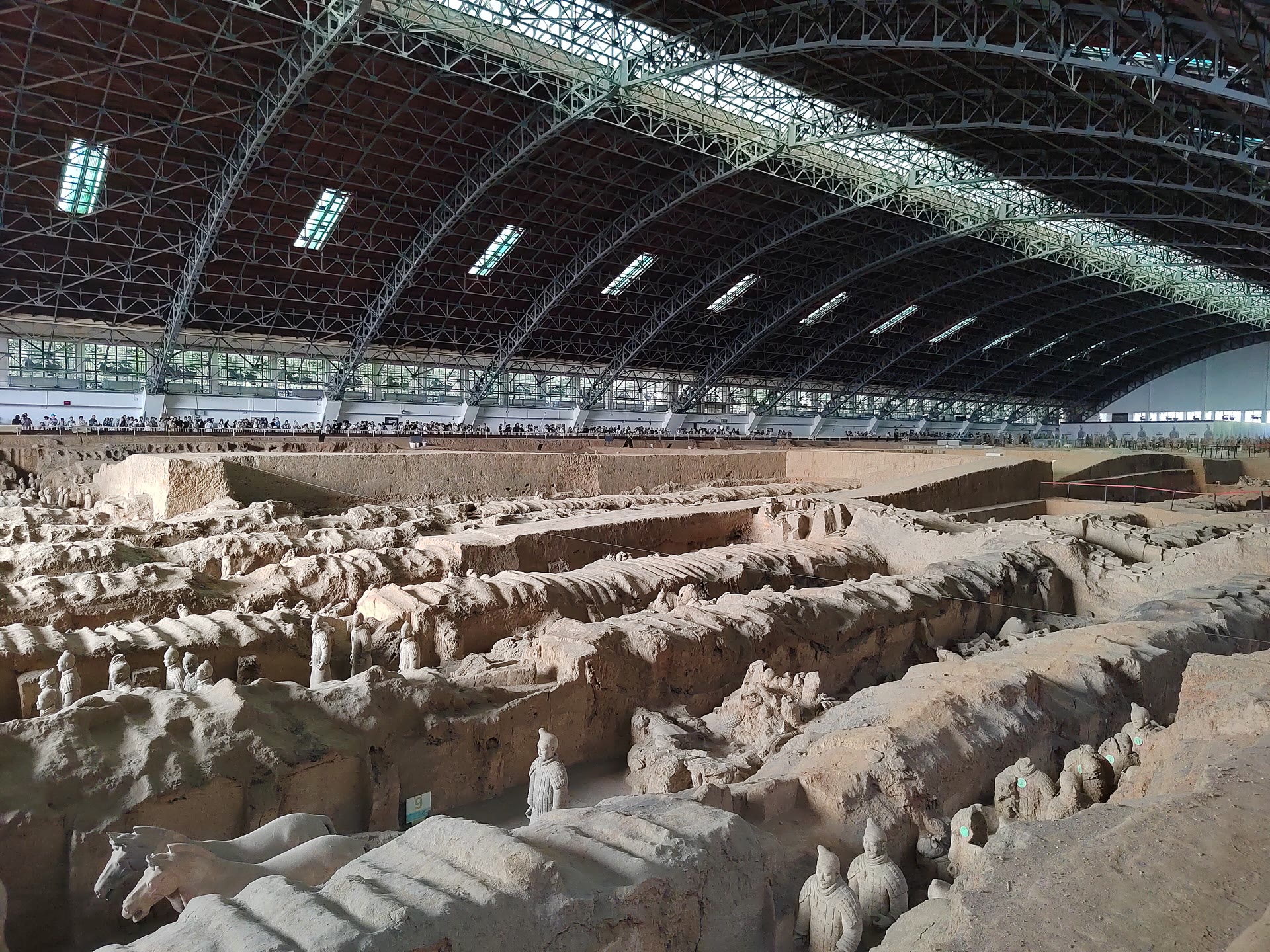
Photo: 沈澄心 / Wikimedia Commons, CC0
Contents
Leaving behind the mist covered West Lake of Hangzhou for the ancient city walls of Xian is like traveling through a living timeline of Chinese history. While Hangzhou represents the peak of southern elegance and the cradle of the tea industry, Xian stands as the formidable gateway to the Silk Road and the home of the Terracotta Warriors. The journey between these two historic capitals spans over 1,200 kilometers, cutting across the heart of China from the lush coastal provinces to the dusty plains of Shaanxi.
The transition from the humid, green landscapes of Zhejiang to the drier, yellow earth of the north is one of the most culturally significant routes in the country. Travelers have the choice between cutting-edge high speed rail that whisks you across the country in a single afternoon or the nostalgic, rhythmic experience of an overnight sleeper train. Whichever you choose, you can easily secure your tickets and plan your itinerary on GoAsia.cc to ensure a smooth transition across the Middle Kingdom.
Hangzhou to Xian by Train
The railway is the undisputed king of this route. China's high speed rail network has revolutionized this journey, making what used to be a multi day trek a simple daytime trip. However, for those on a budget or looking to save on a night of accommodation, the traditional slow trains remain a reliable and atmospheric alternative. Prices for this journey vary significantly, ranging from $33 for a basic seat to $371 for the ultimate luxury in business class. Depending on the train type you select, the trip can take anywhere from about 7 hours to over 22 hours.
High Speed G-Trains
The G-series trains are the fastest way to travel overland. These sleek bullets reach speeds of 300km/h and offer a level of comfort that rivals air travel. Second Class Seats ($105) are the standard choice for most travelers, providing ample legroom and power outlets. For more space, First Class Seats ($169) offer a 2-2 seating configuration. If you are looking to splurge, the Business Class cabins ($328 to $371) feature fully reclining seats, snacks, and access to VIP lounges at the station. These high speed options typically complete the journey in approximately 7 to 8 hours.
Overnight Sleeper Trains
For a more traditional Chinese travel experience, the Z, T, and K trains offer sleeper berths. These are slower, often taking between 16 and 22 hours, but they allow you to wake up refreshed in Xian. The Hard Sleeper ($56 to $62) consists of open compartments with six bunks, while the Soft Sleeper ($86 to $95) offers a lockable cabin with four bunks and better bedding. For the ultimate value, the Hard Seat ($33) is the cheapest option available, though it is only recommended for the most hardy travelers due to the long duration. Some specialized overnight services also offer 1st Class and 2nd Class Sleeper options ($91 to $145), which bridge the gap between speed and comfort.
Comparing Your Options
| Mode | Price (USD) | Duration | Comfort |
|---|---|---|---|
| High Speed Train (Business) | $328 - $371 | 7h - 8h | Excellent |
| High Speed Train (Second Class) | $105 | 7h - 8h | High |
| Soft Sleeper (Overnight) | $86 - $95 | 16h - 22h | Medium |
| Hard Sleeper (Overnight) | $56 - $62 | 16h - 22h | Standard |
| Hard Seat (Slow Train) | $33 | 16h - 22h | Low |
Tips for Traveling from Hangzhou to Xian
- Book in Advance: This is a popular route for both tourists and business travelers. Tickets usually go on sale 15 days before departure and can sell out quickly, especially during public holidays like Golden Week or Chinese New Year.
- Know Your Stations: Most high speed trains depart from Hangzhou East (Hangzhou Dong) and arrive at Xian North (Xian Bei). Traditional slow trains often use the older Hangzhou Station (City Station) and arrive at the main Xian Station near the city walls. Double check your ticket to ensure you head to the right terminal.
- Food and Snacks: While high speed trains have a dining car and trolley service, the options can be limited and pricey. It is a local tradition to bring your own instant noodles, fruit, and tea. Every train station and carriage provides free boiling water.
- Luggage: There are no strict weight checks like at an airport, but you must be able to carry your own bags up stairs and onto overhead racks. On sleeper trains, space is limited, so keep your valuables in a small bag that stays with you.
- Language: English is not widely spoken at the stations. Have your destination name and train number written in Chinese characters or saved on your phone to show staff if you need help finding your platform.
Timetable
| Flight Hangzhou - Xian $ 1,033.22 2h 25m | |
|
|
| Train Hangzhou - Xian $ 32.32–362.76 6h 58m – 22h 15m | |
|
Frequently Asked Questions
Use the booking tool on this page to compare the transport options currently available from Hangzhou to Xian, including current prices and schedules.
The cheapest way to travel is by taking a Hard Seat on a traditional slow train, which costs approximately $33. While very budget friendly, be prepared for a long journey of up to 22 hours in a crowded carriage.
The fastest way to travel is via the high speed G-series trains, which can complete the journey in as little as 6 hours and 58 minutes. These trains are efficient, modern, and reach speeds of up to 300km/h.
Travel time varies significantly based on the train type. High speed trains take between 7 and 10 hours, while traditional overnight sleeper trains can take anywhere from 16 to over 22 hours.
It depends on your priorities. High speed trains save time and are very comfortable for a daytime trip. Sleeper trains are better for those who want to save on the cost of a hotel room and enjoy the classic experience of crossing China by night.
High speed trains arrive at Xian North, which is connected to the city center by metro. Traditional trains usually arrive at the main Xian Station, which is located just outside the northern part of the ancient City Wall.
Business Class passengers on high speed trains receive complimentary meals and snacks. For all other classes, there is usually a dining car or a trolley selling bento-style meals, but many travelers prefer to bring their own food.
Guide prices and journey times are indicative, not live quotes. A booked package may include transfers and waiting time as well as the main journey. Check the selected offer, pickup point and current conditions before booking.