

Contents
Leaving the neon-lit skyscrapers and colonial Bund of Shanghai for the mist-covered limestone peaks of Guilin feels like stepping between two different worlds. While Shanghai represents the hyper-modern pulse of China, Guilin is the soul of its classical landscape paintings. This journey takes you from the eastern coast deep into the heart of Guangxi province, a transition that marks a shift from urban intensity to the slow-moving waters of the Li River.
Because these two cities are far apart, travelers must choose between the efficiency of a domestic flight or the scenic, logistical adventure of the Chinese rail network. Whether you want to be sipping tea by the Reed Flute Cave by lunchtime or you prefer the social atmosphere of a cross-country sleeper train, there are reliable options to suit every budget on GoAsia.cc.
Shanghai to Guilin by Flight
Flying is the most efficient way to bridge the gap between the Yangtze River Delta and the karst mountains and it is the preferred choice for those on a tight schedule. Nonstop flights connect Shanghai Pudong (PVG) and Shanghai Hongqiao (SHA) with Guilin Liangjiang International Airport (KWL). Fares fluctuate with the booking date and the season, so compare the airlines' own sites for your dates. Remember to account for the time needed to reach Shanghai's airports, which are located on the outskirts of the city. A flight saves nearly an entire day compared to the slower train options.
Shanghai to Guilin by Train
The rail journey from Shanghai to Guilin is a study in the diversity of Chinese train travel. You have the choice between high-speed G-trains, overnight D-trains and slower conventional trains. China Railway's 12306 listed six trains from Shanghai to Guilin for 16 October 2026.[1]
High-Speed and Modern Rail
The fastest train on that day was the G263, leaving Shanghai Hongqiao at 11:00 and arriving at Guilin at 18:18, a journey of 7 hours 18 minutes. The G1505 leaves Hongqiao at 07:50 and reaches Guilin North at 17:23 after 9 hours 33 minutes.[1] Note that Guilin has two stations, Guilin and Guilin North, so check which one your train uses. High-speed trains offer Second Class, First Class and Business Class seats.
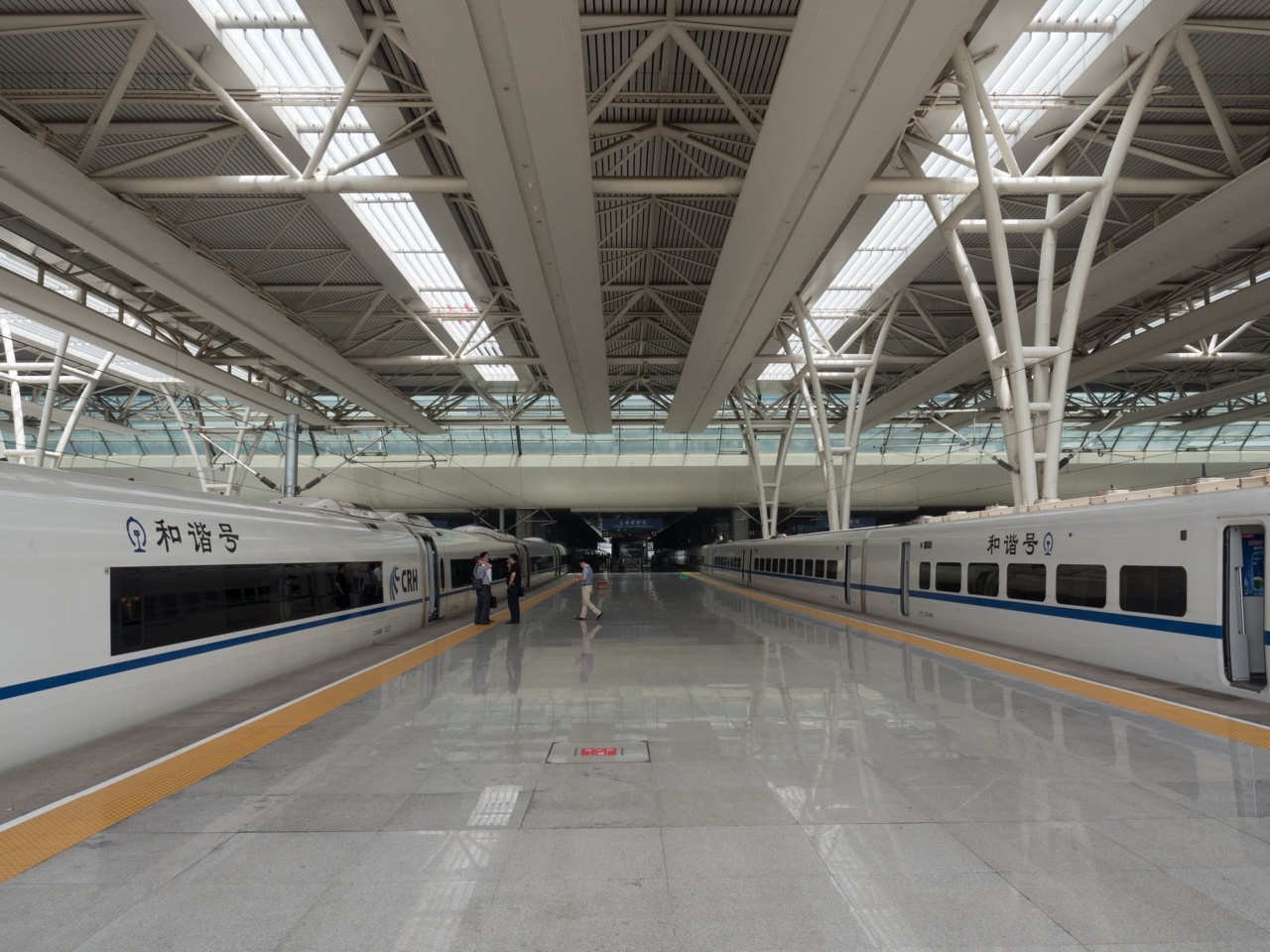
Overnight and Conventional Trains
For those looking to save on a night's accommodation or experience a more traditional way of traversing China, the overnight options take between about 16 and 24 hours. The D197 sleeper train leaves Shanghai South at 11:40 and arrives at Guilin North at 04:00 the next day (16 hours 20 minutes). The K1556 leaves Shanghai Station at 10:13 and arrives at 10:10 the next day (23 hours 57 minutes), while the T381 and K149 leave from Shanghai Songjiang at 16:50 and 17:30 and take 18 hours 49 minutes and 19 hours 49 minutes.[1] Conventional trains offer Hard Seats, Hard Sleepers and Soft Sleepers. A Hard Sleeper is not actually hard; it is a padded bunk in an open compartment of six, while Soft Sleepers offer more privacy in a closed four-berth compartment. These trains are a fantastic way to see the changing countryside and meet local travelers.
Comparing Your Options
| Mode | Duration | Comfort |
|---|---|---|
| Flight | Short nonstop flight | High |
| High-Speed Train | 7h 18min - 9h 33min (16 Oct 2026 timetable)[1] | High |
| Overnight and Conventional Train | 16h 20min - 23h 57min (16 Oct 2026 timetable)[1] | Low to Medium |
Tips for Traveling from Shanghai to Guilin
- Book in Advance: Train tickets in China are released a limited time before departure and sell out quickly, especially for the high-speed routes. Use GoAsia.cc to secure your seats early.
- Airport Choice: If you have a choice, Shanghai Hongqiao Airport (SHA) is closer to the city center than Pudong (PVG) and sits next to Hongqiao railway station.
- Luggage on Trains: Space for large suitcases can be limited on busy trains, so try to board early.
- Food: It is a good idea to buy snacks or a meal at the station before you board a long train journey.
- Station Names: Double-check your departure station. Shanghai has several major hubs (Shanghai Station, Shanghai South, Hongqiao and Songjiang). Getting to the wrong one can result in a missed trip.
Timetable
| Flight Shanghai - Guilin $ 81.70–532.02 2h 10m – 2h 35m | |
|
|
| Train Shanghai - Guilin $ 36.91–362.93 7h 18m – 23h 57m | |
|
Frequently Asked Questions
Use the booking tool on this page to compare the transport options currently available from Shanghai to Guilin, including current prices and schedules.
Conventional trains with hard seats or hard sleepers are normally the cheapest option, but they take 19 to 24 hours. Compare current fares for your date on 12306 or with the airlines, because prices change with season and demand.
A nonstop flight is the fastest option. By rail, the fastest train on 16 October 2026 was the G263 from Shanghai Hongqiao at 11:00 to Guilin at 18:18, taking 7 hours 18 minutes.
Flights are the quickest. High-speed trains took 7 hours 18 minutes to 9 hours 33 minutes on 16 October 2026, the D197 overnight train 16 hours 20 minutes, and the conventional K and T trains about 19 to 24 hours.
If you value time, flying is quicker. The high-speed train is a good choice if you prefer to travel between railway stations and see the countryside, and it avoids airport transfers on the Shanghai side.
Soft sleepers are private four-bunk compartments, and hard sleepers are open-plan six-bunk sections. The soft sleeper offers more privacy and softer mattresses.
Yes. Foreign passengers buy real-name train tickets with a valid passport and must show the same document at the station. Your passport is also required for flights in China.
Sources and background
Numbers in the text such as [1] refer to these sources.
- [1] China Railway (12306): 12306 ticket search: Shanghai to Guilin, 16 October 2026. Retrieved October 15, 2026.
Guide prices and journey times are indicative, not live quotes. A booked package may include transfers and waiting time as well as the main journey. Check the selected offer, pickup point and current conditions before booking.