
Contents
- 1. Getting Around Wuhan by Metro
- 2. Getting Around Wuhan by Bus
- 3. Getting Around Wuhan by Ferry
- 4. Getting Around Wuhan by Taxi
- 5. Getting Around Wuhan by DiDi (Ride-Hailing)
- 6. Getting Around Wuhan by Shared Bike
- 7. Getting Around Wuhan on Foot
- 8. Comparing Your Options
- 9. Practical Tips for Getting Around Wuhan
- 10. Popular Routes and Destinations
- 11. Frequently Asked Questions
Wuhan is really three cities knotted together by water. The Yangtze and Han rivers split the metropolis into Wuchang, Hankou, and Hanyang, and for centuries the only way across was by boat. That geography still shapes daily life here. You feel it the moment you try to cross town and realize a single trip can involve a metro line, a long bridge, and a ferry chugging across the muddy Yangtze.
This is a sprawling, fast-moving place of more than ten million people, and it does not pretend to be a gentle, walkable old town. Distances are big, summers are brutally hot, and the traffic on the bridges can crawl. The good news is that Wuhan has poured money into its metro over the past decade, and the network is now one of the most extensive in central China. Between the trains, an army of buses, river ferries, and cheap ride-hailing, you can reach almost anywhere without a word of Mandarin if you plan a little.
Expect a city that rewards the prepared. Download the right apps, get a transit payment method sorted on day one, and you will glide between the riverside promenades of Hankou, the university district and East Lake in Wuchang, and the museums of Hanyang with surprising ease.
Getting Around Wuhan by Metro
The Wuhan Metro is the backbone of any visitor's transport plan. The network spans more than a dozen lines and reaches across all three towns, with cross-river tunnels and bridges linking Wuchang, Hankou, and Hanyang. Trains are clean, air-conditioned (a blessing in the sticky summer), frequent, and bilingual, with station names and announcements in both Chinese and English.
Fares are distance-based and very cheap, typically starting around 2 yuan and climbing to roughly 7 or 8 yuan for the longest journeys, which is well under a dollar for most trips. Trains generally run from about 6am until around 11pm, with services every few minutes during the day and longer gaps late in the evening.
Key lines worth knowing: Line 2 connects Tianhe International Airport with Hankou and runs under the Yangtze to Wuchang, passing the popular Optics Valley (Guanggu) area. Line 4 links the two main railway stations, Wuchang and Wuhan, and reaches Hanyang. Lines 1, the elevated loop through Hankou, gives you elevated views of the older riverside districts.
To pay, the easiest method is to scan a QR code through Alipay or WeChat. Both apps have a dedicated Wuhan Metro mini-program (look for the transit or riding code option) that lets you tap through the gates with your phone. Alternatively, ticket machines accept cash and sell single-journey tokens, and you can buy a rechargeable Wuhan Tong card for slightly discounted rides if you are staying a while.
Avoid the metro during the morning rush (roughly 7:30am to 9am) and evening peak (5pm to 7pm) if you can, when central interchange stations get genuinely crowded. Off-peak, it is the fastest and most reliable way to move long distances across the rivers.
Getting Around Wuhan by Bus
Wuhan's bus network is enormous and fills in every gap the metro leaves. Hundreds of routes blanket the three towns, including handy sightseeing-friendly lines along the Hankou Bund and around East Lake. Buses are the workhorse for short hops and for neighborhoods the metro does not reach.
A standard fare is typically around 2 yuan, paid with exact change in the fare box or, far more conveniently, by scanning a QR code through Alipay, WeChat, or your Wuhan Tong card. There is no change given for cash, so keep coins and small notes handy if you go that route.
The catch for visitors is the language barrier and the lack of English on most buses. Route information, stop names, and announcements are largely in Chinese. Use a navigation app to tell you which bus to board and when to get off, and watch your phone's GPS to track stops. Buses can be slow in traffic, especially on the bridges, so weigh the savings against your patience in the heat.
Getting Around Wuhan by Ferry
Crossing the Yangtze by ferry is both a practical shortcut and one of the most atmospheric things you can do in Wuhan. The Wuhan Ferry has plied these waters for over a century, and the route between the Wuchang and Hankou banks remains a beloved local commute. The ride takes only about 15 to 20 minutes and delivers postcard views of the river, the bridges, and the city skyline.
Tickets are cheap, generally just a few yuan for the standard crossing, with slightly higher prices for an upper-deck or tourist ferry. Pay at the dock; QR payment and cash both work. The most popular crossing connects the Zhonghua Road dock in Wuchang with the Wuhan Pass area in Hankou, near the historic riverfront concession buildings.
Time your trip for late afternoon or early evening to catch the light on the water, and you will understand why locals still prefer the boat to the bridge. It is more a scenic bonus than a primary transport mode, but it is a genuine joy.
Getting Around Wuhan by Taxi
Metered taxis are plentiful and reasonably priced. Flagfall is typically around 10 yuan, covering the first few kilometers, with the meter ticking up from there. A cross-town ride might run somewhere in the range of 30 to 60 yuan depending on distance and traffic. Most cabs are clean and the drivers honest, though almost none speak English.
The single most useful trick is to have your destination written in Chinese characters to show the driver, or to drop a pin in a Chinese map app. Insist the meter is used (it almost always is), and keep small bills, as drivers may claim to have no change for large notes. Hailing a cab on the street can be tough during rush hour and in the rain, which is exactly when you need one most.
Getting Around Wuhan by DiDi (Ride-Hailing)
For most visitors, DiDi is the smoothest way to get around door to door. China's dominant ride-hailing app works seamlessly in Wuhan, and the international version supports English, foreign credit cards, and in-app translation for chatting with your driver. Cars arrive quickly, fares are transparent and often cheaper than a metered taxi off-peak, and you skip the language and payment hassles entirely.
A typical cross-river trip might cost roughly 30 to 70 yuan, with surge pricing during rush hour, heavy rain, and the worst of the summer heat. You can pre-set pickup and drop-off points on the map, which removes any address confusion. For airport runs, late-night trips, or hauling luggage, DiDi is hard to beat. You can compare transport options and rough costs for your route on GoAsia.cc before you set out.
Getting Around Wuhan by Shared Bike
Wuhan is flat in its central districts and dotted with shared bikes from operators like Meituan and Hello, their distinctive yellow and blue frames parked along sidewalks everywhere. For short hops, the riverside promenades, and a loop around the leafy East Lake scenic area, cycling is cheap and pleasant.
Unlocking a bike usually requires scanning a QR code through Alipay or WeChat and costs around 1.5 yuan for the first half hour. Be aware that registration sometimes needs a Chinese phone number or ID, so set this up early. Skip cycling on the major bridges and arterial roads, where traffic is fast and unforgiving, and avoid the midday sun in summer when temperatures soar.
Getting Around Wuhan on Foot
Wuhan is not a walking city in the way a compact old town might be, but individual districts reward exploration on foot. The Hankou riverfront with its early-twentieth-century concession architecture, the area around Yellow Crane Tower in Wuchang, and the lakeside paths of East Lake are all best savored slowly. Within a single neighborhood, walking is often quicker than waiting for a bus.
Just respect the scale of the place: trying to walk between the three towns is not realistic, and summer humidity will defeat you. Use the metro or a DiDi to cover the big distances, then walk once you arrive.
Comparing Your Options
| Mode | Typical Cost | Duration | Best For |
|---|---|---|---|
| Metro | 2 to 8 yuan | Fast, no traffic | Crossing the city and rivers quickly |
| Bus | Around 2 yuan | Slow in traffic | Cheap short hops where metro does not reach |
| Ferry | A few yuan | 15 to 20 min crossing | Scenic Yangtze crossings |
| Taxi | From around 10 yuan | Door to door | Direct trips when you have an address in Chinese |
| DiDi | Roughly 30 to 70 yuan cross-town | Door to door | Hassle-free travel and airport runs |
| Shared bike | Around 1.5 yuan per 30 min | Short distances | Riverside and East Lake exploring |
Practical Tips for Getting Around Wuhan
The single most important thing you can do before arriving is set up mobile payments. Cash is increasingly rare in daily life, and almost everything from metro gates to bus fares to bikes runs on QR codes.
- Install Alipay and WeChat and link a foreign card. Both now support international travelers and run mini-programs for the Wuhan Metro, buses, and bike-sharing.
- Download DiDi (the international version) for ride-hailing with English support and in-app translation.
- Get an offline-capable map app. Many Western map services are unreliable in China, so a local navigation app or a downloaded map will serve you better for routing buses and metros.
- Save your hotel and key destinations in Chinese characters. Show them to taxi drivers or use them to drop map pins.
- Carry a small power bank. Your phone is your ticket, wallet, and map all at once, and a dead battery leaves you stranded.
On rush hours: the morning crush runs roughly 7:30am to 9am and the evening peak from 5pm to 7pm, when the metro packs out and bridge traffic snarls. Plan long cross-river trips outside these windows. Summers (June through August) are notoriously hot and humid, so favor air-conditioned metro over buses and bikes in the heat of the day.
Wuhan is generally very safe for visitors, and transport scams are rare compared with bigger tourist hubs. The main risks are simple confusion: boarding the wrong bus, struggling with a cash-only fare box, or a taxi driver not understanding a mumbled English address. Insist on the meter in taxis, and prefer DiDi if you want a transparent, pre-agreed fare. Late at night, when the metro has stopped, DiDi is the safest and most convenient way home.
A few useful phrases help enormously: learning to say and recognize Wuchang, Hankou, and Hanyang will orient you fast, since locals constantly reference which of the three towns you mean. Knowing your destination's district saves a lot of back-and-forth.
Popular Routes and Destinations
From Tianhe International Airport, the cheapest route into the city is Metro Line 2, which connects the airport directly to Hankou and continues under the Yangtze toward Wuchang and the Optics Valley district. For door-to-door convenience with luggage, a DiDi or taxi is worth the extra cost, especially late at night when the metro is closed.
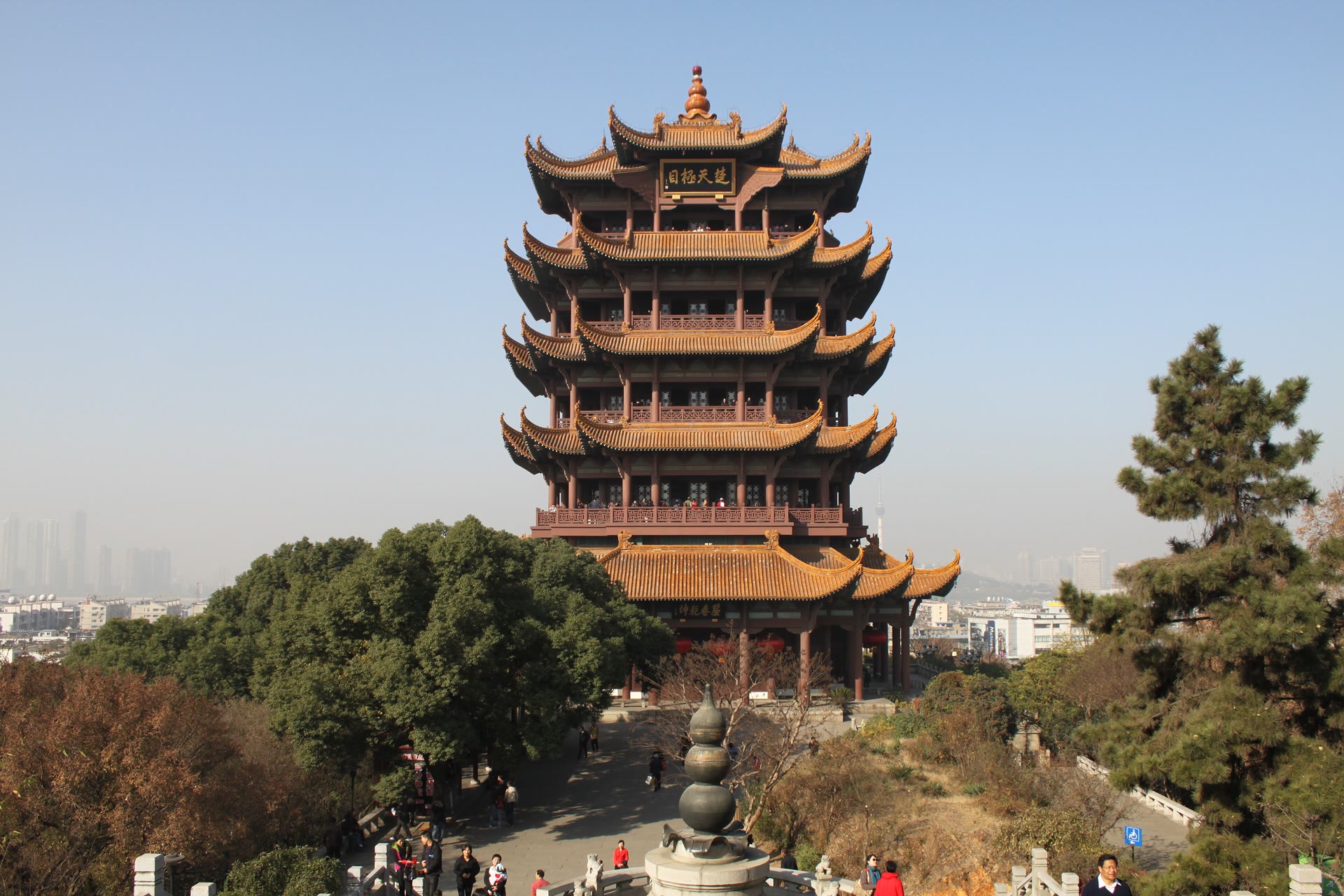
To reach the Yellow Crane Tower and the historic heart of Wuchang, the metro gets you close before a short walk or bike ride. For the Hankou Bund and its concession-era architecture, combine the metro with a stroll, or arrive in style by crossing the Yangtze on the ferry. East Lake, one of China's largest urban lakes, is best explored by shared bike once you reach its edge by metro or DiDi.
Frequently Asked Questions
Use this guide to compare local transport in Wuhan. When bookable tickets are available, the booking tool shows current options and prices.
The metro is the best all-around option, with clean, cheap, bilingual trains linking all three towns across the rivers. For door-to-door trips, late nights, or carrying luggage, ride-hailing with DiDi is the most convenient choice. Combine the two for the smoothest experience.
Transport in Wuhan is very affordable. Metro fares run from around 2 to 8 yuan depending on distance, buses are about 2 yuan, and ferries cost just a few yuan. Taxis start at roughly 10 yuan, and a cross-town DiDi typically costs somewhere between 30 and 70 yuan.
Yes, Wuhan is generally very safe and transport scams are rare. The metro, buses, and ferries are secure and well used, and ride-hailing offers transparent fares. The main challenge is the language barrier rather than safety, so keep destinations saved in Chinese and use map apps to navigate.
Yes, DiDi is widely available and works smoothly across Wuhan. The international version supports English, foreign credit cards, and in-app translation for messaging drivers. It is often cheaper than a metered taxi off-peak and removes any address confusion.
Not necessarily. While a rechargeable Wuhan Tong card works on the metro and buses, most travelers simply scan a QR code through Alipay or WeChat to pay for rides. Setting up these apps before you arrive is the easiest way to handle nearly all local transport.
The metro has English signage and announcements, so it is easy for non-Chinese speakers. For buses and taxis, save your destination in Chinese characters, use a map app to track stops, and rely on DiDi's translation feature when chatting with drivers.
Metro Line 2 runs directly from the airport into Hankou and on toward Wuchang, making it the cheapest option. If you have luggage or arrive late at night after the metro closes, a DiDi or taxi is the most convenient way into town.
Guide prices and journey times are indicative, not live quotes. A booked package may include transfers and waiting time as well as the main journey. Check the selected offer, pickup point and current conditions before booking.