
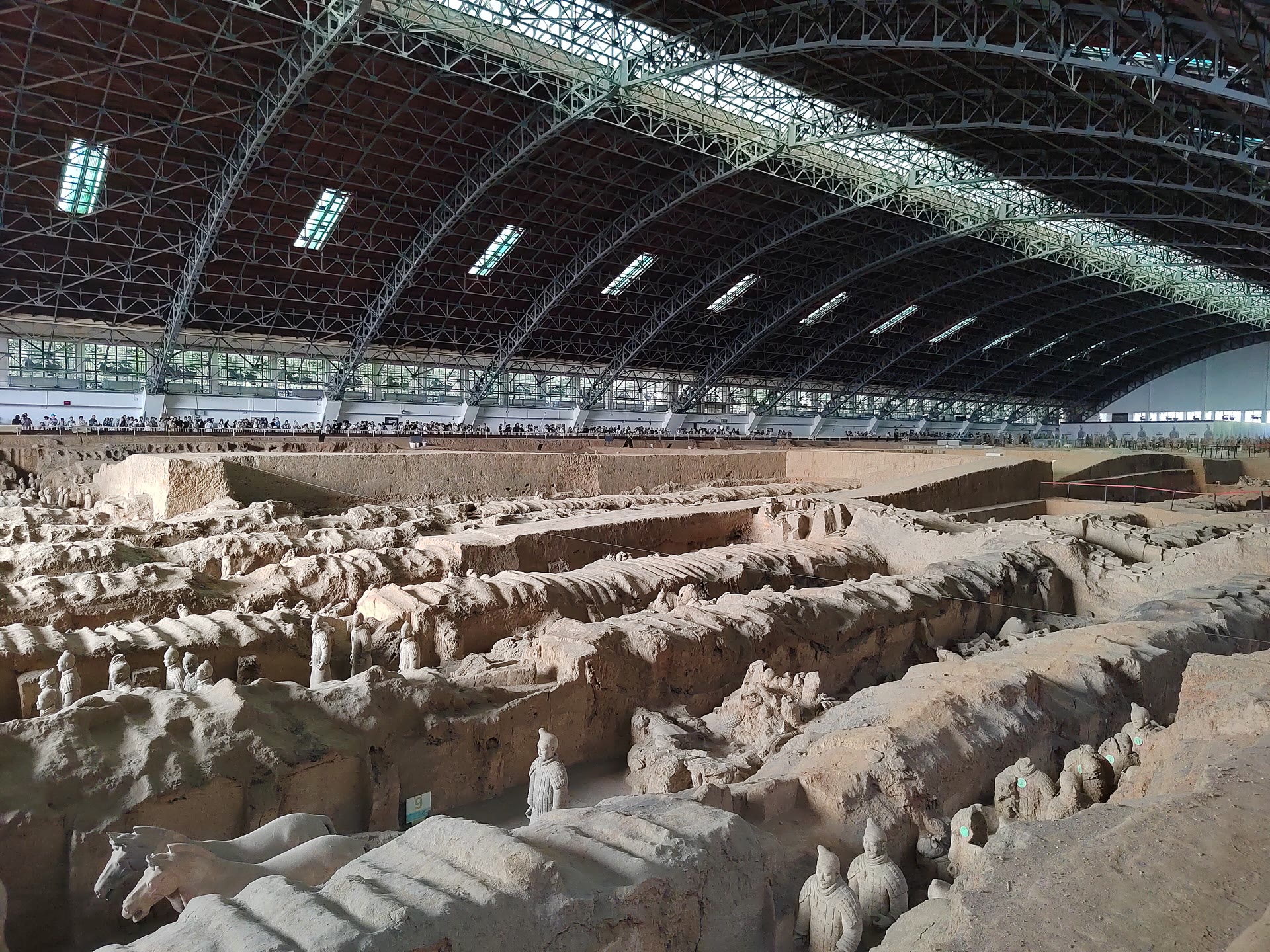
Photo: 沈澄心 / Wikimedia Commons, CC0
Contents
Xian is one of China's easier historic cities to navigate once you understand the basic pattern. The old city sits inside and around the city wall, with the Bell Tower and Drum Tower acting as natural orientation points. Metro lines connect the main rail stations, central districts, airport access points, and several useful sightseeing corridors, while buses and taxis fill the gaps for places that are not directly beside a station. For most visitors, the best strategy is simple: use the metro for predictable cross-city movement, add Didi or a metered taxi for short hops with luggage, and walk inside the wall when the weather is pleasant.
This is a within-city guide, so it is not tied to one fixed route. Think of it as a local mobility playbook for sightseeing days, food nights, hotel transfers, and transport to outer attractions such as the Terracotta Army area. Xian can feel busy near railway stations and famous landmarks, but the transport system is logical. Save Chinese names for your hotel and key stops, set up Alipay or WeChat Pay where possible, and keep a small cash backup for buses, older taxis, or ticket machines that do not like foreign cards.
Metro: The Easiest Way Across Xian
The Xian metro is the backbone of visitor transport. It is clean, signed with English in major areas, and usually faster than road traffic for longer moves. Fares are distance based and commonly start around CNY 2 for short rides, rising gradually for longer journeys. For central sightseeing, this makes the metro both cheap and calm. Bell Tower, Yongningmen, Xiaozhai, Wulukou, Xian North Railway Station, and airport-linked stations are all useful anchors when planning your day.
Buy a single journey ticket at a vending machine, use a transport card, or activate a ride code in Alipay or WeChat if your payment setup works. During peak commuter periods, trains can be crowded, especially on lines serving business districts and railway stations. With a suitcase, avoid tight connections where possible and allow extra time for security checks at station entrances. Bags are scanned before entry, which is normal across many Chinese metro systems.
The metro is especially helpful for reaching Xian North Railway Station, moving between the city wall area and southern hotel districts, and beginning the trip toward the Terracotta Army by connecting with eastern transport links. It is less useful for very short old-town movements where walking is more enjoyable and often nearly as fast.
Buses and Sightseeing Connections
City buses in Xian are cheap and extensive, but they are less beginner friendly than the metro. A standard local bus ride is often around CNY 2, though special routes can differ. Stops may have limited English, route changes happen, and traffic can slow things down. If you read Chinese or are comfortable using map apps, buses are excellent for filling gaps between metro stations and neighborhoods. If not, use buses selectively for simple, direct routes.
For major sights outside the core, check the latest routing on the day. The Terracotta Army area is commonly reached by a combination of metro and bus or by a direct tourist bus, depending on your starting point and current service. A taxi or private car can be more comfortable if you are traveling as a group, visiting early, or combining several outer sights. Ask your hotel to write the destination in Chinese or save the official attraction name in your map app before leaving.
Tourist buses and special services may use different boarding points from ordinary city buses. Around railway stations, ignore unsolicited drivers who approach you aggressively and go to the marked bus area, taxi rank, or app pickup point. Xian is used to visitors, but transport around famous sights rewards a little patience.
Taxis, Didi, and Private Transfers
Taxis and Didi are useful in Xian, particularly late at night, during heavy rain, for restaurant runs, or when your hotel is not close to a metro stop. Taxi starting fares are typically around CNY 9 to CNY 10 before distance charges. App rides are often easier for foreign visitors because the destination is fixed in the app and you can follow the route on your phone. If you hail a taxi, use the meter and show the driver the destination in Chinese.
Airport and railway station transfers are the moments when paying for a car often feels worthwhile. Xian Xianyang International Airport is outside the city core, and the metro can be cost-effective if your arrival time and luggage make sense. A taxi or pre-booked transfer is easier if you land late, travel with children, or stay in a lane-style hotel inside the wall where finding the entrance may take a minute. Always keep your hotel phone number and address saved offline.
Didi pickup points at large stations can be confusing. Do not call a ride until you know which exit you are using. At Xian North Railway Station and big malls, a short walk to the correct pickup zone can save a long phone call in a language you may not speak.
Walking, Cycling, and the City Wall Area
Xian is rewarding on foot inside the old city wall. The Muslim Quarter, Bell Tower area, Drum Tower lanes, city wall gates, and many snack streets are best explored slowly. Pavements can be busy, crossings are wide, and electric scooters may appear quietly, so stay alert even on familiar streets. At night, central Xian is lively and generally comfortable for walking in popular areas, but keep the usual city awareness around crowds and pickpocket-prone places.
Cycling is more of an experience than a transport solution for many visitors. The city wall ride is the classic option, with bike rental available on top of the wall when weather and operations allow. Street cycling is possible in some districts, but traffic style, scooters, and unfamiliar junctions make it less relaxing than metro plus walking. If you use a shared bike, check brakes and seat height before unlocking, and avoid riding through dense pedestrian areas.
Comparing Your Options
| Mode | Best For | Typical Cost | Good To Know |
|---|---|---|---|
| Metro | Cross-city trips, rail stations, central sights | From about CNY 2 | Reliable, signed, and usually the best first choice |
| City bus | Short local gaps and budget travel | Often about CNY 2 | Useful with map apps, less easy without Chinese |
| Taxi | Late nights, luggage, rain, hotel door access | Metered, from about CNY 9 to CNY 10 | Show the destination in Chinese and use the meter |
| Didi | App-based point to point travel | Varies by distance and demand | Best when pickup points are clear |
| Walking | Old city, food streets, short sightseeing hops | Free | Allow time for wide roads and crowded crossings |
Practical Tips
- Set up payment before you need it. Alipay and WeChat Pay make metro gates, taxis, and small payments much easier.
- Save Chinese addresses. English hotel names alone may not help a taxi driver.
- Use the metro for certainty. It avoids much of the road traffic and removes fare negotiation.
- Plan outer sights separately. The Terracotta Army area needs more time than a normal city hop.
- Carry small cash. Digital payment is common, but backup cash is still useful.
- Avoid station touts. Use marked taxi ranks, official bus areas, or your ride-hailing app.
- Keep offline maps ready. Underground stations and old-town lanes can interrupt mobile data.
FAQ
Frequently Asked Questions
Use this guide to compare local transport in Xian. When bookable tickets are available, the booking tool shows current options and prices.
The metro is the best default option for most visitors because it is cheap, predictable, and connects central districts, rail stations, and many sightseeing areas. Use taxis or Didi for luggage, late nights, rain, and places beyond easy metro reach.
Short metro rides commonly start around CNY 2, many local buses are around CNY 2, and taxis usually start around CNY 9 to CNY 10 before distance charges. App ride prices vary by distance, traffic, and demand.
Yes, normal visitor routes in Xian are generally safe. Use official metro stations, marked taxi ranks, reputable ride apps, and ordinary city caution around crowds, station exits, and busy night markets.
Yes, especially if you use the metro and app-based navigation. Save destinations in Chinese, keep your hotel address offline, and use screenshots for drivers or station staff when needed.
Didi is often easier because the destination is entered in the app. Taxis are also useful, but it helps to show the address in Chinese and make sure the meter is used.
Many visitors use a metro plus bus combination, a tourist bus, taxi, or private car. Check the latest routing from your hotel on the day because boarding points and connections can change.
The old city, Muslim Quarter, Bell Tower area, and city wall gates are good for walking. For longer distances, use the metro first and then walk the final section.
Guide prices and journey times are indicative, not live quotes. A booked package may include transfers and waiting time as well as the main journey. Check the selected offer, pickup point and current conditions before booking.