
Contents
- 1. Getting Around Pattaya by Songthaew (Baht Bus)
- 1.1 Fixed-Route Songthaews
- 1.2 Chartered Songthaews
- 2. Getting Around Pattaya by Motorbike Taxi
- 3. Getting Around Pattaya by Grab and Ride-Hailing Apps
- 4. Getting Around Pattaya by Rented Motorbike or Scooter
- 5. Getting Around Pattaya by Taxi
- 6. Getting Around Pattaya on Foot
- 7. Getting Around Pattaya by Rented Car
- 8. Comparing Your Options
- 9. Practical Tips for Getting Around Pattaya
- 10. Popular Routes and Destinations
- 11. Frequently Asked Questions
- 12. Sources and background
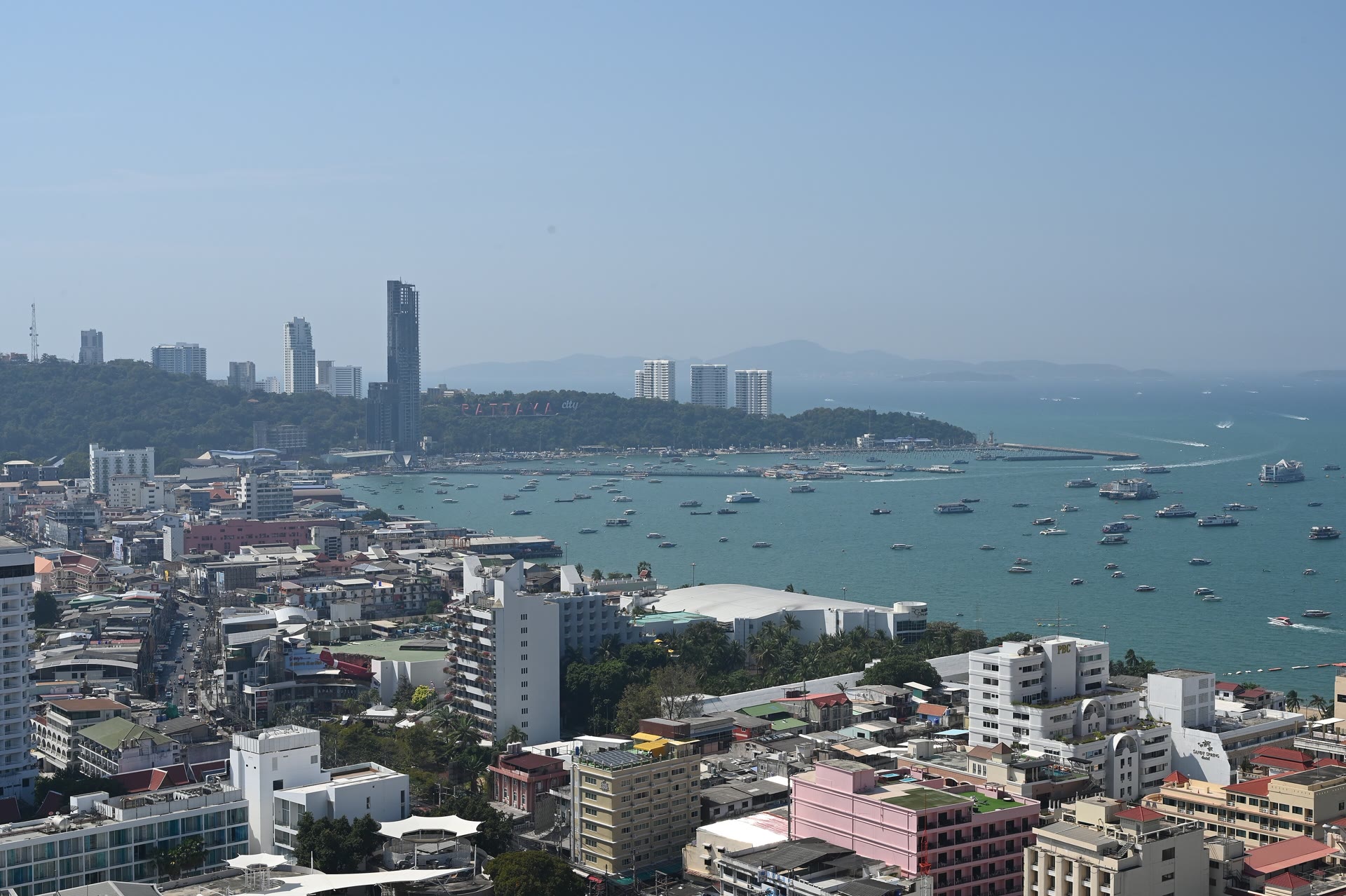
Pattaya sprawls along the Gulf of Thailand in a long, uneven strip that defies the idea of a compact beach town. The city stretches roughly 15 kilometers from Naklua in the north through central Pattaya and down to Jomtien Beach in the south, with hilly terrain, narrow sois (side streets), and a beachfront road that hums with traffic from morning until deep into the night. There is no rail system, no subway, and no formal city bus network. Instead, Pattaya runs on a chaotic but functional ecosystem of songthaews (converted pickup trucks), motorbike taxis, ride-hailing apps, and rented wheels.
The good news is that this informality makes transport cheap and readily available at almost any hour. The challenge is that it rewards travelers who understand how each mode works, where to find it, and what a fair price looks like. Once you decode the system, moving around Pattaya is straightforward and affordable. Step off the plane without a plan, and you will likely overpay or end up on the back of a motorbike headed the wrong way down Beach Road.
This guide breaks down every realistic way to get from point A to point B in Pattaya, so you can move around the city with the confidence of someone who has been here before.
Getting Around Pattaya by Songthaew (Baht Bus)
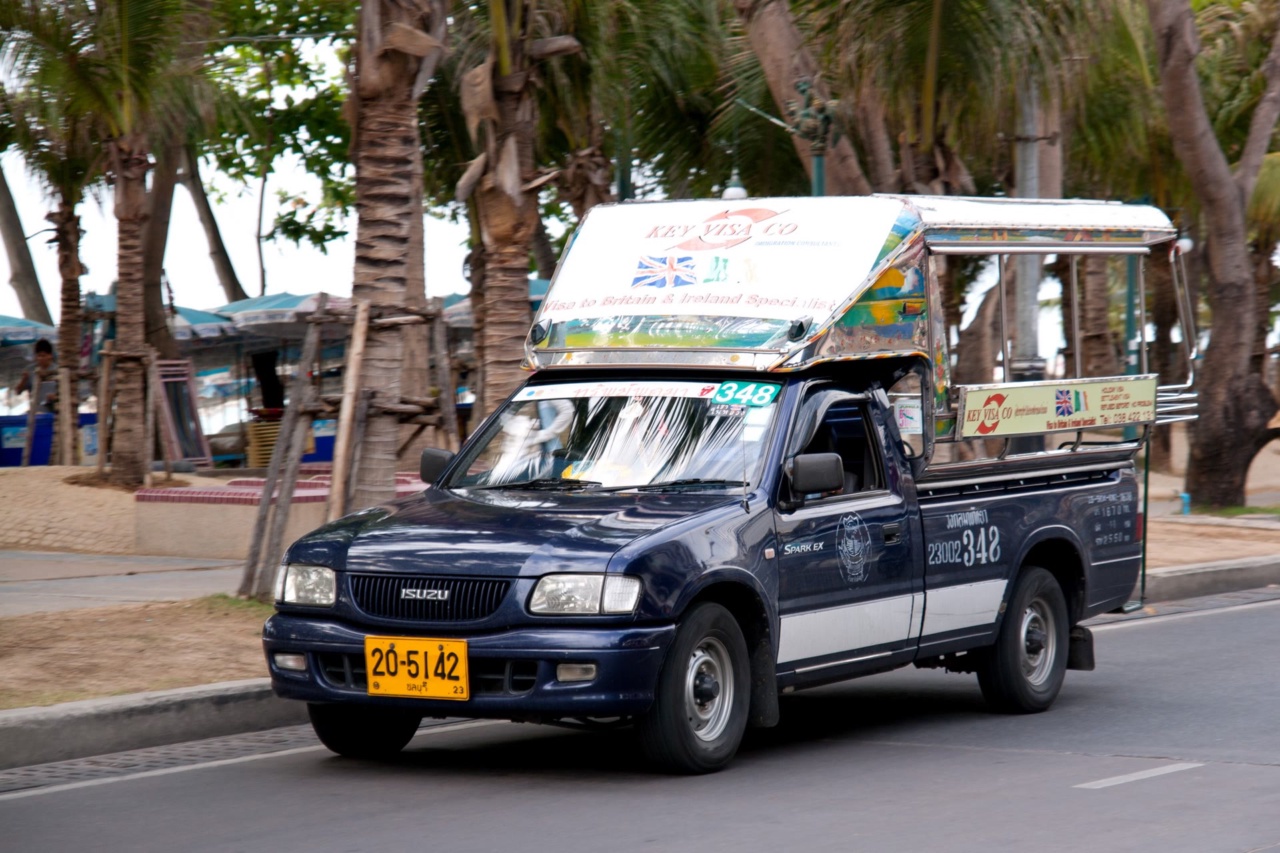
The songthaew is the backbone of Pattaya transport. These are dark blue converted pickup trucks with two bench seats in the back and a roof for shade. Locals call them "baht buses," and they function as a hybrid between a shared taxi and a bus. There are no official stops, no posted schedules, and no route maps at bus shelters, because there are no bus shelters. You simply flag one down, hop on, press the buzzer when you want to get off, and pay the driver through the rear window.
Fixed-Route Songthaews
The most useful route for tourists is the loop along Beach Road and Second Road (Pattaya Sai Song). Songthaews cruise south along Beach Road, turn around near Walking Street, then head north along Second Road before looping back. This circular route covers the heart of central Pattaya and runs continuously from early morning until around midnight or later. The standard fare for riding along this loop is 10 baht per person (roughly $0.30), paid in cash when you exit. No tickets, no change machines, just drop the coins into the driver's hand.
Other fixed routes connect Pattaya to Naklua (north) and Jomtien Beach (south). The Jomtien route typically runs along Thappraya Road and costs 10 to 20 baht depending on the distance. These routes are less frequent than the central loop but still run regularly throughout the day.
Chartered Songthaews
If you want to go somewhere off the main loop, such as a specific temple, a restaurant on a hill, or a destination on a side street, you can charter a songthaew as a private taxi. The driver will quote a price before you get in. Expect to pay anywhere from 100 to 300 baht for short to medium trips within the city. Always agree on the fare before boarding. Some drivers along Beach Road will try to treat every tourist as a charter customer rather than a shared-route passenger, quoting 100 to 200 baht for a trip that should cost 10. The trick is simple: if other passengers are already sitting in the back, it is a shared route and you pay the standard fare. If the truck is empty and the driver is negotiating, he wants a charter fare.
Getting Around Pattaya by Motorbike Taxi
Motorbike taxis are everywhere in Pattaya. Drivers wear numbered, colored vests (usually orange or green) and cluster at the entrances to sois, near shopping malls, and at major intersections. They are the fastest way to cover short distances, especially when traffic clogs the main roads or when you need to reach a specific soi deep inside the city grid.
A short hop of a kilometer or two typically costs 20 to 50 baht. Longer rides across town can reach 80 to 150 baht. Always confirm the price before you climb on. Helmets should be provided, though the quality varies. Motorbike taxis are best for solo travelers or couples without heavy luggage. They are not ideal for families, anyone with large bags, or riders uncomfortable weaving through Pattaya traffic at speed. That said, for quick trips to a nearby restaurant or bar, they are unbeatable for convenience.
Getting Around Pattaya by Grab and Ride-Hailing Apps
Grab operates in Pattaya and is the most reliable ride-hailing option. The app works for both cars (GrabCar) and motorbikes (GrabBike), giving you upfront pricing, GPS-tracked routes, and cashless payment if you link a card. This removes the negotiation that comes with songthaews and motorbike taxis, which is a significant advantage for travelers who do not speak Thai or dislike haggling.
GrabCar fares within central Pattaya typically range from 60 to 200 baht depending on distance and demand. GrabBike is cheaper, usually 30 to 80 baht for similar trips. Surge pricing applies during peak hours and late at night, especially around Walking Street after midnight. One practical note: Grab drivers in Pattaya sometimes cancel rides if the pickup location is in a congested area or if the fare is very low. Be patient, and if a driver cancels, simply rebook. Having your destination written in Thai or pinned on the map helps enormously.
Bolt also operates in Pattaya and sometimes offers lower fares than Grab. It is worth having both apps installed so you can compare prices. You can explore transport options and compare costs on GoAsia.cc to help plan your trips.
Getting Around Pattaya by Rented Motorbike or Scooter
Renting a motorbike is one of the most popular ways for visitors to explore Pattaya independently. Rental shops line Second Road, Beach Road, and the Jomtien area. A basic 110cc scooter costs around 200 to 300 baht per day, while a larger bike like a Honda PCX or Yamaha NMAX runs 400 to 600 baht daily. Weekly and monthly rates bring the daily cost down significantly.
Rental shops may ask for a deposit or identification, but do not leave your original passport as collateral. Ask about a safer deposit option before handing over any document. Leaving a passport is standard practice but carries risk. If possible, negotiate a cash deposit instead or leave a photocopy. Make sure you photograph the bike thoroughly before riding off, noting every scratch and dent, and confirm that the rental includes basic insurance or understand what happens if the bike is damaged.
Driving in Pattaya requires genuine caution. Traffic is dense, road rules are loosely followed, and accidents involving tourists on motorbikes are common. An International Driving Permit (IDP) is technically required, and police occasionally set up checkpoints where tourists without one face fines of around 500 baht. Wear a helmet at all times. Pattaya's roads can be slippery during the rainy season, and potholes appear without warning on side streets.
Getting Around Pattaya by Taxi
Metered taxis exist in Pattaya but are far less common than in Bangkok. You will find them near major hotels, shopping malls like Central Pattaya and Terminal 21, and at the bus station. Unlike Bangkok, many Pattaya taxi drivers prefer to negotiate a flat fare rather than use the meter. If you can get a metered ride, the flag-fall is 35 baht with increments based on distance. In practice, a metered ride across central Pattaya might cost 80 to 150 baht, while a negotiated fare for the same distance could be 150 to 300 baht.
Taxis are most useful for trips with luggage, airport transfers, or when you need air conditioning and comfort. For everyday trips within the city, songthaews or Grab are almost always cheaper and easier to find.
Getting Around Pattaya on Foot
Pattaya is walkable in short bursts but not as a primary mode of transport. The Beach Road promenade is pleasant for strolling, especially in the cooler evening hours, and the stretch from Central Pattaya down to Walking Street is manageable on foot (roughly 2 kilometers). Jomtien Beach also has a good beachfront path.
Beyond these areas, walking becomes less practical. Sidewalks are inconsistent, sometimes disappearing entirely or blocked by parked motorbikes and food carts. The heat and humidity for much of the year make long walks exhausting. Walking works well for exploring a specific neighborhood, like browsing the shops along Soi Buakhao or wandering through Naklua's seafood market, but for covering real distance, you will want wheels of some kind.
Getting Around Pattaya by Rented Car
Renting a car makes sense if you plan to explore beyond Pattaya proper, visiting attractions like the Nong Nooch Tropical Garden, Silverlake Vineyard, or making day trips to Rayong or Koh Samet's ferry pier. Within the city itself, a car is more burden than benefit due to traffic congestion and limited parking.
Rental agencies including Budget, Avis, and local operators have offices along Second Road and at major hotels. A compact car starts around 800 to 1,200 baht per day. An International Driving Permit is required. Drive on the left side of the road, and be prepared for aggressive driving from other motorists. Parking at malls and hotels is usually free or very cheap, but street parking in central Pattaya can be a headache.
Comparing Your Options
| Mode | Typical Cost | Duration | Best For |
|---|---|---|---|
| Songthaew (shared route) | 10 baht ($0.30) | Varies by distance | Budget travel along Beach Road and Second Road loop |
| Songthaew (chartered) | 100-300 baht ($3-$9) | 10-30 min | Off-route destinations when you want door-to-door service |
| Motorbike Taxi | 20-150 baht ($0.60-$4) | 5-20 min | Quick solo trips, navigating sois, beating traffic |
| Grab Car | 60-200 baht ($2-$6) | 10-30 min | Air-conditioned comfort, fixed pricing, no haggling |
| Grab Bike | 30-80 baht ($1-$2) | 5-15 min | Cheap, fast short hops with upfront pricing |
| Metered Taxi | 80-300 baht ($2-$9) | 10-30 min | Trips with luggage, airport transfers, comfort |
| Rented Motorbike | 200-600 baht/day ($6-$17) | Self-paced | Full-day exploring, independence, Jomtien to Naklua flexibility |
| Rented Car | 800-1,200 baht/day ($23-$34) | Self-paced | Day trips outside Pattaya, groups, families with kids |
| Walking | Free | Varies | Short distances along Beach Road, evening strolls, bar-hopping |
Practical Tips for Getting Around Pattaya
Apps to download: Grab and Bolt are essential. Google Maps works well for navigation and shows real-time traffic. If you rent a motorbike, Maps.me offers good offline maps. Download a basic Thai phrasebook app or use Google Translate's camera feature to read signs.
Cash is king: Songthaews, motorbike taxis, and most local transport only accept cash. Keep a supply of small bills (20 and 50 baht notes) and coins. ATMs are plentiful along Beach Road and Second Road but charge a 220 baht fee for foreign cards. Grab allows credit card payment, which is useful when you run low on cash.
Rush hours: Traffic in Pattaya is heaviest between 4 PM and 7 PM, particularly along Sukhumvit Road (the main highway), Second Road, and around the Central Festival mall area. Beach Road can also crawl during these hours. If you have a dinner reservation across town, leave early or take a motorbike taxi that can weave through traffic.
- Avoid taking songthaews during heavy rain. The open-backed design means you will get soaked, and flooding on low-lying roads can slow everything to a crawl.
- Never agree to a songthaew driver's offer to take you to a "special" gem shop, tailor, or restaurant. This is a common commission scam where drivers earn kickbacks for delivering tourists to overpriced businesses.
- When using motorbike taxis, hold on firmly and keep your knees tucked in. Pattaya sois are narrow, and mirrors on parked cars are closer than they appear.
- If a taxi driver refuses to use the meter, you have two choices: negotiate firmly or walk away and use Grab instead. You will almost always get a better deal through the app.
- Late at night (after 1 AM), transport options thin out. Songthaews become scarce, and remaining drivers charge premium rates. Grab surge pricing can double or triple fares around Walking Street at closing time. Budget accordingly or stay within walking distance of your hotel for late nights out.
Language tips: Most songthaew and motorbike taxi drivers speak limited English. Have your destination written in Thai or show it on a map. Hotel business cards with the Thai address are invaluable. For common destinations, learning the Thai name helps: "Haad Jomtien" for Jomtien Beach, "Walking Street" is universally understood, and "Naklua" for the northern area.
Safety: Pattaya transport is generally safe, but motorbike accidents are the biggest risk. Wear a helmet, do not drive drunk, and be extra cautious at night when visibility drops and other drivers may be impaired. Keep valuables secure on motorbike taxis, as bag snatching, while rare, does occur on busy roads.
Popular Routes and Destinations
Getting to Pattaya from Bangkok: Buses run from the Mo Chit 2 and Ekkamai bus terminals in Bangkok to the Pattaya Bus Terminal on Pattaya North Road, a journey of about 2 hours depending on traffic.[1] The fare is THB 155 from Mo Chit 2 and THB 144 from Ekkamai. Mo Chit 2 departures run roughly hourly from 05:00 to 18:00, and Ekkamai departures from 05:00 to 22:00.[1] Private transfers between Bangkok, Pattaya and the airports (Don Mueang, Suvarnabhumi, U-Tapao) are offered by Bell Travel Service.[2] From the Pattaya Bus Terminal, a songthaew or a Grab car takes you on to your hotel.
Frequently Asked Questions
Use this guide to compare local transport in Pattaya. When bookable tickets are available, the booking tool shows current options and prices.
For most travelers, a combination of songthaews (baht buses) and Grab works best. Songthaews are incredibly cheap at 10 baht per ride along the main Beach Road and Second Road loop, while Grab gives you air-conditioned, fixed-price rides to destinations off the main routes. If you want full independence, renting a motorbike is popular and affordable.
Pattaya transport is very affordable. A shared songthaew ride costs just 10 baht (about $0.30). Motorbike taxis run 20 to 150 baht depending on distance. Grab car rides within the city typically range from 60 to 200 baht. Renting a scooter costs around 200 to 300 baht per day, making it one of the cheapest cities in Thailand for getting around.
Yes, songthaews and motorbike taxis are generally safe. The biggest risk is motorbike accidents, so always wear a helmet and choose experienced-looking drivers. Petty scams like inflated fares are more common than safety threats. Use Grab for transparent pricing, and avoid riding motorbikes if you are not an experienced rider, especially at night.
Grab works well in Pattaya for both cars and motorbikes. It provides upfront pricing and GPS tracking, which eliminates the need to negotiate fares. Bolt is also available and sometimes cheaper. Both apps accept credit cards, which is helpful since most other transport in Pattaya is cash-only.
Pattaya is walkable in specific areas but not as a whole. The Beach Road promenade and the stretch to Walking Street are pleasant on foot, and Jomtien has a nice beachfront path. However, the city stretches over 15 kilometers north to south, sidewalks are inconsistent, and the heat makes long walks tiring. For anything beyond a neighborhood stroll, you will want transport.
Stick to songthaews that already have passengers sitting in the back, as these are running shared routes at the standard 10 baht fare. If an empty songthaew driver approaches you and quotes a price, he is offering a private charter at a much higher rate. Simply decline and wait for the next shared one, or use Grab instead.
Buses run from the Mo Chit 2 and Ekkamai bus terminals to the Pattaya Bus Terminal in about 2 hours, for THB 144 to 155 per seat. Private transfers between Bangkok, Pattaya and the airports are also offered.
Before midnight, songthaews still run along the main loop and motorbike taxis are plentiful. After 1 AM, options thin out considerably. Grab is your most reliable option, though expect surge pricing near Walking Street at closing time. If you plan a late night out, stay within walking distance of your hotel or budget for higher ride-hailing fares.
Sources and background
Numbers in the text such as [1] refer to these sources.
- [1] RRC Pattaya Bus: Bangkok Terminal - Pattaya (RRC Pattaya Bus). Retrieved October 15, 2026.
- [2] Bell Travel Service: Private Transfer. Retrieved October 15, 2026.
Guide prices and journey times are indicative, not live quotes. A booked package may include transfers and waiting time as well as the main journey. Check the selected offer, pickup point and current conditions before booking.