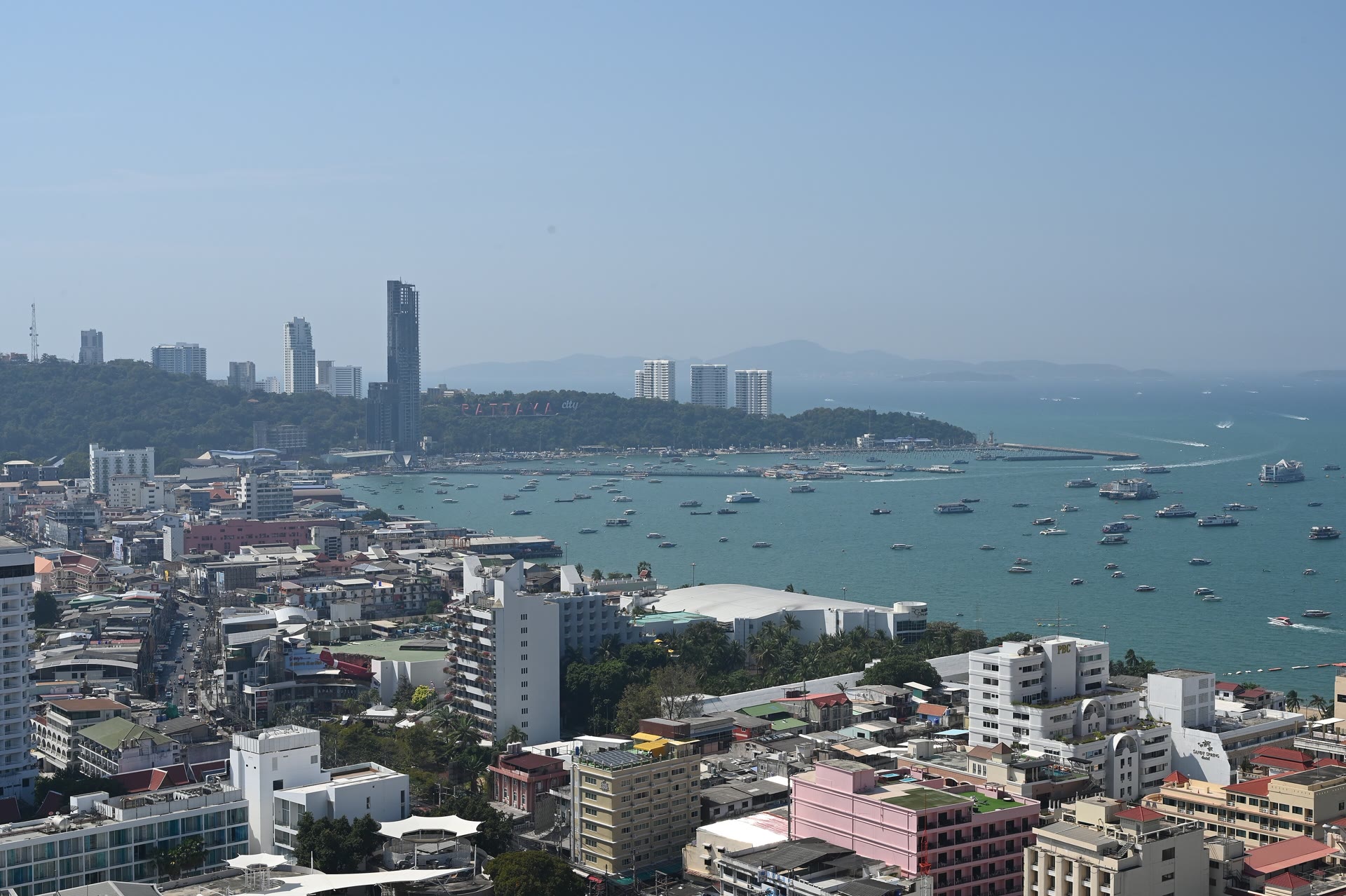
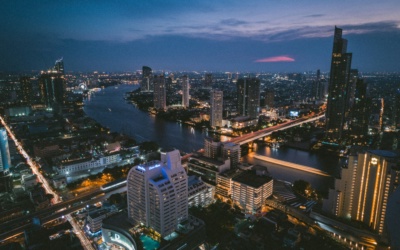
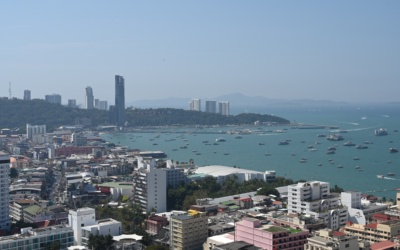
The first thing that strikes you about Pattaya is the sheer density of the place. Neon signs stack five stories high along Walking Street, seafood restaurants spill onto sidewalks where vendors grill squid over charcoal, and longtail boats idle just offshore waiting to zip passengers to quieter islands. It is loud, chaotic, and unapologetically commercial, but that relentless energy is precisely what makes Pattaya unlike anywhere else on the Thai coast.
Located about 150 kilometers southeast of Bangkok on the eastern Gulf of Thailand,[1] Pattaya evolved from a quiet fishing village into a resort city and has been shape-shifting ever since. Its reputation as a nightlife capital still holds, but the city has expanded dramatically into family tourism, luxury resorts, golf, watersports, and cultural attractions. You can spend a morning snorkeling off Koh Larn, an afternoon at a contemporary art museum, and an evening eating charcoal-grilled prawns the size of your forearm at a beachfront market.
Pattaya works for a wide range of travelers. Couples looking for a quick beach escape from Bangkok, families wanting waterparks and easy logistics, solo travelers drawn to the social scene, and retirees seeking affordable long-stay comfort all find their niche here. What it does not offer is the pristine, Robinson Crusoe beach fantasy of southern Thailand. Come with the right expectations and Pattaya delivers remarkable value and variety.
Orientation and Neighborhoods
Pattaya is essentially a long north-south coastal strip backed by hills and flanked by two main bays. Understanding the layout saves you from accidentally booking a hotel next to a go-go bar when you wanted a quiet beach retreat.
Central Pattaya (Pattaya Beach Road Area)
This is the main tourist spine. Beach Road runs along Pattaya Bay with the pedestrianized Walking Street at its southern end. Second Road runs parallel one block inland, packed with malls, restaurants, and bars. This is where the action is - great for nightlife, shopping, and easy access to everything, but noisy and congested. Best for solo travelers and those who want to be in the thick of it.
Naklua
North of central Pattaya, Naklua has a more local, residential feel with a fantastic fish market and several upscale resorts. Wong Amat Beach here is cleaner and quieter than Pattaya Beach. This is an excellent choice for couples and travelers who want proximity to the center without sleeping in it.
Jomtien
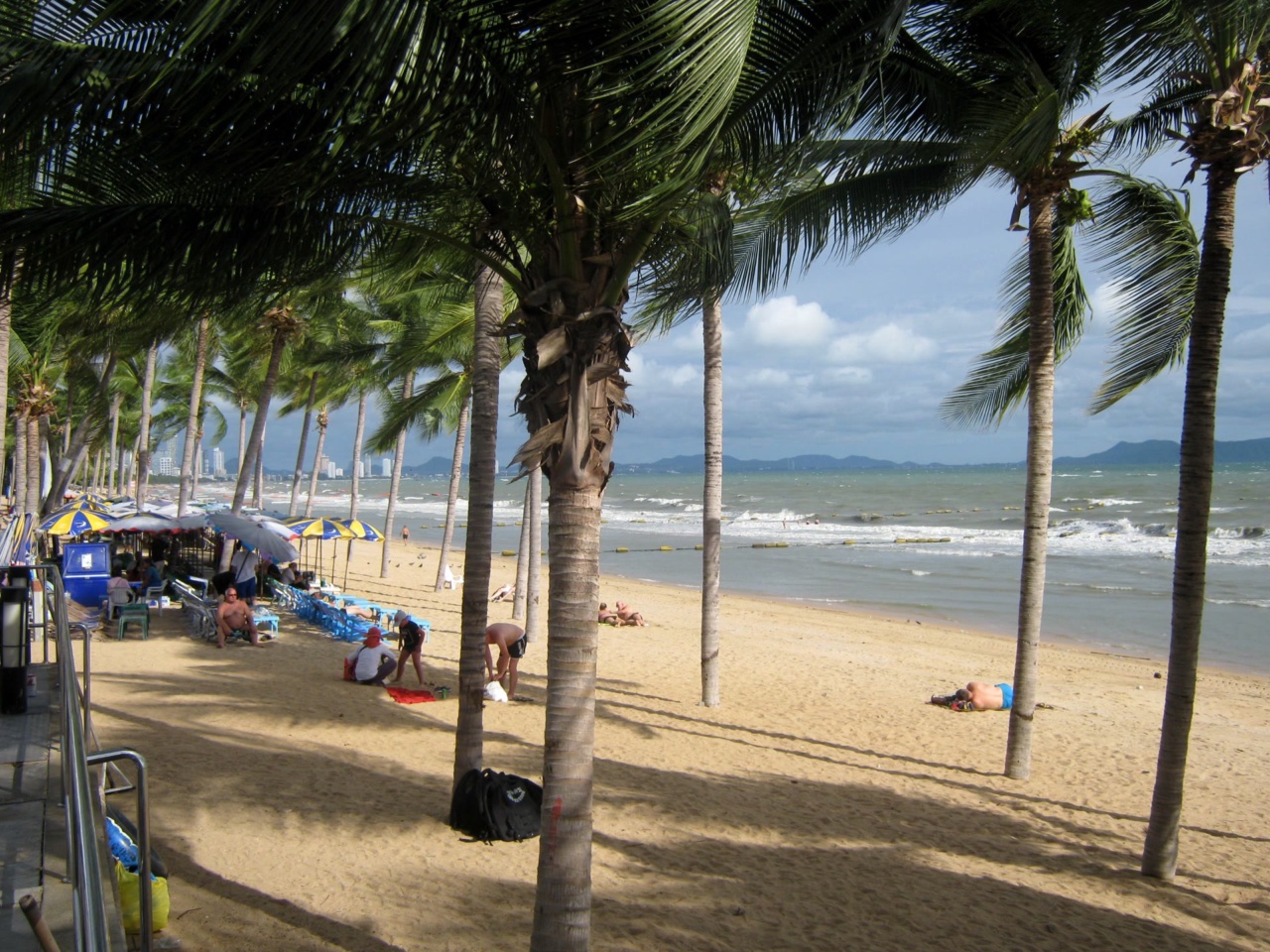
South of Pattaya Hill, Jomtien Beach stretches for several kilometers and draws a more relaxed crowd. The beach is wider and less hectic, with a long promenade popular for jogging and cycling. Jomtien suits families, long-stay visitors, and anyone who prefers a calmer vibe while still being a short ride from central Pattaya. The area around Dongtan Beach at the northern end of Jomtien is known as an LGBTQ-friendly zone.
Further south, these areas are where newer luxury resorts and condominiums have sprung up. The beaches are noticeably cleaner, and the atmosphere is quiet, almost suburban. You will need your own transport or a taxi to reach central Pattaya, but the trade-off is genuine peace and better swimming water.
Pratumnak Hill
The hilly area between central Pattaya and Jomtien is a sweet spot - elevated, quieter, dotted with mid-range and upscale hotels, and walkable to both neighborhoods. Several good restaurants cluster here, and the viewpoint at the top gives you a panoramic sweep of the bay.
Things to Do
Offers are only loaded from GetYourGuide after you click. GetYourGuide can then process your IP address and set cookies. Privacy Policy
GetYourGuide partner offers. GoAsia may earn a commission if you book through these offers. Check whether tickets or transfers are included, and follow the attraction's official booking and admission rules.
Best Time to Visit
Pattaya enjoys a tropical climate with three loosely defined seasons. The city is a year-round destination, but timing your visit can make a real difference in comfort and cost.
Season
Months
Weather
Crowds
Prices
Cool/Dry
November - February
Comfortable, lower humidity
High (peak season)
Highest
Hot
March - May
Very hot and humid
Moderate
Moderate
Rainy
June - October
Frequent showers, warm
Low
Lowest
At the Sattahip weather station south of Pattaya, April is the hottest month (average daily high 34.2°C) and October the wettest (about 286 mm of rain, against 13 mm in December), based on 1991-2020 averages.[2]
The cool and dry season from November through February is the most pleasant time to visit, with lower humidity and blue skies most days. This is peak season, so expect higher hotel rates and busier beaches. December and January around the Christmas and New Year holidays see the biggest crowds and highest prices.
The hot season from March to May is genuinely sweltering, with April being the hottest month. The upside is the Songkran water festival in mid-April, which turns Pattaya into a massive, citywide water fight if you do not mind getting soaked; in 2026 the Pattaya Songkran Summer Festival ran from 17 to 19 April, within the wider Chon Buri celebrations of 5 to 20 April.[3]
The rainy season brings daily showers, usually in intense afternoon bursts that clear within an hour or two. Mornings are often sunny. This is the best time for budget travelers, as hotel rates tend to be lowest. The sea can be rougher, occasionally disrupting boat trips to Koh Larn.
Getting There and Getting Around
Getting to Pattaya
Most travelers arrive from Bangkok. The most popular option is a bus from Ekkamai (Eastern Bus Terminal) or Mo Chit bus station. RRC Pattaya Bus lists roughly hourly departures, a journey of about two hours, and fares of 144 baht from Ekkamai and 155 baht from Mo Chit (about $4 and $5).[4]
If you are arriving at Suvarnabhumi Airport, a direct airport bus to Pattaya skips Bangkok entirely. RRC lists seven departures a day from 07:30 to 18:30, a journey of about two hours, and a fare of 135 baht (about $4).[5] For more details on bus and transport options, you can check schedules on GoAsia.cc.
U-Tapao Rayong-Pattaya International Airport lies south of Pattaya and has scheduled flights; for the 2026 winter schedule, Ezy Airlines lists direct flights to Surat Thani and Hua Hin.[6]
Getting Around Pattaya
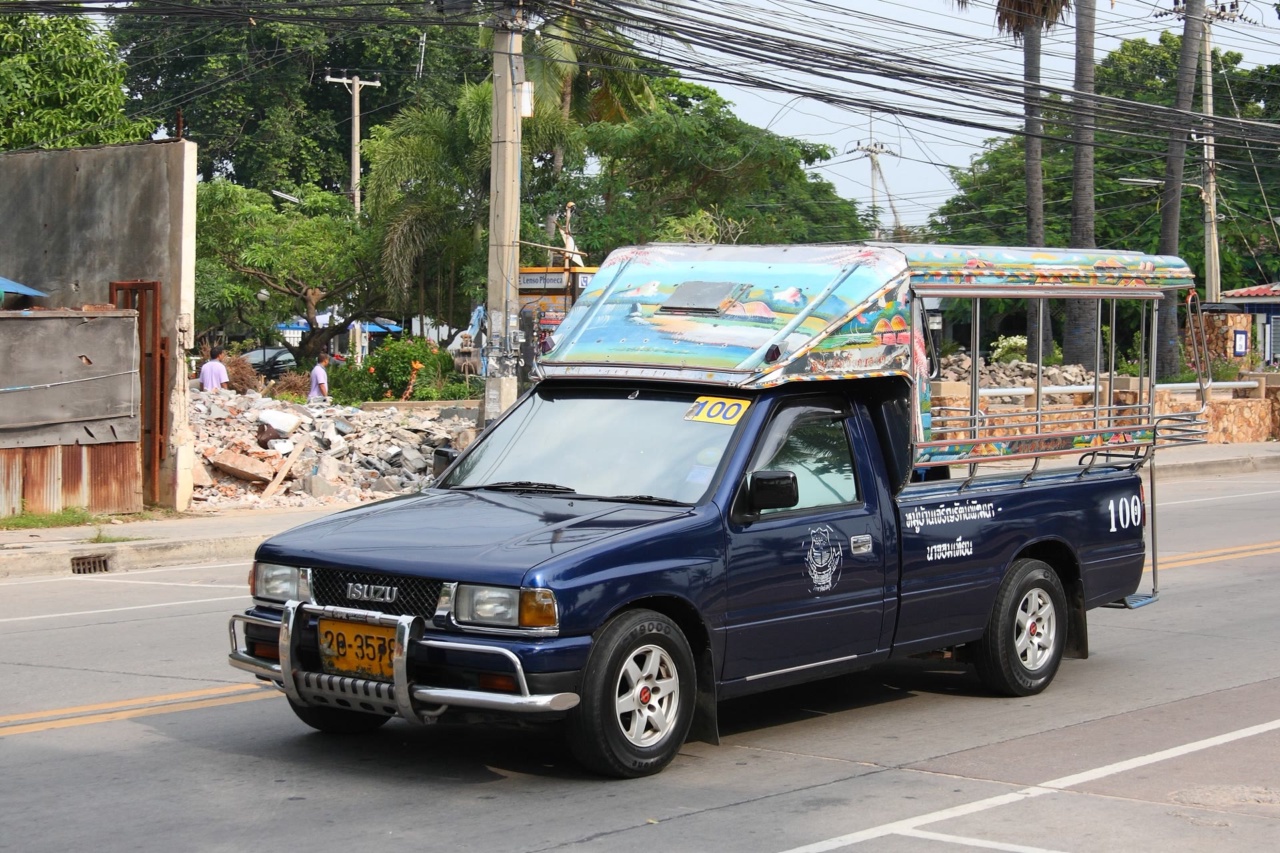
The iconic songthaew (converted pickup truck with bench seats) is Pattaya's de facto public transport. Songthaews circulate fixed routes along Beach Road and Second Road for a flat fare per ride. If you flag one down for a private trip off-route, negotiate the price beforehand.
Grab (the Southeast Asian ride-hailing app) works in Pattaya and is the most transparent way to get around. Motorbike taxis are everywhere, but always agree on the fare before hopping on.
Renting a motorbike is popular but comes with significant risk. Thailand has a high number of road traffic accidents, particularly with motorcycles, and riding without a valid licence could invalidate your travel insurance.[7] Rental bikes in tourist areas are often unregistered,[7] so check the small print. If you rent one, wear a helmet and drive defensively.
Central Pattaya is moderately walkable along the beachfront, but the heat and distances between neighborhoods make walking between areas impractical. Jomtien's promenade is excellent for walking and cycling.
Top Sights and Experiences
Must-See Attractions
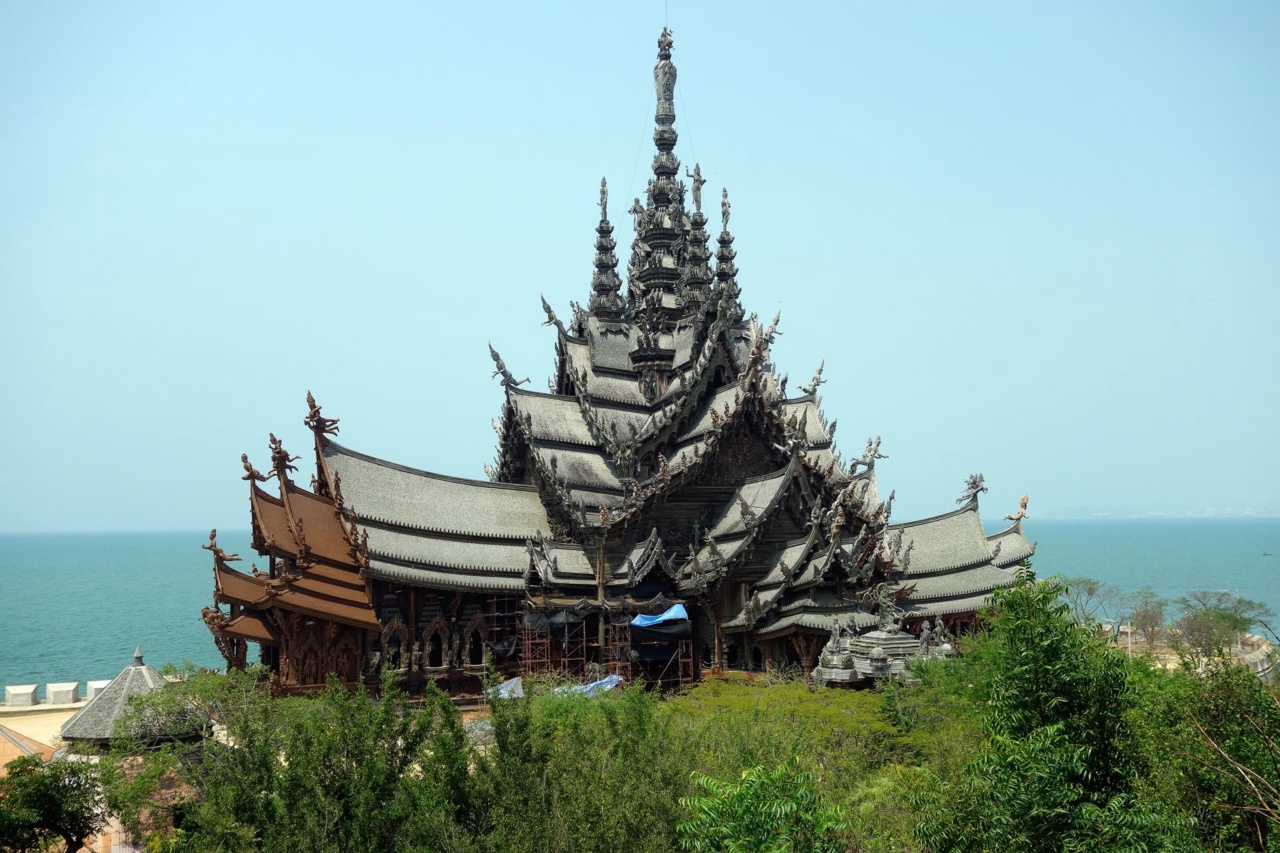
Sanctuary of Truth - This extraordinary all-wood temple-museum in Naklua is Pattaya's most impressive cultural attraction. The structure on the beachfront is covered in intricate hand-carved mythological figures from Hindu and Buddhist traditions. Construction started in 1981.[8] Allow two hours. Foreign adults pay 500 baht for the day tour or 700 baht for the night tour (about $15 and $21).[9] Go early in the day, when it is cooler and the crowds are thinner.
Koh Larn (Coral Island) - A ferry from Bali Hai Pier takes about 45 minutes; the Tourism Authority of Thailand lists departures from 07:00 to 18:30 and returns from 06:30 to 18:00.[10] Koh Larn has the clear, swimmable water that Pattaya Beach lacks, with beaches including Tawaen, Samae and Tien. Speedboats for up to 10 people are listed at 2,500 to 3,000 baht per boat, depending on the agreement (about $75 to $89).[10]
Nong Nooch Tropical Garden - South of central Pattaya, this botanical garden now covers over 1,700 rai and has a daily Thai cultural show and an elephant show.[11] It is open daily from 08:00 to 18:00.[12] Budget three hours or more, and visit in the morning before the heat peaks.
Walking Street - Love it or hate it, Walking Street is a Pattaya institution. This pedestrian strip is a sensory overload of neon, thumping music, street performers, seafood restaurants, and nightlife venues of every description. Even if the bar scene is not your thing, walking through once is a cultural experience in itself. Go around 9-10 PM when the atmosphere is at full throttle.
Lesser-Known Gems
Art in Paradise - A 3D trick-art museum that is genuinely fun for an hour, especially if you are traveling with kids. The optical illusions make for entertaining photos. Admission is 400 baht for adults and 200 baht for children, and it is open from 09:00 to 22:30.[13]
Naklua Fish Market - This working market at the northern end of Naklua is where locals buy seafood. You can pick your own fish, prawns, or crab from the stalls and have it cooked to order at adjacent restaurants for a small fee. Go in the late afternoon when the boats come in.
Buddha Mountain (Khao Chi Chan) - A seated Buddha image engraved into a cliff face with lasers, 30 meters high and 70 meters wide, open daily from 08:00 to 18:00.[14] Combine it with a trip to Nong Nooch.
Pattaya Floating Market - While not as authentic as the canal markets near Bangkok, this purpose-built attraction on the outskirts of Pattaya is pleasant for browsing Thai crafts, eating regional snacks, and taking boat rides through the market sections. The food stalls offer good variety.
Overrated Attractions
Pattaya Beach itself - The water along the main bay is murky and not great for swimming. The beach is narrow, crowded with sun loungers, and flanked by traffic. Go to Koh Larn or Jomtien instead for actual beach time.
Ripley's Believe It or Not - Located in the Royal Garden Plaza mall, this franchise attraction is a modest outing. Kids might enjoy it for a short while, but there are better uses of your time.
Gem galleries and jewelry shops - Touts and tuk-tuk drivers may offer you free rides to gem shops, claiming a special sale. This is a well-known scam. The gems are overpriced and often low quality. Politely decline.
Food and Drink
Pattaya punches well above its weight as a food destination, largely because of its coastal location and the diversity of its visitor base. Thai, seafood, Indian, Russian, German, Korean, and Japanese restaurants all thrive here, but the real draw is the seafood and Thai street food.
Signature Dishes
Dish
Description
Where to Try
Kung Pao (Giant River Prawns)
Massive grilled prawns, often a foot long, served with seafood dipping sauce
Naklua fish market restaurants
Pla Kapong Neung Manao
Whole steamed sea bass with lime, chili, and garlic - a Thai coastal classic
Seafood restaurants along Jomtien
Khao Pad Pu
Crab fried rice, a simple dish elevated by fresh crabmeat
Beachfront restaurants
Som Tam
Spicy green papaya salad - the unofficial national dish of Thailand
Street vendors everywhere
Moo Ping
Grilled pork skewers marinated in garlic and coriander root, served with sticky rice
Morning markets and street stalls
Hoy Tod
Crispy mussel or oyster omelet, a popular street food
Night markets
Where to Eat
Naklua is the undisputed king for seafood. The fish market area has a cluster of open-air restaurants where you choose your seafood from ice-filled displays and it is cooked fresh.
Soi Buakhao in central Pattaya has become a hub for affordable, diverse eating. Thai, Indian, and Middle Eastern restaurants line this street, and the nightly market at the Soi Buakhao intersection offers cheap street food in a lively atmosphere.
Jomtien Beach Road has a good mix of Thai seafood restaurants and international options. Prices are lower than Beach Road in central Pattaya, and the setting along the quieter beachfront is more pleasant for a long meal.
Third Road area is where locals eat. Restaurants here cater to Thai residents rather than tourists. Look for places packed with Thai diners at lunchtime.
Where to Stay
Budget
Pattaya has an enormous supply of budget accommodation. Hostels and basic guesthouses cluster along Second Road and Soi Buakhao, and Jomtien also has affordable guesthouses with better surroundings. Expect functional rooms with Wi-Fi but minimal frills. Many budget places in central Pattaya cater primarily to the nightlife crowd, so read recent reviews to gauge noise levels.
Mid-Range
This is where Pattaya offers exceptional value: well-appointed hotel rooms with a pool, often at a property that would cost much more in Bangkok. Pratumnak Hill has several mid-range hotels with sea views, and Naklua and northern Jomtien also have strong options. Many mid-range hotels include breakfast, and some have direct beach access.
Upscale
Luxury resorts and boutique hotels cluster in Na Jomtien, Wong Amat Beach in Naklua, and along the Pratumnak hillside. International chains are well-represented, and several Thai boutique brands offer stylish design hotels with pools, spas, and quality restaurants.
Serviced apartments and condo rentals are popular with long-stay visitors, who often negotiate monthly rates directly.
Practical Tips
Safety: Pattaya is generally safe, but exercise common sense. Petty theft, bag snatching from motorbikes, and drink spiking in nightlife areas are the main concerns. Keep valuables in your hotel safe. The jet ski scam is Pattaya's most notorious hustle - operators claim you damaged the machine and demand inflated repair costs. Avoid renting jet skis from beach touts entirely, and never hand over your passport as a deposit for a jet ski or motorbike rental.[15]
Use Grab rather than negotiating with taxi or tuk-tuk drivers to avoid fare disputes.
Carry a photocopy of your passport rather than the original.
If you are approached by someone offering a free tuk-tuk ride to a shop or show, it is a commission-based scheme. Decline politely.
Money: Cash is king for street food, markets, and songthaews. ATMs are everywhere and dispense Thai baht, but foreign cards are charged a fee per withdrawal; Krungsri, for example, charges 250 baht per withdrawal (about $7).[16] Credit cards are accepted at hotels, malls, and upscale restaurants. Tipping is not mandatory but appreciated, for example by rounding up the bill at restaurants.
SIM Cards and Internet: Tourist SIM cards are sold by the main operators; AIS, for example, lists 499 baht for 8 days and 1,199 baht for 30 days (about $15 and $36).[17] Most hotels and restaurants offer free Wi-Fi.
Water: Most travelers stick to bottled water. The Provincial Waterworks Authority states that its tap water meets WHO criteria for drinking,[18] but pipes and tanks in individual buildings can differ.
Language: English is widely spoken in tourist areas - more so than most Thai cities. Menus, signs, and transport information are commonly bilingual. In local neighborhoods and markets, basic Thai phrases (hello: sawasdee khrap/ka; thank you: khop khun khrap/ka) go a long way and are warmly received.
Remove your shoes before entering temples and some shops. Look for a pile of shoes at the entrance as your cue.
The Thai royal family is deeply revered. Never make critical or disrespectful comments about the monarchy: this is a criminal offense in Thailand, punishable by up to 15 years in prison per offense.[15]
Dress modestly when visiting temples: cover shoulders and knees.
Do not touch anyone's head, and avoid pointing your feet at people or religious objects.
Day Trips
Koh Samet
Koh Samet lies about 6.5 km off the coast at Ban Phe, where the passenger ferries depart,[19] and offers white sand beaches and clear water that are an upgrade from Pattaya's coast. The island is part of a national park with an entrance fee of 200 baht for foreign adults (about $6).[20] The island has a range of accommodation from backpacker bungalows to boutique resorts. It works as an overnight trip or a long day trip if you leave early. Weekdays are much quieter than weekends.
Sriracha and Koh Sichang
Sriracha, north of Pattaya, is a pleasant small city with a waterfront park and a hilltop temple. From Sriracha pier, a ferry takes you to Koh Sichang, a laid-back island with a former royal palace and Chinese temples.
Rayong Province
East of Pattaya, Rayong's coastline has quieter beaches, fruit orchards (famous for durian and rambutan), and the Mae Phim beach area, which is popular with Thai families. It makes a relaxing contrast to Pattaya's intensity. Combine with a stop at a tropical fruit market along the highway.
Khao Kheow Open Zoo
This open-concept zoo is set in forested hills near Si Racha. It is open daily from 08:00 to 17:00, with a night safari from 18:30 on Fridays, Saturdays and Sundays. Foreign adults pay 350 baht and children 120 baht (about $10 and $4).[21] It is a good half-day outing for families.
Ancient City (Muang Boran) near Bangkok
Located in Samut Prakan province, this open-air museum spreads over 800 rai and is regarded as one of the largest open-air museums in the world, with replicas of Thailand's important historical sites and temples. It is open daily from 09:00 to 19:00. Foreign adults pay 700 baht and children 350 baht (about $21 and $10).[22]
Sample 3-Day Itinerary
Day 1: Central Pattaya and Naklua
Morning: Start at the Sanctuary of Truth in Naklua. Arrive when it opens to beat the heat and crowds. Spend about two hours exploring the carved wooden structure and its beachfront grounds.
Afternoon: Head to the Naklua fish market for a late lunch of fresh seafood cooked to order. Afterward, stroll Wong Amat Beach or relax at your hotel pool during the hottest part of the day.
Evening: Walk along Beach Road as the sun sets over Pattaya Bay, then head to Walking Street around 9 PM. Even if the nightlife scene is not your priority, walking the length of the street once is a quintessential Pattaya experience. Grab dinner at one of the seafood restaurants at the entrance to Walking Street.
Day 2: Koh Larn Island Day
Morning: Take a morning public ferry from Bali Hai Pier to Koh Larn. On the island, take a songthaew to Samae Beach or Tien Beach.
Afternoon: Swim, snorkel (basic gear available for rent), and eat lunch at one of the beachfront restaurants. Fresh grilled seafood on the island is affordable and delicious.
Evening: Take the last ferry back; the Tourism Authority of Thailand lists returns until 18:00.[10] Clean up and head to Soi Buakhao for dinner at the night market, followed by drinks at one of the rooftop bars on Pratumnak Hill.
Day 3: Southern Pattaya and Jomtien
Morning: Visit Nong Nooch Tropical Garden early. Catch the cultural show and explore the themed gardens. Budget three hours.
Afternoon: Stop at Buddha Mountain on the way back for photos (15-minute visit). Continue to Jomtien Beach for a relaxed afternoon of swimming and sunbathing on the wider, calmer beach. The promenade is great for a late-afternoon walk.
Evening: Have a final dinner at a seafood restaurant along Jomtien Beach Road, watching the sun set over the water. If you have energy, head to one of the rooftop bars in central Pattaya for a nightcap with a bay view.
Frequently Asked Questions
Is Pattaya worth visiting?
Yes, especially if you want a beach destination that is easy to reach from Bangkok and packed with activities beyond just lying on sand. Pattaya offers excellent seafood, waterparks, island day trips, cultural sites like the Sanctuary of Truth, and a vibrant nightlife scene. It is not the place for secluded tropical beaches, but for variety and convenience it is hard to beat on the eastern Gulf coast.
How many days do you need in Pattaya?
Two to three full days is the sweet spot for most visitors. That gives you time for a beach day or island trip to Koh Larn, a round of the main sights, and an evening exploring the food and nightlife. If you add day trips to places like the Nong Nooch gardens or a floating market, four days is comfortable without feeling stretched.
Is Pattaya safe for tourists?
Pattaya is generally safe for tourists, with violent crime against visitors being rare. The main risks are petty theft, drink spiking in nightlife areas, jet ski scams, and motorbike accidents. Stick to well-lit areas at night, avoid renting jet skis from beach touts, and use common sense with your valuables. Solo female travelers should exercise extra caution in the Walking Street area late at night.
What food is Pattaya famous for?
Pattaya is renowned for its seafood, particularly giant river prawns, grilled squid, crab fried rice, and whole steamed fish with lime and chili. The city also has a strong street food culture with dishes like som tam, pad thai, and moo ping available everywhere. The Naklua fish market area is a must-visit for fresh, affordable seafood cooked to order.
Is Pattaya expensive?
Pattaya is generally considered affordable by international standards, and accommodation and food offer good value. The biggest variable is spending on nightlife and tourist-oriented activities like waterparks and boat trips, which add up quickly. Check current prices before you go.
Can you drink tap water in Pattaya?
Most travelers stick to bottled water, which is cheap and available everywhere. The Provincial Waterworks Authority states that its tap water meets WHO criteria for drinking, but pipes and tanks in individual buildings can differ. Ice in restaurants and bars is generally made from purified water, but street stalls may occasionally use lower-quality ice.
How do I get from Bangkok to Pattaya?
The easiest options are a direct bus from Bangkok's Eastern Bus Terminal (Ekkamai) or Mo Chit, taking around two hours, with fares of 144 baht from Ekkamai and 155 baht from Mo Chit according to RRC Pattaya Bus. Private taxis or minivans are also available. If flying into Suvarnabhumi Airport, you can take a direct bus to Pattaya in about two hours for 135 baht, bypassing Bangkok entirely.
Is Pattaya good for families?
Pattaya has become increasingly family-friendly, with attractions like Ramayana Water Park, Cartoon Network Amazone, underwater aquariums, and the easy day trip to Koh Larn island. The Jomtien and Na Jomtien areas are calmer and better suited to families than central Pattaya. Just be aware that the Walking Street nightlife district is not family-appropriate after dark.
What should I avoid in Pattaya?
Avoid renting jet skis from beach touts, as damage scams are well-documented, and never hand over your passport as a deposit. Do not accept drinks from strangers in nightlife areas. Skip the overpriced gem shops that touts may steer you toward. Be cautious with motorbike rentals if you are not an experienced rider, as traffic in Pattaya is aggressive and insurance claims are difficult.
Is English widely spoken in Pattaya?
English is more widely spoken in Pattaya than in most Thai cities outside Bangkok, thanks to decades of international tourism. Hotel staff, restaurant workers in tourist zones, and taxi drivers generally speak functional English. In local markets and neighborhoods away from the beach strip, a translation app or a few Thai phrases will help significantly.
Sources and background
Numbers in the text such as [1] refer to these sources.
[1]Tourism Authority of Thailand: Pattaya. Retrieved October 16, 2026.