
Contents
- 1. Getting Around Mui Ne by Motorbike
- 1.1 Motorbike Taxis (Xe Om)
- 2. Getting Around Mui Ne by Taxi
- 3. Getting Around Mui Ne by Grab
- 4. Getting Around Mui Ne by Jeep and Quad Bike
- 5. Getting Around Mui Ne by Bicycle
- 6. Getting Around Mui Ne on Foot
- 7. Comparing Your Options
- 8. Practical Tips for Getting Around Mui Ne
- 9. Popular Routes and Destinations
- 10. Frequently Asked Questions
Mui Ne is not a city in the usual sense. It is a long, sun-baked strip of fishing village turned beach resort, draped along a single coastal road that runs for roughly fifteen kilometres beside the South China Sea. Almost everything you came for, the resorts, the seafood shacks, the kitesurfing schools and the bars, lines up along this one ribbon of asphalt, Nguyen Dinh Chieu, which becomes Huynh Thuc Khang as you head out toward the famous sand dunes.
This linear layout shapes how you move here. There is no metro, no proper bus network within the resort area, and the streets feel sleepy compared to the chaos of Saigon or Hanoi. The dominant rhythm is two wheels: motorbikes buzz past sun-bleached palms while the salty wind carries the smell of grilled squid from roadside stalls. Distances are deceptive. What looks like a short walk on a map can be a hot, shadeless twenty-minute trudge, so most travelers settle into a mix of rented scooters, the occasional taxi and tours that bundle the sights together.
Understanding your options before you arrive saves both money and frustration, because Mui Ne has its share of tourist pricing and the language barrier is real once you step away from the resorts. You can compare transport options on GoAsia.cc, but the short version is this: rent a scooter if you are comfortable, lean on Grab and taxis when you are not, and book a jeep tour for the dunes.
Getting Around Mui Ne by Motorbike
The scooter is king in Mui Ne, and for good reason. With everything strung along one road, a small automatic motorbike lets you hop between your hotel, the beach, a noodle stall and a sunset bar entirely on your own schedule. Nearly every guesthouse and resort either rents bikes directly or knows someone who does.
Expect to pay roughly 120,000 to 200,000 dong per day for a standard automatic scooter, with lower rates if you rent for several days or a week. Petrol is cheap, and a tank lasts a long way along this flat coast. Fill up at a proper petrol station rather than the roadside bottles where you can, though the bottle vendors are handy in a pinch out near the dunes.
A few practical realities: an International Driving Permit with a motorcycle endorsement is technically required, and police do occasionally set up checkpoints, particularly near the main resort strip. Always wear the helmet, take photos of any existing scratches before you ride off, and never hand over your passport as a deposit. Leave a cash deposit or a photocopy instead. The coastal road has fast-moving buses and trucks, so ride defensively, and avoid the sandy patches near the dunes where bikes slide easily.
Motorbike Taxis (Xe Om)
If you do not want to drive yourself, the traditional xe om (literally hug taxi) still operates. You will find drivers loitering near markets, the fishing village and busy junctions. They have no meters, so agree the fare before you sit down. A short hop within the strip typically costs around 30,000 to 60,000 dong. They are quick and cheap but offer no helmet guarantees and no fixed pricing, so they suit confident, budget-minded travelers more than nervous first-timers.
Getting Around Mui Ne by Taxi
Metered taxis are the comfortable, air-conditioned default for anyone not on two wheels, especially in the midday heat or after a few drinks. The two reliable companies you want to look for are Mai Linh (green cars) and Vinasun, both with clear logos and working meters. These are far safer bets than the unbranded cars that sometimes hover around tourist spots with rigged meters or invented flat rates.
Flagfall is around 10,000 to 15,000 dong, with short trips along the strip costing roughly 40,000 to 80,000 dong. A ride from one end of Mui Ne to the other usually lands under 150,000 dong. Insist the driver uses the meter; if they refuse or claim it is broken, wave them off and take the next one. Carry small notes, as drivers rarely have change for large bills, and keep your destination written down or pinned on a map since English is limited.
Getting Around Mui Ne by Grab
Grab, the dominant ride-hailing app across Vietnam, works in Mui Ne but with one big caveat: driver availability is thin compared to the major cities. During the day along the resort strip you can usually summon a GrabCar or GrabBike within a few minutes, but late at night or out near the dunes you may wait a long time or find no cars at all. Download the app before you arrive and link a card or keep cash ready.
The appeal of Grab is the fixed, upfront price that removes all haggling and meter anxiety, which is a relief given the local taxi reputation. Fares tend to be similar to or slightly cheaper than metered taxis. When Grab has no cars showing, the metered taxi companies are your fallback, so it is worth having both options on hand.
Getting Around Mui Ne by Jeep and Quad Bike
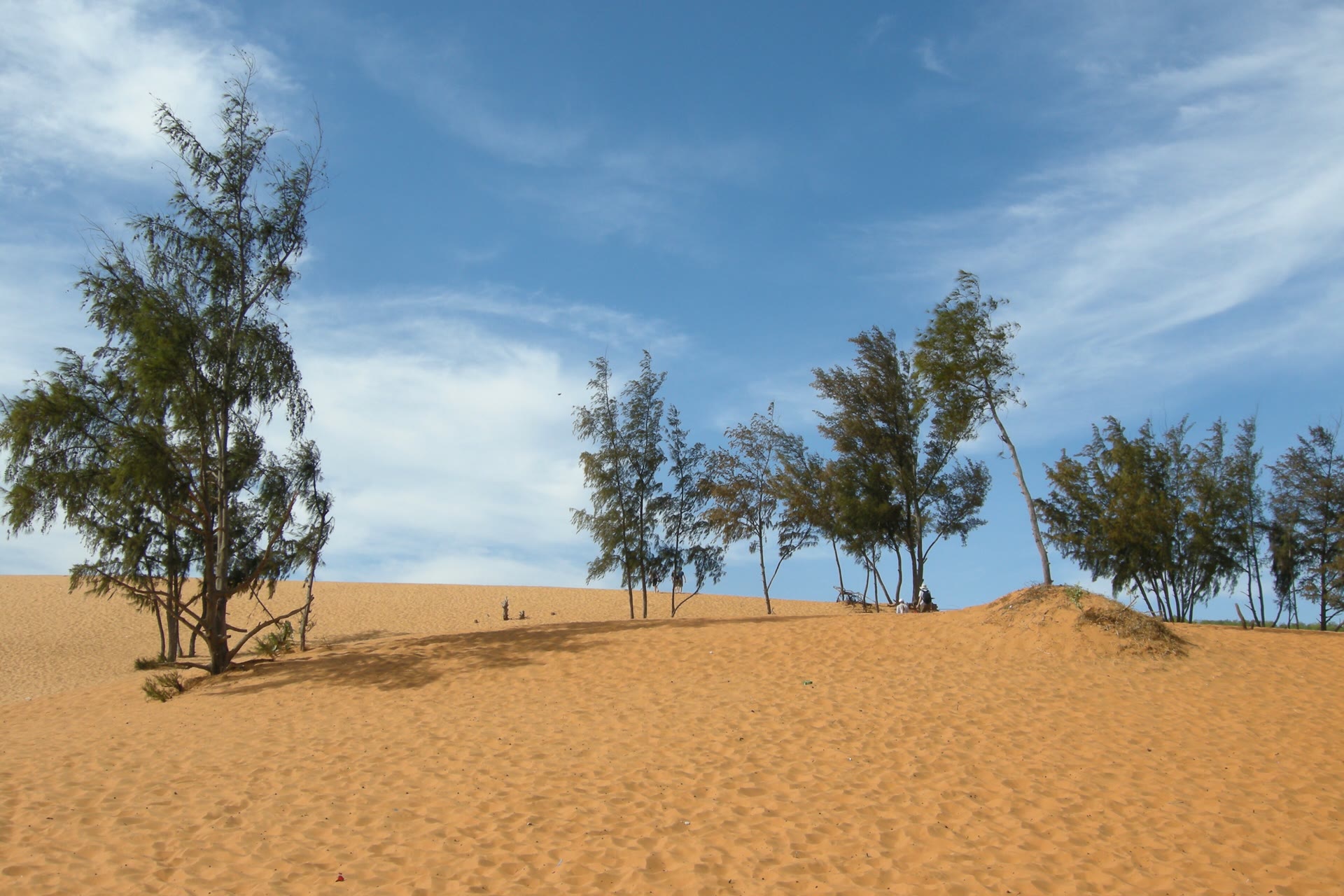
The reason most people come to Mui Ne is the surreal landscape of red and white sand dunes, and the classic way to see them is by open-sided jeep. These tours typically run a sunrise or sunset loop covering the White Sand Dunes, the Red Sand Dunes, the Fairy Stream and the fishing village. Expect to pay roughly 600,000 to 1,200,000 dong for a private jeep depending on the route and time, easily split between several people.
Booking is simple, as every hotel and travel desk along the strip sells these tours, and you can also negotiate directly with jeep drivers parked near the dunes. Out at the White Dunes you can also rent quad bikes (ATVs) to roar across the sand for around 200,000 to 400,000 dong for a short session. Sunrise tours start brutally early, around 4:30am, but the cool light on the dunes is worth the alarm.
Getting Around Mui Ne by Bicycle
For shorter, slower exploration, many resorts lend or rent bicycles, sometimes free for guests. Cycling works well for pottering between your hotel, a nearby beach and the cafes, and it lets you stop wherever the view tempts you. The terrain is flat, which helps, but the relentless sun and the lack of shade make long distances tiring, and sharing the coastal road with buses takes some nerve. Use a bicycle for leisurely local loops rather than reaching the dunes.
Getting Around Mui Ne on Foot
Walking is realistic only within whatever cluster you are staying in. The central resort strip has stretches of sidewalk where you can stroll between dinner and a bar, and the beach itself makes a pleasant walking route at low tide. Beyond that, the heat, the distances and patchy footpaths mean walking is not a practical way to cross town. Treat it as something you do around your immediate neighbourhood, not as a transport plan.
Comparing Your Options
| Mode | Typical Cost | Duration | Best For |
|---|---|---|---|
| Rented motorbike | 120,000-200,000 dong/day | Flexible | Independent exploring along the strip |
| Xe om (motorbike taxi) | 30,000-60,000 dong/trip | Quick short hops | Cheap, fast point-to-point rides |
| Metered taxi | 40,000-150,000 dong | Short to medium | Comfortable, air-conditioned travel |
| Grab | Similar to taxi, upfront | Short to medium | Fixed prices, no haggling |
| Jeep tour | 600,000-1,200,000 dong | Half day | Visiting the sand dunes and sights |
| Bicycle | Free to cheap | Slow | Leisurely local loops |
| On foot | Free | Slow | Around your immediate area |
Practical Tips for Getting Around Mui Ne
Mui Ne rewards a little preparation. The single biggest mistake travelers make is underestimating distances and assuming they can walk to the dunes or to a restaurant that turns out to be three kilometres away in the sun. Plan your transport for each trip rather than wandering out and hoping.
- Download Grab before you arrive and set up payment, as it removes haggling on the spot.
- Use Google Maps offline maps and Google Translate; the language barrier is genuine once you leave the resorts.
- Carry small denomination notes (10,000, 20,000, 50,000 dong) because drivers rarely break large bills.
- Stick to Mai Linh and Vinasun taxis and insist on the meter; walk away from unbranded cars quoting flat fares.
- Never leave your passport as a motorbike rental deposit, and photograph the bike for existing damage first.
- Book jeep tours through your hotel or by negotiating directly at the dunes, and confirm the exact stops included.
Timing matters too. The midday heat is intense, so consider doing your moving around early morning or late afternoon. Sunrise dune tours fill quickly in peak season, so arrange them the day before. At night the strip is quiet and generally safe, but Grab and taxi availability drops, so if you are heading out late, save a taxi company number or arrange a return pickup. Watch for sand on the road near the dunes, which causes most scooter spills, and never ride after drinking.
Popular Routes and Destinations
Most travelers reach Mui Ne via Phan Thiet, the nearest town and transport hub, or arrive on long-distance buses from Saigon and Da Lat. From Phan Thiet, a private transfer into Mui Ne is the most comfortable option and takes around 14 to 35 minutes, with prices ranging from about $18 up to $71 depending on the vehicle and service level. This is the easiest door-to-door choice if you have luggage.
Coming from the wider Binh Thuan area, bus connections into Mui Ne run around $10 and take anywhere from roughly 10 to 50 minutes depending on the service and traffic. Buses are the budget pick, though they may drop you on the main road rather than at your hotel, leaving a short xe om or taxi hop to finish the journey. For getting to the sand dunes themselves once you are settled in, a jeep tour remains the standout option, bundling the White Dunes, Red Dunes and Fairy Stream into one efficient loop.
Frequently Asked Questions
Use this guide to compare local transport in Mui Ne. When bookable tickets are available, the booking tool shows current options and prices.
For independent travelers, renting a motorbike is the best way to move along Mui Ne's single coastal strip, giving you total freedom for around 120,000 to 200,000 dong per day. If you prefer not to drive, metered taxis from Mai Linh or Vinasun and the Grab app cover most trips comfortably. For the sand dunes, a jeep tour is the standout choice.
Costs are low by international standards. Scooter rental runs about 120,000 to 200,000 dong per day, short xe om rides cost roughly 30,000 to 60,000 dong, and metered taxi trips along the strip usually stay under 150,000 dong. A private jeep dune tour typically costs between 600,000 and 1,200,000 dong, easily split among several people.
Mui Ne is generally safe and relaxed. Branded taxis like Mai Linh and Vinasun and the Grab app are the most reliable and transparent options. The main risks are rigged meters in unbranded taxis and motorbike accidents on sandy stretches of road, so ride carefully, wear a helmet and never ride after drinking.
Yes, Grab works in Mui Ne, but driver availability is thinner than in big cities. During the day along the resort strip you can usually get a car or bike within minutes, while late at night or out near the dunes you may wait or find none. Keep a metered taxi number as a backup.
Only within your immediate area. The resort strip has some sidewalks and the beach makes a pleasant walk, but the town stretches for around fifteen kilometres along one road with little shade. Most destinations are too far to reach comfortably on foot, so plan to ride for anything beyond your neighbourhood.
Technically you need an International Driving Permit with a motorcycle endorsement, and police do run occasional checkpoints along the strip. Many travelers rent without one, but you ride at your own risk regarding fines and insurance. Always wear the helmet, leave a cash deposit rather than your passport, and photograph the bike before riding.
A private transfer is the easiest option, taking around 14 to 35 minutes with prices from about $18 up to $71 depending on the vehicle. Budget travelers can take a bus from the wider Binh Thuan area for around $10, though it may drop you on the main road, leaving a short taxi or xe om ride to your hotel.
Guide prices and journey times are indicative, not live quotes. A booked package may include transfers and waiting time as well as the main journey. Check the selected offer, pickup point and current conditions before booking.