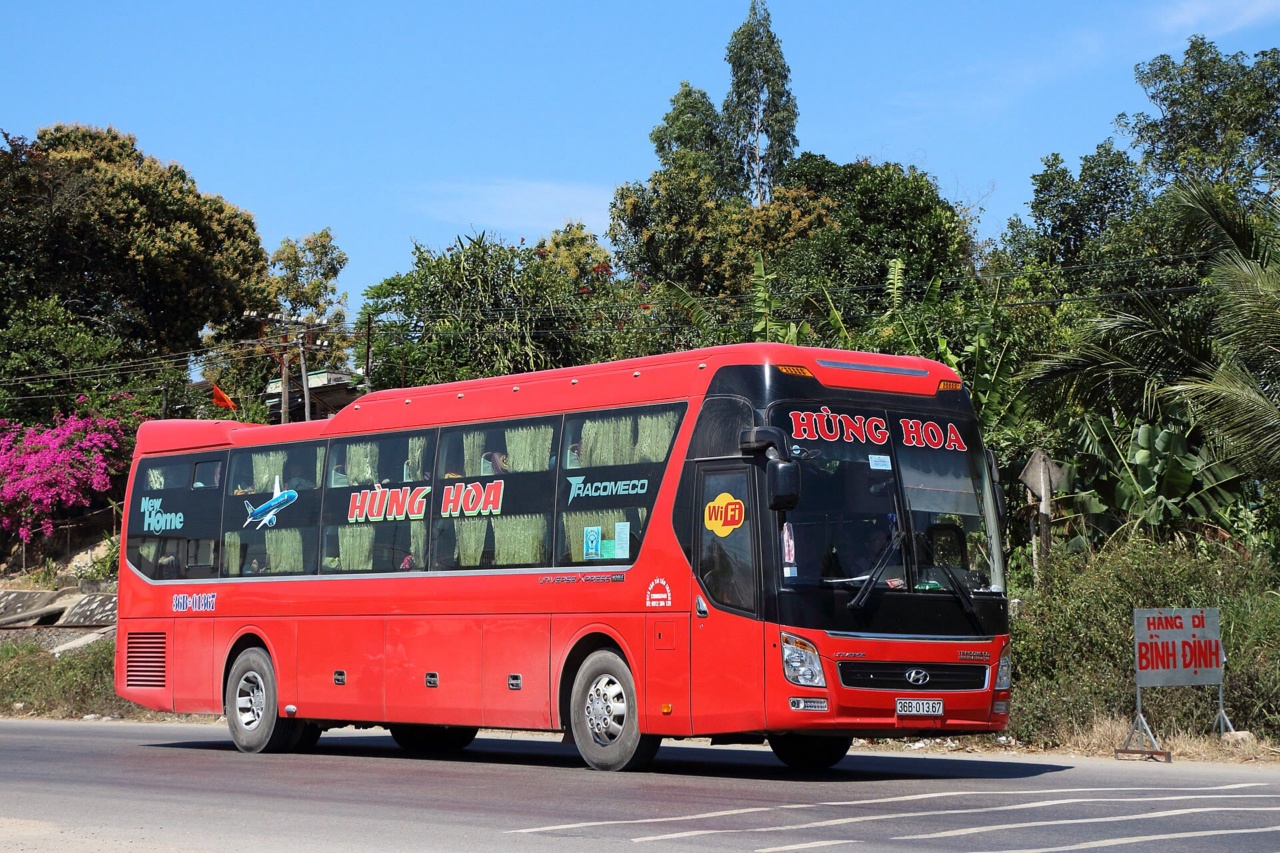
Plan your Vietnam bus journey with our guide to sleeper buses, limousine coaches, booking tips, and what to expect on board across this stunning country.
Vietnam stretches from the Chinese border to the tip of the Mekong Delta, and the bus is the thread that stitches it all together. Long before budget airlines carved up the sky, overnight sleeper buses were carrying backpackers and locals alike along the narrow coastal corridor, past limestone karsts, terraced rice fields, and endless stretches of South China Sea coastline. Today, bus travel remains the backbone of Vietnamese transportation - not just a budget fallback, but a genuinely practical way to move through a country whose geography rewards slow, overland journeys.
From the chaos of Hanoi's bus stations to the gleaming new coaches departing Ho Chi Minh City, Vietnam's bus network is vast, affordable, and constantly evolving. Understanding how it works will open up corners of the country that trains and planes simply cannot reach.
The Bus Network in Vietnam
Vietnam's bus network is extensive. Long-distance routes connect every major city and most provincial towns, while local buses serve urban areas and short rural hops. The main artery is the north-south corridor running from Hanoi to Ho Chi Minh City (often still called Saigon by locals), roughly following the path of Highway 1 and the coast. FUTA lists Da Nang to Ho Chi Minh City at 990 km and about 20 hours, and Da Nang to Nha Trang at 550 km and about 10 hours,[1] so most travelers break the north-south journey into segments - Hanoi to Hue, Hue to Hoi An, Hoi An to Nha Trang, and onward to Saigon.
Several operators run long-distance routes. Phuong Trang (FUTA Bus Lines) is a large domestic carrier that runs over 6,500 intercity trips a day from stations across the south and central regions.[1] In the north, Bang Phan serves Ha Giang, for example Hanoi to Ha Giang (300 km, about 6 hours, from 350,000 VND) and Ha Giang to Sapa (240 km, about 6 hours 30 minutes, from 350,000 VND), alongside various local operators for Sapa, Ninh Binh, and Ha Long Bay.[2]
Coverage is remarkably thorough. Even remote highland towns in the northwest or the far reaches of the Mekong Delta are connected by some form of bus service. However, frequency and quality drop significantly on rural routes. The most competitive and comfortable services run between major tourist destinations.
Classes and Comfort Levels
Vietnamese buses come in several distinct tiers, and the differences are dramatic.
Sleeper buses are Vietnam's signature contribution to overland travel. Instead of upright seats, these coaches are fitted with reclining berths arranged in two or three tiers. You get a narrow bed with a pillow and light blanket, and you travel lying down. On well-maintained coaches from operators like FUTA, sleeper buses are surprisingly comfortable for overnight journeys; FUTA's 34-berth Kim Long 99 Deluxe cabin bus, for example, has charging ports, curtains and leather berths.[3] The berths recline rather than lie fully flat, which is close enough for most people to sleep.
Limousine or VIP buses have emerged as a premium option on popular routes. These are smaller vehicles - often converted vans or mini-coaches - with wide reclining seats, more legroom, USB charging ports, and sometimes even individual entertainment screens. They typically carry fewer passengers than a full sleeper and offer a quieter, more comfortable ride. Limousine buses are especially popular on routes like Hanoi to Sapa and Hanoi to Ha Long Bay.
Standard seated buses still operate on shorter routes and local services. These range from modern air-conditioned coaches to older minibuses with open windows. For trips under three or four hours, a standard seat is perfectly adequate.
For most travelers, the limousine class offers the best balance of comfort and value on medium-distance routes, while sleeper buses remain the practical choice for overnight hauls.
Booking and Tickets
Booking a bus in Vietnam has become remarkably easy. Most major operators have their own websites or apps where you can reserve seats online. Vexere.com is a popular Vietnamese aggregator that lets you compare schedules and operators for a given route. Travelers can also compare options and book through GoAsia.cc, which is particularly useful for seeing multiple operators side by side and securing English-language confirmations.
For popular routes during peak times - Tet holiday, summer weekends, or the stretch between Hoi An and Hue - booking a day or two ahead is wise. On most other occasions, walk-up tickets are available at bus stations. Many guesthouses and hotels can also arrange bus tickets, though they may add a small commission.
E-tickets and booking confirmations on your phone are widely accepted by major operators. Smaller local companies may still issue paper tickets at the station counter. Cash in Vietnamese dong is widely accepted; card payments are increasingly available online but rarely at station counters.
One important note: Vietnam has both official bus stations (ben xe) and operator-specific pickup points. Tourist-oriented services often pick up from hotels or central meeting points, while domestic operators depart from the city bus stations, which can be located on the outskirts of town. Always confirm your departure point when booking.
What to Expect on Board
Board a Vietnamese sleeper bus and the first thing you will be asked to do is remove your shoes. Plastic bags are provided at the door, and you carry your footwear with you to your berth. This is non-negotiable - the sleeping area is treated as a clean space, much like entering a Vietnamese home.
Luggage goes in the storage compartment below the bus. Keep a small daypack with valuables, snacks, and a phone charger with you. Most modern buses have USB ports or power outlets at each berth, though they do not always work, so a portable battery is a smart backup.
Overnight buses typically make a few rest stops at roadside stations where you can use the toilet, stretch your legs, and buy food from vendors or small restaurants. These stops are brief, and the bus will leave without you if you wander too far. Vietnamese passengers tend to eat pho or rice dishes at these stops, and the food is generally safe and inexpensive.
Scenery is a major reward on daytime routes. The stretch between Hue and Hoi An crosses the Hai Van Pass (unless the bus takes the tunnel), offering jaw-dropping coastal views. Routes through the northern highlands to Ha Giang or Sapa wind through terraced valleys and misty mountain passes. Even the flat Mekong Delta has its charm, with endless green paddies and river crossings.
Expect horn honking - Vietnamese drivers communicate constantly with horns, and it can be startling at first. Earplugs or noise-canceling headphones are near-essential for sleeping. Motion sickness is also worth preparing for on winding mountain roads, particularly in the north.
Tips for Bus Travel in Vietnam
Bring layers and socks. Air conditioning on Vietnamese buses is often set to arctic levels. A hoodie or light jacket and warm socks will make overnight journeys far more bearable.
Download offline maps. Tracking your location on Google Maps or Maps.me helps you know when your stop is approaching, especially if the driver announces stops only in Vietnamese.
Avoid Tet travel if possible. The Vietnamese Lunar New Year triggers the largest migration of the year. Buses can sell out well in advance, prices spike, and roads are heavily congested. If you must travel during Tet, book as early as you can.
Choose reputable operators. Safety standards vary. Established companies are generally a safer bet than cheap no-name services, which may cut corners on maintenance and drive aggressively.
Carry toilet paper and hand sanitizer. Rest stop facilities range from clean to very basic. Being prepared saves discomfort.
Watch your belongings. Theft is uncommon but not unheard of on buses. Keep your phone, passport, and cash in a bag that stays with you on your berth, not in the overhead or underfloor storage.
Learn a few key phrases. "Ben xe" (bus station), "dung lai" (stop here), and "cam on" (thank you) go a long way. Most drivers on tourist routes understand basic English, but on local services, a translation app is invaluable.
Be flexible with timing. Departure times are approximate. Buses may leave early if full or late if traffic is bad. Build buffer time into your itinerary rather than scheduling tight connections.
Sources and background
Numbers in the text such as [1] refer to these sources.
[1]Phuong Trang - FUTA Bus Lines: FUTA Bus Lines. Retrieved October 15, 2026.