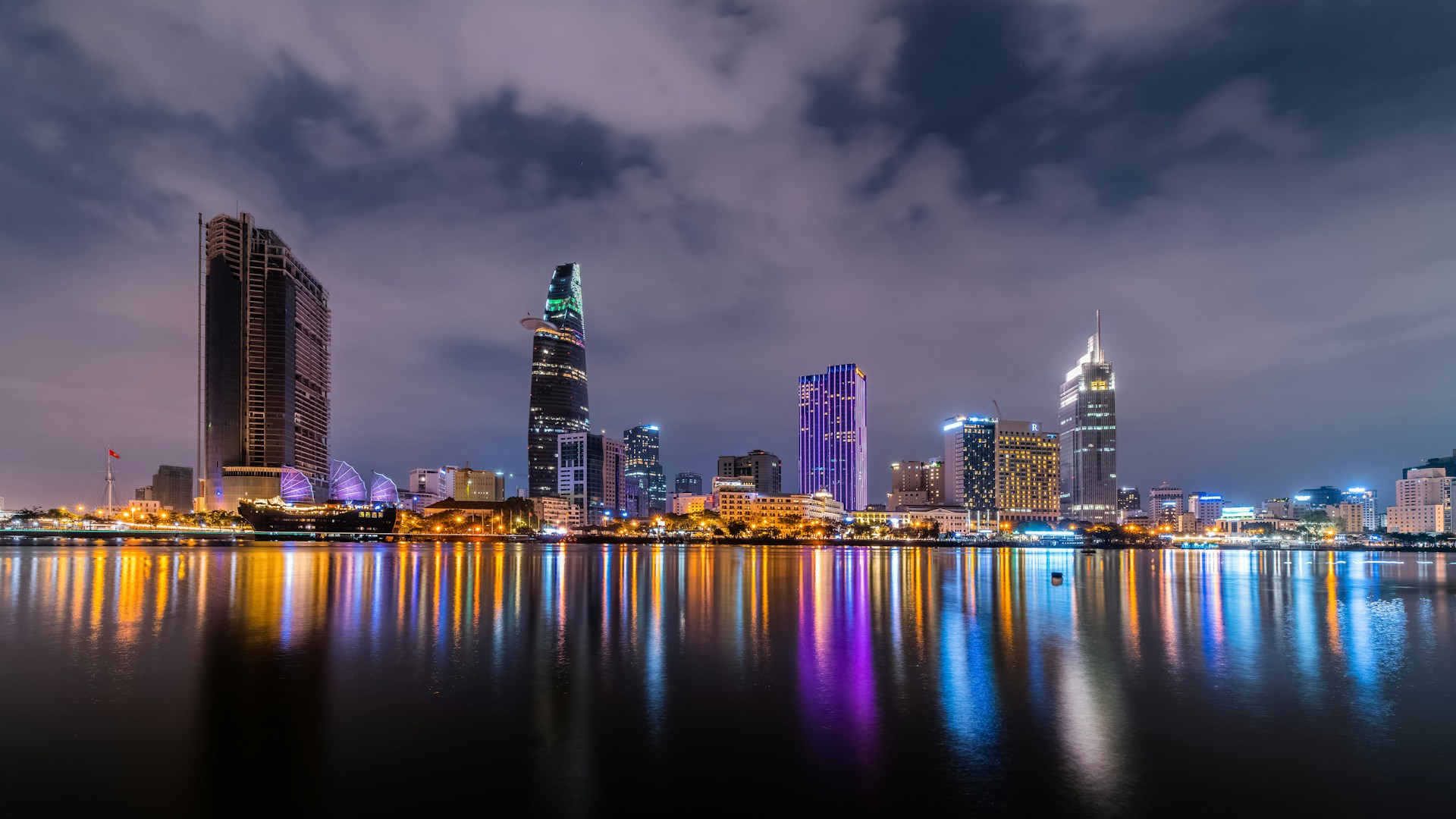
The first thing that hits you in Ho Chi Minh City is the sound: a continuous, layered hum of motorbike engines, street vendors calling out, and construction cranes swinging overhead. Formerly known as Saigon, a name locals still use with affection, this city of roughly nine million people occupies the southern tip of Vietnam and operates at a pace that makes Bangkok feel sleepy. Skyscrapers sprout beside crumbling French villas, and a bowl of pho eaten on a tiny plastic stool at 6 a.m. can be the best meal of your life.
Ho Chi Minh City is ideal for food-obsessed travelers, history buffs drawn to the Vietnam War era, and anyone who enjoys watching a city reinvent itself in real time. The energy is relentless but never hostile. Saigonese are famously warm, entrepreneurial, and proud of their city's resilience. If you can cross a street here, you can handle anything Southeast Asia throws at you.
Unlike Hanoi's compact Old Quarter charm, Ho Chi Minh City sprawls. Its highlights are scattered across distinct districts, each with its own personality. A visit here is less about ticking off monuments and more about absorbing atmosphere: the coffee culture, the after-dark street life, the sheer density of flavor packed into every alley.
Orientation and Neighborhoods
Ho Chi Minh City is divided into numbered districts (quan) plus several named districts. Most travelers spend their time in just a handful.
District 1 (city center)
The beating heart of the city. This is where you will find the Notre-Dame Cathedral, the Central Post Office, Reunification Palace, Ben Thanh Market, and the War Remnants Museum. Bui Vien Street (the backpacker strip) and the more upscale Dong Khoi corridor both sit here. Stay in District 1 if you want walkable access to the main sights and the widest restaurant selection.
District 3
Just north of District 1, District 3 is quieter, more residential, and increasingly popular with travelers who want local flavor without the tourist markup. Tree-lined streets, excellent banh mi stalls, and independent coffee shops define this area. It is a strong choice for mid-range stays.
District 5 (Cholon)
Saigon's sprawling Chinatown is home to ornate temples like Thien Hau Pagoda, bustling Binh Tay Market, and some of the city's best Chinese-Vietnamese food. It feels like a different city entirely and is well worth a half-day visit.
District 2 (Thao Dien / Thu Duc City)
Across the Saigon River, Thao Dien is the expat enclave: international restaurants, boutique cafes, yoga studios, and a calmer pace. Good for families or anyone wanting a break from the chaos, though sights are limited.
District 7 (Phu My Hung)
A planned urban zone with wide boulevards, Korean and Japanese restaurants, and large malls. Practical rather than charming, it appeals mainly to long-term visitors.
For a first visit, base yourself in District 1 or District 3. District 1 gives you maximum convenience; District 3 gives you a more authentic neighborhood feel at slightly lower prices.
Best Time to Visit
Ho Chi Minh City sits in a tropical climate zone with two broad seasons: wet and dry, with sporadic rainfall from May to November.[1] Temperatures stay hot year-round, so heat is a constant.
| Season | Months | Weather | Crowds | Prices |
|---|
| Dry season | December - April | Hot, low humidity, almost no rain | High (peak tourism) | Higher |
| Wet season | May - November | Hot, humid, daily afternoon downpours | Lower | Lower |
The dry season, especially December through February, is the most comfortable time to visit. Humidity drops and rain is rare. However, hotels charge peak rates and popular sites are busier.
The wet season is underrated. Rain usually falls in intense 30-to-60-minute bursts in the late afternoon, leaving mornings and early afternoons clear. Prices drop noticeably, and the rain cools the city down. Pack a lightweight rain jacket and you will be fine.
Tet (Lunar New Year, usually late January or early February) is the most important holiday. The city empties as locals return to their hometowns, many shops and restaurants close for several days, and flower markets bloom across the city. It is festive but can be frustrating if you want to eat out or visit businesses.
Getting There and Getting Around
Arriving by Air
Tan Son Nhat International Airport (SGN) sits about 8 km (5 miles) from the city center. It is Vietnam's busiest airport with direct flights from most major Asian hubs, plus long-haul routes from Europe and Australia. A metered taxi into town costs VND 120,000 to 180,000 (roughly $5 to $7) plus an airport toll of VND 10,000, and the ride can take 50 minutes or more depending on traffic.[2] Grab (Southeast Asia's dominant ride-hailing app) is the easiest option: follow signs to the ride-hailing pickup zone outside arrivals. Two bright yellow airport buses, Route 109 (to the backpacker district) and Route 49 (to Ben Thanh Station), cost VND 20,000 to 40,000 (under $2).[2]
Getting Around
Motorbikes define this city's transport DNA. Grab is the most practical way to move around: both car and motorbike options are available. A Grab motorbike ride across District 1 costs around $1 to $2, while a car ride from District 1 to Cholon runs roughly $3 to $5. Traditional metered taxis from Mai Linh or Vinasun are reliable; avoid unmarked cabs.
The city's first metro line connecting Ben Thanh Market to the suburbs is now operational, though coverage remains limited. Buses exist but are slow and confusing for visitors. Walking is feasible within District 1's core but the heat and motorbike-dominated sidewalks make it tiring over long distances. For more detailed transport options and routes across Vietnam, GoAsia.cc has comprehensive guides.
Crossing the street deserves its own paragraph. Do not wait for a gap in traffic because one will never come. Walk slowly and steadily at a consistent pace, and motorbikes will flow around you. Do not stop suddenly or make unpredictable movements.
Top Sights and Experiences
Must-See Attractions
War Remnants Museum: The most visited museum in the city, and for good reason. Its unflinching exhibits on the Vietnam War, including Agent Orange, are deeply moving. Allow 90 minutes to two hours and arrive early in the morning to avoid large tour groups. Entry costs VND 60,000 (about $2) from 1 October 2026, and the museum is open every day from 7:30 to 17:30, with the ticket office closing at 17:00.[3]
Reunification Palace: The former presidential palace of South Vietnam, frozen in time since a North Vietnamese tank crashed through its gates in April 1975. The retro interiors, war room, and rooftop helicopter are fascinating. Budget an hour. An adult ticket costs VND 40,000 for the palace alone (about $1.50) or VND 80,000 including the exhibition house (about $3), and the palace is open daily from 7:00 to 18:00.[4]
Cu Chi Tunnels: Technically outside the city (about 40 miles northwest), the tunnel network used by Viet Cong fighters is one of Vietnam's most famous attractions. You can crawl through widened sections, see booby trap displays, and even fire an AK-47 at the shooting range. Half-day tours from the city cost $10 to $25 depending on group size. Go to the Ben Dinh site for the more touristic experience or Ben Duoc for fewer crowds and a more authentic feel.
Notre-Dame Cathedral and Central Post Office: These two landmarks sit side by side in the heart of District 1. The cathedral, built in the 1880s with bricks imported from Marseille, remains photogenic from outside. The Post Office, a French colonial building, features a gorgeous vaulted interior and still functions as a working post office. Ten minutes is enough for each.
Ben Thanh Market: This iconic covered market is the city's most recognizable landmark. It sells everything from lacquerware to dried squid. Prices are inflated and aggressive bargaining is expected. It is worth a walk-through for the atmosphere, but buy souvenirs elsewhere for better value. The surrounding night market (evenings only) is more relaxed.
Lesser-Known Gems
Cholon's Temples: Thien Hau Pagoda and Quan Am Pagoda in District 5 are atmospheric, incense-filled Chinese temples that see far fewer tourists than the District 1 sights. Visit in the morning when locals come to pray.
Apartment Cafes: Saigon's unique cafe culture includes hidden coffee shops tucked inside aging apartment buildings, particularly the famous building at 42 Nguyen Hue and The Cafe Apartments at 14 Ton That Dam. Riding a creaky elevator to a fifth-floor cafe overlooking the city is a quintessential Saigon experience.
Binh Tay Market: The wholesale market in Cholon is far more chaotic and authentic than Ben Thanh. Mountains of dried goods, herbs, and kitchenware fill a beautiful art deco building. Bring a camera and go before 10 a.m.
Jade Emperor Pagoda: Tucked away in District 1, this Taoist temple is one of the most atmospheric in the city, with elaborate wood carvings, ceramic figurines, and a tortoise pond. It is often overlooked despite being a short taxi ride from the main sights.
Overrated Attractions
Bitexco Financial Tower Skydeck: The observation deck charges around $8 for a view that is not dramatically better than what you get from several rooftop bars for the price of a drink. Skip the Skydeck and head to a rooftop bar on Dong Khoi or nearby instead.
Saigon River Dinner Cruises: The riverfront is not particularly scenic, and the buffet food on most boats is mediocre. Your money is better spent at a riverside restaurant in District 2.
Ben Thanh Market for Shopping: As mentioned, prices are inflated and the haggling can be exhausting. For better deals on similar goods, try Saigon Square or the markets in Cholon.
Food and Drink
Ho Chi Minh City is arguably the greatest street food city in Southeast Asia. The southern Vietnamese palate leans sweeter and more herbaceous than the north, and the city's Chinese, Khmer, and French influences create a culinary landscape that is staggeringly diverse.
Signature Dishes
| Dish | Description | Where to Try | Typical Price |
|---|
| Pho | Rice noodle soup with beef or chicken in a fragrant broth, loaded with fresh herbs | Street stalls across District 1 and 3; look for long morning queues | $1.50 - $3 |
| Banh Mi | Crusty baguette stuffed with pate, cold cuts, pickled vegetables, chili, and cilantro | Carts and small shops throughout the city; District 3 has legendary stalls | $0.75 - $1.50 |
| Com Tam | Broken rice with grilled pork chop, egg cake, and fish sauce - Saigon's signature lunch | Ubiquitous; best at no-frills lunch spots in Districts 1 and 3 | $1.50 - $3 |
| Bun Thit Nuong | Vermicelli noodles with grilled pork, spring rolls, herbs, and nuoc cham dipping sauce | Street-side restaurants across the city | $1.50 - $2.50 |
| Banh Xeo | Crispy turmeric crepe filled with shrimp, pork, and bean sprouts, wrapped in lettuce | Dedicated banh xeo restaurants in District 1 and 3 | $2 - $4 |
| Ca Phe Sua Da | Vietnamese iced coffee with sweetened condensed milk, strong and addictive | Every cafe and street cart in the city | $0.50 - $1.50 |
| Goi Cuon | Fresh spring rolls with shrimp, pork, herbs, and rice vermicelli in translucent rice paper | Restaurants and market stalls everywhere | $1 - $2 |
Where and How to Eat
Street food is the backbone of Saigon dining. Tiny plastic stools on the sidewalk, a single-dish menu, and a cook who has been perfecting that one recipe for decades: this is where you eat best. Do not be intimidated. Point at what others are eating, sit down, and enjoy. The best stalls have high turnover, which means fresh ingredients.
For street food concentration, explore the alleys around Ben Thanh Market, the backstreets of District 3 (especially around Vo Van Tan and Nguyen Dinh Chieu), and the food stalls surrounding Binh Tay Market in Cholon. District 4, just south of District 1, is increasingly known for excellent seafood and local dishes at rock-bottom prices.
Mid-range restaurants serving modern Vietnamese cuisine have exploded across the city. Expect to pay $8 to $20 per person for a full meal with drinks at these spots, many clustered along Dong Khoi and in the alleys of District 3. For a splurge, the city has a growing fine dining scene blending Vietnamese ingredients with French and Japanese techniques, where tasting menus run $40 to $80.
Craft beer has taken off in Saigon. Local microbreweries serve excellent IPAs and pale ales for around $3 to $5 a pint. For something cheaper, bia hoi (fresh draft beer) at sidewalk joints costs as little as $0.30 a glass. The backpacker strip on Bui Vien is lively but loud; for a more refined evening drink, head to one of the many rooftop bars in District 1.
Where to Stay
Budget (under $20 per night)
Hostels and basic guesthouses cluster around Bui Vien and Pham Ngu Lao streets in District 1. Dorm beds start at $5 to $8, while private rooms in guesthouses go for $12 to $20. Expect air conditioning, Wi-Fi, and basic furnishings. The area is noisy at night, so bring earplugs or stay a block or two away from the main strip.
Mid-Range ($30 - $80 per night)
District 3 offers the best value in this range, with boutique hotels and serviced apartments that would cost twice as much in District 1. In District 1 itself, you can find well-reviewed three-star hotels and stylish boutique properties for $40 to $70. Look for places along or near Nguyen Hue walking street for a central location without the Bui Vien noise.
Upscale ($100 and above)
District 1 has international five-star chains and heritage luxury hotels, many along Dong Khoi Street. Expect to pay $120 to $300 per night for properties with rooftop pools, spas, and colonial-era architecture. District 2 (Thao Dien) has boutique luxury options in a quieter riverside setting.
A unique Saigon accommodation experience is renting a serviced apartment, which gives you a kitchen and more space at prices comparable to a mid-range hotel. These are available across Districts 1, 3, and 7.
Practical Tips
Safety: Ho Chi Minh City is generally safe for tourists. Violent crime against visitors is rare. The main risks are petty theft and bag snatching by motorbike riders. Wear your bag across your body on the side away from the road, and keep your phone secure when walking near traffic. Avoid flashing expensive jewelry or electronics.
- Scams to watch for: Overcharging at Ben Thanh Market (always agree on price first), rigged taxi meters (stick to Grab, Mai Linh, or Vinasun), and friendly strangers who steer you toward specific shops for commission.
- Traffic: The biggest actual danger. Always look both ways, cross slowly, and never assume vehicles will stop for you.
Money and Payment: The currency is the Vietnamese dong (VND). Cash is still king for street food, markets, and smaller shops. ATMs are everywhere and dispense dong; most charge a small fee per withdrawal. Credit cards are accepted at hotels, upscale restaurants, and malls. Tipping is not expected at street food stalls but appreciated at sit-down restaurants (5 to 10 percent). Always check your change carefully, as the many zeros on Vietnamese bills can be confusing.
SIM Cards and Internet: Buy a prepaid SIM card at the airport from Viettel, Mobifone, or Vinaphone for around $5 to $10, which gets you generous data for a month. Wi-Fi is excellent and available at virtually every cafe and hotel.
Language: English is spoken at tourist-facing businesses, hotels, and by younger Vietnamese in urban areas. Outside the tourist zones, English is limited. Having Google Translate downloaded with the Vietnamese language pack is very helpful. Learn a few basic phrases: xin chao (hello), cam on (thank you), and bao nhieu (how much).
- Cultural tips: Remove shoes before entering someone's home or a temple. Dress modestly at pagodas (cover shoulders and knees). Avoid public displays of anger, which cause loss of face. When handing something to an older person, use both hands as a sign of respect.
- Tap water: Do not drink tap water. Bottled water is cheap and sold everywhere. Ice in restaurants and cafes is generally factory-made and safe.
Day Trips
Cu Chi Tunnels
About 40 miles northwest of the city, the Cu Chi tunnel network is the most popular day trip from Ho Chi Minh City. Half-day tours typically depart early morning and return by lunch, or combine with a Cao Dai Temple visit for a full day. You can also rent a motorbike or take a public bus, but a guided tour provides essential context. Definitely worth doing.
Mekong Delta
The lush river delta begins about 50 miles southwest of the city. Day tours visit floating markets (Cai Be is closest), coconut candy workshops, and fruit orchards via narrow sampan boats. The experience is touristy but genuinely scenic. For a deeper dive, consider an overnight trip to Can Tho, where the Cai Rang floating market is larger and more authentic. Day tours cost $15 to $40.
Vung Tau
This coastal city is roughly 75 miles southeast and reachable by a high-speed ferry from Saigon that takes about 2 hours, with fares of VND 170,000 to 320,000.[5] It is a popular weekend escape for Saigonese, with decent beaches (Back Beach is the better option), fresh seafood, and the massive Christ the King statue on a hilltop. It is not a world-class beach destination, but it is a pleasant change of pace for a day.
Tay Ninh and Cao Dai Temple
About 60 miles northwest, the Cao Dai Holy See in Tay Ninh is the headquarters of Vietnam's most visually striking religion. The temple is a kaleidoscopic blend of architectural styles, and attending the midday prayer ceremony is a memorable experience. Often combined with Cu Chi Tunnels on a full-day tour.
Can Gio Mangrove Forest
A UNESCO biosphere reserve designated in 2000 on the coast south-east of the city,[6] Can Gio is a half-day escape into nature. Take a boat through mangrove channels, visit a monkey island, and see crocodile farms. It is a good option if you want greenery without a long journey. Best reached by motorbike or private car.
Sample 3-Day Itinerary
Day 1: Central Saigon and History
Morning: Start with pho for breakfast at a busy street stall near Ben Thanh Market. Walk to the War Remnants Museum when it opens (around 7:30 a.m.) to beat the crowds. Spend 90 minutes here.
Afternoon: Walk to Reunification Palace (15 minutes away), then continue to Notre-Dame Cathedral and the Central Post Office. Grab a ca phe sua da at one of the apartment cafes on Nguyen Hue walking street. Browse the Dong Khoi area for boutique shops.
Evening: Head to a rooftop bar for sunset drinks overlooking the city. Dinner at a mid-range Vietnamese restaurant in District 1, then stroll Bui Vien Street for the atmosphere (even if you do not stay long).
Day 2: Cholon, Markets, and Food
Morning: Take a Grab to Cholon (District 5). Visit Thien Hau Pagoda and Quan Am Pagoda, then explore Binh Tay Market. Have a Chinese-Vietnamese breakfast of dim sum or hu tieu (pork noodle soup) nearby.
Afternoon: Return to District 1 and visit the Jade Emperor Pagoda. Spend the afternoon on a street food walking tour (self-guided or with a local guide, roughly $15 to $30 for a guided option). District 4 is excellent for this.
Evening: Dinner of banh xeo at a local restaurant, followed by craft beer at a District 1 microbrewery.
Day 3: Cu Chi Tunnels and Final Exploration
Morning: Join an early morning half-day tour to the Cu Chi Tunnels. You will be back in the city by early afternoon.
Afternoon: Explore District 3 on foot: browse independent coffee shops, eat com tam for a late lunch, and soak up the residential neighborhood vibe. Pick up souvenirs at Saigon Square or a local shop rather than Ben Thanh.
Evening: Farewell dinner at an upscale Vietnamese restaurant, or go all-in on one final round of street food. End the night with a drink on a quiet rooftop, watching the motorbike rivers flow below.
Budget Overview
| Category | Budget | Mid-Range | Comfort |
|---|
| Accommodation | $8 - $15 | $35 - $60 | $100 - $200 |
| Food | $5 - $10 | $15 - $30 | $30 - $60 |
| Transport | $2 - $5 | $5 - $10 | $10 - $20 |
| Activities | $3 - $5 | $10 - $20 | $20 - $40 |
| Daily Total | $18 - $35 | $65 - $120 | $160 - $320 |
Ho Chi Minh City remains one of the most affordable major cities in Southeast Asia. Budget travelers eating street food and staying in hostels can get by on $25 a day without feeling deprived. Mid-range travelers enjoy boutique hotels, sit-down restaurants, and guided tours comfortably at $80 to $100 per day. Even at the comfort level, the city delivers extraordinary value compared to destinations like Bangkok or Singapore.