Plan your Vietnam flights with a guide to domestic airlines, fare classes, baggage rules, travel documents and practical advice for flying across the country.
Vietnam stretches over 1,600 kilometers from the misty mountains of the north to the lush Mekong Delta in the south, a geography that makes domestic flights convenient for travelers short on time. The direct flight between Ho Chi Minh City and Hanoi takes about 2 hours 5 minutes,[1] and several carriers compete on the main routes.
For travelers, this means a choice between a full-service airline and low-cost fares with paid extras, so it pays to compare what is included before you book.
The Flight Network in Vietnam
Vietnam's domestic flight network is anchored by 3 major hubs: Noi Bai International Airport (HAN) in Hanoi, Tan Son Nhat International Airport (SGN) in Ho Chi Minh City, and Da Nang International Airport (DAD) in central Vietnam. These three airports serve as gateways to international destinations across Asia and beyond.
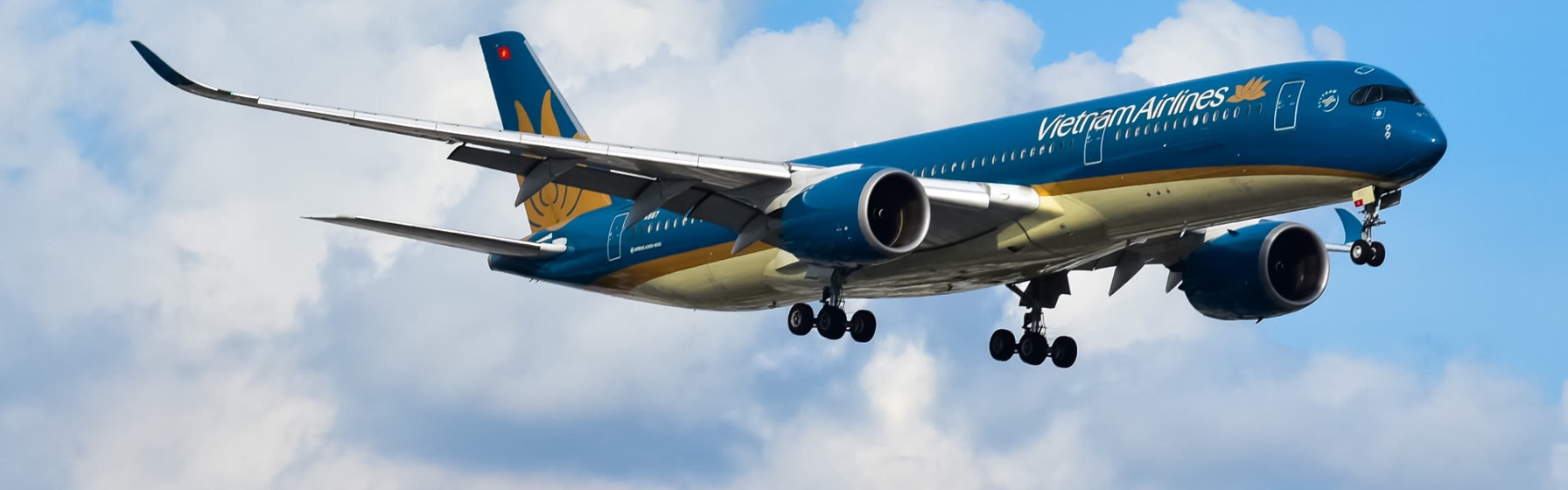
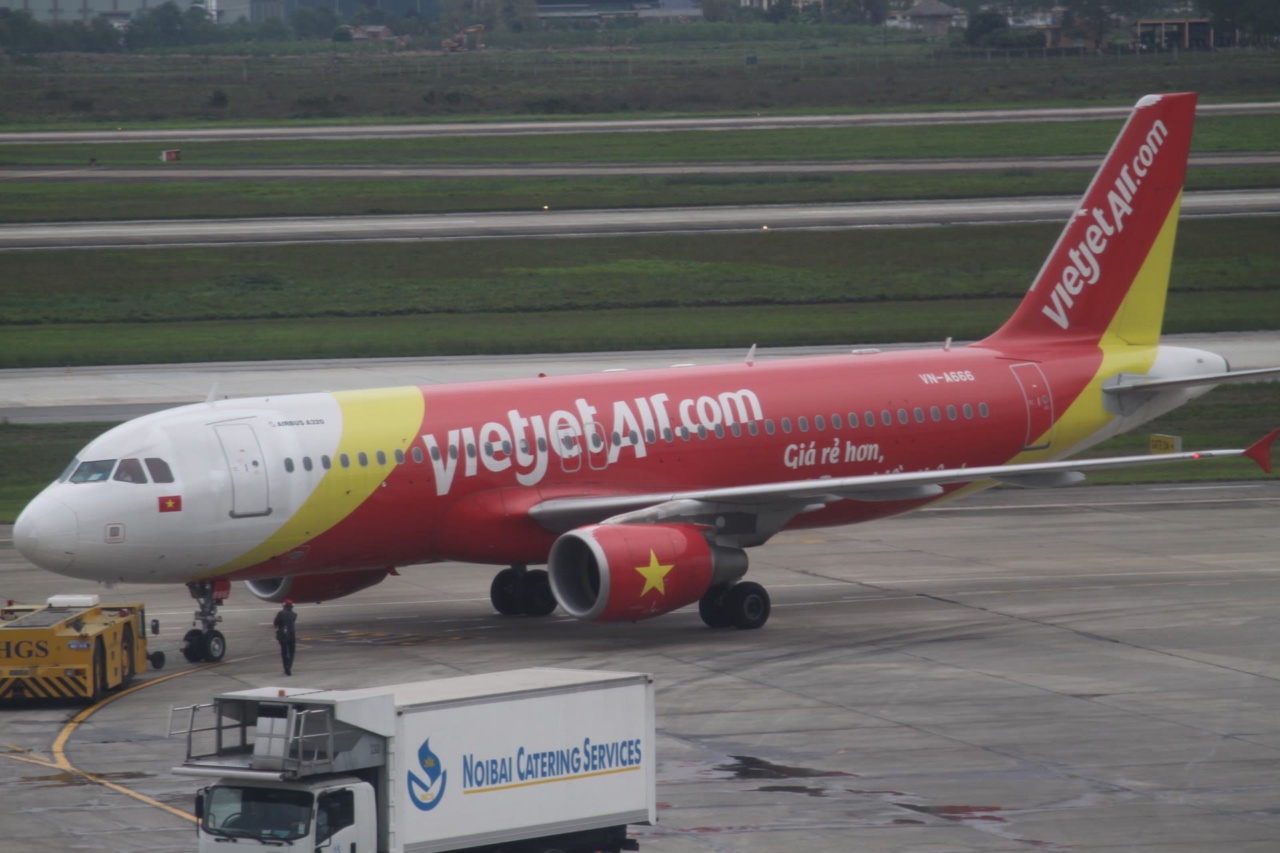
The main carriers on domestic routes are Vietnam Airlines, the national flag carrier, and Vietjet Air, a low-cost airline. Pacific Airlines and VASCO also operate domestic services.[2]
Beyond the big three hubs, many regional airports can be reached directly. Phu Quoc is served by 4 to 7 Vietnam Airlines flights a day from Ho Chi Minh City, about 1 hour in the air.[3]Da Lat's Lien Khuong Airport, about 30 km from the city center, is 55 minutes from Ho Chi Minh City and 2 hours 5 minutes from Hanoi, with 1 to 2 flights a day on each route.[4] Dong Hoi, the gateway to Phong Nha, has daily domestic flights from Hanoi and Ho Chi Minh City,[5] and Vietnam Airlines also flies from Hai Phong to Da Nang.[6] Con Dao, Rach Gia and Ca Mau are served from Tan Son Nhat's Terminal 1.[2]
Classes and Comfort Levels
Vietnam's airlines offer a range of fare types, and the baggage rules differ by carrier.
Vietnam Airlines sells domestic Economy in 4 fare families (Flex, Classic, Lite and Super Lite) as well as Business Class. Economy Flex, Classic and Lite include 1 carry-on piece of 10 kg plus an accessory and 1 checked piece of 23 kg. Super Lite lists the carry-on allowance only and is non-refundable and non-changeable.[7] On flights operated with ATR 72 aircraft, the carry-on limit is 7 kg.[7]
Vietjet Air operates a low-cost model. Each passenger may carry 1 main carry-on item and 1 small personal item with a combined weight of up to 7 kg, depending on fare class and route. Checked baggage is bought separately, up to 32 kg per piece, and costs more at the airport than when bought in advance.[8]
For most domestic flights in Vietnam, which take at most about 2 hours, Economy Class on any carrier is perfectly adequate.
Booking and Tickets
Booking domestic flights in Vietnam is straightforward. Each airline has its own website and mobile app where tickets can be purchased directly. For comparing fares across carriers and finding the best deal for your route, platforms like GoAsia.cc let you see all available options side by side and book in one place.
Advance booking is generally recommended, particularly for popular routes like Hanoi to Ho Chi Minh City or any flight to Phu Quoc during holiday periods. Vietnam Airlines publishes a separate Lunar New Year peak period with its own fare and change conditions, so plan well ahead if you travel around Tet.[7]
Domestic fares from Vietnam Airlines show how widely prices vary: a one-way ticket from Ho Chi Minh City to Hanoi starts at about 1.55 million VND,[1] and Ho Chi Minh City to Phu Quoc is quoted from about 730,000 VND.[3]
What to Expect on Board
Domestic flights in Vietnam are generally short. Beyond the flight times above, Ho Chi Minh City to Phu Quoc takes about 1 hour.[3] Luggage policies differ significantly between carriers: a Vietnam Airlines Economy Flex, Classic or Lite ticket includes a checked bag, while Vietjet's carry-on allowance is only 7 kg and checked bags are purchased separately. This catches many travelers off guard and can increase the total cost, so always check your fare's baggage allowance before heading to the airport.
Vietnamese airports, particularly Tan Son Nhat in Ho Chi Minh City, can be crowded. Arrive in good time before domestic departures, especially during mornings and holiday periods.
Tips for Flight Travel in Vietnam
Compare total costs, not just base fares. A low headline fare may look cheaper, but once you add checked baggage and seat selection, a ticket with inclusions can cost the same or less. Always factor in your luggage needs.
Watch out for Tet. The Lunar New Year period (usually late January or February) causes a surge in domestic travel. Book very early or avoid flying during this window.
Consider open-jaw itineraries. Since flights are frequent, you do not need to backtrack. Fly into Hanoi, travel south through Hue and Hoi An, then fly out of Ho Chi Minh City.
Keep your travel documents handy. Foreign travelers need their passport (with the latest entry stamp) or another valid international travel document, together with their visa or residence document where one applies. The documents must be originals, valid and with a photo.[9]
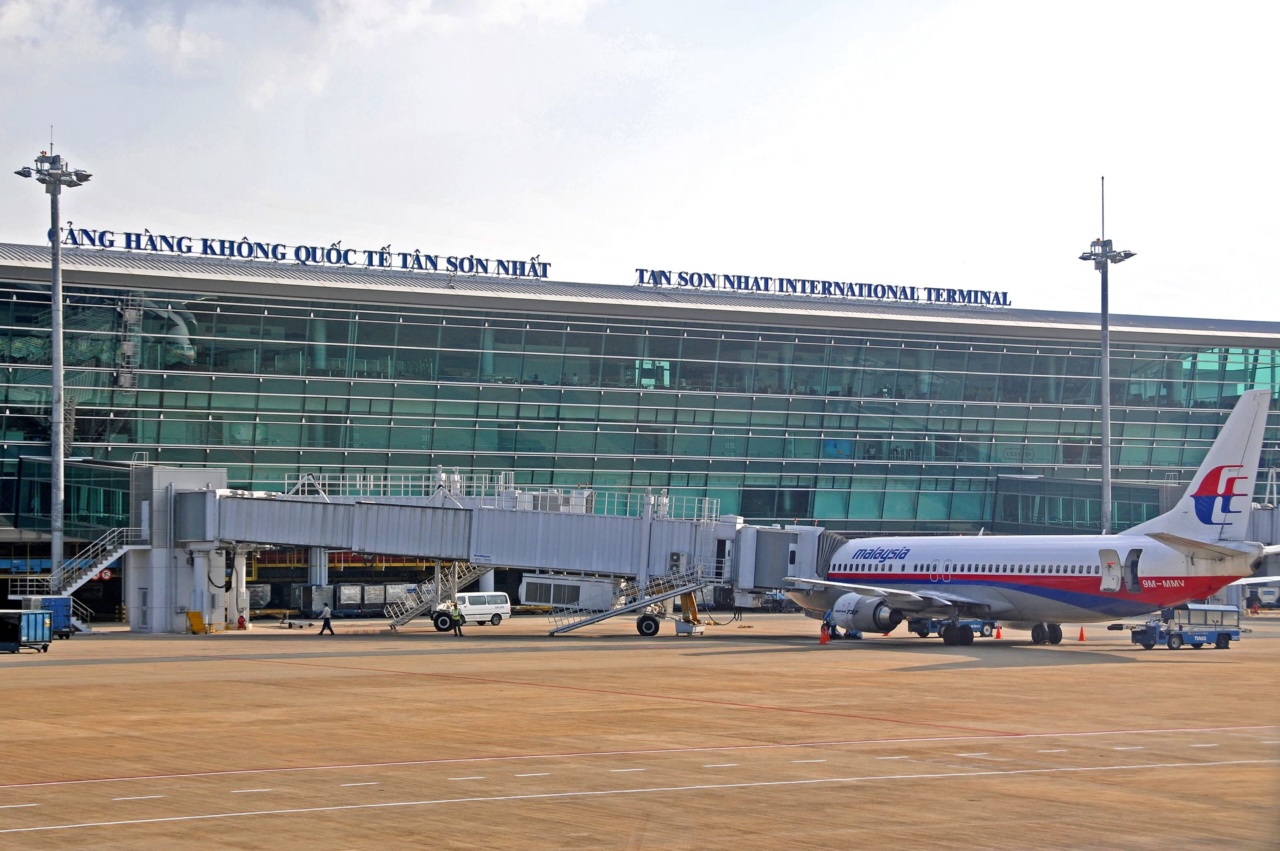
Check your Tan Son Nhat terminal. Terminal T3 is operating, not still under construction. Vietnam Airlines moved most domestic services there in May 2025, with exceptions described in its official terminal announcement.[2] Terminal allocation depends on the airline and route, so check your booking and current airline instructions before arranging a taxi or connecting flight.
Sources and background
Numbers in the text such as [1] refer to these sources.