Bayon Temple: The Smiling Faces of Angkor Thom

Bayon Temple: The Smiling Faces of Angkor Thom

Last updated: March 16, 2026

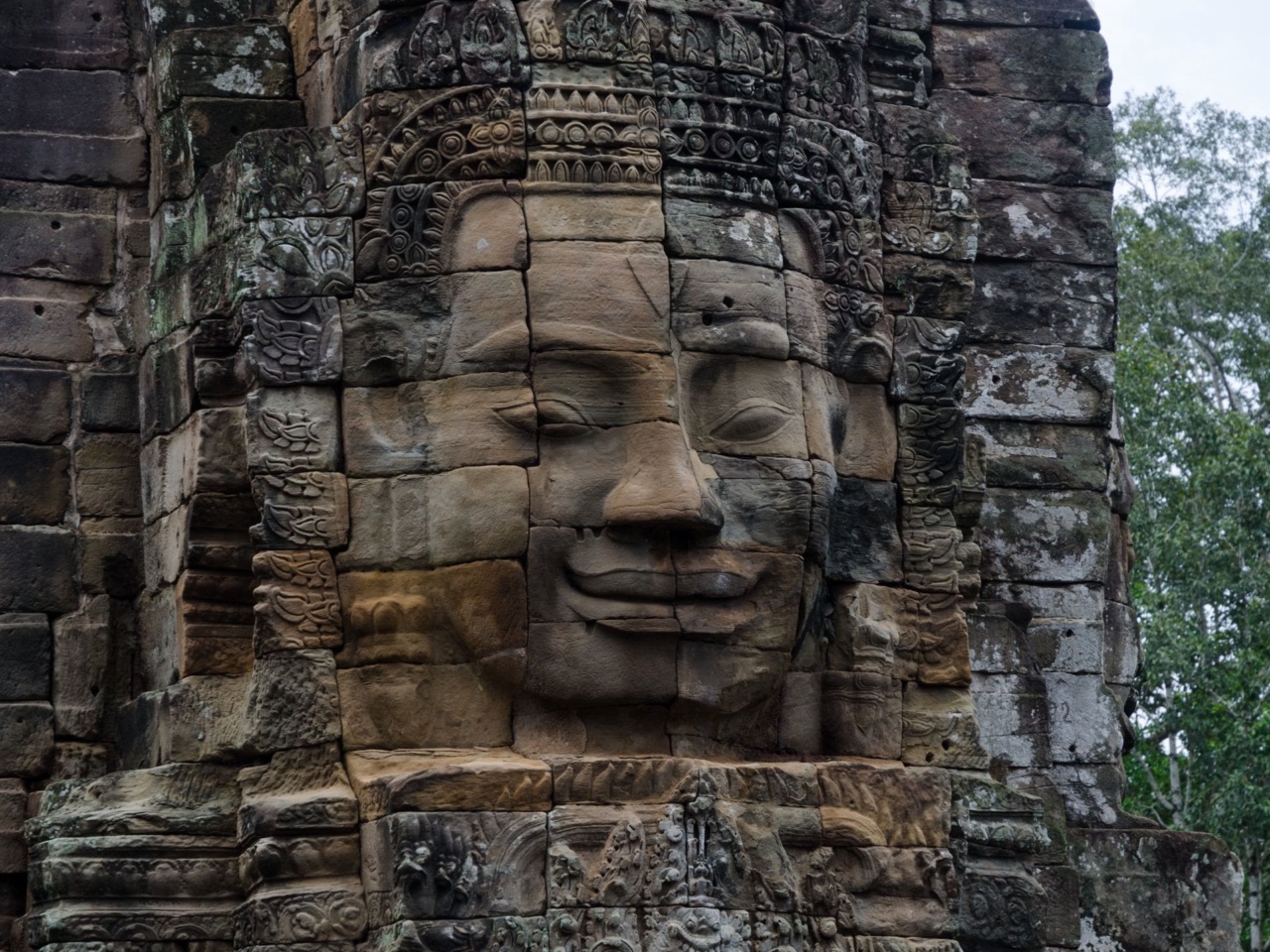
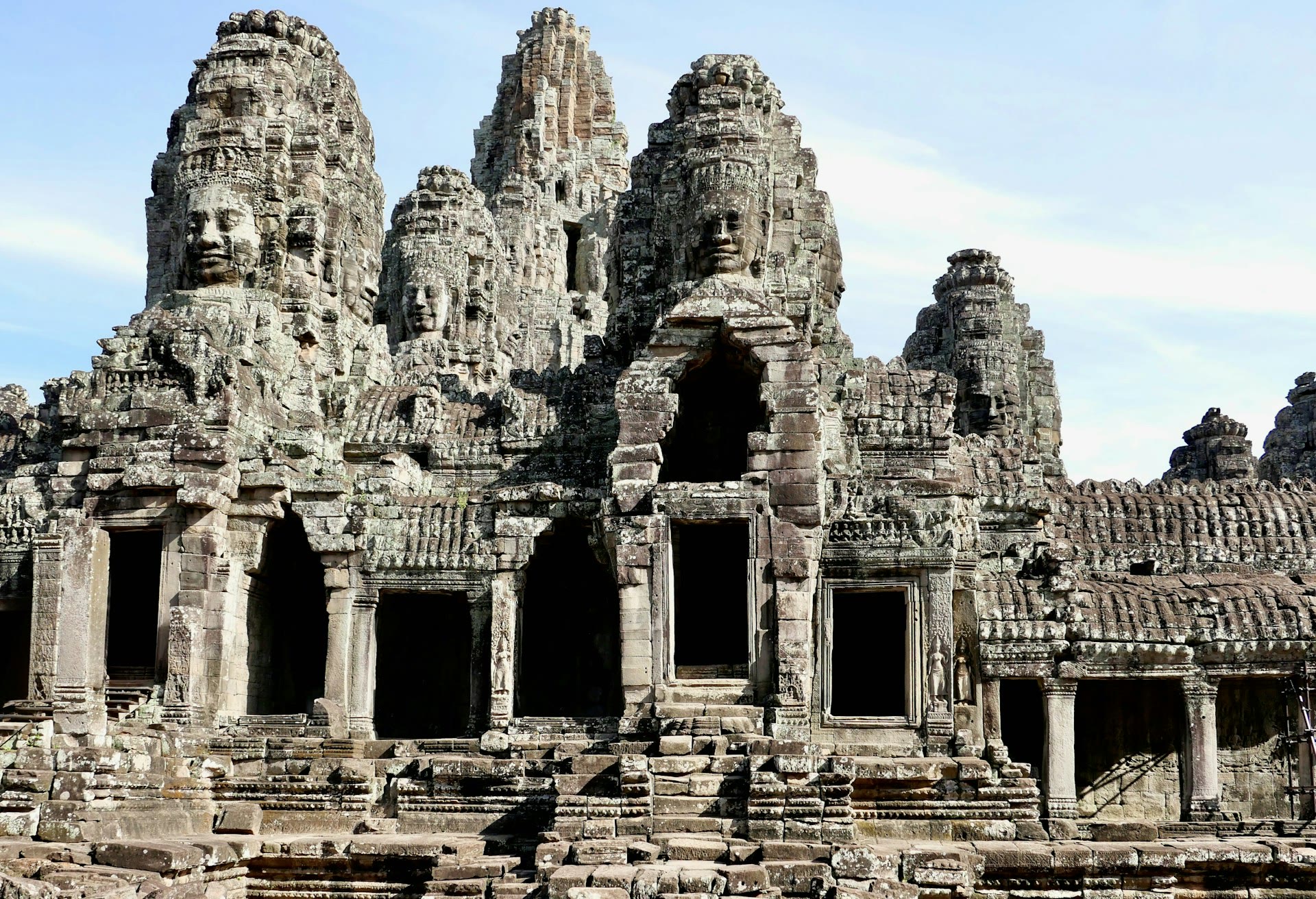
Dozens of enormous stone faces gaze out from every direction, their lips curved into an enigmatic smile that has puzzled scholars and captivated visitors for over eight centuries. Bayon Temple sits at the exact geographic center of Angkor Thom, the last great capital of the Khmer Empire, and it remains one of the most visually striking and emotionally powerful monuments in all of Southeast Asia.

While Angkor Wat gets the sunrise crowds and the postcard covers, Bayon offers something different: an intimate, almost disorienting experience of wandering through narrow corridors and suddenly finding yourself face-to-face with a serene stone visage three meters tall. The temple rewards close exploration, and its bas-reliefs depict not just gods and kings but the daily lives of ordinary Khmer people, making it one of the most human monuments of the ancient world.

History of Bayon Temple

Bayon was built in the late 12th and early 13th centuries by King Jayavarman VII, the most prolific builder in Khmer history and the only Angkorian king to adopt Mahayana Buddhism as the state religion. The temple served as his state temple and the spiritual heart of his capital city, Angkor Thom.

Jayavarman VII came to power after a period of devastating warfare. In 1177, the Cham kingdom (from present-day Vietnam) launched a naval invasion up the Tonle Sap lake and sacked the previous Khmer capital. Jayavarman rallied forces, defeated the Chams, and embarked on an extraordinary building campaign that produced Bayon, Ta Prohm, Preah Khan, and the walled city of Angkor Thom itself.

Unlike his predecessors who built Hindu temples dedicated to Shiva or Vishnu, Jayavarman VII centered Bayon on the Bodhisattva Avalokiteshvara, the embodiment of Buddhist compassion. This spiritual orientation is reflected in the temple's most famous feature: the hundreds of serene faces carved into its towers, widely interpreted as representing either the Bodhisattva or Jayavarman VII himself, or perhaps a deliberate fusion of both.

After Jayavarman VII's death, subsequent rulers modified the temple, adding Hindu elements and, in some cases, defacing Buddhist imagery during periods of religious reaction. The temple was eventually abandoned along with the rest of Angkor and consumed by jungle until French explorers rediscovered the complex in the 19th century.

Things to Do

Architecture and Layout

Bayon is built as a temple-mountain representing Mount Meru, the center of the universe in both Hindu and Buddhist cosmology. It sits at the precise center of Angkor Thom's 9-square-kilometer walled city, with roads leading directly to it from each of the city's five gates.

Unlike Angkor Wat, Bayon has no outer wall or moat of its own. The walls and moat of Angkor Thom itself serve that purpose, making the entire city effectively the temple's enclosure. This city-temple arrangement covers an area roughly four times larger than Angkor Wat.

The Three Levels

The temple is organized on three levels, each with distinct features:

  • First level (outer gallery): A rectangular gallery containing extensive bas-reliefs depicting historical battles and scenes of daily Khmer life. The southern gallery focuses on the naval battle against the Chams on Tonle Sap, while the eastern gallery shows market scenes, cooking, festivals, and everyday activities.
  • Second level (inner gallery): A smaller gallery with bas-reliefs featuring more mythological and religious scenes, including Hindu narratives added by later rulers. This level is partially collapsed and less accessible in places.
  • Third level (upper terrace): The circular upper terrace is the most atmospheric part of the temple, a maze of towers, narrow passages, and the famous face towers. This is where the stone faces surround you from every angle.

The Face Towers

The temple's signature feature is its collection of massive stone faces carved into towers on the upper terrace. Originally, scholars believe there were 49 to 59 face towers; today 37 remain. Most towers have four faces, each oriented toward one of the cardinal directions, though some have three.

The faces measure roughly 1.75 to 2.4 meters in height and share a consistent expression: eyes downcast in meditation, lips curved in a gentle, knowing smile. The identity of the faces has been debated for decades. The prevailing theory identifies them as the Bodhisattva Avalokiteshvara, whose all-seeing compassion radiates in every direction. Others argue they represent Jayavarman VII himself, noting their resemblance to portrait statues of the king found elsewhere. The most compelling interpretation may be that they are intentionally both, merging the divine and the royal in a single image.

The Bas-Reliefs

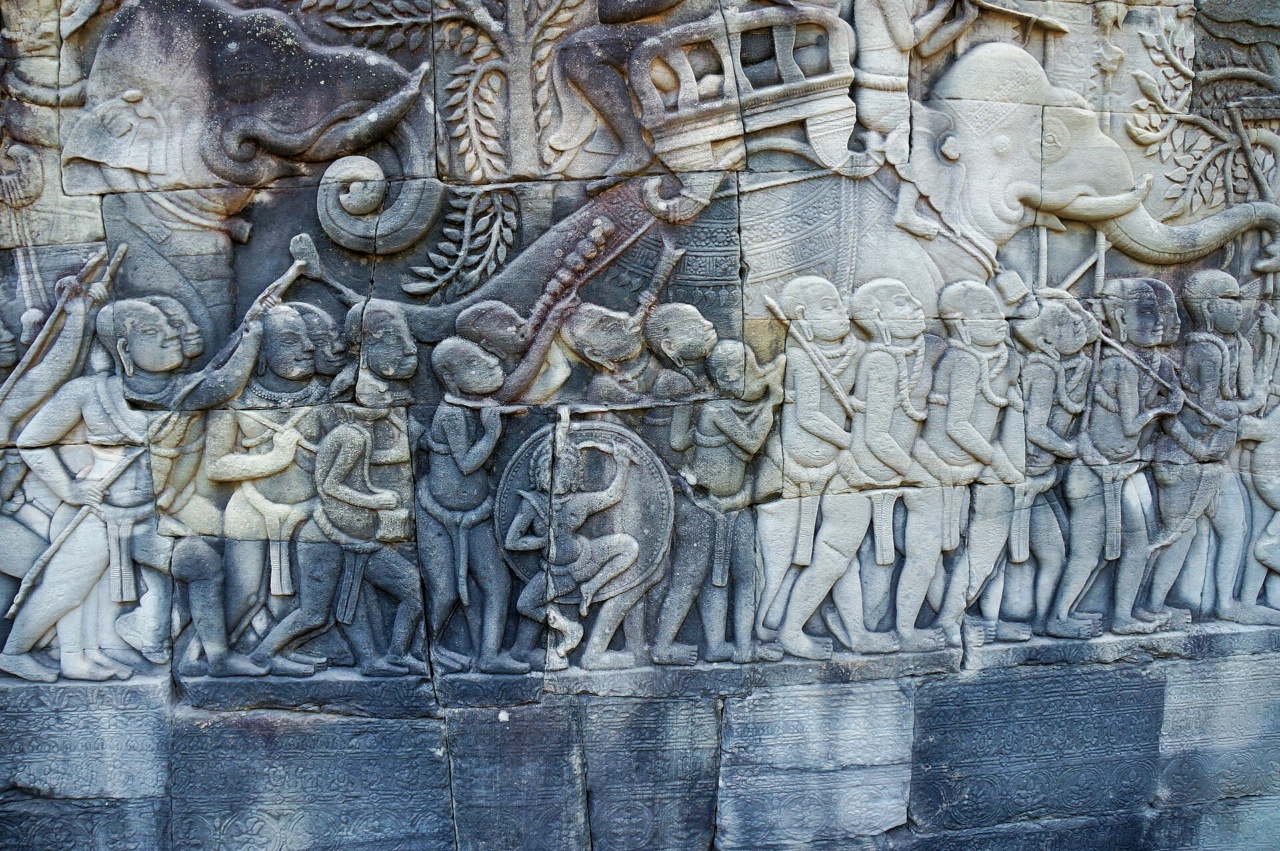
Bayon's bas-reliefs are exceptional not just for their artistic quality but for their subject matter. While Angkor Wat's reliefs focus on mythology and royal ceremony, Bayon's carvings provide an extraordinary window into 12th-century Khmer life.

Historical Scenes

The outer gallery's southern wall depicts the decisive naval battle between the Khmer and Cham forces on Tonle Sap lake. The carvings show warships with ram prows, soldiers in combat, crocodiles seizing fallen warriors in the water, and the aftermath of battle. These panels are among the most dynamic and detailed military scenes in Khmer art.

Daily Life Scenes

The eastern sections of the outer gallery contain some of the most remarkable carvings in all of Angkor. You can see:

  • Market traders selling fish, rice, and vegetables
  • Hunters in the forest with dogs and weapons
  • Women cooking over fires and serving food
  • Jugglers, acrobats, and musicians performing
  • Cockfighting and gambling scenes
  • Pregnant women, mothers with children, people playing board games
  • Chinese merchants (identifiable by their distinctive clothing and hairstyles)

These scenes offer an unparalleled documentary record of ordinary life in the Khmer Empire, information that exists nowhere else in the historical record.

Visiting Bayon Temple

Entrance and Tickets

Bayon is part of the Angkor Archaeological Park and requires an Angkor Pass. No separate ticket is needed.

Pass TypeDurationCost
1-day pass1 day$37
3-day pass3 days (use within 10 days)$62
7-day pass7 days (use within 1 month)$72

Passes are purchased at the main ticket office on the road between Siem Reap and Angkor Wat. Photo ID is captured digitally and printed on the pass. The ticket office opens at 5:00 for sunrise visitors.

Best Time to Visit

Bayon is best visited in the early morning (7:30-9:00) or late afternoon (15:30-17:00). Early morning offers cooler temperatures and fewer crowds, as most tour groups start at Angkor Wat for sunrise and arrive at Bayon later. Late afternoon provides the best photography light, with warm golden tones illuminating the stone faces and creating dramatic shadows in the corridors.

Avoid midday if possible. The temple has limited shade, the stone absorbs heat, and tour groups peak between 10:00 and 14:00.

How Long to Spend

Allow one to two hours for a thorough visit. A quick circuit of the upper terrace and face towers takes 30-40 minutes, but the bas-reliefs alone deserve an hour of close attention. If you have a guide who can explain the relief panels, budget closer to two hours.

Getting There

Bayon sits inside the walled city of Angkor Thom, about 8 kilometers north of Siem Reap. Most visitors reach it as part of the "Small Circuit" (Petit Circuit), the standard temple route that includes Angkor Wat, Angkor Thom, and Ta Prohm. Transport options from Siem Reap include:

  • Tuk-tuk: $15-20 for a full-day Small Circuit tour
  • Car with driver: $25-35 for a full day
  • Bicycle: Rentable in Siem Reap for $2-5/day; the ride to Angkor Thom's South Gate takes about 30 minutes on flat roads
  • E-bike/scooter: $8-15/day, a popular middle option

Combining Bayon with Angkor Thom

Bayon is the centerpiece of Angkor Thom, but the walled city contains several other important monuments worth visiting on the same trip:

  • Baphuon: A massive pyramid temple just northwest of Bayon, recently restored after decades of painstaking reconstruction. Features a reclining Buddha on its western wall.
  • Terrace of the Elephants: A 350-meter-long carved platform north of Bayon, once used as a royal viewing stand for ceremonies and processions.
  • Terrace of the Leper King: Named for a mysterious statue found here, this terrace features deeply carved walls with rows of seated figures, apsaras, and nagas in excellent condition.
  • Phimeanakas: A small but steep pyramid temple within the Royal Palace enclosure, offering good views from the top.

A thorough exploration of Angkor Thom, including Bayon and these surrounding monuments, takes a full morning or afternoon.

Tips for Visiting Bayon

  • Cover shoulders and knees. The dress code is enforced at Angkor temples. Lightweight long trousers and a t-shirt with sleeves are the simplest solution.
  • Explore the upper terrace slowly. The layout is deliberately maze-like. Getting slightly lost among the towers is part of the experience. The faces reveal different expressions depending on the angle and light.
  • Do not skip the bas-reliefs. Many visitors head straight for the face towers and miss the extraordinary carvings on the first level. The daily life scenes on the eastern outer gallery are arguably more interesting than the military panels.
  • Bring a wide-angle lens. The corridors are tight and the towers close together. A wide-angle lens captures the faces in their architectural context. A telephoto is useful for isolating individual faces against the sky.
  • Hire a guide for context. The bas-reliefs tell specific stories that are nearly impossible to decode without knowledge of Khmer history. A knowledgeable guide transforms the visit from impressive to genuinely educational. Guides can be hired at the temple entrance for $20-30.
  • Bring water and sun protection. The upper terrace is exposed to full sun with no shade. Dehydration happens quickly in Cambodia's heat.

For more on exploring the Angkor complex and planning your time in Siem Reap, GoAsia.cc has comprehensive guides covering temple circuits, transport, and accommodation.

Frequently Asked Questions

What is Bayon Temple and what makes it unique?

Bayon is a late 12th-century Buddhist temple at the center of Angkor Thom, the last capital of the Khmer Empire. It is famous for its towers carved with over 200 massive serene stone faces, believed to represent either the Bodhisattva Avalokiteshvara or King Jayavarman VII. Its bas-reliefs uniquely depict daily Khmer life alongside military history.

How much does it cost to visit Bayon Temple?

Bayon is included in the Angkor Archaeological Park pass. A 1-day pass costs $37, a 3-day pass is $62, and a 7-day pass is $72. There is no separate fee for Bayon. The pass also covers Angkor Wat, Ta Prohm, and all other temples in the park.

How do I get to Bayon Temple from Siem Reap?

Bayon is inside Angkor Thom, about 8 kilometers north of Siem Reap. Most visitors hire a tuk-tuk for a full-day temple circuit ($15-20), which includes Bayon along with Angkor Wat and Ta Prohm. You can also cycle (30 minutes on flat roads), hire a car with driver, or rent an e-bike.

When is the best time of day to visit Bayon?

Early morning (7:30-9:00) offers cooler temperatures, fewer crowds, and soft light on the stone faces. Late afternoon (15:30-17:00) provides the best photography light with golden tones and dramatic shadows. Avoid midday when the temple is hottest and most crowded with tour groups.

How long should I spend at Bayon Temple?

Allow one to two hours for a thorough visit. The upper terrace with the face towers takes 30-40 minutes, but the bas-reliefs on the lower levels deserve at least an hour. With a guide explaining the carvings, budget closer to two hours for the full experience.

Whose faces are carved on Bayon's towers?

The identity is debated among scholars. The prevailing theory identifies them as the Bodhisattva Avalokiteshvara, representing Buddhist compassion radiating in all directions. Others see them as portraits of King Jayavarman VII. Many scholars now believe they intentionally merge both identities, fusing the divine and the royal.

What is the difference between Bayon and Angkor Wat?

Angkor Wat is a Hindu temple built about 70 years earlier in classical Khmer style, known for its symmetry and iconic silhouette. Bayon is a Buddhist temple in baroque Khmer style, famous for its face towers and maze-like layout. Angkor Wat's reliefs depict mythology, while Bayon's show daily life and historical battles.

Can I visit Bayon without a guide?

Yes, you can explore freely with your Angkor Pass. However, a guide significantly enhances the experience, especially for understanding the bas-reliefs which depict specific historical events and cultural scenes. Guides can be hired at the entrance for $20-30 and are highly recommended for first-time visitors.