Doi Suthep Temple: Chiang Mai's Sacred Mountain Shrine

Doi Suthep Temple: Chiang Mai's Sacred Mountain Shrine

Last updated: March 16, 2026

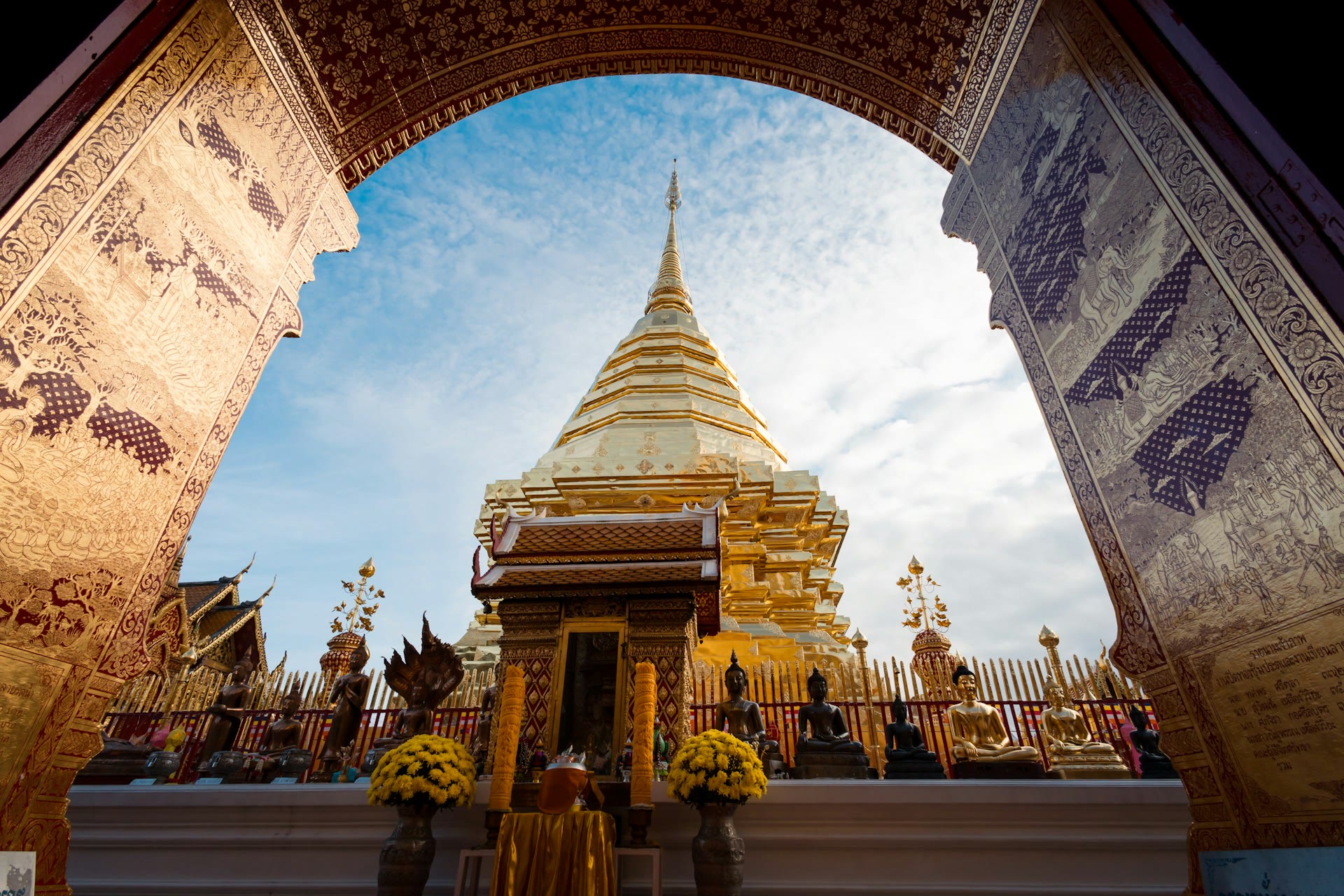
Every morning, the golden chedi of Wat Phra That Doi Suthep catches the first sunlight above Chiang Mai, visible from nearly every corner of the city below. Perched at 1,073 meters on the slopes of Doi Suthep mountain, this is the most sacred temple in northern Thailand and the single sight that no visitor to Chiang Mai should skip. The temple has stood here since the 14th century, and for locals it remains a living place of worship, not just a tourist attraction.

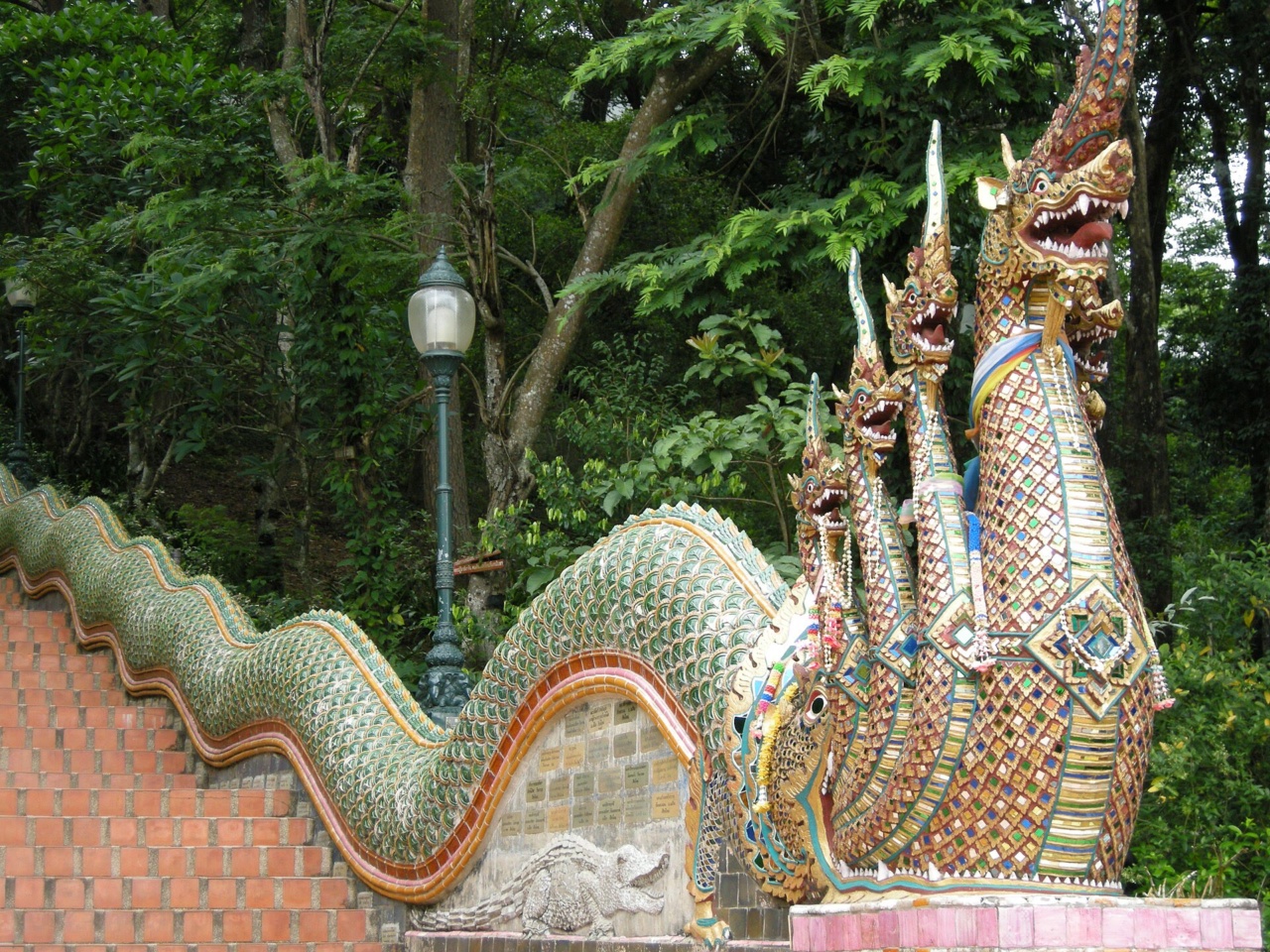
The approach alone makes a visit memorable. A winding mountain road climbs 15 km from the city through thick forest, ending at the foot of a 306-step Naga staircase flanked by enormous serpent balustrades. At the top, a glittering complex of golden chedis, Buddha statues, bells, and panoramic viewpoints rewards the climb. The whole experience, from the drive up to the descent, takes about two to three hours and works perfectly as a morning or late afternoon trip from Chiang Mai.

History and Significance

Wat Phra That Doi Suthep was founded in 1383 during the reign of King Ku Na of the Lanna Kingdom. According to legend, a monk named Sumanathera brought a bone relic of the Buddha to northern Thailand. The relic was placed on the back of a white elephant, which was released to choose the site for a new temple. The elephant climbed Doi Suthep mountain, trumpeted three times, and knelt down at the spot where the chedi now stands. The story explains both the temple's location and the white elephant statue you will see in the grounds.

The temple has been expanded and renovated many times over the centuries. The golden chedi at its center is believed to house the original relic and remains the most venerated Buddhist site in Chiang Mai. During major Buddhist holidays, thousands of Thai worshippers make the pilgrimage up the mountain, many walking the entire road from the city as an act of devotion.

Things to Do

The Naga Staircase

The formal entrance to the temple is through a monumental staircase of 306 steps, guarded on each side by a continuous Naga (serpent) balustrade that stretches the full length of the climb. The Nagas are executed in colorful mosaic tilework, their scaled bodies undulating along the staircase with raised hoods at the base, forming one of the longest single Naga sculptures in Thailand. This is a masterpiece of Lanna artistry and worth admiring closely before you start climbing.

The climb takes about 10-15 minutes at a moderate pace. The steps are well-maintained but can be slippery after rain. If the stairs are not for you, a funicular runs alongside from 6:00 AM to 6:00 PM, costing 50 Baht for foreign visitors. Most people choose to walk up and ride the funicular down, or vice versa.

What to See at the Temple

The Golden Chedi

The central chedi is the heart of the temple, a gleaming golden stupa rising above the courtyard. It is surrounded by a cloister walkway where visitors and worshippers perform a clockwise circumambulation (walking around the chedi three times while holding a lotus flower and incense). This ritual is one of the most atmospheric experiences at Doi Suthep, and you are welcome to join. Lotus flowers, candles, and incense sets are available at small stalls near the entrance for 20-40 Baht.

The Emerald Buddha Replica

A jade replica of Thailand's famous Emerald Buddha sits in a chapel near the main chedi. While smaller than the original in Bangkok's Wat Phra Kaew, it is a significant devotional object for northern Thai Buddhists and is usually surrounded by offerings of flowers and gold leaf.

The Viewpoint

A terrace on the eastern side of the temple complex offers sweeping views over Chiang Mai and the surrounding plains. On clear days, the vista extends to the mountains beyond the city. This view is particularly beautiful in the late afternoon when the light turns golden, or in the early morning when mist still hangs over the valleys. During the smoky season (February to April), visibility can drop significantly.

Temple Bells and Shrines

Rows of brass bells line the walkways, and visitors often ring them for good luck. Scattered throughout the grounds are smaller shrines, meditation areas, and statues of important monks and figures from the temple's history. A Bodhi tree descended from the original tree under which the Buddha attained enlightenment stands in the courtyard.

Getting to Doi Suthep

The temple sits 15 km west of Chiang Mai's Old City, connected by a winding mountain road (Route 1004). There is no public bus service, but several transport options make the trip easy.

TransportCostTimeNotes
Shared songthaew (red truck)50 Baht per person one way30-40 minDepart from Chang Phueak Gate or Chiang Mai Zoo when full (8-10 passengers)
Private songthaew charter300-500 Baht round trip30 minWaits for you at the top; negotiate before departing
Grab/Bolt taxi200-300 Baht one way25 minConvenient but may be hard to find a return ride at the top
Motorbike rental200-300 Baht per day25 minFreedom to stop at viewpoints; road has tight curves
Guided tour500-1,000 BahtHalf dayOften combined with Doi Pui village or other mountain stops

The most popular option is the shared songthaew from Chang Phueak Gate on the north side of the Old City moat. Drivers wait until the vehicle fills up, which usually takes 5-15 minutes during daytime hours. Some songthaews also depart from the main entrance of Chiang Mai Zoo, about halfway up the mountain.

Combining with Other Attractions

Doi Suthep mountain has more to offer beyond the temple, and a half-day trip can easily include additional stops along the same road.

  • Doi Pui Hmong Village: A small hill-tribe village about 4 km past the temple, where you can see traditional Hmong clothing, buy handicrafts, and walk through a simple museum. The village is touristy but gives a brief glimpse into northern Thailand's ethnic diversity.
  • Doi Suthep-Pui National Park: The temple sits within this national park, which has several nature trails and waterfalls. The Monthathan Waterfall trail (2 km below the temple on the main road) is a popular short hike.
  • Phra Tamnak Phu Ping (Royal Winter Palace): The royal family's northern residence, with beautiful gardens open to visitors on days when the royals are not in residence. Located between the temple and Doi Pui village.

For more ideas on what to do in Chiang Mai and northern Thailand, check GoAsia.cc for detailed guides and transport information.

Tips for Visiting Doi Suthep Temple

  • Dress modestly. Shoulders and knees must be covered. Sarongs are available for rent at the base of the Naga staircase if needed, but bringing your own cover-up avoids the queue.
  • Remove shoes before entering. The entire inner temple area is a shoe-free zone. Carry your shoes with you in a bag or use the racks provided at the entrance.
  • Visit early morning or late afternoon. The temple opens at 6:00 AM and closes at 6:00 PM. Tour buses arrive between 9:00 and 11:00 AM, making early morning the quietest and coolest time. Late afternoon offers the best light for photography and city views.
  • Bring water and sun protection. The courtyard is largely exposed, and the reflected heat from the golden surfaces adds to the temperature. The staircase climb will warm you up.
  • Watch for monkeys. Macaques live around the temple grounds and the parking area. Keep food and shiny objects out of sight. They are bold and will grab bags or bottles.
  • Carry small bills. The entrance fee is 30 Baht for foreigners, the funicular is 50 Baht, and offerings or donations are typically 20-40 Baht. Vendors and ticket counters may not have change for large notes.
  • Avoid the smoky season. From roughly February through April, agricultural burning fills the Chiang Mai valley with haze. The mountain views from Doi Suthep disappear entirely on bad days. If you are visiting during this period, go as early as possible when the air is clearest.
  • Join the circumambulation. Walking three times clockwise around the golden chedi with a lotus and incense is a beautiful ritual open to all visitors, not just Buddhists. It takes about five minutes and is one of the most memorable things you can do at the temple.

Frequently Asked Questions

Why is Doi Suthep considered the most important temple in Chiang Mai?

Wat Phra That Doi Suthep houses a relic of the Buddha and has been the spiritual center of northern Thailand since its founding in 1383. It holds royal temple status and is the site of major Buddhist ceremonies throughout the year. For locals, a trip to Chiang Mai is not complete without paying respects here.

How much does it cost to visit Doi Suthep?

The temple entrance fee is 30 Baht (about $1) for foreign visitors. The funicular costs 50 Baht if you prefer not to climb the 306 steps. A shared songthaew from the city runs 50 Baht per person each way. In total, a visit costs under 200 Baht ($6) including round-trip transport.

How do I get to Doi Suthep from Chiang Mai Old City?

The easiest way is a shared red songthaew from Chang Phueak Gate, costing 50 Baht per person and taking about 30-40 minutes. The trucks depart when full, usually within 15 minutes during the day. You can also use Grab or rent a motorbike for more flexibility.

Do I have to climb all 306 steps?

No. A funicular runs parallel to the Naga staircase from 6:00 AM to 6:00 PM, costing 50 Baht for foreigners. Many visitors walk up to enjoy the Naga staircase and its mosaic serpent sculptures, then take the funicular down to save their knees.

What is the best time of day to visit Doi Suthep?

Early morning (before 9:00 AM) is best for avoiding crowds and heat. Late afternoon offers golden light on the chedi and the best city views from the terrace. Avoid midday when tour groups peak and the exposed courtyard is at its hottest.

What should I wear to Doi Suthep?

Shoulders and knees must be covered, as at all Thai temples. Lightweight long pants or a skirt below the knee with a T-shirt works well. Sarongs are available to borrow at the base, but having your own cover-up saves time. Shoes are removed at the inner temple entrance.

How long does a visit to Doi Suthep take?

Plan two to three hours total including transport from Chiang Mai. The temple itself takes about one hour to explore thoroughly. Add time if you want to visit the Doi Pui Hmong village or the Monthathan waterfall on the same trip.

Is Doi Suthep worth visiting during the smoky season?

The temple itself remains impressive year-round, but the panoramic city views from the terrace can be completely obscured by haze from February through April. If you visit during this period, go at dawn when the air is clearest. The golden chedi, Naga staircase, and inner temple are unaffected by the smoke.