Leshan Giant Buddha: Choose Your View and Plan a Visit From Chengdu
Contents
- 1. Choose a daytime land visit, a river excursion or both
- 2. Tickets, budget and the correct arrival point
- 3. A Tang-dynasty Maitreya above three rivers
- 4. Carving, assembled details and drainage
- 5. Plan the land route around the views you want
- 6. A river view is a separate experience
- 7. From Chengdu: book the railway journey and the last leg
- 8. Time, weather and a comfortable visit
- 9. Keep Mount Emei as a separately planned destination
- 10. Sources and background
- 11. Frequently Asked Questions
Choose Leshan for a remarkable meeting of Buddhist sculpture, cliff engineering and river landscape. The first decision is how to see the Buddha: a land visit brings you closer to the carving and temple grounds, while a river excursion offers a more distant view of the whole figure. Pick your priority before booking transport, since the scenic-area entrance and the boat pier are different destinations.
Choose a daytime land visit, a river excursion or both
Look for the product names 白天游山, daytime land admission, and 白天游江, daytime river viewing. They are distinct products; night visits are another choice. Land admission suits an interest in the statue’s details and surrounding heritage. A boat suits a river-facing overview without taking the cliff descent, but boarding and access to the pier still need checking if stairs or balance are a concern.
If you want both perspectives, leave a flexible day for Leshan rather than scheduling another major attraction immediately afterwards. Start with the experience that matters most, then decide on the second after checking the day’s access, river operations and available time. A boat ticket alone is not a visit to the hillside temples.
Things to Do
Offers are only loaded from GetYourGuide after you click. GetYourGuide can then process your IP address and set cookies. Privacy Policy
GetYourGuide partner offers. GoAsia may earn a commission if you book through these offers. Check whether tickets or transfers are included, and follow the attraction's official booking and admission rules.
Tickets, budget and the correct arrival point
Check the official booking information for your date, including the exact product, entrance or pier, admission window, ticket coverage and any eligibility documents. Ask how a foreign-passport booking is checked at entry, save the confirmation and carry the original document. Budget for rail travel, the local transfer and any separately chosen boat or guiding service as well as admission.
An authority notice dated 9 November 2025 listed daytime river viewing at RMB 70 per person, operating from 08:00 to 17:00 at Wuyouba Pier (乌尤坝码头). Use this as a dated budget reference, then obtain the price and departure arrangements for your own day. The same notice announced a water-level-related suspension of Jiazhou Ferry Pier and the river-crossing service from 10 November, with reopening to be announced separately. Confirm your actual boarding pier before sending a driver or choosing a bus.
That notice named the 大佛旅游 mini program on WeChat or Alipay and the 乐山大佛景区 account on Douyin for boat purchases, with in-person sales at the South Visitor Centre and Wuyouba Pier. Check the scenic authority’s current instructions before paying, including the accepted payment method, cancellation conditions and whether your chosen ticket includes the land visit.
A Tang-dynasty Maitreya above three rivers
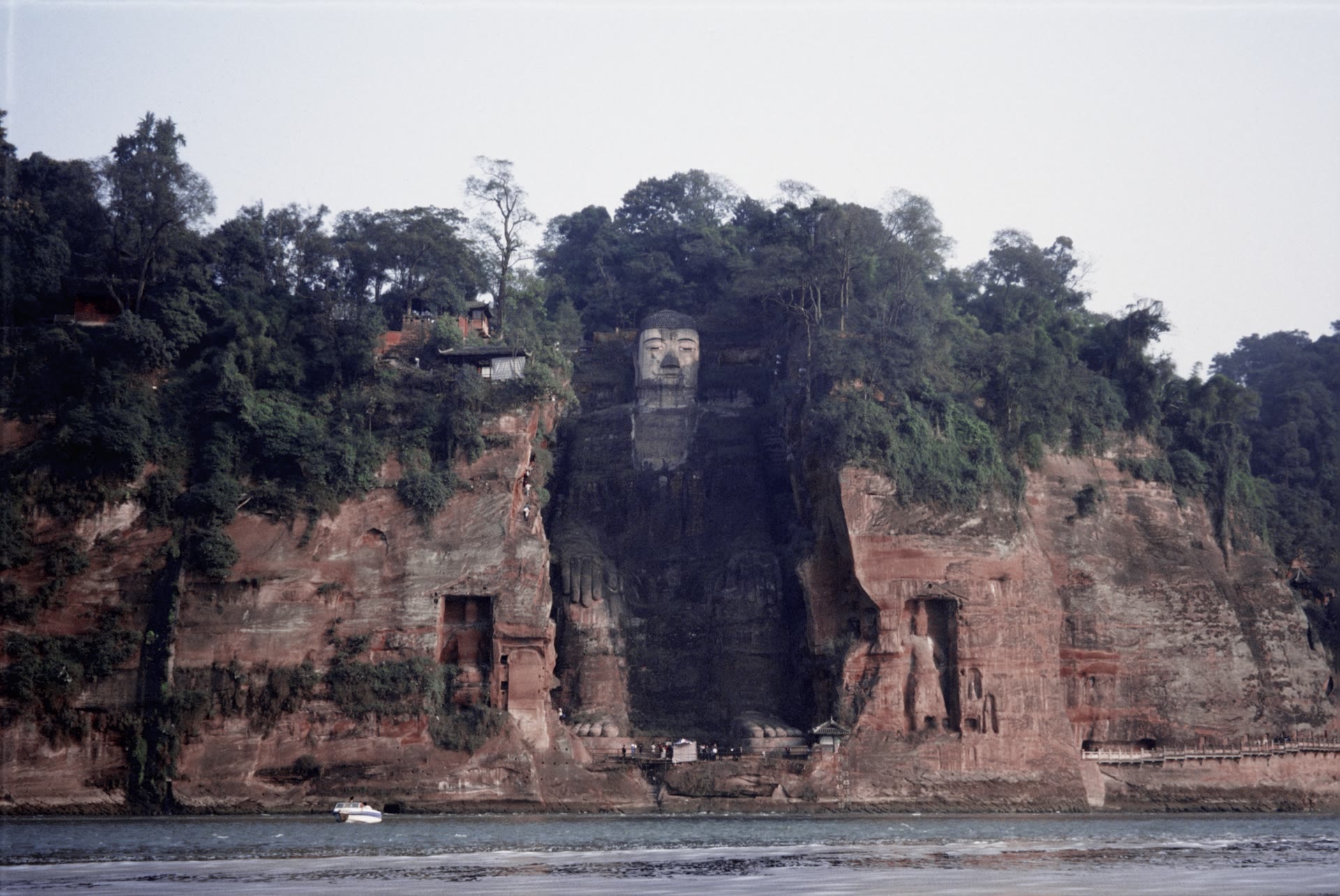
The 71-metre statue depicts Maitreya, the future Buddha, seated with hands on his knees. It overlooks the confluence of the Minjiang, Dadu and Qingyi rivers and was carved into Lingyun Hill’s red sandstone. UNESCO includes Leshan and Mount Emei in one World Heritage property combining Buddhist cultural heritage with a significant natural landscape.
Construction began in 713 under the initiative of the monk Haitong. Work continued under Zhangchou Jianqiong and was completed under Wei Gao in 803, a project spanning about 90 years. This long construction history is part of its appeal: look at the relationship between the sculpted figure, the cliff and the river setting rather than judging it only by its height.
Carving, assembled details and drainage
Most of the Buddha was cut into the natural hillside, but its construction is more varied than a single untouched block. Xinhua’s 2018 report on conservation research explains that individual carved stone blocks were assembled to form the hair curls, while the ears and nose include supporting and applied materials. These details reveal the combination of rock cutting, assembly and later care behind the monumental appearance.
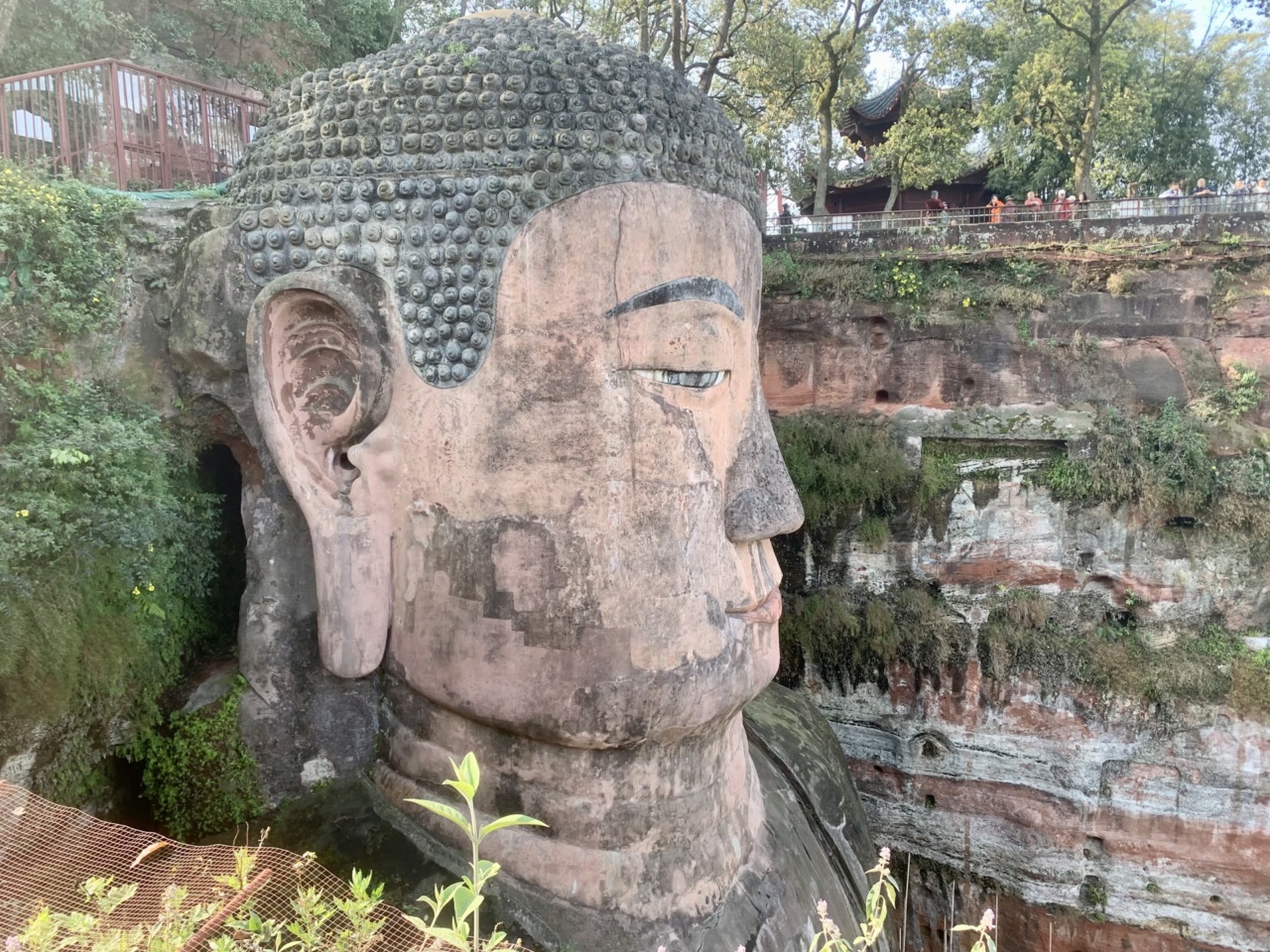
Water management is equally important. Channels among the hair curls lead water behind the ears, and grooves associated with the clothing help divert surface water. Behind the head, shoulders and chest, drainage passages intercept seepage. The same research describes damaged channels, while the scenic authority’s 2025 conservation account discusses weathering, vegetation, acid rain and repair work. The statue’s survival reflects continued protection as well as historical ingenuity.
Plan the land route around the views you want
For a closer visit, choose the land product and consult the day’s visitor map. Views near the head and a descent towards the feet offer very different senses of scale. If the cliff stair route is open, allow for both the descent and the onward or return route directed by staff. Decide before joining a queue whether the steps, exposure and remaining time suit you.
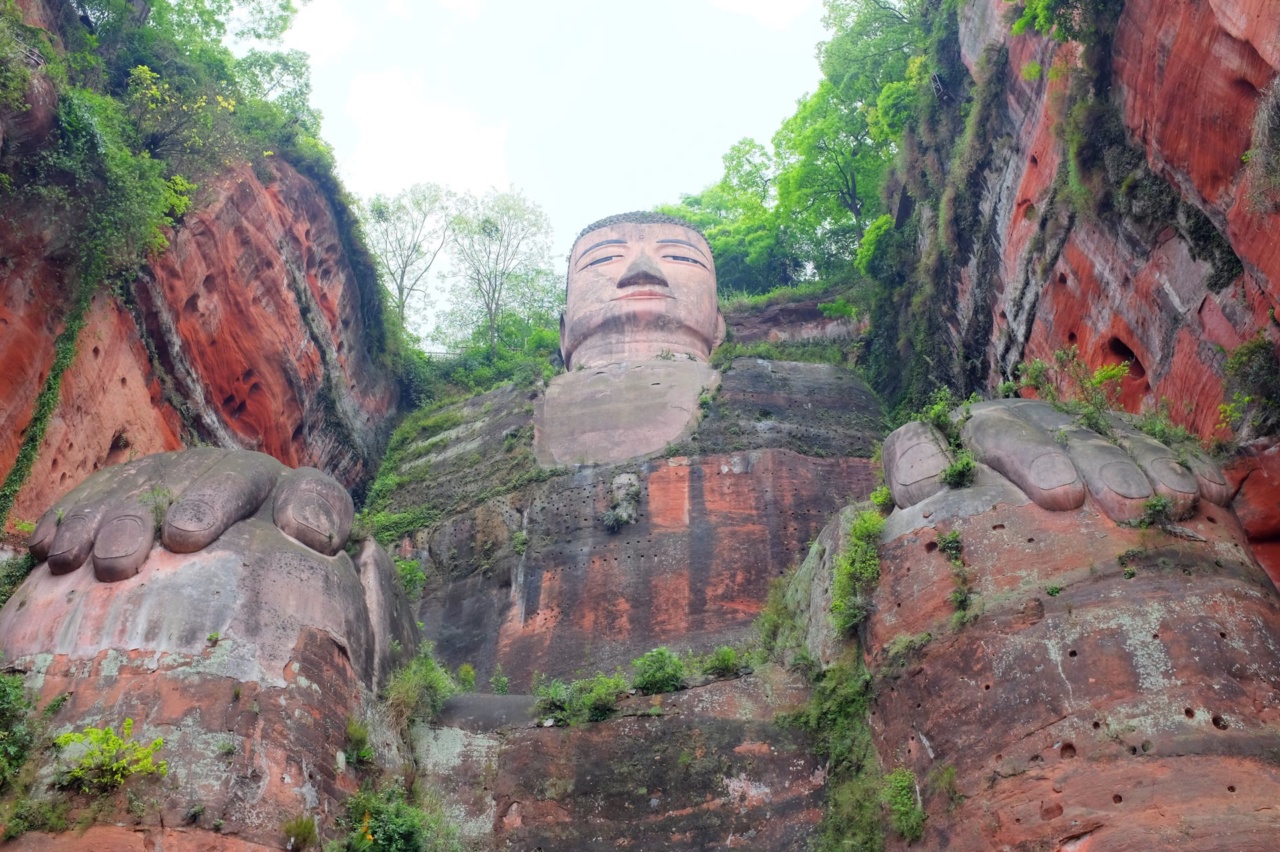
Add temple grounds or other heritage stops according to the paths and ticket coverage available that day. Lingbao Pagoda, the Mahao cliff tombs and Wuyou Temple belong to the wider heritage context described by UNESCO; they need not all be part of a short Buddha-focused visit. Ask the visitor centre about a suitable route if you need to avoid steep stairs, and confirm access to each stop you particularly want to see.
A river view is a separate experience
The attraction of river viewing is the relationship of the complete figure to its cliff and the confluence. It complements close land views rather than replacing the temples or the carving details. Ask the operator about boarding access, the route, time on the water and the day’s return pier before committing to an onward connection.
River conditions can change operations and boarding arrangements. Reconfirm service before travelling to the pier and follow crew instructions and safety requirements. If the boat is suspended, keep a land visit as an option only if its open routes suit your mobility and interests; otherwise rearrange the outing rather than treating either experience as guaranteed.
From Chengdu: book the railway journey and the last leg
Search 12306 for your date and exact stations, using 乐山 for Leshan. Compare the actual Chengdu departure station, train time, fare and return seats, then add travel from your accommodation to the station and from Leshan station to your chosen entrance or pier. A train duration is not the full door-to-door journey. Save the destination’s Chinese name and map location for the local transfer.
The official 12306 English service accepts valid foreign passports under the applicable rules. Use accurate passenger details, carry the original identity document used to book and leave time for security and ticket checks. If you choose a driver or an organized excursion, agree on the drop-off, pickup, total price, included tickets and time allowed at each stop. Ask directly about optional shopping or additional visits rather than assuming every tour has the same itinerary.
Time, weather and a comfortable visit
As a planning choice, reserve a day from Chengdu if you want both land and river experiences. For a single viewpoint, build the schedule from the confirmed journey, admission or boarding arrangements, walking you want to do and a return buffer. Check the current route and queue information before joining the descent, and set a latest time to leave for your booked train.
Use the local forecast and scenic notices to choose your day. Bring drinking water, rain protection and shoes with good grip; wet paths deserve a slower pace. Respect barriers, avoid climbing or touching the carving and keep temple visits quiet. The authority reported bilingual maps, audio-guide provision and a foreign-visitor service station in July 2025. Ask about the services and guiding language available for your visit.
Keep Mount Emei as a separately planned destination
Mount Emei adds mountain scenery and Buddhist temple traditions to the same World Heritage story. A practical two-day option is Leshan first, an overnight in a suitable base and the selected Emei route the next day. Choose the mountain entrance, walking or transport plan and onward travel before booking accommodation. Use our Mount Emei guide to plan that separate mountain visit.
Sharing a World Heritage designation does not mean sharing an admission ticket. Check the coverage and conditions of any offered package, and compare the total against separately selected visits. If you have only one day, prioritise the experience you most want rather than relying on transfers or mountain transport to make two substantial visits effortless.
Sources and background
These sources support the topics listed below, not every statement or current price in this article.
- [1] UNESCO World Heritage Centre: Mount Emei and Leshan Giant Buddha World Heritage property. Retrieved October 5, 2026. History, Culture, Nature
- [2] Xinhua News Agency: Leshan Giant Buddha: construction, assembled details and drainage research. Retrieved October 5, 2026. History, Culture
- [3] Leshan Giant Buddha Scenic Area Management Committee: November 2025 river excursion and pier operation notice. Retrieved October 5, 2026. Transport, Admission, Opening hours, Safety
- [4] China Railway Customer Service Center: China Railway ticket booking, foreign passports and station checks. Retrieved October 5, 2026. Transport, Registration
- [5] Leshan Giant Buddha Cultural Heritage Protection Management Committee: July 2025 account of Leshan Giant Buddha conservation. Retrieved October 5, 2026. History, Culture
- [6] Leshan Giant Buddha Cultural Heritage Protection Management Committee: July 2025 visitor services, bilingual maps and audio guides. Retrieved October 5, 2026. Access, Culture
- [7] Leshan Giant Buddha Cultural Heritage Protection Management Committee: 2026 group tour policy and distinct land and river products. Retrieved October 5, 2026. Admission
Frequently Asked Questions
Choose land for closer statue views and temple grounds; choose the river for the whole figure against its cliff. If you want both, allow a flexible Leshan day. Ask about cliff-route access and boat boarding before deciding.
Get the land and boat prices, admission windows and ticket coverage for your date. A 9 November 2025 authority notice listed daytime river viewing at RMB 70 and 08:00 to 17:00; those dated figures are a reference, not your booking confirmation.
Use the pier on your actual booking. A November 2025 notice moved daytime boarding to Wuyouba while suspending Jiazhou Ferry Pier and the crossing service. Confirm current arrangements and send the exact Chinese name and map location to your driver.
Search 12306 for your date and Leshan (乐山), select the actual departure station and return seats, then arrange the transfer to the chosen entrance or pier. Carry the original document used for the rail booking and allow time for station checks.
A day from Chengdu is a useful planning allocation for both experiences. For one, add the confirmed journey, entry or boarding, selected walking and return buffer. Check access and queue information before committing to the descent.
Ask the visitor centre about land routes suited to your needs and the boat operator about pier access and boarding. Avoid assuming either the cliff route or the boat is step-free. Choose only a route whose arrangements have been confirmed for you.
Drainage channels and passages help manage water, but preservation also involves repairs and protection of weathered sandstone. The construction includes assembled hair curls as well as rock carving; it is not an entirely unchanged monument made from one block.
Yes, as separately planned visits. Giving the mountain its own day lets you choose a meaningful temple or mountain route. Book the transfer, mountain entrance and any transport separately, and check exactly what any package ticket includes.