Mount Emei: summit access, tickets and safe visit planning
Contents
- 1. Choose your visit before booking
- 2. Construction and summit reservations
- 3. Admission, buses and cable cars
- 4. Getting to the correct departure point
- 5. Walking routes and night restrictions
- 6. Altitude, weather and overnight stays
- 7. Wildlife and temple etiquette
- 8. Allow time for a flexible return
- 9. Sources and background
- 10. Frequently Asked Questions
Choose your visit before booking
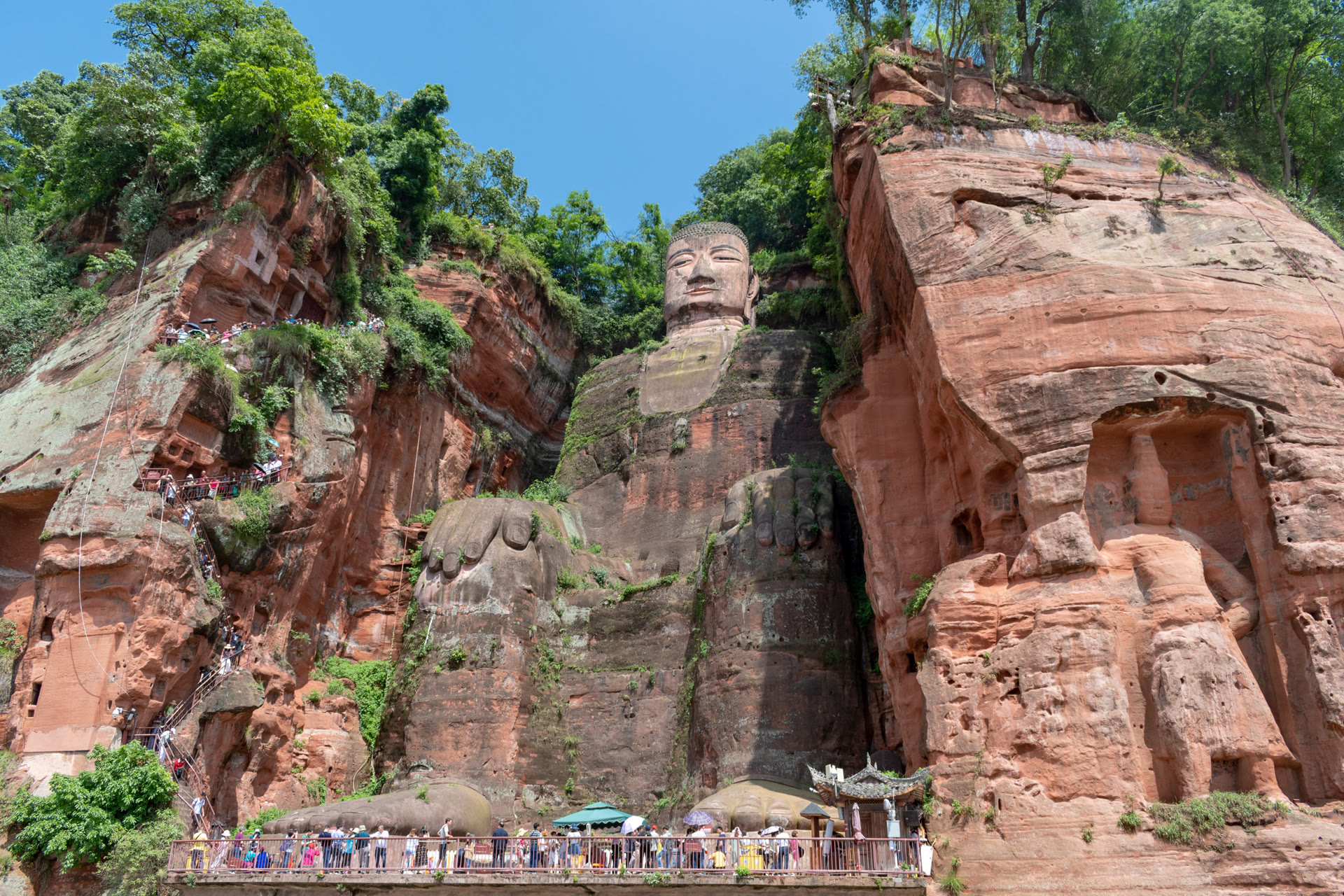
Choose between a lower or middle mountain visit focused on temples and permitted walking paths, and a separate high-mountain itinerary to the Golden Summit, Jinding. They involve different transport, walking and altitude demands. A summit ticket is not a promise of clear views or an unrestricted hiking route. UNESCO recognises Mount Emei and the Leshan Giant Buddha together for their Buddhist heritage and natural setting; this does not make them one visitor site or one ticket.
Things to Do
Offers are only loaded from GetYourGuide after you click. GetYourGuide can then process your IP address and set cookies. Privacy Policy
GetYourGuide partner offers. GoAsia may earn a commission if you book through these offers. Check whether tickets or transfers are included, and follow the attraction's official booking and admission rules.
Construction and summit reservations
The scenic-area authority announced on 22 May 2026 that construction at Leidongping parking and station facilities and upgrades to the Golden Summit cable car reduce high-mountain transport capacity. Its notice limits Golden Summit admission to 8,000 tickets daily from 23 May, also limits round-trip high-mountain bus tickets and retains timed entry reservations. It expects the projects to finish in 2027, not on a guaranteed date. Check the current notice and actual availability for your visit. The announcement does not close the entire mountain.
Leidongping boarding and waiting functions move to a temporary area identified on site. The old station building is not available for overnight rest. Bus dispatch can change with visitor flow. Confirm your actual boarding point, reserved time slot, return service and cable-car operation rather than following an old station photograph or a fixed online timetable.
Admission, buses and cable cars
The official fee directory published on 8 January 2026 lists admission at 160 yuan per person in high season and 110 in low season. Golden Summit cable-car fares are separate: high season 65 yuan up and 55 down; low season 30 up and 20 down. Wannian cable-car fares are also separate: high season 65 up and 45 down; low season 30 up and 20 down. These are published tariff standards, not a guaranteed checkout price for every travel date, age group or package. Verify the applicable season, eligibility and exact product before paying.
The same directory lists the Baoguo or Huangwan to Leidongping sightseeing-bus round trip at 90 yuan per person. Other listed round trips include lower-area services at 40 yuan, Wannian or Wuxiangang to Leidongping at 70, and Zero Kilometre to Leidongping at 50. Different boarding points and route products are not interchangeable. As a high-season adult illustration only, admission 160, that 90-yuan bus and Golden Summit cable car 65 up plus 55 down total 370 yuan before other expenses. Construction, availability and the actual product can change what you can buy. Include onward transfers, meals and any separately charged temple or activity in your budget.
Getting to the correct departure point
For travel from Chengdu, distinguish Emeishan station from Emei station and the town from the scenic-area boarding facilities. Confirm the actual train, arrival station, last-mile transfer and departure point in the operator booking system. The primary notices cited here do not establish a current train timetable, taxi fare or universal private-car access rule. For a summit visit, book the correct permitted bus and cable-car products and allow for walking between stops. Their existence does not establish that every part is step-free.
Walking routes and night restrictions
The official night-visit notice prohibits visits from 18:00 to 06:00 in its specified controlled paths and non-open areas, including the Qingyin and Wannian access routes. These checkpoints stop uphill access at night; Xixiangchi restricts downhill passage during that period. Pedestrians are prohibited on the road from Zero Kilometre to Leidongping at all times. A separate notice prohibits unauthorised entry, hiking and camping in non-open areas. This is not permission to walk the entire bus road or bypass a closed checkpoint. Follow current signs and staff instructions.
Do not plan a pre-dawn ascent on a prohibited path. If considering a sunrise visit or a mountain hotel, obtain confirmation of the permitted access arrangement, opening times, actual accommodation and return before booking. A hotel reservation does not waive route restrictions. Clouds, closures and transport capacity may prevent the view you hoped for; staying overnight does not guarantee sunrise scenery.
Altitude, weather and overnight stays
A bus or cable car reduces walking effort, not the health risks of rapid ascent. CDC guidance favours gradual ascent and warns against going higher when symptoms occur. Overnighting high on the mountain is not an automatic acclimatisation plan. Discuss a suitable itinerary with a clinician if you have relevant health conditions. If symptoms worsen at rest, descend and seek medical help. Confusion, difficulty walking or breathlessness at rest require urgent medical help and safe descent. Do not dismiss these signs as ordinary tiredness.
Use the current weather and closure information to choose footwear, rain protection and warm layers. Lower and upper areas may require different preparation. Do not rely on a promise that a named month is dry, quiet or ideal for cloud views. A walking pole can assist balance on a permitted trail, but is not a weapon or a proven way to deter macaques. Keep away from exposed edges and do not continue merely because a prepaid ticket makes turning back disappointing.
Wildlife and temple etiquette
The authority asks visitors to keep a safe distance from the Tibetan macaques and not feed, tease or harm them. They are wild animals, not tame photo props. Keep children close and avoid contact rather than testing advice about smiling, eye contact or displaying empty hands. CDC advises immediate washing with soap and running water and prompt medical care after a bite or scratch, even if it seems minor or you were previously vaccinated against rabies. In temples, follow local photography and worship rules and ask before taking photographs where permission is unclear.
Allow time for a flexible return
Choose a realistic set of open temples, paths or summit sights rather than promising a complete mountain visit in a fixed number of hours. Allow for transfers, queues, permitted walking, breaks and the last confirmed return connection. Leshan is a separate journey: UNESCO describes its eighth-century, 71-metre Buddha, but the heritage listing does not confirm present admission, boat services or combined booking. Visit it separately unless your actual transport and tickets leave adequate time.
Sources and background
These sources support the topics listed below, not every statement or current price in this article.
- [1] Mount Emei Scenic Area Management Committee: May 2026 summit capacity, timed reservations and temporary Leidongping facilities. Retrieved October 5, 2026. Access, Transport, Registration
- [2] Mount Emei Scenic Area Management Committee: January 2026 published admission, cable car and sightseeing bus tariff standards. Retrieved October 5, 2026. Admission, Transport
- [3] Mount Emei Scenic Area Management Committee: Official night visit and Zero Kilometre to Leidongping pedestrian restrictions. Retrieved October 5, 2026. Access, Opening hours, Safety
- [4] Mount Emei Scenic Area Management Committee: Prohibition of unauthorised hiking and camping in non-open areas. Retrieved October 5, 2026. Access, Safety
- [5] Mount Emei Scenic Area Management Committee: Official visitor conduct and protection of Tibetan macaques. Retrieved October 5, 2026. Nature, Safety
- [6] UNESCO World Heritage Centre: Mount Emei and Leshan Buddhist heritage and natural landscape. Retrieved October 5, 2026. History, Culture, Nature
- [7] Centers for Disease Control and Prevention: Avoiding animal contact and medical care after bites or scratches. Retrieved October 5, 2026. Health, Safety
- [8] Centers for Disease Control and Prevention: Gradual ascent, altitude illness and urgent descent indications. Retrieved October 5, 2026. Health, Safety
Frequently Asked Questions
The scenic-area authority announced on 22 May 2026 that construction at Leidongping parking and station facilities and upgrades to the Golden Summit cable car reduce high-mountain transport capacity. Its notice limits Golden Summit admission to 8,000 tickets daily from 23 May, also limits round-trip high-mountain bus tickets and retains timed entry reservations. It expects the projects to finish in 2027, not on a guaranteed date. Check the current notice and actual availability for your visit. The announcement does not close the entire mountain. Leidongping boarding and waiting functions move to a temporary area identified on site. The old station building is not available for overnight rest. Bus dispatch can change with visitor flow. Confirm your actual boarding point, reserved time slot, return service and cable-car operation rather than following an old station photograph or a fixed online timetable.
The official fee directory published on 8 January 2026 lists admission at 160 yuan per person in high season and 110 in low season. Golden Summit cable-car fares are separate: high season 65 yuan up and 55 down; low season 30 up and 20 down. Wannian cable-car fares are also separate: high season 65 up and 45 down; low season 30 up and 20 down. These are published tariff standards, not a guaranteed checkout price for every travel date, age group or package. Verify the applicable season, eligibility and exact product before paying. The same directory lists the Baoguo or Huangwan to Leidongping sightseeing-bus round trip at 90 yuan per person. Other listed round trips include lower-area services at 40 yuan, Wannian or Wuxiangang to Leidongping at 70, and Zero Kilometre to Leidongping at 50. Different boarding points and route products are not interchangeable. As a high-season adult illustration only, admission 160, that 90-yuan bus and Golden Summit cable car 65 up plus 55 down total 370 yuan before other expenses. Construction, availability and the actual product can change what you can buy. Include onward transfers, meals and any separately charged temple or activity in your budget.
For travel from Chengdu, distinguish Emeishan station from Emei station and the town from the scenic-area boarding facilities. Confirm the actual train, arrival station, last-mile transfer and departure point in the operator booking system. The primary notices cited here do not establish a current train timetable, taxi fare or universal private-car access rule. For a summit visit, book the correct permitted bus and cable-car products and allow for walking between stops. Their existence does not establish that every part is step-free. Leidongping boarding and waiting functions move to a temporary area identified on site. The old station building is not available for overnight rest. Bus dispatch can change with visitor flow. Confirm your actual boarding point, reserved time slot, return service and cable-car operation rather than following an old station photograph or a fixed online timetable.
The official night-visit notice prohibits visits from 18:00 to 06:00 in its specified controlled paths and non-open areas, including the Qingyin and Wannian access routes. These checkpoints stop uphill access at night; Xixiangchi restricts downhill passage during that period. Pedestrians are prohibited on the road from Zero Kilometre to Leidongping at all times. A separate notice prohibits unauthorised entry, hiking and camping in non-open areas. This is not permission to walk the entire bus road or bypass a closed checkpoint. Follow current signs and staff instructions. Do not plan a pre-dawn ascent on a prohibited path. If considering a sunrise visit or a mountain hotel, obtain confirmation of the permitted access arrangement, opening times, actual accommodation and return before booking. A hotel reservation does not waive route restrictions. Clouds, closures and transport capacity may prevent the view you hoped for; staying overnight does not guarantee sunrise scenery.
A bus or cable car reduces walking effort, not the health risks of rapid ascent. CDC guidance favours gradual ascent and warns against going higher when symptoms occur. Overnighting high on the mountain is not an automatic acclimatisation plan. Discuss a suitable itinerary with a clinician if you have relevant health conditions. If symptoms worsen at rest, descend and seek medical help. Confusion, difficulty walking or breathlessness at rest require urgent medical help and safe descent. Do not dismiss these signs as ordinary tiredness.
The authority asks visitors to keep a safe distance from the Tibetan macaques and not feed, tease or harm them. They are wild animals, not tame photo props. Keep children close and avoid contact rather than testing advice about smiling, eye contact or displaying empty hands. CDC advises immediate washing with soap and running water and prompt medical care after a bite or scratch, even if it seems minor or you were previously vaccinated against rabies. In temples, follow local photography and worship rules and ask before taking photographs where permission is unclear.
Choose a realistic set of open temples, paths or summit sights rather than promising a complete mountain visit in a fixed number of hours. Allow for transfers, queues, permitted walking, breaks and the last confirmed return connection. Leshan is a separate journey: UNESCO describes its eighth-century, 71-metre Buddha, but the heritage listing does not confirm present admission, boat services or combined booking. Visit it separately unless your actual transport and tickets leave adequate time.