Minneriya elephant gathering: plan a wildlife safari
Contents
- 1. Seasonal appeal without a sighting guarantee
- 2. Compare the complete safari cost
- 3. Plan pickup, park access and the return
- 4. Minneriya, Kaudulla and other wildlife choices
- 5. Observe wildlife without demanding a close encounter
- 6. Connect the safari with the wider trip
- 7. Sources and background
- 8. Frequently Asked Questions
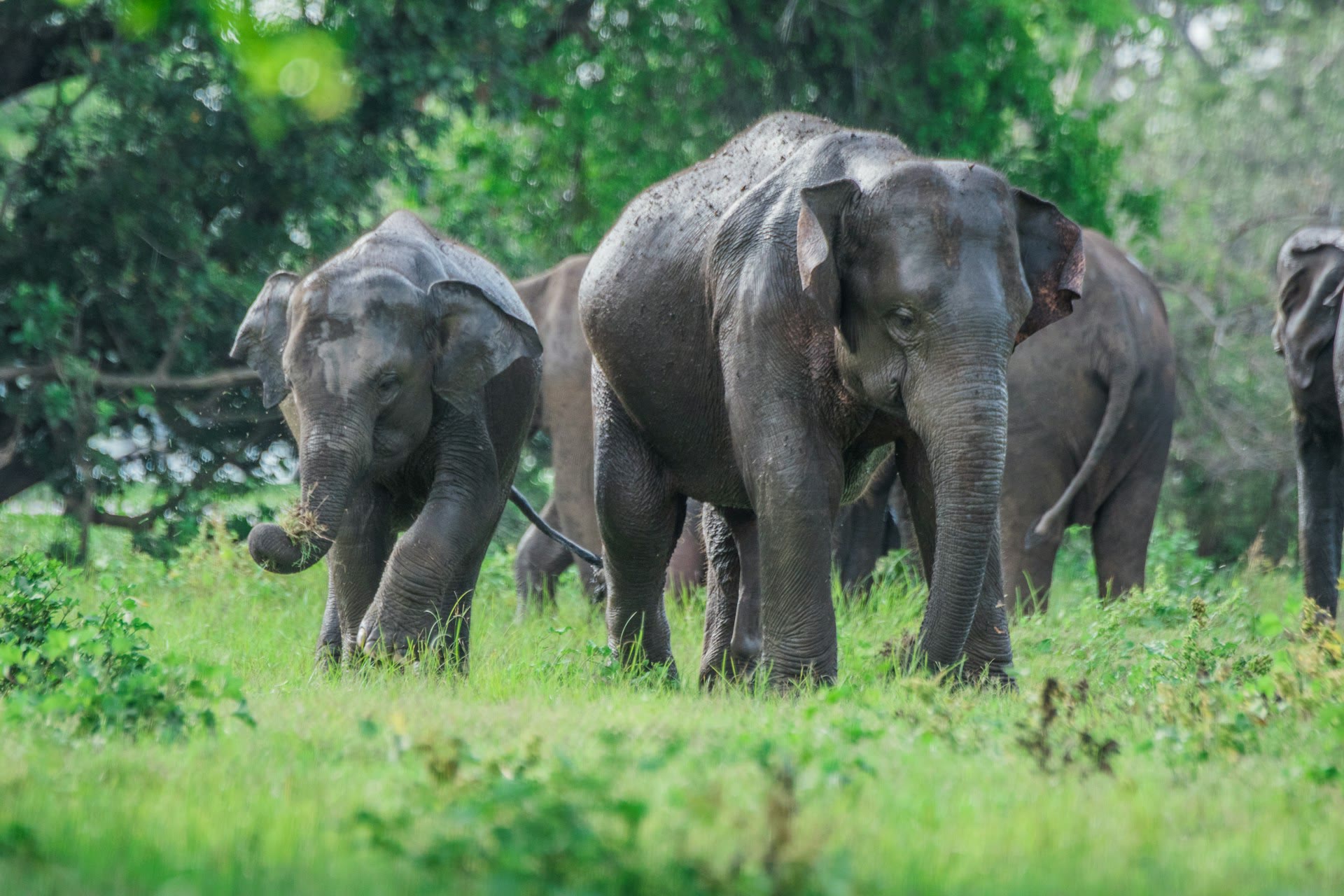
Minneriya is one of the great wildlife spectacles of Sri Lanka: in the dry season, elephants come down to the reservoir shore to graze on fresh grass, sometimes in herds of hundreds. The size of the gathering changes from year to year, so book the outing for the landscape and the wildlife as a whole, not for a promised herd size.
Sri Lanka Tourism describes a national park designated in 1997 around the Minneriya reservoir. As the water recedes in the dry season, lush grass is exposed on the banks, and small herds from surrounding parks travel to Minneriya and gather into massive herds.[1]
Seasonal appeal without a sighting guarantee
May to October is a popular time to visit because of the elephant gathering.[1] The park is also worth a visit outside the gathering months: elephants are a major attraction year round, though not in the same numbers.[1]
The gathering depends on water. The Department of Wildlife Conservation reports that since 2019, gradual water releases from the Moragahakanda Project have filled the Minneriya tank early in the dry season. When the tank is nearly full by September, elephants no longer gather at the site as they once did.[2] Ask your operator or park staff where elephants have been seen recently, and plan the outing around those conditions.
An afternoon drive is a common choice, but permitted entry and return times matter more than any single hour. Keep a buffer in the schedule and let the guide choose where to park.
Things to Do
Offers are only loaded from GetYourGuide after you click. GetYourGuide can then process your IP address and set cookies. Privacy Policy
GetYourGuide partner offers. GoAsia may earn a commission if you book through these offers. Check whether tickets or transfers are included, and follow the attraction's official booking and admission rules.
Compare the complete safari cost
Entry to a national park requires a permit and payment of the prescribed fee, in line with its conditions.[3] Ask for the actual admission category and total before you pay, and for an itemised quote that shows the following.
- Admission and permit: which park, which visitor category and which charges.
- Jeep and driver: a whole vehicle or a shared seat, and how many guests share it.
- Additional charges: taxes, service, vehicle entry and any required guiding.
- Hotel transfer: both legs, waiting time and any extra distance.
Compare quotes for the same park, date, passenger count and services: a whole-jeep price is not a per-person price. Ask about payment currency, cancellation and weather-related changes, and agree any change of park before you pay.
Plan pickup, park access and the return
Habarana, Sigiriya and Dambulla all work as bases. Tell your operator where you are staying so the pickup and the gate match. Request an itinerary that separates hotel pickup, travel to the gate, permit formalities, time inside the park and the return.
Allow a buffer before a train, intercity bus or another booked visit, and agree the return destination in advance.
Minneriya, Kaudulla and other wildlife choices
Minneriya and Kaudulla National Parks together host one of the largest recurring congregations of Asian elephants in the world, and they sit within a connected protected-area network that also includes the Minneriya-Kaudulla Elephant Corridor, Minneriya-Giritale Nature Reserve and Angammedilla National Park.[2] Choose between them using current access and recent sightings.
- Minneriya: the reservoir landscape and seasonal elephant gathering.
- Kaudulla: ask why it is proposed and confirm its own access and charges, as one permit does not cover both parks.
- Udawalawe: a separate journey and outing, covered in our Udawalawe planning guide.
- Birdlife: the park has registered more than 170 bird species, and the reservoir attracts large water birds including the Painted Stork and Spot-billed Pelican.[1]
- Other animals: sambar deer, spotted deer, toque macaques, purple-faced leaf monkeys, mugger crocodiles and water monitors.[1]
Observe wildlife without demanding a close encounter
Never ask a driver to chase elephants, block their route or move closer for a photograph. Follow the distance and movement instructions given by park staff, stay in the vehicle where required and do not feed animals.
Bring binoculars, drinking water, sun protection and rain protection. Check the Department of Meteorology forecasts and warnings, and ask about rough-road tolerance and access needs before booking.
Connect the safari with the wider trip
A wildlife outing combines well with Polonnaruwa's ancient city, but plan the heritage site and the safari as separate appointments with their own admission and travel time. Use our Sri Lanka travel overview to organise the wider route.
Sources and background
Numbers in the text such as [1] refer to these sources.
- [1] Sri Lanka Tourism Development Authority: Minneriya National Park. Retrieved October 21, 2026.
- [2] Department of Wildlife Conservation, Sri Lanka: Wildlife magazine 2026: the seasonal elephant gathering and reservoir management. Retrieved October 21, 2026.
- [3] Department of Wildlife Conservation, Sri Lanka: National Park. Retrieved October 21, 2026.
Frequently Asked Questions
May to October is the popular period, when the reservoir recedes and grass is exposed on the banks. Since 2019, early filling of the tank has changed the gathering in some years, so ask about recent conditions for your date.
Afternoon drives are common, but no single hour guarantees a sighting. Ask about recent observations and about the permitted entry and return times.
Get a dated, itemised quote for the park, visitor categories, passenger count, jeep and transfers. Clarify which amounts are per person and which cover the whole vehicle, plus taxes and other charges.
Ask about current access and recent wildlife sightings at each park, then consider your pickup location and return plan. The parks belong to a connected elephant landscape, but one permit does not cover both.
Follow park-staff instructions and do not chase, surround, feed or block animals. A close encounter is not an entitlement.
Yes. Ask your accommodation or operator for the pickup, the park and gate, the return destination and the complete price, and agree any changes before you pay.
Yes. The park is worth a visit outside the gathering months, with elephants year round, more than 170 bird species and other wildlife.