Phnom Kulen National Park: Cambodia's Sacred Mountain and Birthplace of the Khmer Empire

Phnom Kulen National Park: Cambodia's Sacred Mountain and Birthplace of the Khmer Empire

Last updated: March 18, 2026

Every stone that built Angkor Wat came from this mountain. In 802 CE, King Jayavarman II stood on this plateau and declared himself universal monarch, founding the Khmer Empire in a ceremony that would shape Southeast Asian history for the next six centuries. Phnom Kulen is not just a national park with waterfalls and jungle trails - it is the spiritual and historical origin point of Angkorian civilization, and it remains one of the most sacred places in Cambodia.

Located about 50 km northeast of Siem Reap, Phnom Kulen ("Mountain of the Lychees") rises 487 meters above the surrounding plains. The mountain's plateau hides an extraordinary collection of ancient sites - a massive reclining Buddha carved into the bedrock, a riverbed sculpted with thousands of Hindu sacred symbols, waterfalls that Cambodians consider holy, and the buried remains of Mahendraparvata, the first capital city of the Khmer Empire, only fully mapped in recent years using laser scanning technology.

Most visitors to the Angkor region never make it to Phnom Kulen, which is a missed opportunity. While Angkor Wat and the Bayon get the crowds, this mountain tells the story of where it all began. The combination of deep historical significance, natural beauty, and the refreshing change from flat temple-hopping makes Phnom Kulen one of the most rewarding day trips from Siem Reap.

What to See at Phnom Kulen

The Reclining Buddha

The largest and most visited site on Phnom Kulen is a massive reclining Buddha carved directly into a sandstone boulder at the summit of the mountain. The sculpture dates to the 16th century and measures about 8 meters in length. It sits within an active Buddhist monastery complex, and monks maintain a small shrine beside it. The carving is remarkably well-preserved, with the Buddha's serene expression still clearly defined after centuries of weather exposure. A short climb up stone steps from the parking area leads to the site, where you can also enjoy panoramic views over the forested plateau.

The River of a Thousand Lingas (Kbal Spean)

This is Phnom Kulen's most remarkable ancient site. A section of the Siem Reap River's headwaters has been carved with hundreds of lingas (phallic symbols representing the Hindu god Shiva) and yonis (female symbols) directly into the riverbed. The carvings date to the 11th and 12th centuries, and the flowing water over these sacred symbols was believed to bless the rice paddies downstream and ensure the fertility of the kingdom.

Walking along the riverbed, you can see lingas arranged in rows beneath clear shallow water, interspersed with carved images of Vishnu, Brahma, and other Hindu deities. The site is particularly atmospheric during the rainy season when the water level is higher and the carvings shimmer beneath the current. During the dry season, more carvings are exposed but the river may be reduced to a trickle in places.

The Waterfall

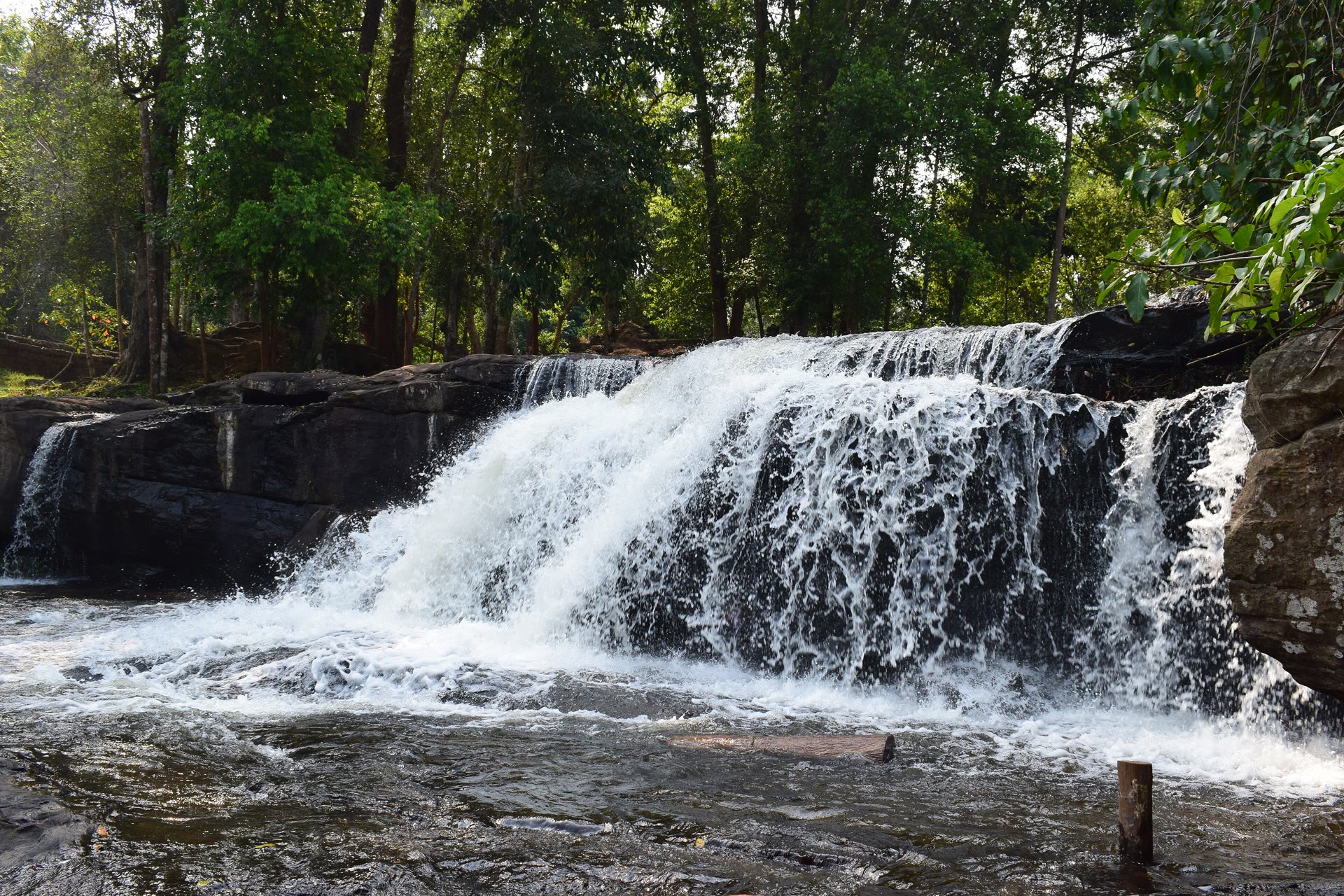
Phnom Kulen's two-tiered waterfall is one of the park's main draws, especially for Cambodian families on weekends and holidays. The upper tier is broad and flat, creating a natural pool that is perfect for wading and splashing, particularly suitable for families with young children. The lower tier drops more dramatically and has a deeper swimming pool at its base.

The waterfall is at its most impressive from October through January, when the rainy season has filled the mountain's streams and the cascade is powerful. During the dry season (March to May), the flow diminishes significantly. Swimming is permitted and encouraged - this is as much a recreation spot as a scenic attraction. Food vendors set up along the paths, selling grilled chicken, sticky rice, and fruit.

Mahendraparvata - The Lost City

Beneath the forest canopy of Phnom Kulen lies the remains of Mahendraparvata, the capital established by Jayavarman II when he founded the Khmer Empire. For centuries, the city was known only from inscriptions. Then in 2012, an international archaeological team used airborne LIDAR (laser scanning) technology to peer through the jungle and revealed a massive, formally planned urban grid covering the mountain plateau.

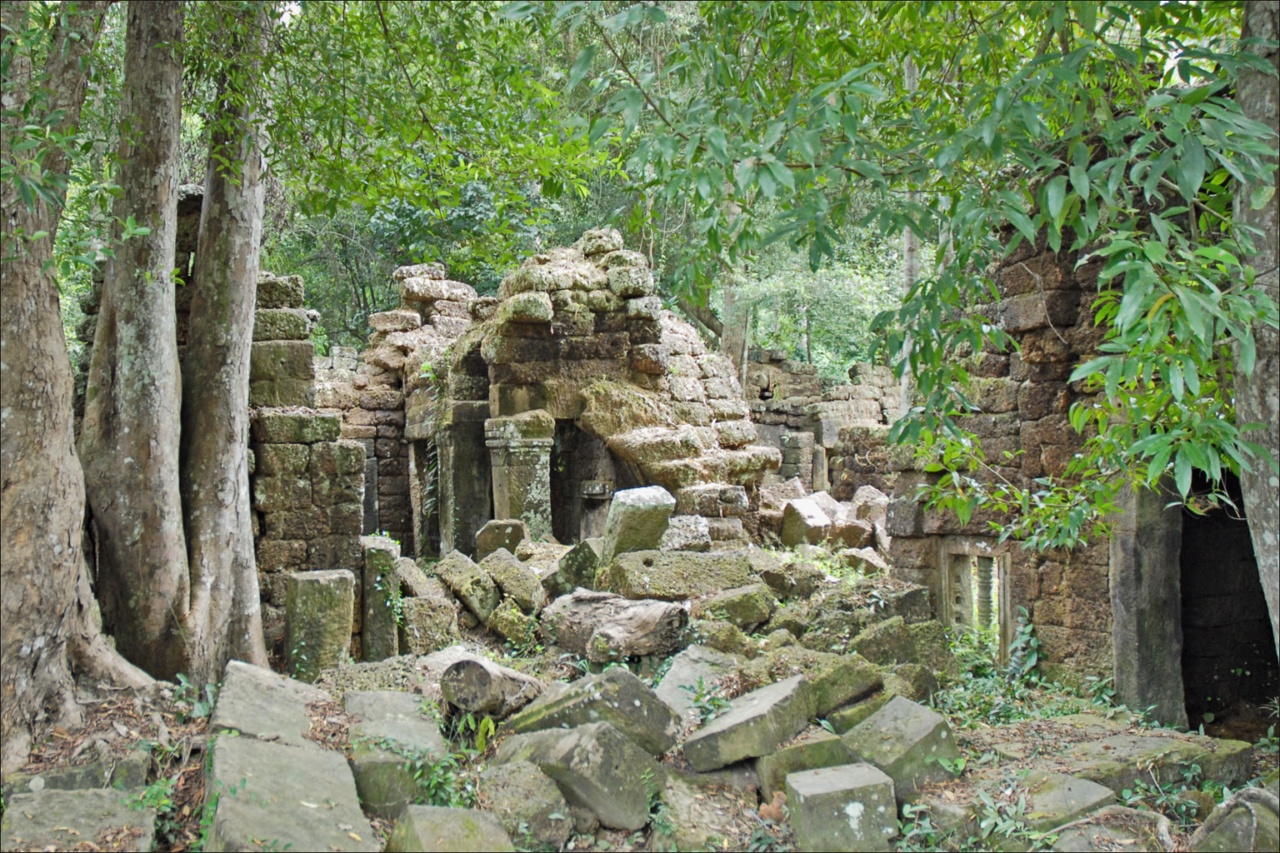
The scans showed an extensive network of earthen dikes, water management infrastructure, temple foundations, and residential areas - evidence of a sophisticated city that predated Angkor. While most of the remains are buried or overgrown and not easily visible to casual visitors, several temple ruins and carved boulders are accessible along the mountain trails. The discovery confirmed Phnom Kulen's importance as the true birthplace of Angkorian civilization.

Sandstone Quarries

The southeast foothills of Phnom Kulen contain the quarries that supplied sandstone for virtually all of the Angkor temples. The quarrying industry operated from the 9th to the 12th century, and partially cut blocks and tool marks are still visible at some sites. Knowing that every carved devata and bas-relief at Angkor began as raw stone from this mountain adds a tangible connection between Phnom Kulen and the temples most visitors have already seen.

Things to Do

Getting to Phnom Kulen

Phnom Kulen is located about 50 km northeast of Siem Reap. The drive takes approximately 1.5 to 2 hours depending on road conditions and traffic at the park entrance.

Critical: One-Way Road System

The mountain road operates on a strict one-way traffic system. Vehicles are only permitted to drive up the mountain in the morning, roughly until noon. After noon, traffic is only allowed to drive down. This means you must arrive at the park entrance and begin your ascent before 11:00 AM at the latest, or you will be turned away. Plan accordingly - leaving Siem Reap by 8:00 to 8:30 AM is recommended.

Transport OptionCostNotes
Private car/taxi$50 - $70Round trip from Siem Reap with driver. Most comfortable option. Driver waits on the mountain.
Organized tour$30 - $60Includes transport, guide, sometimes lunch. Entrance fee usually separate.
Tuk-tuk$35 - $50Possible but slow and uncomfortable on the mountain road. Car is preferred for this trip.
Motorbike$10 - $15/day rentalThe mountain road is paved but steep. Only for experienced riders.

Admission and Practical Details

  • Entrance fee: $20 for foreign visitors. Cambodian citizens enter free with ID. Tickets can be purchased at the gate or booked online in advance.
  • Opening hours: The park is generally open from 6:00 AM to around 5:00 PM. Remember the one-way road system - you must head up before noon.
  • Phnom Kulen is NOT included in the Angkor Pass. The $20 entrance fee is separate and must be paid at the park gate.
  • Time needed: Plan for a full day trip. With travel time (3-4 hours round trip) and exploration of the main sites, you will need 6 to 8 hours total.
  • Facilities: Basic food stalls and restrooms are available near the waterfall area. Bring water, sunscreen, and a hat for the exposed sections of the walk.

When to Visit

  • Best months: October through January, when the rainy season has ended but the waterfall is still powerful, the landscape is green, and the river carvings are partially submerged for dramatic effect. Temperatures are also more comfortable in these months.
  • Dry season (February to May): Hotter and dustier, with a reduced waterfall flow. The river carvings are more fully exposed, which can be better for photography but less visually striking.
  • Rainy season (June to September): The mountain is at its most lush, but heavy rain can make trails slippery and muddy. The waterfall is at maximum power. Some trails may be partially inaccessible.
  • Weekends and Cambodian holidays: The waterfall area gets very crowded with local families. Weekday visits are significantly quieter.

Tips for Visiting Phnom Kulen

  • Leave Siem Reap early. Departing by 8:00 AM ensures you reach the park entrance well before the noon cutoff for ascending traffic. Arriving early also means cooler temperatures and smaller crowds at the main sites.
  • Wear modest clothing. The reclining Buddha is within an active monastery. Cover your shoulders and knees when visiting religious sites. If you plan to swim at the waterfall, Cambodians typically swim fully clothed or in modest swimwear - bikinis and shirtless swimming draw disapproving looks.
  • Bring good footwear. The paths to the river carvings and some temple ruins involve uneven terrain, river rocks, and potentially muddy trails. Sandals with grip work for dry conditions, but proper closed-toe shoes are better during or after rain.
  • Do not step on the river carvings. The lingas and other carvings in the riverbed are irreplaceable ancient artifacts. Walk carefully around them, not on them. Guides will show you where to step safely.
  • Combine thoughtfully with your Angkor schedule. Phnom Kulen requires a full day, so plan it separately from your Angkor temple visits. Many travelers do Angkor for two or three days and then Phnom Kulen on a fourth day. Visiting Phnom Kulen first actually enhances the Angkor experience, since you will understand where the stone and the civilization originated.
  • Hire a guide. A knowledgeable guide brings the historical sites to life, especially Mahendraparvata and the river carvings, which are easy to walk past without understanding their significance. Guides can be arranged through your hotel or tour operator in Siem Reap for $20 to $30.
  • Bring cash. There are no ATMs on the mountain. The entrance fee, food, and any guide fees must be paid in cash (USD or riel).

Phnom Kulen sits at the intersection of Cambodia's spiritual identity and its greatest archaeological heritage. For travelers who want to understand Angkor beyond the postcard views, this sacred mountain offers the origin story that makes everything else fall into place. More guides to Cambodia's temple circuit and broader Southeast Asian travel are available on GoAsia.cc.

Frequently Asked Questions

Why is Phnom Kulen considered the birthplace of the Khmer Empire?

In 802 CE, King Jayavarman II performed a consecration ceremony on Phnom Kulen declaring himself universal monarch and establishing independence from Javanese influence. This event is considered the founding moment of the Khmer Empire, which went on to build Angkor Wat and rule much of mainland Southeast Asia. The mountain also housed Mahendraparvata, the empire's first capital city.

How much does it cost to visit Phnom Kulen National Park?

The entrance fee is $20 for foreign visitors, payable in cash at the park gate or bookable online. Cambodian citizens enter free. This fee is separate from the Angkor Pass. Add $50 to $70 for a private car round trip from Siem Reap, or $30 to $60 for an organized tour.

How do I get to Phnom Kulen from Siem Reap?

The park is about 50 km northeast of Siem Reap, roughly 1.5 to 2 hours by car. The mountain road is one-way only - vehicles must ascend before noon and descend after noon. Leave Siem Reap by 8:00 to 8:30 AM to ensure you arrive before the cutoff. A private car with driver is the most comfortable option.

What is the one-way road rule at Phnom Kulen?

The mountain road allows upward traffic only until approximately noon, and downward traffic only from noon onward. If you arrive at the park entrance after the morning cutoff, you will be turned away. This system exists because the road is too narrow for two-way traffic. Plan your departure from Siem Reap accordingly.

Can I swim at the Phnom Kulen waterfall?

Yes, swimming is permitted and popular at both tiers of the waterfall. The upper tier has a broad, shallow pool ideal for families, while the lower tier offers a deeper swimming area. Dress modestly - Cambodians swim in clothing or conservative swimwear, and revealing swimsuits are considered inappropriate.

Is Phnom Kulen included in the Angkor Pass?

No, Phnom Kulen has its own separate $20 entrance fee that is not covered by any Angkor Pass. You must purchase a Phnom Kulen ticket at the park entrance gate. The two ticketing systems are completely independent.

How long do I need to visit Phnom Kulen?

Plan for a full day. The round trip drive from Siem Reap takes 3 to 4 hours total, and you need at least 3 to 4 hours on the mountain to see the reclining Buddha, river carvings, and waterfall without rushing. Most visitors spend 6 to 8 hours from departure to return.

When is the best time to visit Phnom Kulen?

October through January offers the ideal combination of post-rainy-season greenery, a powerful waterfall, and comfortable temperatures. The river carvings are partially submerged, creating a beautiful effect. Visit on a weekday if possible, as weekends draw large crowds of Cambodian families to the waterfall area.