Si Phan Don: Exploring Laos' 4,000 Islands on the Mekong

Si Phan Don: Exploring Laos' 4,000 Islands on the Mekong

Last updated: March 16, 2026

Somewhere in southern Laos, the mighty Mekong River fans out to its widest point, fracturing into thousands of channels, sandbars, and islands. This is Si Phan Don, literally "four thousand islands," a place where the river slows down and so does everything else. For travelers who have been rushing through Southeast Asia's temple circuits and overnight buses, Si Phan Don offers something increasingly rare: genuine quiet, affordable riverside living, and a pace of life dictated by hammock swings rather than itineraries.

The archipelago sits in Champasak Province, close to the Cambodian border, and stretches roughly 14 kilometers along the Mekong. Most of the islands are uninhabited sandbars that appear and disappear with the seasons. Tourism concentrates on three main islands, each with a distinct character, and the surrounding area holds Southeast Asia's largest waterfall and remnants of a curious French colonial railway.

The Three Main Islands

Don Det

Don Det is where most backpackers end up, and for good reason. It has the widest range of budget accommodation, the most restaurants and bars, and the easiest transport connections. The island's sunrise side (east bank) is lined with guesthouses offering river-view bungalows, many with hammocks strung over the water. The sunset side (west bank) tends to be quieter and slightly cheaper.

Don Det has developed a reputation as a party spot, but that label is somewhat exaggerated. A handful of bars on the north tip play music into the evening, but the rest of the island remains tranquil. It is small enough to walk across in 15 minutes and cycle around in under an hour.

Don Khon

Connected to Don Det by a repurposed French colonial railway bridge, Don Khon is larger, quieter, and more culturally interesting. This is where you find the main historical and natural attractions: the Li Phi Falls, old locomotive ruins from the French railway, traditional villages, and several atmospheric temples including Wat Khon Tai.

Accommodation on Don Khon ranges from basic bungalows to a few mid-range guesthouses. The island has a noticeably more local feel than Don Det, with fewer tourist-oriented businesses and more rice paddies and village life. Many travelers base themselves on Don Det and cycle across the bridge to explore Don Khon during the day.

Don Khong

The largest island in the archipelago, Don Khong attracts far fewer tourists than its southern neighbors. It appeals to travelers seeking near-total solitude and a glimpse of rural Lao life with virtually no tourist infrastructure. The main settlement, Muang Khong, has a handful of guesthouses and restaurants. The island is best explored by bicycle or motorbike, passing through farming villages, small temples, and riverside viewpoints that you will likely have entirely to yourself.

Things to Do

Things to Do

Cycling the Islands

Renting a bicycle is the best way to explore Si Phan Don. The terrain is flat, distances are short, and the dirt tracks pass through some of the most peaceful scenery in Laos. A full loop of Don Det and Don Khon takes roughly three to four hours with stops, passing rice paddies, small temples, river viewpoints, and villages where children wave enthusiastically at passing cyclists.

Bicycle rental costs around 25,000 LAK ($1-2) per day from guesthouses on Don Det. The bikes are basic single-speeds, perfectly adequate for the flat terrain. A bridge toll of 25,000 LAK applies when crossing from Don Det to Don Khon.

Li Phi Falls (Tat Somphamit)

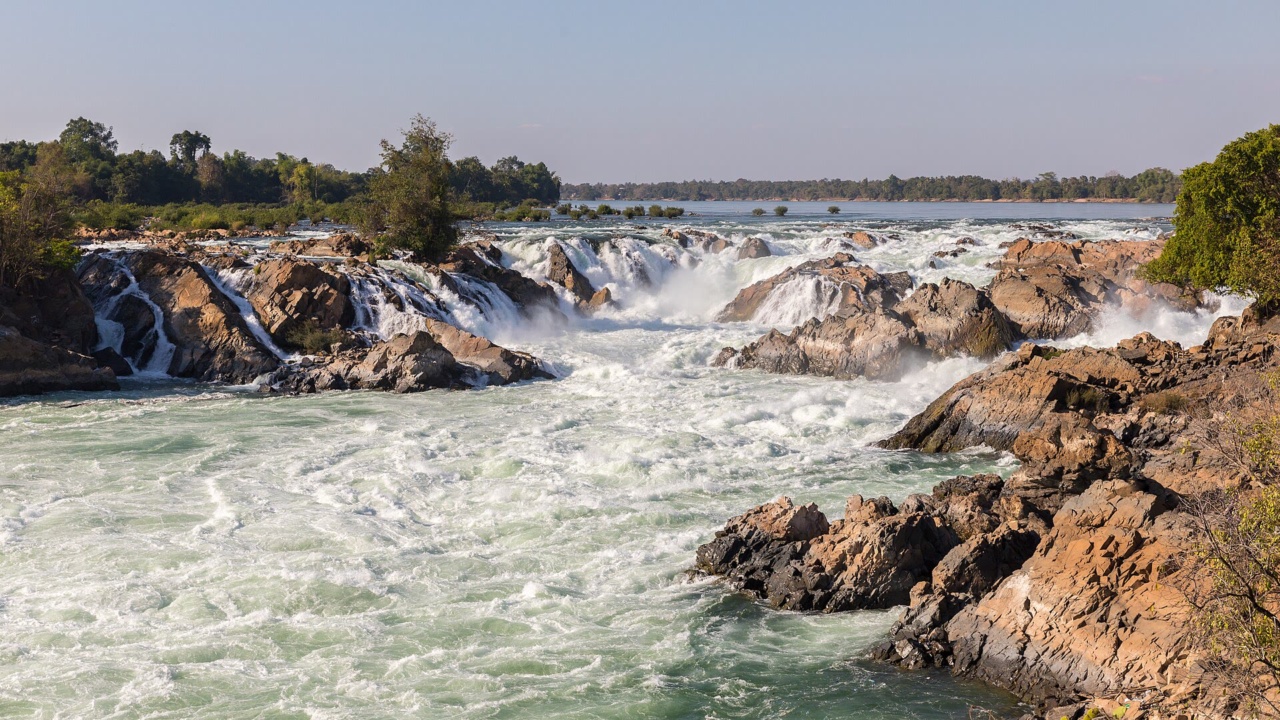
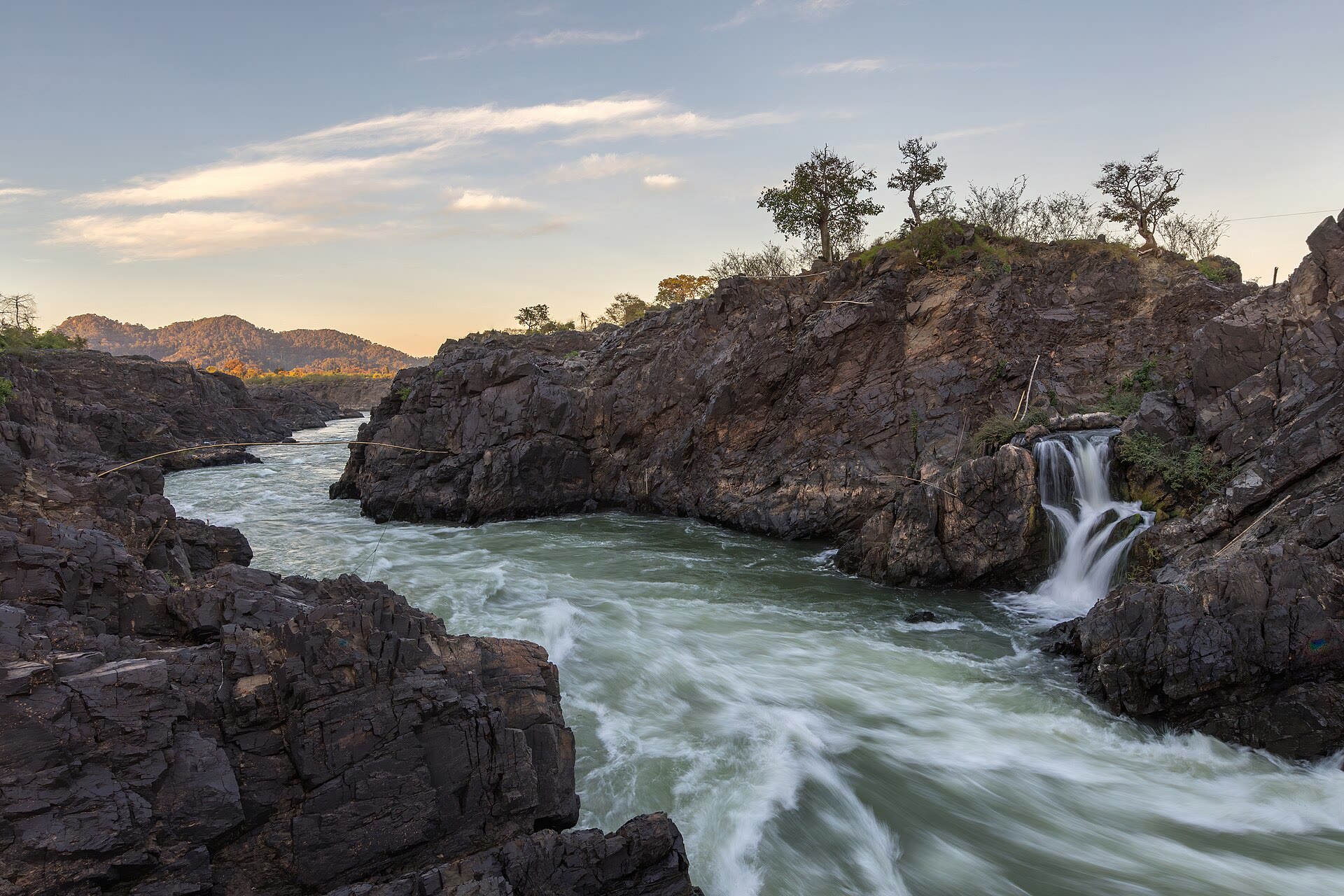
Located on the western side of Don Khon, Li Phi Falls is a dramatic series of rapids where the Mekong forces through a narrow gap between rocks. The falls are about a 25-minute walk or 10-minute cycle from the Don Det-Don Khon bridge. Admission costs 35,000 LAK. The viewing platforms offer impressive views of the churning water, and the surrounding area has been developed with walking paths and a small cafe. The falls are most powerful during and just after the rainy season (August through November).

Khone Phapheng Falls

The largest waterfall in Southeast Asia by volume, Khone Phapheng is located on the mainland east of Don Khon. The falls span roughly 10 kilometers of the Mekong and drop with enormous force during the wet season. Reaching them requires a boat trip from Don Det or Don Khon to the mainland, followed by a short tuk-tuk ride. Most guesthouses can arrange this as a half-day excursion for around 80,000-100,000 LAK per person. Admission to the falls viewpoint is 55,000 LAK.

French Colonial Railway Remnants

In the early 1900s, the French built a narrow-gauge railway across Don Det and Don Khon to bypass the unnavigable falls and transport cargo along the Mekong. The railway bridge connecting the two islands is now a pedestrian and bicycle crossing, and you can still see the old rail tracks embedded in the concrete. On Don Khon, a rusted locomotive sits where it was abandoned decades ago, slowly being reclaimed by vegetation. These remnants offer a fascinating window into Laos' colonial past.

Kayaking and Boat Trips

Half-day and full-day kayaking trips explore the channels between the islands, offering a water-level perspective of the Mekong landscape. Full-day tours typically include the Li Phi Falls, smaller unnamed cascades, and floating through quiet channels between forested islets. Prices range from 100,000 to 200,000 LAK depending on the duration and group size.

Hammock Time

This deserves its own section because it is genuinely what most visitors spend the majority of their time doing in Si Phan Don. The islands are purpose-built for doing nothing. Riverside bungalows come with hammocks, sunset bars serve cold Beer Lao at 10,000-15,000 LAK, and the only deadline is whether you can be bothered to move before the kitchen closes.

Getting to Si Phan Don

Most travelers reach Si Phan Don from Pakse, the nearest city with bus connections and an airport. The journey from Pakse takes roughly three to four hours by minivan or local bus to Nakasang, the mainland departure point for boats to the islands.

RouteTransportDurationCost (approx.)
Pakse to NakasangMinivan2.5-3 hours60,000-80,000 LAK
Nakasang to Don DetBoat15-20 minutes25,000-30,000 LAK
Vientiane to PakseFlight1.5 hours$60-100
Vientiane to PakseSleeper bus10-12 hours180,000-250,000 LAK
Cambodia border to Don DetMinivan + boat2-3 hours$10-15

From Cambodia, the Trapaeng Kriel / Nong Nok Khiene border crossing is the most direct route. Many travelers combine Si Phan Don with Siem Reap or Phnom Penh as part of a longer Mekong route. Arrange onward transport through your guesthouse rather than border touts, who often overcharge significantly.

Where to Stay

Accommodation across the islands is overwhelmingly budget-oriented. River-view bungalows on Don Det range from 50,000 to 150,000 LAK ($3-9) per night for a basic room with fan, mosquito net, and shared bathroom. Mid-range options with private bathroom and sometimes air conditioning run 200,000-400,000 LAK ($12-24). Don Khon has fewer options but generally better-maintained properties at slightly higher prices.

The best bungalows are along the sunrise (east) side of Don Det and the southern tip of Don Khon, where the river views are widest. During peak season (December through February), popular places fill up by early afternoon, so arrive in the morning or book a day ahead via messaging apps. Most guesthouses have a social media presence for direct booking.

Practical Tips for Si Phan Don

  • Bring enough cash. There are no ATMs on Don Det or Don Khon. The nearest ATMs are in Nakasang or Pakse. Bring more than you think you need since card payments are essentially nonexistent on the islands.
  • Dry season (November through March) is the best time to visit. The weather is pleasant, roads are passable, and the waterfalls still have good flow. April and May are extremely hot. The rainy season (June through October) makes some paths muddy but the falls are at their most dramatic.
  • Pack a headlamp or flashlight. Electricity on the islands can be intermittent, and paths between guesthouses are unlit at night.
  • Bring insect repellent. Mosquitoes are abundant near the river, especially at sunset. A mosquito net is standard in most bungalows but repellent adds an extra layer of protection.
  • Respect the current. The Mekong has powerful undercurrents, especially near the falls. Swimming is only safe in designated calm areas. Heed local advice about where the water is safe.
  • Plan for two to three nights minimum. One night feels rushed. The islands reward those who slow down and settle into the rhythm. Many travelers arrive planning two nights and stay for five.
  • Budget around $10-15 per day. With cheap accommodation, inexpensive local food, and bicycle rental as the main expense, Si Phan Don is one of the most affordable destinations in Southeast Asia.

For more on exploring southern Laos and connecting Si Phan Don to a broader itinerary, GoAsia.cc has guides covering the country's major routes and destinations.

Frequently Asked Questions

What are the 4,000 Islands (Si Phan Don) in Laos?

Si Phan Don is a riverine archipelago in the Mekong River in Champasak Province, southern Laos. The name means 'four thousand islands' in Lao, referring to the thousands of islands, sandbars, and channels formed where the Mekong reaches its widest point. Tourism focuses on three main islands: Don Det, Don Khon, and Don Khong.

How much does it cost to visit Si Phan Don?

Si Phan Don is extremely budget-friendly. Basic river-view bungalows cost $3-9 per night, meals run $1-3, and bicycle rental is about $1-2 per day. Including activities like waterfall visits and kayaking, most travelers spend $10-15 per day total. Bring cash as there are no ATMs on the islands.

How do I get to Si Phan Don from Pakse?

Take a minivan or local bus from Pakse to Nakasang (2.5-3 hours, 60,000-80,000 LAK), then a boat from Nakasang to Don Det (15-20 minutes, 25,000-30,000 LAK). Most guesthouses in Pakse can arrange the combined transport. You can also reach Si Phan Don from the Cambodian border.

Which island should I stay on - Don Det or Don Khon?

Don Det has the most accommodation, restaurants, and social atmosphere, making it the best choice for most travelers, especially those on a tight budget. Don Khon is quieter and closer to the main attractions like Li Phi Falls and the colonial railway ruins. Many visitors stay on Don Det and cycle to Don Khon for day trips.

When is the best time to visit Si Phan Don?

The dry season from November to March offers the most comfortable weather and accessible paths. The waterfalls still have good flow from the receding rainy season. April and May are extremely hot, while the wet season (June to October) brings muddy roads but the most dramatic waterfall views.

Can I see Irrawaddy dolphins at Si Phan Don?

Unfortunately, the Irrawaddy dolphins that once inhabited this stretch of the Mekong are now functionally extinct in Laos. Some tour operators still advertise dolphin-watching trips, but sightings are no longer realistic. Be cautious of any operator claiming guaranteed dolphin encounters.

How many days should I spend at Si Phan Don?

Plan for at least two to three nights. One night is too rushed to appreciate the islands' relaxed pace. Many travelers arrive planning two nights and extend to four or five. With cycling, waterfall visits, kayaking, and plenty of hammock time, three full days is ideal.

Is Si Phan Don safe for swimming?

Swimming is only safe in designated calm areas. The Mekong has powerful undercurrents, especially near the falls and in narrow channels between islands. Always ask locals or your guesthouse about safe swimming spots, and never swim near the Li Phi or Khone Phapheng Falls.