Rising barely 36 meters above the flat canal country of Suzhou, Tiger Hill (Huqiu) punches far above its modest height. Locals call it the must-see of the city, and the saying goes that to visit Suzhou without climbing Tiger Hill is a regret. At the top stands the tilting Yunyan Pagoda, a brick tower more than a thousand years old that leans noticeably to one side, earning it comparisons to the tower at Pisa.
What makes Tiger Hill compelling is not just the architecture but the layering of history and legend underfoot. The site is tied to the tomb of King Helu of the Wu state, buried here with a hoard of swords according to ancient accounts. Centuries of poets, monks, and emperors left inscriptions, ponds, and pavilions across the slope, so a walk up the hill is really a walk through Chinese folklore and landscape design at once.
For an independent traveler, Tiger Hill works well as a half-day outing. It rewards an unhurried pace, sits close to the historic Shantang Street and its canal, and gives you a genuine landmark to anchor a day in the old quarter rather than another walled garden. This guide covers how to reach it, what to see in order, when to come, and how to combine it with the surrounding canal district.
What Tiger Hill Is and Why It Matters
Tiger Hill is a small wooded rise on the northwestern edge of central Suzhou, in Jiangsu province. It has been a sacred and scenic spot for well over two thousand years. The name traces to a legend that a white tiger appeared to guard the tomb of King Helu after his burial here, though other accounts say the hill itself simply resembled a crouching tiger.
The headline attraction is the Yunyan Pagoda, also called the Tiger Hill Pagoda or Huqiu Tower. Built in brick during the tenth century, it is one of the oldest surviving pagodas in the region and has tilted gradually over the centuries due to uneven foundations on the hill. Stabilization work in modern times halted further leaning, but the visible tilt remains and is the image most associated with Suzhou.
Beyond the pagoda, the hill is dense with named sites: a flat ceremonial rock where a monk is said to have preached to a thousand listeners, a sword-testing stone split as if by a blade, a deep pond linked to the hidden royal tomb, old wells, and carved inscriptions. None of these are grand on their own, but together they give the hill the feel of an open-air museum of myth.
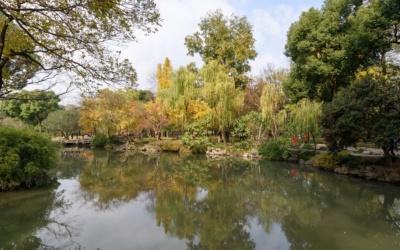
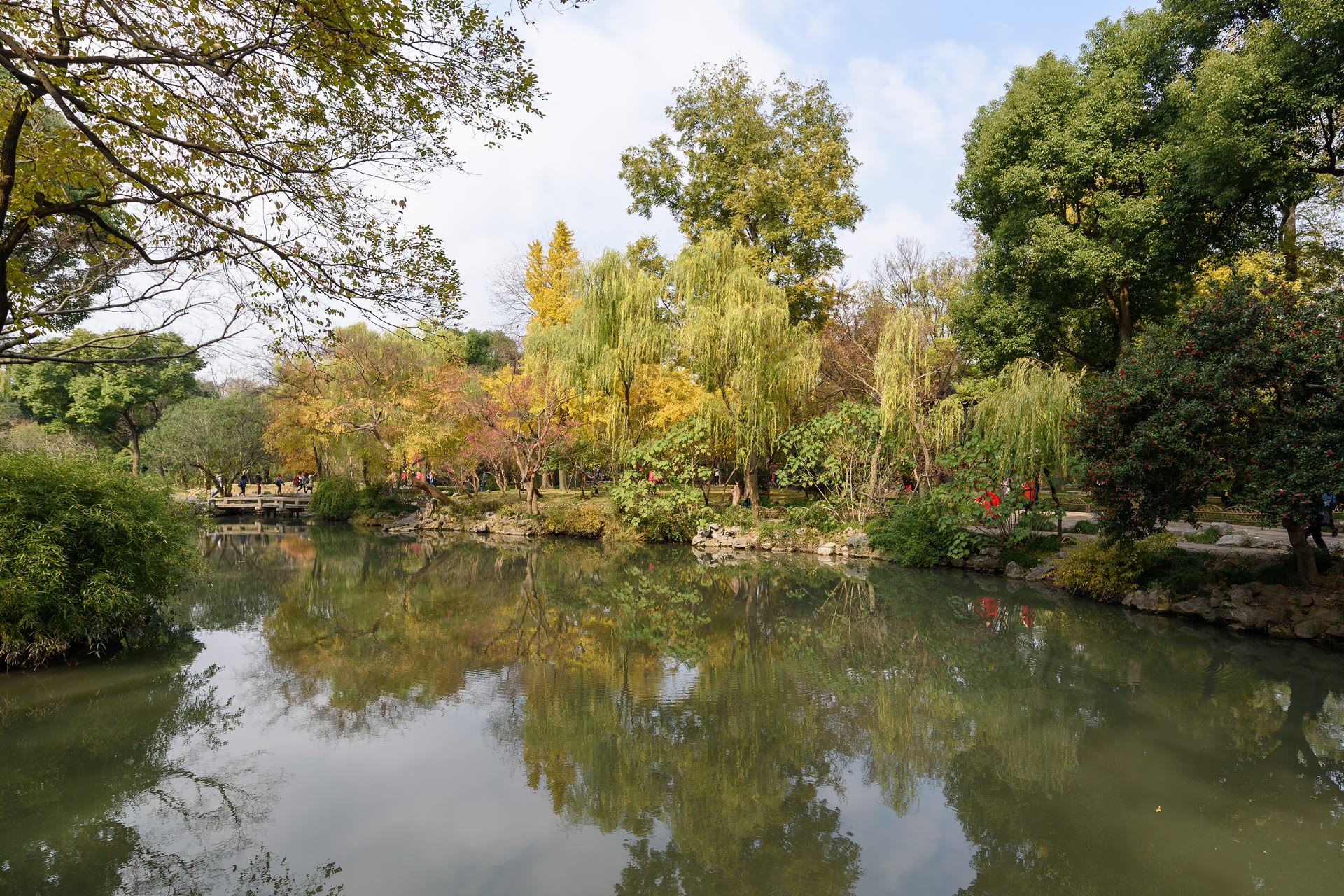
The setting is also a landscaped one. Paths wind through bamboo, plum, and seasonal flower plantings, and the lower areas include ponds and bonsai displays. It is a place to slow down and read the scenery rather than tick off a single monument.
Things to Do
The Canal Approach Through Shantang
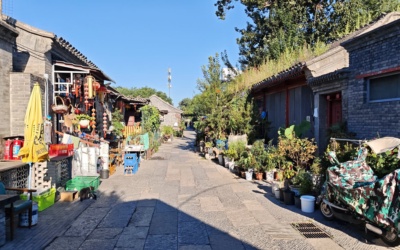
One of the most atmospheric ways to arrive is from the south, along the historic Shantang district. Shantang Street follows an old canal that was dug, by tradition, under the poet-official Bai Juyi to connect the city with Tiger Hill. The waterway runs roughly between the bustling old town and the foot of the hill, lined with whitewashed houses, stone bridges, teahouses, and lantern-hung shopfronts.
You can walk the length of Shantang Street and emerge near Tiger Hill, or take a wooden canal boat for part of the route, which gives the journey a slow, classical feel. The boats are tourist-oriented and short, but they capture the historic relationship between the canal and the hill better than any taxi ride. If you arrive by boat or on foot from Shantang, you approach the hill the way travelers have for centuries.
This approach is worth planning deliberately. Many visitors taxi straight to the Tiger Hill gate and miss the canal context entirely. Combining the two turns a single sight into a coherent half-day that explains why the hill sits where it does.
The Walking Route Up the Hill
Tiger Hill is compact and you do not need a map to enjoy it, but knowing the rough sequence helps you pace your time and not miss the highlights. The path is largely paved and the climb is gentle, suitable for most fitness levels, though there are steps and uneven stone in places.
Lower Slopes and the Sword Pond
From the main entrance you pass through landscaped grounds before the path begins to climb. Early stops include the broad flat rock associated with the preaching legend and a split boulder said to have been cleft by a sword being tested. The famous Sword Pond, a narrow rock-walled pool, is one of the most evocative spots: legend holds that the tomb of King Helu lies beneath it, filled with buried swords, and that the water has never been fully drained to reveal what is below. Cliff inscriptions surround it.
The Pagoda at the Summit
Continuing up brings you to the summit terrace and the Yunyan Pagoda. From the base you can clearly see the lean, and the brick detailing and aged surfaces reward a slow look. Whether you can climb inside the pagoda has varied over time due to its fragile state, so treat interior access as something to confirm at the gate rather than assume. Even from outside, the tower is the photographic centerpiece and the natural turnaround point of the visit.
Gardens, Ponds, and the Descent
On the way down you can take alternate paths through the garden areas, ponds, and pavilions. There are quieter corners away from the main staircase where the crowds thin and the landscaping shows its best. Bonsai and seasonal plantings are concentrated in the lower zones, so save a little energy for these rather than rushing straight out the gate.
A relaxed visit to the hill itself takes around 90 minutes to two hours. Add time if you intend to read inscriptions, photograph the pagoda from several angles, or linger over tea.
Seasonal Flowers and the Best Time to Visit
Tiger Hill is enjoyable year round, but the experience changes sharply with the seasons, and Suzhou's climate is a real factor in planning.
Spring is the classic choice. Plum blossoms appear in late winter and early spring, and other flowering displays follow as the weather warms. Spring brings mild temperatures and lush greenery, and the hill often stages seasonal flower events, so it can be both beautiful and busy. Autumn is the other strong season, with comfortable temperatures, clearer light for photography, and fewer of the heavy crowds that peak around public holidays.
Summer in Suzhou is hot and humid, and the shade on the hill only partly offsets it. Carry water and consider an early start. Winter is quiet and atmospheric, especially with plum blossoms toward its end, but days are short and damp cold can set in. Whatever the season, mornings tend to be calmer and better for photographs of the pagoda before tour groups arrive.
| Season | What to expect | Crowds |
|---|---|---|
| Spring | Plum and seasonal blossoms, mild and green, flower events | High, peaks on holidays |
| Summer | Hot and humid, partial shade, lush foliage | Moderate, lighter midday |
| Autumn | Comfortable temperatures, clear light, good photography | Moderate |
| Winter | Quiet and atmospheric, late-winter plum blossoms, damp cold | Low |
Getting There and Practical Access
Tiger Hill sits in the northwest of central Suzhou, a short ride from the old town and the main railway stations. Suzhou is exceptionally well connected by high-speed rail to Shanghai, with frequent trains that take well under an hour, making the city an easy independent day trip or overnight from Shanghai. From Suzhou's stations, taxis and ride-hailing apps reach Tiger Hill quickly, and local buses serve the area as well.
If you want the canal experience, head to the Shantang district first and approach the hill from there on foot or by short boat ride. Otherwise, a taxi straight to the Tiger Hill scenic area entrance is the simplest option. Within the old town, getting around is easy on foot or by short taxi hops, and Suzhou's metro covers parts of the city if you prefer to avoid traffic.
Tickets are purchased at the scenic area entrance. Admission prices and opening hours change with the season and over time, and ticketing for many Chinese sites increasingly runs through apps and ID-linked systems, so verify the current price, hours, and any reservation or online-purchase requirement before you go. Foreign passport holders should carry their passport, as it is commonly used for entry and verification at managed scenic areas.
For continued trip planning across the region and beyond, GoAsia.cc is a useful place to map out how Suzhou fits with Shanghai, Hangzhou, and the wider Yangtze delta.
Pairing Tiger Hill With Shantang Street
The single best pairing is Tiger Hill with Shantang Street, because the two are historically and geographically linked by the same canal. A natural plan is to spend the late morning or midday exploring the hill, then walk or boat down through Shantang for the afternoon and into the evening.
Shantang is a restored canal street with old architecture, snack stalls, teahouses, craft shops, and small temples. It is touristy and can be crowded, especially on weekends and holidays, but the waterway and lantern-lit evenings are genuinely attractive. Doing the hill earlier and Shantang later means you finish the day with food, atmosphere, and the option of an evening canal boat when the lanterns are on.
If you have more time, Suzhou's famous classical gardens, such as the Humble Administrator's Garden and the Lingering Garden, are elsewhere in the city and make strong additions on a second half-day. Tiger Hill is a landscape and legend site rather than a walled scholar's garden, so it complements the gardens rather than duplicating them.
Practical Tips for Visiting Tiger Hill
- Go early. Arrive near opening to photograph the leaning pagoda before tour groups fill the summit terrace, and to walk the lower paths in calmer conditions.
- Wear proper shoes. Paths are paved but include steps and uneven, sometimes slick stone, especially near the Sword Pond and after rain.
- Confirm pagoda access in advance. Whether you can enter or climb the tower depends on its conservation status, which has changed over time. Do not assume interior access.
- Carry your passport. It is commonly required for entry and verification at managed scenic areas in China.
- Verify tickets and hours. Prices, opening times, and online-booking rules vary by season and can change, so check current details before arriving.
- Match your visit to the season. Come in spring for blossoms and flower events or in autumn for comfortable weather and clearer light. Bring water in summer.
- Build in the canal. Approach via Shantang Street or take a short boat ride to experience the historic link between the city and the hill.
- Allow about two hours on the hill. Then keep the rest of the day flexible for Shantang or a classical garden.
Honest Limitations and Common Mistakes
Tiger Hill is a landmark, not a vast site, and travelers expecting hours of exploration may find it compact. The hill is small and the climb short, so the appeal lies in atmosphere, legend, and the pagoda rather than scale. If you race through without context, it can feel like a quick photo stop. Reading the legends before you go, or hiring a local guide, deepens the experience considerably.
Crowds are the main downside. On weekends, holidays, and during spring flower events, the summit terrace and main paths can get congested, and the canal boats and Shantang Street fill up too. Early-morning visits and shoulder seasons are the simplest fixes.
Another common mistake is skipping the canal approach in favor of a direct taxi to the gate. Doing so saves a little time but removes much of what makes Tiger Hill distinctive within Suzhou's water-town setting. Finally, weather matters: a hot, humid summer afternoon or a heavy rainy spell can sap the enjoyment, so check the forecast and plan an early or shaded visit accordingly.
Used well, though, Tiger Hill is one of the most rewarding short outings in Suzhou. It gives you a thousand-year-old leaning tower, a tomb wrapped in legend, landscaped paths that change with the seasons, and a historic canal that leads you back into the heart of the old town.
Frequently Asked Questions
Allow about 90 minutes to two hours for the hill itself at a relaxed pace, which is enough to see the Sword Pond, the legend sites, and the leaning pagoda. Pairing it with Shantang Street and a canal boat makes a comfortable half-day. Add more if you want to explore the gardens and read the cliff inscriptions slowly.
Tiger Hill charges admission at the scenic area entrance, and prices and hours vary by season and can change over time. Many Chinese scenic sites now use app-based or ID-linked ticketing, so check the current price and any online-booking requirement before you go. Foreign visitors should carry their passport for entry and verification.
From Shanghai, take a high-speed train to Suzhou, which takes well under an hour with frequent departures. From Suzhou's stations or old town, use a taxi or ride-hailing app to reach the Tiger Hill entrance quickly, or head to the Shantang district first to approach by canal boat or on foot. Local buses also serve the area.
Interior and climbing access to the pagoda has varied over time because of its fragile, tilting structure and conservation work. Do not assume you can go inside. Confirm current access at the entrance, and note that the tower is impressive and very photogenic from the outside regardless.
Spring is popular for plum and seasonal blossoms and flower events, while autumn offers comfortable temperatures and clearer light for photography. Summer is hot and humid, so start early and carry water, and winter is quiet with late-season plum blossoms. Mornings are best in any season to avoid crowds.
Yes, especially if you pair it with Shantang Street, which together fill a meaningful half-day rooted in Suzhou's canal history. If you also want a classical garden, add the Humble Administrator's Garden or Lingering Garden in the other half of the day. Tiger Hill complements the gardens rather than duplicating them.