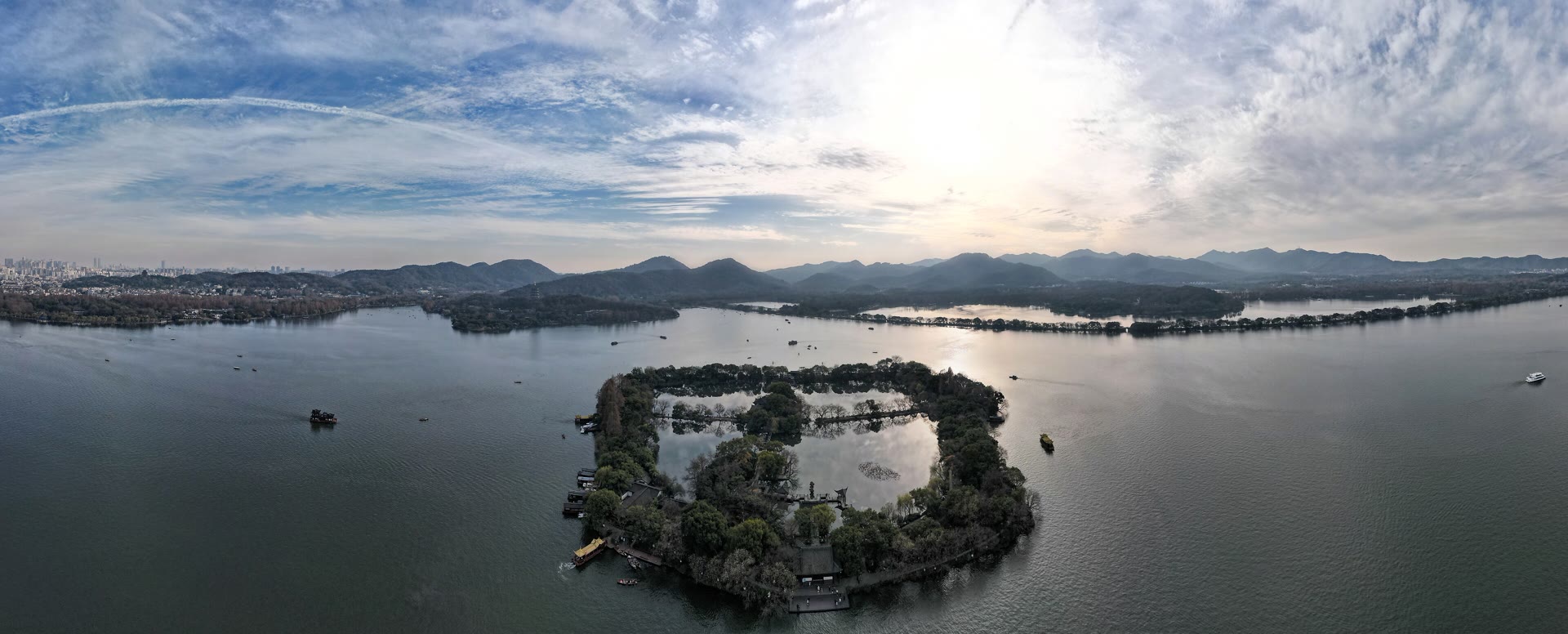
Few places in China have been painted, written about, and praised as relentlessly as West Lake in Hangzhou. For centuries it served as the unofficial standard for what a beautiful lake should look like: a soft expanse of water ringed by willow-lined causeways, arched bridges, pagodas rising from wooded hills, and tea fields climbing the slopes just beyond. When Chinese poets and landscape painters wanted to describe ideal scenery, they reached for West Lake.
What surprises many first-time visitors is that this is not a remote natural wonder. West Lake sits right at the edge of central Hangzhou, a major city about an hour from Shanghai by high-speed train. The lake is a designed landscape, shaped over more than a thousand years through dredging, causeway building, planting, and the careful placement of temples and viewpoints. UNESCO recognized it as a cultural landscape precisely because it represents an idealized fusion of nature and human composition that influenced garden design across East Asia.
For an independent traveler, the appeal is simple: West Lake is free to enter, easy to reach, and rewarding whether you have two hours or two days. The challenge is crowds and scale. This guide covers how to walk it, when to come, what to prioritize, and how to pair it with the nearby temples and tea hills that complete a Hangzhou trip.
What West Lake Actually Is
West Lake (Xihu) is a freshwater lake covering roughly six square kilometers, divided into sections by two long causeways and dotted with small islands. It is shallow, calm, and almost entirely framed by hills on three sides, with the city pressing up against the eastern shore. That geography is the whole point: from almost any vantage, you see water leading the eye to layered hills and a distant pagoda, the classic composition reproduced in countless Chinese paintings.
The lake's fame rests on a set of named scenic views, traditionally counted as ten, each tied to a season, a time of day, or a weather condition. Names like Lingering Snow on the Broken Bridge, Autumn Moon over the Calm Lake, and Three Pools Mirroring the Moon are not just labels but instructions on when and how to look. You do not need to memorize them, but knowing they exist explains why locals talk about West Lake in terms of mood and timing rather than a single must-see object.
Crucially, this is a living urban landscape, not a fenced attraction. Residents jog the causeways at dawn, practice tai chi under the willows, and drink tea in lakeside pavilions. Visiting West Lake well means slowing down to its rhythm rather than ticking off sights at speed.
Things to Do
The Two Causeways: The Backbone of Any Visit
The lake's two famous causeways do most of the work in organizing a visit. They are flat, scenic, and let you cross the water on foot rather than circling the entire shoreline.
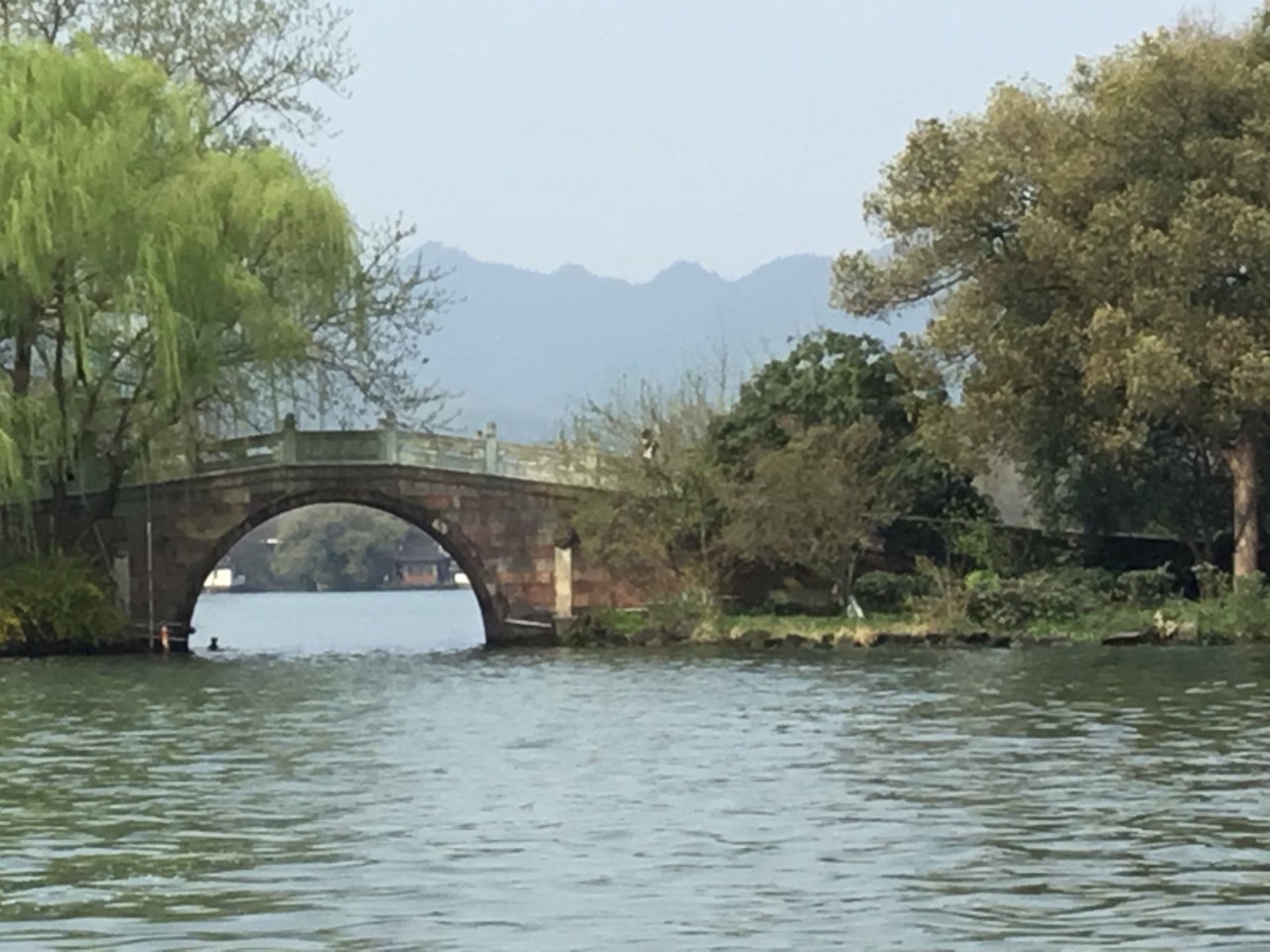
The Su Causeway runs north to south along the western side of the lake and is the longer of the two, stretching close to three kilometers. It is lined with willows and peach trees, crossed by six arched stone bridges, and offers continuous open views back toward the city skyline and the hills. Walking its full length takes most people around 45 minutes to an hour at a relaxed pace. It is named after the poet and official Su Dongpo, who oversaw major dredging works that used the excavated mud to build the embankment.
The Bai Causeway is shorter and sits on the northern edge, connecting the shore to Solitary Hill Island. Its most famous feature is the Broken Bridge (Duanqiao), celebrated in legend and especially atmospheric when light snow leaves the arch looking incomplete. The bridge is also the setting for the classic Legend of the White Snake folktale, which adds to its pull for Chinese visitors. Expect this corner to be among the busiest on the whole lake.
A practical way to use the causeways: walk out along the Bai Causeway from the northeast, cross to Solitary Hill, then loop down and use the Su Causeway to cross the lake's width on your return. This gives you both signature walks without doubling back along the crowded eastern shore.
Boats and How to Cross the Water
Getting out onto the lake itself changes the experience. From the water, the causeways become thin green lines, the pagodas line up against the hills, and the scale of the designed landscape becomes clear.
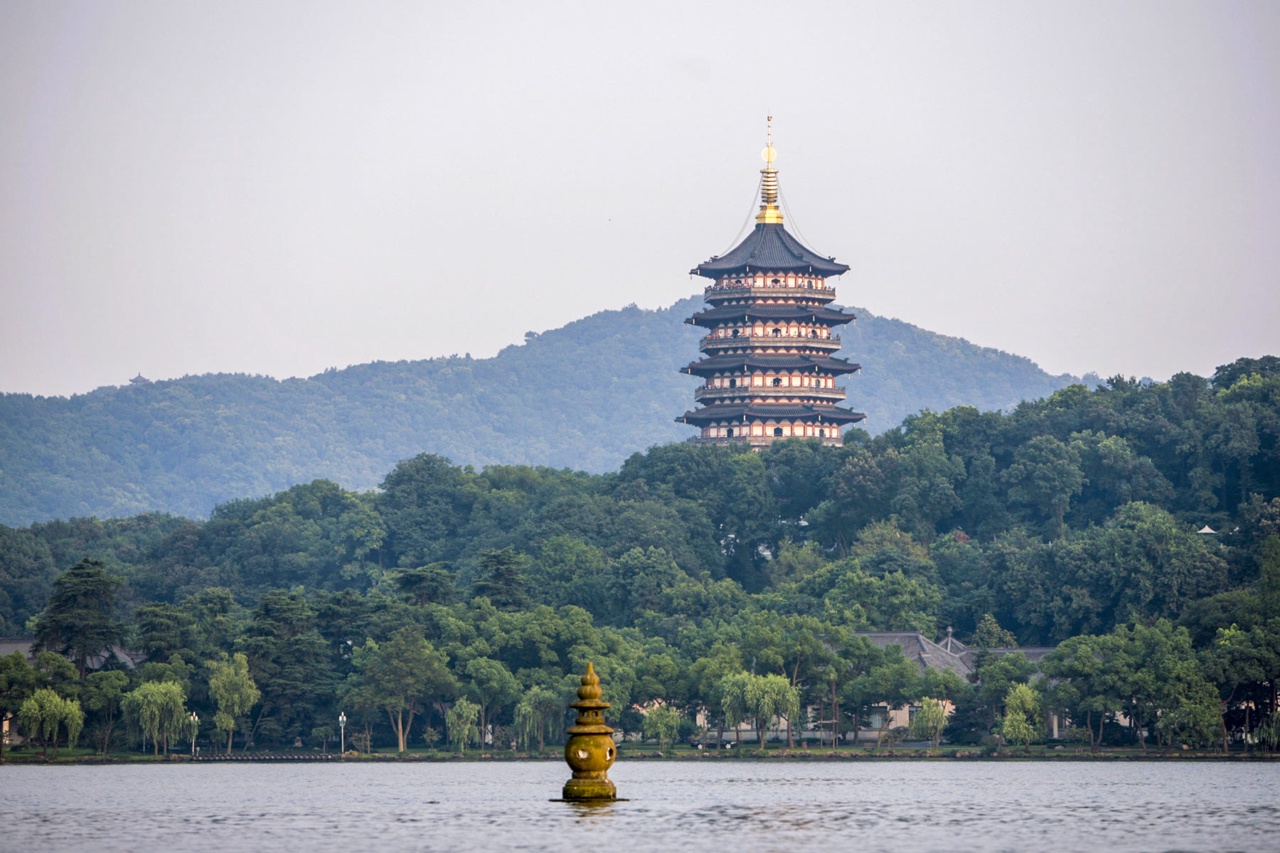
Several boat options operate on West Lake. Larger cruise boats run scheduled loops and typically stop at Xiaoyingzhou, the island known for the Three Pools Mirroring the Moon, where three small stone pagodas stand in the water and form one of the lake's most reproduced images, including on Chinese currency. Smaller hand-rowed wooden boats can be hired for more intimate, flexible trips, though you will need to agree on a price and route before boarding.
A few practical points to verify on arrival, since operations change: the standard cruise ticket often bundles the boat ride with landing access to the island, departures cluster near the eastern docks, and the rowed boats are negotiated per boat rather than per person. Avoid the temptation to take a boat purely as transport across the lake; the causeways do that job better and for free. Take a boat for the views and the island, not as a shortcut.
Leifeng Pagoda and the Southern Shore
On the southern shore stands Leifeng Pagoda, rebuilt on the site of an ancient structure that collapsed long ago. The modern tower contains the excavated foundations of the original beneath a glass floor and offers elevated views over the lake. The pairing of the pagoda with the distant Baochu Pagoda on the northern hills frames the lake along a north-south axis that photographers chase, especially near sunset when the light goes gold over the water.
The pagoda is a paid attraction with escalators carrying visitors up the hillside, which feels incongruous but makes the climb easy. The view from the top is the real reward: on a clear evening you look straight across the Su Causeway and the open lake toward the city. This is also a strong sunset position, so it draws crowds late in the day. If you want photographs without crowds in frame, arrive earlier and accept softer light.
Lingyin Temple: The Essential Pairing
No West Lake visit is complete without pairing it with Lingyin Temple, one of the most important Buddhist temples in China, tucked into a forested valley just west of the lake. The setting is the draw as much as the temple itself: a wooded gorge below Feilai Feng, a limestone outcrop carved with hundreds of Buddhist rock sculptures dating back centuries.
The temple complex is large, active, and atmospheric, with incense smoke drifting through tall halls and pilgrims alongside tourists. Plan at least two to three hours here, more if you want to explore the carvings and side halls properly. Note that access typically involves two layers of ticketing: one for the scenic area around Feilai Feng and the carvings, and a separate ticket for the temple itself. Confirm the current arrangement before you go, as it can confuse first-timers who buy one and not the other.
Lingyin sits a short ride from the western shore of the lake. A logical full-day plan is to spend the morning at the lake while it is quiet, head to Lingyin around midday or early afternoon, and return to the southern shore for a Leifeng Pagoda sunset.
Tea Hills and the Quieter West Side
West of the lake, the hills are covered in terraced tea fields that produce Longjing (Dragon Well) green tea, one of China's most prized teas. The village of Longjing and the surrounding slopes offer a calm, green counterpoint to the busy lakeshore, with tea houses where you can sit and taste freshly brewed leaves.
This area rewards travelers who want to escape the densest crowds. Walking paths thread through the tea terraces and small temples, and the scenery is at its best in spring when the new leaves are harvested. Be aware that aggressive tea selling targets tourists here; if you buy, buy from a settled tea house rather than from someone who approaches you on a path, and treat very cheap or very expensive offers with equal suspicion.
How Much Time You Need
West Lake scales to the time you have, but here is a realistic framework:
| Time available | Suggested focus |
|---|---|
| 2 to 3 hours | Walk the Bai Causeway and Broken Bridge, then part of the Su Causeway; skip paid sights. |
| Half day | Both causeways plus a boat to Xiaoyingzhou island, ending at Leifeng Pagoda for views. |
| Full day | Morning at the lake, midday at Lingyin Temple, late afternoon tea hills or Leifeng Pagoda sunset. |
| Two days | Add the tea villages, lakeside museums and gardens, and a slow second walk at a different time of day. |
The lake is genuinely large. Walking the entire shoreline is possible but takes several hours and a lot of the route passes through similar willow-lined paths. Most travelers get more out of combining causeway walks with a single boat trip rather than attempting a full circuit on foot.
When to Go and How to Beat the Crowds
West Lake is one of the most visited places in China, and crowds are the single biggest factor that can make or break the experience. Weekends, public holidays, and especially the early autumn and spring holiday periods bring enormous domestic crowds. The Broken Bridge, the eastern docks, and Leifeng Pagoda at sunset are the worst pinch points.
The best crowd strategy is timing of day. Come at dawn or early morning, when the light is soft, the air is cooler, and you share the causeways mostly with locals exercising. The lake is at its most poetic in early mist, exactly the mood the classic views were designed around. By mid-morning the tour groups arrive, and by midday the central paths can feel like a slow-moving river of people.
Seasonally, spring brings blossoms and fresh tea, autumn brings clear air and comfortable temperatures, and the rare light snow transforms the bridges into the scenes that gave the views their names. Summer is hot and humid with strong sun, so plan early starts and shade breaks. Winter is quieter and can be beautiful but cold and gray. Whatever the season, avoid national holiday weeks if you can, as both the lake and Hangzhou's transport fill to capacity.
Getting There and Getting Around
Hangzhou is extremely well connected, which is part of West Lake's appeal. High-speed trains link it to Shanghai in around an hour and to many other major cities across China. The lake sits on the western edge of the city center, a short metro ride or taxi from the main railway stations.
Hangzhou's metro reaches the eastern and northern lake areas, after which everything is best done on foot. Ride-hailing and taxis are widely used and convenient for reaching Lingyin Temple and the tea hills, which are not directly walkable from the main lakeshore. Public buses also serve these outer areas. For getting around China more broadly and planning onward routes, GoAsia.cc is a useful place to keep researching as you build your itinerary.
One practical note: payment in Hangzhou, as across China, runs heavily on mobile apps. Set up a mobile payment method linked to your card before you travel, since cash is accepted less and less and many small vendors and boat operators prefer scanning a code.
Practical Tips for a Smooth West Lake Visit
- Start early. The single most effective move is to be at the lake by sunrise or shortly after. Light, temperature, and crowd levels are all best in the first hours.
- Bring your passport. Some sites require ID for ticketing or entry registration, and it is generally needed for travel in China.
- Wear comfortable shoes. Even a modest plan involves several kilometers of walking on the causeways and around the temple grounds.
- Decide on paid sights in advance. The lake and causeways are free. Leifeng Pagoda, boat rides, and Lingyin Temple cost money, so choose which ones matter to you rather than paying for all of them.
- Carry water and sun protection. Shade is patchy in open stretches and summer sun is intense.
- Be wary of tea touts. In the hills, approach unsolicited tea offers with caution and buy from established tea houses.
- Plan the temple as a separate trip. Lingyin is not on the lakeshore; treat it as its own half-day with transport built in.
- Verify hours and tickets before you go. Operating arrangements for boats and temples change, so confirm current details rather than relying on old information.
Realistic Downsides to Expect
West Lake is beautiful, but honesty helps. The crowds can be overwhelming at peak times, to the point where the contemplative quality the lake is famous for vanishes entirely. The eastern shore near the city is the most developed and least atmospheric, with heavy foot traffic and commercial activity. Some of the named viewpoints are subtle and seasonal, so a midday summer visit will not deliver the misty, painted scenes you may have imagined.
There is also the matter of expectation. West Lake is a refined, gentle landscape, not a dramatic natural spectacle. Travelers expecting towering mountains or wild scenery may find it understated. Its rewards come from atmosphere, composition, and the slow pleasure of walking and tea drinking rather than from a single jaw-dropping sight. Approached that way, with an early start and a relaxed pace, it is one of the most pleasant urban landscapes in China.
Building West Lake Into a Hangzhou Trip
For most travelers, one full day at the lake plus its temples and tea hills is the sweet spot, with a second day if you want to slow down or explore the city's canals, museums, and food. Hangzhou itself is a comfortable, walkable city with strong rail links, which makes it easy to slot West Lake into a broader China itinerary, often as a day trip or overnight from Shanghai.
If you have only one day from Shanghai, take an early train, head straight to the lake, walk the causeways before the crowds build, fit in Lingyin Temple in the afternoon, and return in the evening. If you stay overnight, you gain the lake's best hours twice: sunset over the southern shore and the quiet, misty dawn that gave West Lake its reputation in the first place.
Frequently Asked Questions
A half day covers the main causeways, a boat trip, and Leifeng Pagoda views, which suits most travelers. A full day lets you add Lingyin Temple and the tea hills. If you want a relaxed pace or to catch both sunset and early morning mist, stay overnight in Hangzhou and split your visit across two days.
The lake itself, including the Su and Bai causeways and the lakeside paths, is free to enter and walk. Specific attractions cost money, including Leifeng Pagoda, boat rides to the islands, and Lingyin Temple, which often has two separate tickets. Decide which paid sights you want and confirm current prices on arrival, as arrangements change.
Take a high-speed train from Shanghai to Hangzhou, which takes roughly an hour. From the railway station, use the metro or a taxi to reach the lake's eastern or northern shore, then explore on foot. Day trips are very doable, but an early train is essential to enjoy the lake before crowds build.
Early morning, ideally around sunrise, is the best time. The light is soft, temperatures are cooler, and you share the causeways mainly with locals exercising rather than tour groups. By mid-morning the crowds arrive, so front-load your visit and save indoor or outer-area sights for the busier midday hours.
Yes, Lingyin Temple is the natural pairing with West Lake and one of the most important Buddhist temples in China. It sits in a forested valley just west of the lake, a short ride from the shore, so treat it as a separate half-day with transport built in. Allow two to three hours and check whether you need both the scenic area and temple tickets.
Crowds peak on weekends and especially during Chinese national holiday weeks, when both the lake and the city fill to capacity. The Broken Bridge, the boat docks, and Leifeng Pagoda at sunset are the busiest spots. If possible, avoid major holiday periods entirely and visit on a weekday morning.
Yes, you can walk the full shoreline, but it takes several hours and much of the route looks similar. Most travelers get more out of crossing the lake using the Su and Bai causeways and adding a single boat trip rather than completing a full loop on foot. Wear comfortable shoes regardless, since even a partial visit covers several kilometers.