Roughly two hours southeast of Chongqing, the limestone country around Wulong cracks open into one of the most dramatic karst landscapes in southern China. This is not the gentle, rounded scenery of Guilin or Yangshuo. At Wulong the ground has collapsed into vast sinkholes, rivers have carved gorges hundreds of meters deep, and three colossal natural rock bridges arch over a hidden valley floor that feels closer to a film set than a tourist trail, which is exactly why it has served as one.
Wulong is part of the South China Karst, inscribed on the UNESCO World Heritage list as a globally significant example of how water shapes soluble rock over millions of years. For travelers, the appeal is more immediate: you descend into chasms most people only see in photographs, walk beneath natural arches taller than skyscrapers, and emerge with a sense of scale that flat scenery rarely delivers.
It is also genuinely visitable as an independent traveler. The two headline sights, the Three Natural Bridges and the Longshuixia Gap, are organized for visitors with shuttle buses, elevators, and clear walking routes. You do not need a tour group or a guide. You do need a reasonable pair of legs, a tolerance for stairs, and a plan for the weather, which can flip from clear to misty within an hour.
What Wulong Karst Actually Is
Wulong sits within the larger South China Karst region, a serial UNESCO property recognized for its diversity of karst landforms. While other components of that property showcase stone forests and cone karst, Wulong is celebrated for what geologists call a giant dolines and natural bridge system. In plain terms, the rock dissolved and collapsed in spectacular ways, leaving behind natural stone arches, deep collapse pits, and narrow slot gorges.
Most visitors focus on a handful of distinct sites that are spread across the county rather than concentrated in one spot. The two essential ones are the Three Natural Bridges and the Longshuixia Gap Crack, sometimes translated as Longshuixia Ground Fissure. A third popular destination, Furong Cave, is a large show cave with illuminated formations. There are also more remote nature areas such as Xiannv Mountain, a high plateau grassland that contrasts sharply with the gorges below.
The practical takeaway is that Wulong is a cluster of attractions, not a single park you walk into. Planning means deciding how many of them you want to see and budgeting transport time between them.
Things to Do
The Three Natural Bridges
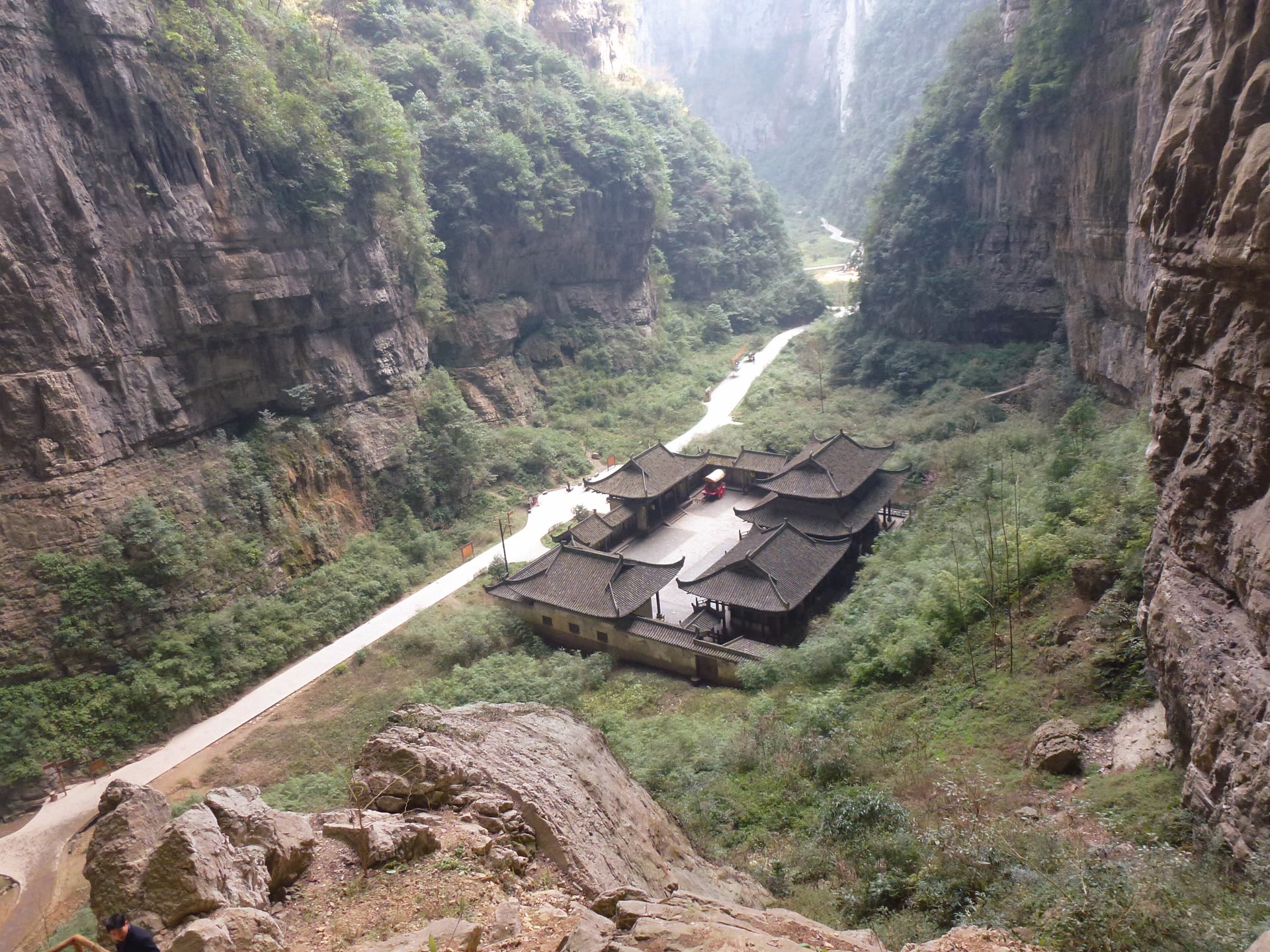
This is the signature sight and the one most people come for. You enter from a high ridge, ride an elevator or descend a long staircase into the gorge, and then walk a roughly looping route along the valley floor beneath three enormous natural rock bridges named Tianlong, Qinglong, and Heilong, often translated as Sky Dragon, Green Dragon, and Black Dragon.
The bridges are genuinely huge. Walking under them, with cliff walls rising on both sides and waterfalls trickling down the rock, gives a strong sense of being inside a sealed canyon. On the valley floor sits a reconstructed courtyard structure, an old post station building, which has appeared in films and is a popular photo stop. The whole walk is paved and well marked.
The catch is the descent and the climb. You go down into the gorge and you have to come back up. Elevators handle part of the elevation, but expect significant stairs along the route. Allow two to three hours for an unhurried visit, more if you stop often for photos or if crowds slow the pace on the narrow sections.
What to expect on the trail
- Mostly downhill on the way in, with a glass-walled elevator handling the steepest initial drop in most layouts. Verify current elevator status when you arrive, as maintenance can change the route.
- Paved paths and steps along the valley, sometimes wet from spray and seepage. Footwear with grip matters.
- Cooler, damper air inside the gorge than on the rim, even in summer. A light layer is useful.
- Limited shade in some open sections and cliff overhangs in others, so the temperature shifts as you walk.
Longshuixia Gap
The Longshuixia Gap, a deep and narrow slot gorge, is the natural companion to the Three Natural Bridges and is usually visited the same day or the next. Here you descend into a tight fissure where a stream has carved a slender canyon, then follow boardwalks and stairs along the water past waterfalls, pools, and overhanging rock.
It is a different experience from the bridges. Instead of the open grandeur of giant arches, you get the intimacy and slight claustrophobia of walking through a crack in the earth, with cliffs pressing in and water everywhere. Many travelers find it the more atmospheric of the two, though it is also more stair-heavy and can feel crowded on busy days because the path is narrow.
Budget about one and a half to two and a half hours. The walking is more demanding per kilometer than the bridges because of the constant steps and the wet, sometimes slippery surfaces. People with knee problems should think carefully about combining both sites in a single day.
Furong Cave and Xiannv Mountain
If you have extra time, two other sites round out the area. Furong Cave is a large limestone show cave with lit stalactites, stalagmites, and flowstone, located near the Wulong town side rather than at the gorge cluster. It is a good rainy-day option since it is entirely indoors and the temperature stays stable.
Xiannv Mountain, sometimes written Fairy Mountain, is a high grassland plateau that is a complete tonal shift from the gorges: open meadows, cooler air, and a resort-like atmosphere with seasonal activities. It is more of a summer escape and winter snow destination for domestic visitors than a karst-viewing site, and it is far enough away that fitting it in alongside the bridges and the gap requires a second day.
Getting to Wulong from Chongqing
Wulong sits southeast of central Chongqing. The two practical options are rail and road, and the right choice depends on how much you value flexibility versus convenience.
| Option | Roughly | Notes |
|---|---|---|
| Train to Wulong station | Around 2 hours | Trains run from Chongqing main stations to Wulong. From Wulong town you still need a local bus or taxi to the scenic areas, which are outside town. |
| Long-distance bus | Around 3 hours | Direct coaches from Chongqing bus terminals. Less frequent than trains but can drop closer to certain points depending on the service. |
| Private car or chartered driver | Around 2.5 to 3 hours | Most flexible for hitting multiple scattered sites in a day. More expensive but saves a lot of internal transfer time. |
| Organized day tour | Full day | Handles all transport and tickets. Convenient but rushed, with fixed timing and limited photo stops. |
The key thing independent travelers underestimate is the internal transport at Wulong itself. Arriving at Wulong town is not the same as arriving at the gorge. The scenic areas have their own ticket centers and shuttle buses, and you often must take a mandatory shuttle from a transit center to the entrance. Factor this transfer time and the shuttle fee into your plan, and confirm the current shuttle arrangement when you buy tickets, since the system has been reorganized more than once.
How Much Time You Need
Your time budget shapes everything. Here is a realistic framework.
- Long day trip from Chongqing: Doable if you focus on the Three Natural Bridges alone, or the bridges plus a quick look at Longshuixia. Expect an early start and a late return, with a lot of the day spent in transit. This is the most common independent approach.
- One night in Wulong: The sweet spot for most travelers. Stay near the town or the scenic area, do the bridges and the gap without rushing, and avoid the worst of the day-tripper crush by timing your visits early or late.
- Two nights: Needed if you want to add Furong Cave and Xiannv Mountain. The plateau in particular eats up a half to full day given the distance.
If you only have one full day and you are based in Chongqing, accept that you will see one or two sites well rather than everything. Trying to cram the bridges, the gap, the cave, and the mountain into a single day is a recipe for a stressful, transport-dominated day with little time to actually enjoy any of them.
Tickets, Access, and Practical Logistics
Each major site at Wulong is ticketed separately, and there are usually combined or package tickets that bundle the entrance fee with the mandatory shuttle bus. Because pricing, package structures, and booking rules change, treat any specific figure you read online as provisional and confirm at the official ticket center or a reputable booking channel before you go.
A few things that consistently matter:
- Shuttle buses are usually compulsory. You generally cannot drive your own vehicle to the gorge entrances. Budget for the shuttle on top of the entrance ticket.
- Bring your passport. Chinese attractions increasingly tie tickets to real-name registration, and foreign visitors may need to show a passport at counters or use it for any reserved-entry system. Verify whether advance reservation is required, as this has become common at popular sites.
- Carry some cash and a working mobile payment setup. Many transactions in China run on mobile payment apps. Set this up before you travel, and keep cash as a backup for smaller vendors.
- Closing times are earlier than you expect. Last entry and last shuttle departures are well before the posted closing time. Aim to start the bridges or the gap by early afternoon at the latest if you want to finish comfortably.
Weather and the Best Time to Visit
Chongqing and its surrounding mountains have a humid subtropical climate, and Wulong's weather strongly affects the experience inside the gorges.
- Spring and autumn are the most comfortable. Moderate temperatures, manageable humidity, and reasonable odds of clear views. These shoulder seasons are the best overall window.
- Summer is hot and humid in the lowlands but the gorges stay cooler, which is part of their appeal. Expect afternoon showers and the risk of mist filling the canyons. Summer is also peak domestic travel season, so crowds peak too.
- Winter is cold and can be damp, with the chance of snow on Xiannv Mountain that draws domestic visitors. The gorges are quieter but the wet stone is colder and the light flatter.
- Rain turns the stairs slippery and can swell waterfalls dramatically, which looks impressive but makes footing trickier. Heavy rain occasionally forces temporary closures of the slot gorge for safety.
Mist is the wildcard. Fog can roll into the gorges with little warning and obscure the upper reaches of the bridges. There is no fixing this on the day, so if your schedule allows flexibility, watch the forecast and favor the clearer morning hours.
Realistic Downsides
Wulong is spectacular, but it is worth knowing the tradeoffs before you commit a day or two to it.
- Stairs, stairs, stairs. Both headline sites involve serious descents and climbs. If knees or general fitness are a concern, this is the single most important factor in your decision.
- Crowds. As a famous domestic destination and a filming location, Wulong draws large tour groups, especially on weekends, public holidays, and summer. Narrow gorge paths bottleneck quickly.
- Transport friction. The combination of getting to Wulong town, transferring to a transit center, and taking a shuttle to the entrance adds up. The actual scenery time can be a smaller share of the day than you expect.
- Limited English. Signage and staff English are inconsistent. A translation app, offline maps, and your destinations written in Chinese characters make everything smoother.
- Spread-out sites. Because attractions are scattered, you cannot casually wander between them. Each one is a logistical decision.
Tips for a Smoother Wulong Visit
- Go early. The first shuttle batches of the morning beat the worst of the tour-group surge and give you better light for photos in the gorges.
- Do the harder site first. If you plan both, tackle Longshuixia Gap or the bridges while your legs are fresh, then save the other for a more relaxed pace.
- Wear proper shoes. Grippy, closed footwear is not optional given the wet steps. Skip sandals.
- Pack light but smart. Water, a light rain layer, and a small towel for spray-soaked railings. Leave heavy bags behind, since you will be climbing a lot.
- Check reservation and shuttle rules the day before. Confirm whether advance booking is required and how the shuttle transfer currently works, so you are not caught out at the gate.
- Stay overnight if you can. One night near Wulong transforms a frantic day trip into a relaxed visit and lets you wait out bad weather or fog if needed.
- Build in buffer time for the return. Trains and buses back to Chongqing fill up, especially on weekends. Book your return ahead and do not cut the timing close.
Fitting Wulong Into a Wider Trip
Wulong pairs naturally with Chongqing itself, a vast, vertical megacity famous for its hotpot, its layered hillside districts, and its dramatic riverside skyline. Many travelers spend a day or two exploring Chongqing, then use it as the base for the Wulong excursion. The Yangtze River cruise routes also depart from the Chongqing region, so some visitors slot Wulong in before or after a cruise.
If you are assembling a broader southern China itinerary that mixes karst scenery, you can compare Wulong's collapse-and-arch landscapes with the cone karst of Guilin and Yangshuo further south, which offers a very different, river-cruising kind of beauty. For more route ideas and city guides across the region, GoAsia.cc is a useful place to keep planning your China and wider Asia travels.
The bottom line: Wulong rewards travelers who treat it as a focused, well-planned excursion rather than a casual stop. Pick your sites, respect the stairs, watch the weather, and the payoff is a landscape genuinely unlike anywhere else.
Frequently Asked Questions
A long day trip from Chongqing works if you focus on just the Three Natural Bridges, or the bridges plus a quick look at Longshuixia Gap. To see both sites at a relaxed pace, plan one overnight near Wulong. If you also want Furong Cave and Xiannv Mountain, allow two nights because the sites are spread out and transport eats into your day.
Each major site, including the Three Natural Bridges and Longshuixia Gap, is ticketed separately, and the entrance fee usually comes bundled with a mandatory shuttle bus. Advance reservation has become common at popular Chinese sites, so check the current rules before you go and bring your passport for real-name registration. Set up mobile payment and carry some cash as backup.
Trains from Chongqing to Wulong station take roughly two hours, while long-distance buses take about three. From Wulong town you still need a local bus or taxi to the scenic areas, which are outside town, and then often a compulsory shuttle from a transit center to each entrance. A chartered car is the most flexible option if you want to combine several scattered sites in one day.
Yes. Both the Three Natural Bridges and Longshuixia Gap involve substantial descents into the gorges and climbs back out, with long stretches of stairs. Elevators handle some elevation at the bridges, but expect significant walking on wet, sometimes slippery steps. Travelers with knee problems or limited mobility should think carefully before attempting both sites in one day.
Spring and autumn offer the most comfortable temperatures and the best odds of clear views. Summer is hot in the lowlands but cooler inside the gorges, though it brings afternoon showers, mist, and the heaviest crowds. Winter is cold and quieter, with possible snow on Xiannv Mountain. Watch the forecast, since fog can fill the gorges and obscure the bridges.
Yes, independent day trips are common, but they are transport-heavy. With an early start you can comfortably do the Three Natural Bridges and possibly Longshuixia Gap before heading back. Book your return train or bus in advance, especially on weekends and holidays, and account for the shuttle transfers and earlier-than-expected last entry times.