
Getting Around Koh Rong Samloem - Local Transport Guide
Contents
- 1. Getting Around Koh Rong Samloem on Foot
- 1.1 Night Walking
- 2. Getting Around Koh Rong Samloem by Longtail Boat and Water Taxi
- 2.1 Snorkeling and Island Tour Boats
- 3. Getting Around Koh Rong Samloem by Kayak and Paddleboard
- 4. Getting Around Koh Rong Samloem by Swimming
- 5. Comparing Your Options
- 6. Practical Tips for Getting Around Koh Rong Samloem
- 7. Popular Routes and Destinations
- 7.1 Sihanoukville to Koh Rong Samloem
- 7.2 Koh Rong to Koh Rong Samloem
- 7.3 Getting Between Bays on Arrival
- 8. Frequently Asked Questions
- 9. Sources and background
Koh Rong Samloem is not a city. It is a small, largely undeveloped island off the southern coast of Cambodia, and that distinction matters the moment you step off the ferry. There are no roads, no cars, no tuk-tuks, and no motorbikes buzzing past. The soundtrack here is waves, not engines. Getting around this island means walking sandy trails through jungle, flagging down a longtail boat from a wooden pier, or simply wading through knee-deep water at low tide to reach the next beach. It is one of the few places in Southeast Asia where your feet and the sea are genuinely your only transport options.
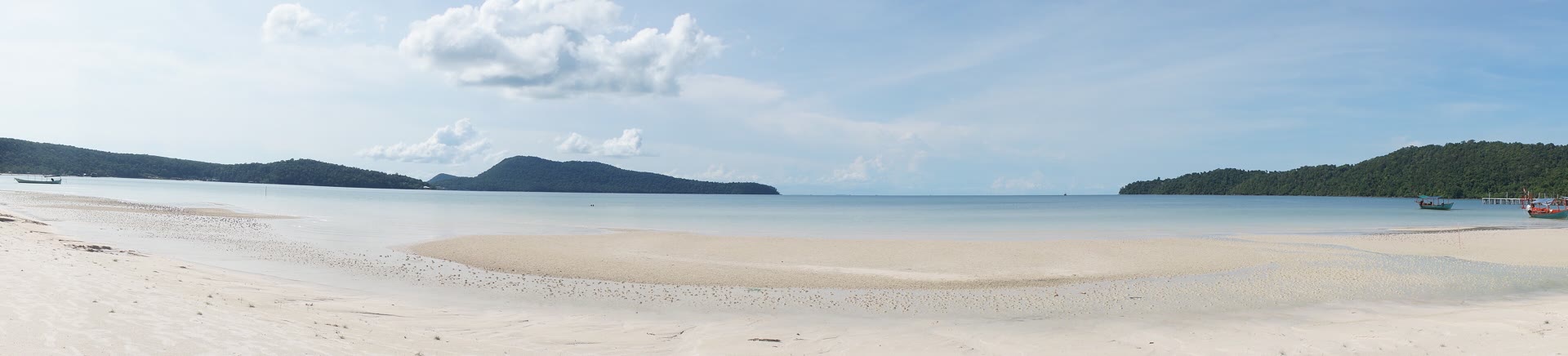
The island has three main areas where travelers stay: Saracen Bay on the east coast (the most developed, with guesthouses and restaurants lining a crescent of white sand), M'Pai Bay in the north (a laid-back fishing village with backpacker hostels and a community feel), and Lazy Beach on the west coast (remote, quiet, and accessible only by boat or a jungle hike). Understanding these three zones is the key to understanding movement on the island. Within each area, everything is walkable. Between them, you will need a boat or a willingness to trek through dense tropical forest.
Forget everything you know about urban transport. Koh Rong Samloem rewards slow travel, and the limited transport options are part of its charm. Here is how to navigate this beautiful island.
Getting Around Koh Rong Samloem on Foot
Walking is the primary way to get around on Koh Rong Samloem, and for most travelers staying in one area, it is the only transport you will need. Saracen Bay stretches along a crescent of sand that you can stroll from one end to the other, and M'Pai Bay is even more compact. Within these zones, paths are sandy, unpaved, and mostly flat.
Between the main areas, jungle trails connect parts of the island, but these are not casual strolls. The most popular hiking trail runs from Saracen Bay to Lazy Beach on the opposite coast. This trek runs through dense jungle, crossing the island's hilly interior. The path is marked but can be muddy, overgrown, and slippery after rain. Wear proper shoes (not flip-flops), bring water, and start early to avoid the midday heat. Some travelers also hike from Saracen Bay northward toward M'Pai Bay, but this trail is longer, less maintained, and easy to lose in places. Ask your guesthouse for current trail conditions before setting out.
Night Walking
Bring a headlamp or flashlight. The island has very limited electricity, and once the sun sets, paths between guesthouses and restaurants are pitch dark. Solar-powered lights mark some stretches of Saracen Bay, but do not count on them. Walking along the beach at night is magical - bioluminescent plankton often light up the shallows - but navigating jungle trails after dark is not recommended.
Getting Around Koh Rong Samloem by Longtail Boat and Water Taxi
When walking is not practical - either because of distance, terrain, or heavy luggage - boats are how you move between the island's different bays. This is the closest thing Koh Rong Samloem has to a taxi service.
Longtail boats (narrow wooden boats with an outboard motor) operate informally around the island. There is no schedule and no fixed route. You arrange rides directly with boat operators at the piers in Saracen Bay, M'Pai Bay, or through your guesthouse. Most guesthouses can radio a boat for you or know a local captain.
Prices for boat transfers between bays are not fixed: they depend on distance, the number of passengers, fuel costs, weather and time of day. Ask your guesthouse for a current price and always agree on the price before boarding.
Some guesthouses on Lazy Beach and at more remote locations include boat transfers in their booking, so check when you reserve. This can save both money and the hassle of arranging your own ride.
Snorkeling and Island Tour Boats
Many of the same longtail boat operators who shuttle travelers between bays also offer snorkeling trips and island circumnavigation tours. Snorkeling trips visit coral reefs, and island tours are often the only way to reach the island's most secluded beaches and swimming spots on the western shore. Guesthouses in all three main areas can arrange these trips.
Getting Around Koh Rong Samloem by Kayak and Paddleboard
For independent coastal exploration, kayaks and stand-up paddleboards are available for rent at several guesthouses and small resorts along Saracen Bay. Rental rates are usually charged per hour or per day, so ask for the price before you set off.
Kayaking is a genuinely practical way to move along the coast, not just a recreational activity. You can paddle from Saracen Bay around the southern tip to Lazy Beach if conditions are calm. This is a scenic and rewarding alternative to the jungle hike or a paid boat ride. However, be cautious: the open water between the east and west coasts can be rough, especially during the wet season (June through October) when swells pick up. Stick close to shore, wear a life jacket, and check conditions with locals before heading out.
M'Pai Bay also has kayak rentals, and the calm waters of the northern bay are ideal for paddling to nearby small beaches and rocky outcrops.
Getting Around Koh Rong Samloem by Swimming
This might sound unusual in a transport guide, but swimming is a legitimate way to cover short distances on Koh Rong Samloem. The waters around Saracen Bay are calm, warm, and shallow for a long way out. Some travelers swim between neighboring sections of beach rather than walking around rocky headlands. At low tide, you can wade through ankle-deep water to reach small islands and sandbars just offshore.
That said, use common sense. Do not swim long distances alone, be aware of boat traffic (longtails do not always see swimmers), and avoid swimming far from shore, where currents can be strong. Jellyfish are occasionally present, particularly in the wet season.
Comparing Your Options
| Mode | Best For |
|---|---|
| Walking (within one bay) | Daily movement within Saracen Bay, M'Pai Bay, or Lazy Beach |
| Jungle hiking (between bays) | Adventurous travelers going from Saracen Bay to Lazy Beach |
| Longtail boat / water taxi | Moving between bays, heavy luggage, reaching remote beaches |
| Kayak rental | Coastal exploration, reaching nearby beaches independently |
| Paddleboard rental | Leisurely coastal cruising in calm conditions |
| Snorkeling / tour boat | Reaching remote western beaches and snorkeling spots |
Practical Tips for Getting Around Koh Rong Samloem
Koh Rong Samloem is beautifully simple, but a few things catch first-time visitors off guard. Here is what you should know before you arrive.
- Bring cash. Do not count on ATMs on the island. Some guesthouses accept card payments, but boat operators, kayak rentals, and small shops are cash only. Bring enough US dollars (the widely accepted currency in Cambodia) and Cambodian riel to cover your entire stay, plus a buffer. Small denominations are essential, because boat captains rarely have change for large notes.
- Pack light and smart. You will carry your own bags from the ferry pier to your accommodation, often along sandy paths or through shallow water. A backpack beats a rolling suitcase every time. Waterproof bags or dry sacks protect electronics during boat transfers when spray is inevitable.
- Footwear matters. Flip-flops work on the beach and around your guesthouse, but bring a pair of sport sandals or trail shoes if you plan to hike between bays. The jungle trails have roots, rocks, and mud that will defeat flimsy footwear.
- Electricity is limited. Many guesthouses run on solar power or generators with set hours. Charge your phone and power bank whenever you can. Download offline maps before arriving - Google Maps has basic trail outlines for the island, and Maps.me offers better detail for hiking paths.
- Wet season changes everything. From June through October, seas can be rough, ferries may be delayed or canceled, and longtail boats sometimes refuse to operate. The UK government advises that tourist boats sometimes operate despite weather warnings, particularly between Sihanoukville and the nearby islands, and that accidents have happened when boats are overloaded or poorly maintained.[1] Jungle trails become slippery mud chutes. The island is quieter and cheaper during this period, but transport is less reliable. Plan extra buffer days in case you get weathered in.
- No ride-hailing apps. Grab, PassApp, and other Cambodian ride-hailing services do not operate here. Everything is arranged in person or through your guesthouse. Embrace it.
- Respect the environment. Do not leave trash on trails, do not touch coral, and avoid using reef-damaging sunscreen. The island's beauty is its main asset, and keeping it clean is everyone's responsibility.
- Learn a few Khmer phrases. English is spoken at most guesthouses, but boat operators and local villagers may speak limited English. "Awkun" (thank you) and "Ponman?" (how much?) go a long way. A smile works everywhere.
For travelers comparing ferry options and boat schedules to and from the island, GoAsia.cc can help you sort through available routes and prices to plan your arrival and departure.
Popular Routes and Destinations
Getting to Koh Rong Samloem and moving between the nearby islands involves ferries operating from the mainland port of Sihanoukville.
Sihanoukville to Koh Rong Samloem
Ferries and speedboats connect Sihanoukville to Koh Rong Samloem. On booking platforms, tickets cost about $13 one way and the crossing is listed at 40 minutes to 1 hour 30 minutes, depending on the vessel and the pier on the island (October 2026).[2] Buva Sea is one of the operators on this route.[3] Saracen Bay is a common stop, and M'Pai Bay is served by some boats and otherwise needs a transfer. Book in advance during peak season (November through March) as ferries can sell out.
Koh Rong to Koh Rong Samloem
If you are island-hopping from neighboring Koh Rong, ferries run between the two islands; booking platforms list fares of about $6 to $14 and journey times of 10 to 50 minutes, depending on the boat (October 2026).[4] This is a popular route for travelers combining both islands in one trip. Check that your ticket is a direct inter-island service, because routing back through Sihanoukville adds hours and cost. Check with operators at the Koh Rong pier for direct boats, or ask your guesthouse on either island to arrange a longtail transfer (more expensive but more flexible).
Getting Between Bays on Arrival
Many ferries dock at Saracen Bay. If your accommodation is at M'Pai Bay or Lazy Beach, you have two options: arrange a boat transfer in advance through your guesthouse (strongly recommended), or find a longtail at the Saracen Bay pier after you arrive. During peak season, some guesthouses at M'Pai Bay and Lazy Beach send boats to meet the ferries, but confirm this when you book your stay.
Frequently Asked Questions
Use this guide to compare local transport in Koh Rong Samloem. When bookable tickets are available, the booking tool shows current options and prices.
Walking is the primary way to get around within each area of the island. For travel between the main bays (Saracen Bay, M'Pai Bay, and Lazy Beach), longtail boats are the most practical option. You can also hike jungle trails between bays, though these are rugged.
Walking is free, and most travelers spend nothing on transport if they stay in one area. Longtail boat rides between bays are negotiated individually, so agree on the price before boarding, and kayak rentals are usually charged per hour or per day. There are no taxis, motorbikes, or tuk-tuks on the island.
There is no formal public transport on the island, but longtail boats are generally safe when seas are calm. Always wear a life jacket on boats, avoid boat transfers in rough weather, and be cautious on jungle hiking trails which can be slippery. Walking along the beaches is safe at all hours, though bring a flashlight at night as there is very little lighting.
No. There are no roads, cars, taxis, or motorbikes on the island. Ride-hailing apps like Grab and PassApp do not operate here. All motorized transport is by boat, arranged informally through your guesthouse or directly with boat operators at the piers.
Within each bay area, absolutely. Saracen Bay can be walked end to end, and M'Pai Bay is even smaller. However, walking between bays requires jungle hiking on uneven trails, which is doable but demanding. Most travelers walk within their area and take boats between bays.
Ferries and speedboats run from Sihanoukville to Koh Rong Samloem. On booking platforms, tickets cost about $13 one way and the crossing is listed at 40 minutes to 1 hour 30 minutes, depending on the vessel and stop. Book in advance during peak season as boats fill up.
Yes, ferries run between the two islands. Booking platforms list fares of about $6 to $14 and journey times of 10 to 50 minutes. Check that your ticket is a direct service. Alternatively, your guesthouse can sometimes arrange a private longtail boat transfer between the islands.
Yes, definitely. Do not count on ATMs on the island. Boat operators, kayak rentals, and most small shops only accept cash. Bring enough US dollars in small denominations to cover your entire stay, including any boat transfers you might need between bays.
Sources and background
Numbers in the text such as [1] refer to these sources.
- [1] UK Foreign, Commonwealth & Development Office: Safety and security - Cambodia travel advice. Retrieved October 15, 2026.
- [2] 12Go: 12Go timetable: Sihanoukville to Koh Rong Samloem. Retrieved October 15, 2026.
- [3] Buva Sea: Buva Sea Cambodia. Retrieved October 15, 2026.
- [4] 12Go: 12Go timetable: Koh Rong to Koh Rong Samloem. Retrieved October 15, 2026.
Guide prices and journey times are indicative, not live quotes. A booked package may include transfers and waiting time as well as the main journey. Check the selected offer, pickup point and current conditions before booking.