
Getting Around Stung Treng - Local Transport Guide
Contents
- 1. Getting Around Stung Treng on Foot
- 2. Getting Around Stung Treng by Motodop
- 3. Getting Around Stung Treng by Tuk-Tuk
- 4. Getting Around Stung Treng by Rented Motorbike or Bicycle
- 5. Getting Around Stung Treng by Boat
- 6. Getting Around Stung Treng by Long-Distance Bus and Van
- 7. Comparing Your Options
- 8. Practical Tips for Getting Around Stung Treng
- 9. Popular Routes and Destinations
- 10. Frequently Asked Questions
Stung Treng sits where the Sekong River meets the mighty Mekong in Cambodia's quiet northeast, and the pace here matches the slow brown current that drifts past town. This is a small provincial capital, not a sprawling metropolis, and most travelers are surprised by how compact the center actually is. The riverfront, the market, the guesthouses and the main roads can all be reached on foot within fifteen or twenty minutes.
What that means for getting around is simple: you will not find metros, app-based ride networks running everywhere, or air-conditioned city buses. Instead, transport here is human-scale and personal. A motodop driver who recognizes you by day two, a tuk-tuk parked near the market waiting for a fare, a battered minivan loading up for the long haul to Phnom Penh or the Laos border. The rhythm is unhurried and the distances are short.
Stung Treng works best as a base for exploring the surrounding region, from the Mekong river dolphins near the Laos frontier to the waterfalls and islands upstream. So while moving around town itself is easy, the real transport questions usually involve longer journeys out of town. You can compare transport options for those longer hauls on GoAsia.cc to plan ahead.
Getting Around Stung Treng on Foot
The single best way to experience the town center is on your own two feet. Stung Treng's core is small and flat, hugging the riverbank, and the main streets form a rough grid that is easy to navigate. From most guesthouses you can walk to the central market, the riverside promenade, the local eateries and the boat landings in well under twenty minutes.
Walking is free, lets you soak in the relaxed local atmosphere, and means you never have to negotiate a fare for short distances. The streets are generally calm compared to Cambodia's bigger cities, with far less traffic chaos than Phnom Penh or Siem Reap. Mornings and late afternoons are the most pleasant times to stroll, since the midday heat can be punishing. Wear a hat, carry water, and stick to shade where you can. Sidewalks are patchy in places, so watch your footing and be ready to share the road edge with motorbikes.
Getting Around Stung Treng by Motodop
The motodop, a motorbike taxi, is the workhorse of local transport across Cambodia, and Stung Treng is no exception. These are simply local men on motorbikes who will carry you on the back seat for a small fee. You will spot them loitering near the market, the bus drop-off points and the riverfront, often calling out to passing foreigners.
For short hops within town, expect to pay roughly 2,000 to 4,000 riel (around $1) per ride, while trips to the edge of town or nearby villages cost more depending on distance. Always agree on the price before you climb on, since meters do not exist here. Motodops are quick, cheap and perfect for darting across town when the heat saps your enthusiasm for walking.
Helmets for passengers are rarely offered, so if road safety matters to you, this is worth keeping in mind. Drivers know the area well and can also be hired by the hour or day to take you to attractions outside town, which is a common and affordable arrangement. A little Khmer goes a long way when negotiating, and showing your destination on a map or written down helps bridge the language gap.
Getting Around Stung Treng by Tuk-Tuk
Tuk-tuks in Stung Treng are the small motorbike-pulled carriages typical of Cambodia, offering a bit more shade and space than riding pillion on a motodop. They are ideal if you are traveling with luggage, with a companion, or simply want to sit back rather than hold on. You will find them clustered near the market and at the bus and van arrival points.
Fares are negotiable and a touch higher than motodops, typically around 4,000 to 8,000 riel (roughly $1 to $2) for trips within and just outside town. As with everything here, settle the price before you set off. Tuk-tuk drivers are often happy to be hired for half-day or full-day excursions to spots like the riverside temples, the Thala Barivat ferry crossing, or out toward the waterfalls, and this is usually the most comfortable way to see the surrounding countryside without your own transport.
Tuk-tuks are slower than motodops in traffic but far more relaxed, and the open sides catch a welcome breeze on hot days. Because Stung Treng sees fewer tourists than Cambodia's headline destinations, drivers here tend to be less pushy than their counterparts in Siem Reap, though friendly bargaining is still expected.
Getting Around Stung Treng by Rented Motorbike or Bicycle
For independent travelers, renting your own wheels is one of the most rewarding options. Several guesthouses and small shops rent out motorbikes for roughly $5 to $8 per day, giving you total freedom to explore town and the scenic roads that follow the rivers. The terrain is flat and traffic is light, making it far less intimidating than riding in a major Cambodian city.
Bicycles are also available at some guesthouses for just a couple of dollars a day, and they are a lovely way to potter along the riverfront and quiet back lanes at your own pace. If you rent a motorbike, make sure it comes with a helmet, check the brakes and lights before you ride off, and fill up at one of the small fuel stalls that sell petrol from bottles or pumps around town. An international driving permit is technically required, and police occasionally stop foreign riders, so carry your documents.
Getting Around Stung Treng by Boat
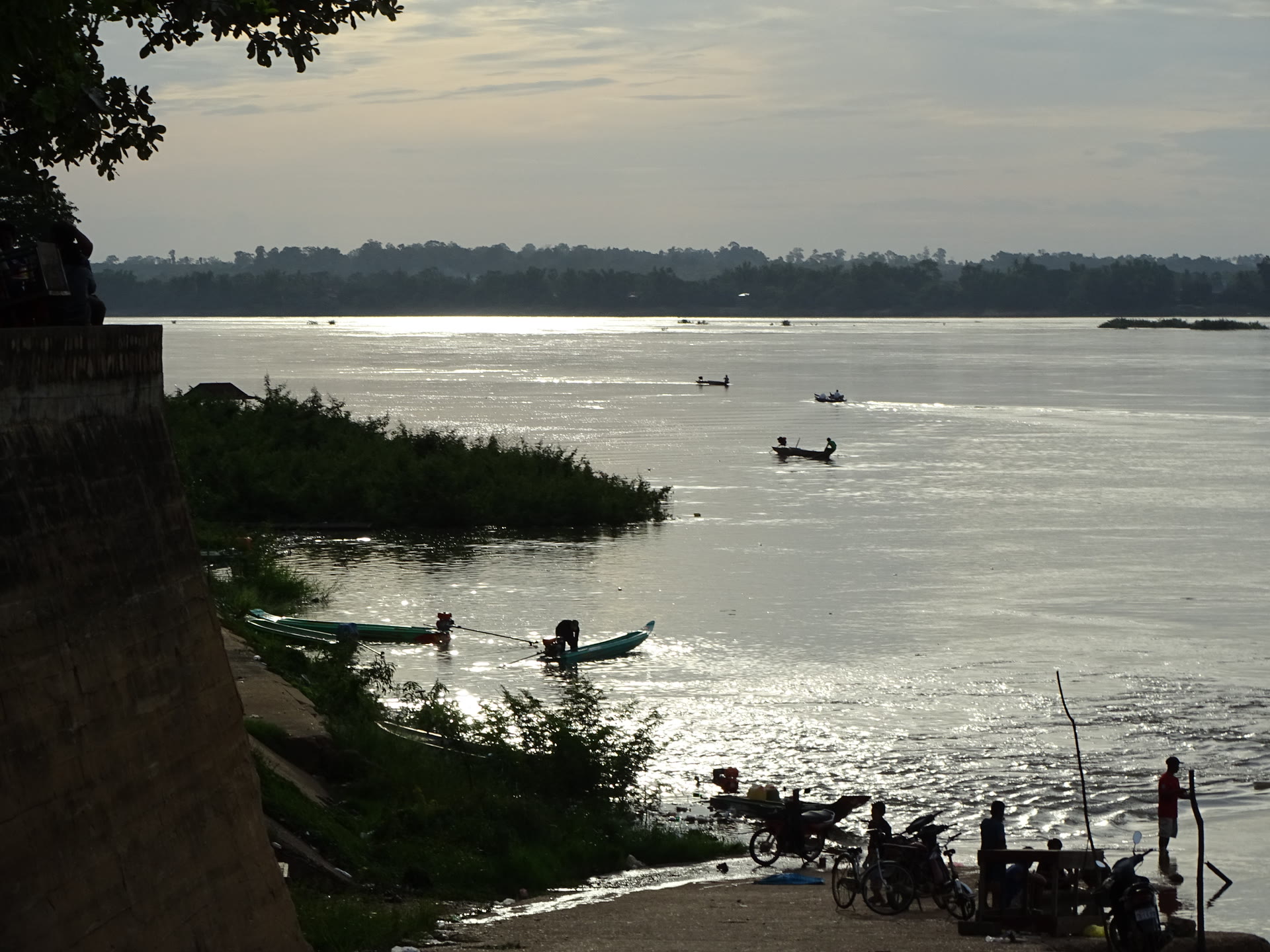
Given the town's setting at the meeting of two rivers, boats are part of daily life here. Small wooden ferries and longtail boats cross the Mekong to Thala Barivat and the villages on the far bank, and they are an authentic, inexpensive way to get a different view of the area. Crossings are cheap, often just a few thousand riel for foot passengers, with motorbikes carried for a little more.
Boats can also be chartered for trips upstream toward the Laos border to see the rare Irrawaddy dolphins, or to explore the flooded forest and river islands. These are arranged informally through guesthouses, tuk-tuk drivers or directly at the riverbank, and prices depend on the distance and how long you want to be out on the water. Negotiate the full price in advance, bring sun protection, and do not expect life jackets as standard.
Getting Around Stung Treng by Long-Distance Bus and Van
While buses and minivans are not for getting around within the town, they are the lifeline connecting Stung Treng to the rest of Cambodia and to southern Laos. The bus and van station, along with various pick-up points, sits near the center, so most journeys begin and end close to where you are staying.
Minivans are the faster, more frequent option for regional travel and depart throughout the day, while larger buses tend to run on fixed schedules toward Phnom Penh, Kratie, Kampong Cham and the Laos crossing at Trapeang Kriel. Tickets can be bought at the station, through your guesthouse, or via booking platforms. Vans are quicker but cramped and drivers can be aggressive, whereas buses are slower but roomier and a little more comfortable for long stretches.
Comparing Your Options
| Mode | Typical Cost | Duration | Best For |
|---|---|---|---|
| Walking | Free | Up to 20 min across the center | Exploring the riverfront and market |
| Motodop | Around $1 per short trip | Minutes within town | Quick, cheap solo hops |
| Tuk-tuk | Roughly $1 to $2 in town | Minutes within town | Luggage, couples, day tours |
| Rented motorbike | About $5 to $8 per day | Self-paced | Independent countryside exploring |
| Bicycle | A couple of dollars per day | Self-paced | Leisurely riverside rides |
| Boat | A few thousand riel for crossings | Varies by route | River crossings and dolphin trips |
| Bus (regional) | From $8 | From 1h 30min | Longer hauls between towns |
| Van (regional) | $8 to $11 | From 1h | Faster regional connections |
Practical Tips for Getting Around Stung Treng
Stung Treng is one of Cambodia's more laid-back towns, and getting around is refreshingly low-stress once you understand the local way of doing things. A few pointers will save you money and hassle.
- Carry small denominations in both Cambodian riel and US dollars. Both currencies circulate freely, prices are often quoted in either, and change for large notes can be hard to come by.
- Always agree on a fare before getting into a tuk-tuk, onto a motodop, or onto a chartered boat. Smiling, friendly negotiation is normal and expected.
- Download an offline map app such as Maps.me or Google Maps with the area saved, since mobile data coverage can be patchy outside town and pointing to a map helps with directions.
- App-based ride-hailing like Grab and PassApp is widespread in Phnom Penh but generally does not operate in Stung Treng, so plan to flag down drivers in person.
- Learn a handful of Khmer words and numbers for prices, or have your guesthouse write down destinations in Khmer script, as English is limited among many drivers.
- The midday sun is intense. Travel in the cooler morning or late afternoon when you can, and always carry water.
- For longer journeys, book van or bus tickets a day ahead in the busy season, and confirm pick-up details with your guesthouse since departure points can vary.
Scams are rare here compared to Cambodia's tourist hotspots, but always confirm whether a quoted price is per person or for the whole vehicle, and double-check that your luggage is loaded before a van pulls away. At night the town is quiet and generally safe, though streetlighting is limited, so a tuk-tuk or motodop is a sensible choice after dark rather than walking unfamiliar lanes.
Popular Routes and Destinations
The most common reason travelers need transport beyond town is to connect onward through Cambodia or to cross into Laos. Regional buses and minivans handle these journeys from the central station area.
For shorter regional hops, a bus typically costs around $8 and takes about 1 hour 30 minutes, making it a budget-friendly choice if you do not mind the slower pace. Minivans cover similar routes and cost between $8 and $11, with journey times from roughly 1 hour to 1 hour 30 minutes, so they are the better pick when you want to save time. Within town itself, none of these are necessary, a motodop or tuk-tuk will get you anywhere you need to go for around a dollar or two.
Frequently Asked Questions
Use this guide to compare local transport in Krong Stung Treng. When bookable tickets are available, the booking tool shows current options and prices.
For the compact town center, walking is genuinely the best option since most places are within a fifteen to twenty minute stroll. For longer hops or when the heat is too much, hop on a motodop or tuk-tuk, and for exploring the surrounding countryside, rent a motorbike or bicycle.
Short motodop rides within town cost around $1, while tuk-tuks run roughly $1 to $2. Renting a motorbike is about $5 to $8 per day and bicycles just a couple of dollars. Regional buses start from $8 and minivans cost $8 to $11.
Yes, Stung Treng is a relaxed and generally safe provincial town with far less scam activity than the major tourist centers. The main thing to note is that motodops rarely provide passenger helmets, so road safety is a personal judgment call. At night, take a tuk-tuk rather than walking poorly lit lanes.
App-based services like Grab and PassApp that work well in Phnom Penh generally do not operate in Stung Treng. You will need to flag down tuk-tuks and motodops in person, usually near the market or the bus and van arrival points, and agree on a price before you set off.
Very much so. The town center is small, flat and hugs the riverbank, so you can reach the market, the riverfront and most guesthouses on foot within twenty minutes. Just plan around the midday heat by walking in the cooler morning and late afternoon hours.
English is limited among many drivers, so learn a few Khmer numbers for negotiating fares and have your guesthouse write down destinations in Khmer script. Showing your destination on an offline map app also works well for bridging the gap.
Regional buses and minivans depart from the central station area throughout the day. Buses typically cost around $8 and take about 1 hour 30 minutes for shorter routes, while faster minivans cost $8 to $11 with journey times from roughly 1 hour. Book a day ahead in busy periods.
Guide prices and journey times are indicative, not live quotes. A booked package may include transfers and waiting time as well as the main journey. Check the selected offer, pickup point and current conditions before booking.