Plan your Cambodia bus trip with our guide to routes, operators like Giant Ibis and Larryta, comfort classes, booking tips, and what to expect on board.
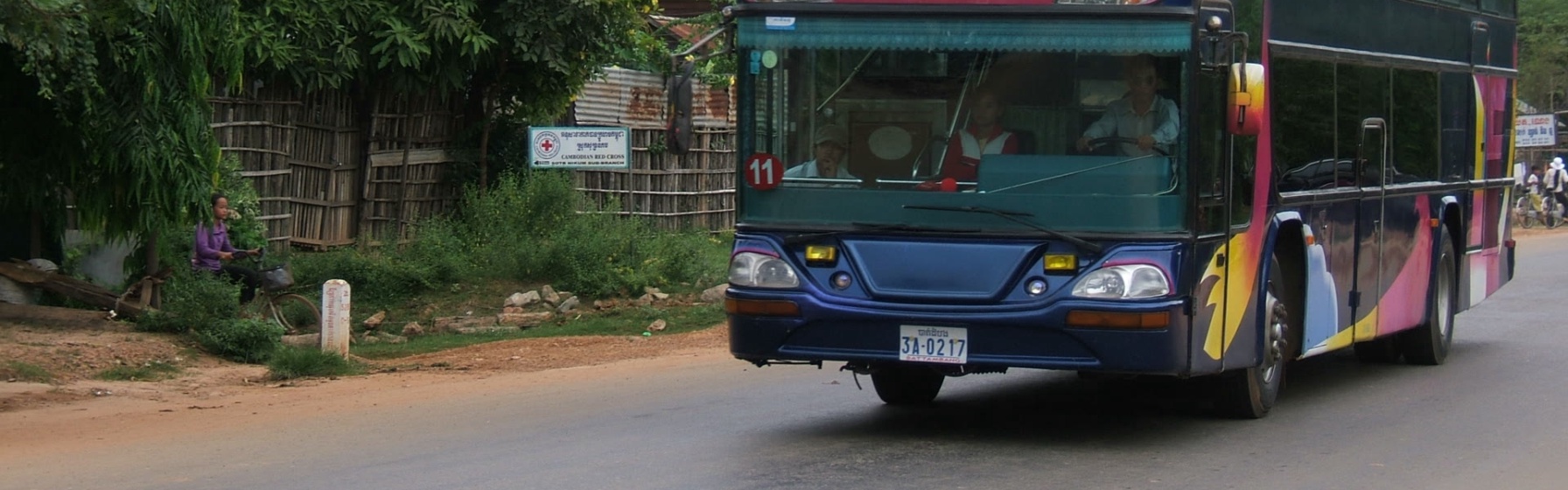
Cambodia's buses rumble through landscapes that shift from the chaotic energy of Phnom Penh's outskirts to vast stretches of emerald rice paddies, red-dirt roads flanked by stilted wooden houses, and the lush jungle corridors leading to ancient temple complexes. For decades, Cambodia's road network was in rough shape - a legacy of conflict and underinvestment - but the country's bus system has evolved dramatically, becoming the backbone of overland travel for locals and visitors alike. Riding a bus here is more than just getting from A to B; it is a window into the rhythm of Cambodian life, where vendors board at rest stops selling fried tarantulas and tropical fruit, and fellow passengers offer warm smiles despite any language gap.
Today, buses connect most destinations a traveler would want to reach, making them the most practical and affordable way to explore the country beyond the main tourist triangle of Phnom Penh, Siem Reap, and Sihanoukville.
The Bus Network in Cambodia
Cambodia's bus network radiates outward from Phnom Penh, the capital and main transport hub. Popular routes link Phnom Penh to Siem Reap (the gateway to Angkor Wat), Sihanoukville (the coastal hub for beaches and islands), and the Vietnamese border at Bavet for travelers heading to Ho Chi Minh City. Other popular routes connect Phnom Penh to Kampot and Kep in the south, Battambang in the northwest, and Kratie and Sen Monorom in the more remote east.
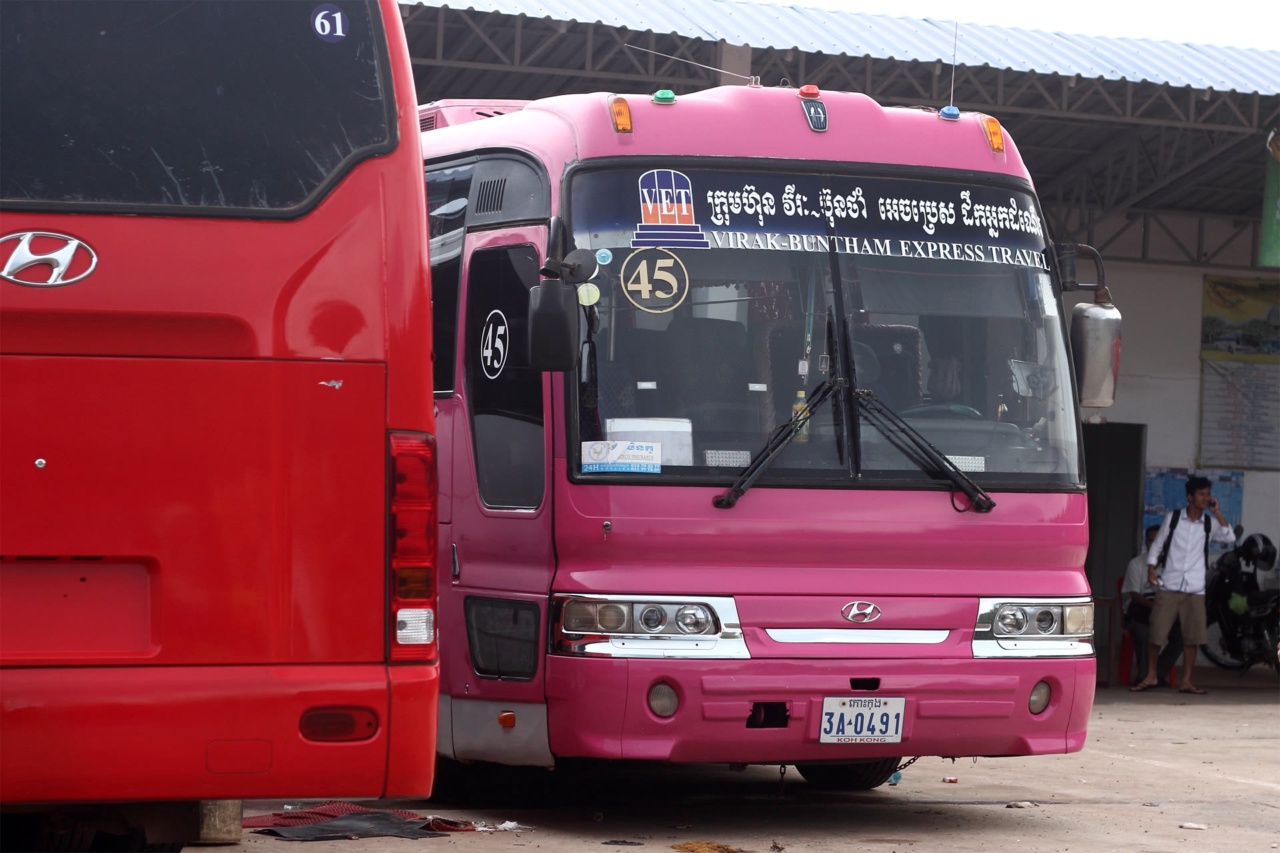
Several operators serve the main routes. Giant Ibis runs premium buses between Phnom Penh, Siem Reap, Sihanoukville, Kampot, Kep, Battambang, Ho Chi Minh City and Bangkok.[1]Larryta Express serves Phnom Penh, Siem Reap, Sihanoukville, Battambang and Poipet.[2] Other companies, such as Virak Buntham, Mekong Express and Capitol, also operate in Cambodia.
Journey times on the main corridors have come down: Giant Ibis lists Phnom Penh to Siem Reap at 320 km and 6 hours,[3] and Phnom Penh to Sihanoukville at 240 km and 4 hours along the expressway.[4] Journeys to more remote destinations such as Sen Monorom or Preah Vihear can take longer, especially in the rainy season when unpaved sections turn to mud.
Classes and Comfort Levels
Cambodian bus travel generally falls into three tiers, though the terminology varies by operator.
Class
Typical Features
Best For
VIP / Premium
Reclining seats, air conditioning, onboard Wi-Fi, power outlets, complimentary water and snacks, sometimes a meal
Travelers wanting maximum comfort and reliability
Standard Bus
Air conditioning, assigned seating, basic legroom, water provided
Budget-conscious travelers on major routes
Minivan
Small vans, air conditioning, faster travel times but less legroom
Shorter routes or destinations not served by large buses
Giant Ibis operates at the VIP end, with free Wi-Fi, power outlets, extra legroom, and a complimentary pastry and water on board.[1] Minivans are faster but can feel cramped.
Service quality varies between operators, so reading recent reviews before booking can save you from a frustrating ride.
Booking and Tickets
Booking bus tickets in Cambodia is straightforward. The most convenient approach is to book online through aggregator platforms - GoAsia.cc lets you compare operators, routes, and departure times side by side, which is especially useful when multiple companies serve the same route at different comfort levels. Giant Ibis and Larryta also have their own booking websites and apps.[1][2]
Alternatively, you can buy tickets at bus company offices. Giant Ibis departs from its terminal on Street 106 in Phnom Penh, near the Night Market,[3] and Larryta has a branch in Phnom Penh.[2] Guesthouses and travel agents throughout the country sell tickets too, though they sometimes add a small commission. For popular routes during peak season (around Khmer New Year in April, Pchum Ben in September/October, and the Christmas-New Year holiday period), booking a day or two ahead is wise. Outside these periods, walk-up purchases are often possible for standard and budget services, though VIP seats can sell out.
Giant Ibis accepts KHQR, Visa, MasterCard and UPI online,[1] and Larryta accepts KHQR and credit or debit cards.[2] At physical counters, cash in US dollars or Cambodian riel is standard.
What to Expect on Board
The experience varies depending on your chosen operator. On a Giant Ibis bus, the crew hands out a pastry, a bottle of water and a cold towel, and the Phnom Penh to Sihanoukville service stops for 30 minutes at a rest area along the expressway, where you can buy food and use a restroom.[4] Giant Ibis buses have onboard Wi-Fi and power outlets, and toilets only on its night buses.[1]
On budget services, stops may be more frequent, vendors may board to sell snacks and drinks, and the entertainment system, if present, may play music or videos at high volume. This is all part of the experience, and many travelers find it charming.
Scenery along the major routes is genuinely beautiful. The Phnom Penh to Siem Reap highway passes through flat agricultural land dotted with sugar palms - an iconic Cambodian silhouette. The road south to Kampot winds through pepper plantations and karst mountains. Heading east toward Kratie, the landscape becomes wilder, with forest cover increasing as you move toward the Mekong River towns.
Luggage is stored in the cargo hold below, and you will want to keep valuables in a daypack on your lap or at your feet. Most VIP buses have overhead racks for smaller bags. Giant Ibis includes a 20 kg baggage allowance.[4] Charging outlets are standard on its buses but hit-or-miss on budget ones, so a portable power bank is a smart addition to your kit. Wi-Fi, where advertised, can be unreliable in rural areas, as Giant Ibis itself notes,[4] so do not count on it for anything beyond basic messaging.
Tips for Bus Travel in Cambodia
Dress for the cold: Cambodian buses blast air conditioning to near-freezing levels. Bring a light jacket or scarf, even if it is sweltering outside. This is one of the most universal pieces of advice for Cambodia and it is absolutely true.
Bring your own snacks and water: Rest stop food is generally safe but limited in variety. Having your own supplies means you will not go hungry if the bus skips a stop or the options do not appeal.
Allow buffer time: Delays happen, especially on routes with road construction or during rainy season flooding. Avoid booking a bus that arrives just hours before an onward flight or boat connection.
Choose your seat wisely: Front seats offer less bumping on rough roads. Back seats near the restroom (on buses that have one) can be unpleasant on long journeys. Middle rows tend to be the sweet spot.
Check border status and avoid border-run scams: Land crossings between Thailand and Cambodia are currently suspended,[5] so confirm the situation before booking a Bangkok service. On international routes to Vietnam, some budget operators work with border "helpers" who charge inflated fees for visa processing. Cambodia's official e-Visa site lists Bavet among the land checkpoints that accept e-Visas,[6] so research visa requirements beforehand and handle the process yourself at the immigration window.
Rainy season realities: From June through October, heavy rains can cause road flooding, particularly on routes to eastern Cambodia. Journeys may take significantly longer, and some remote routes become impassable. Stick to major highways or consider flying if your schedule is tight.
Language tips: English is widely spoken at ticket counters in tourist areas, but bus drivers and staff on budget services may speak only Khmer. Having your destination written in Khmer script on your phone can prevent confusion. A simple awkun (thank you) goes a long way.
Night buses: Giant Ibis runs night buses on the Phnom Penh to Siem Reap route.[7] These save on a night's accommodation but comfort varies. If you are a light sleeper, a daytime VIP bus and a cheap guesthouse may leave you better rested.
Sources and background
Numbers in the text such as [1] refer to these sources.