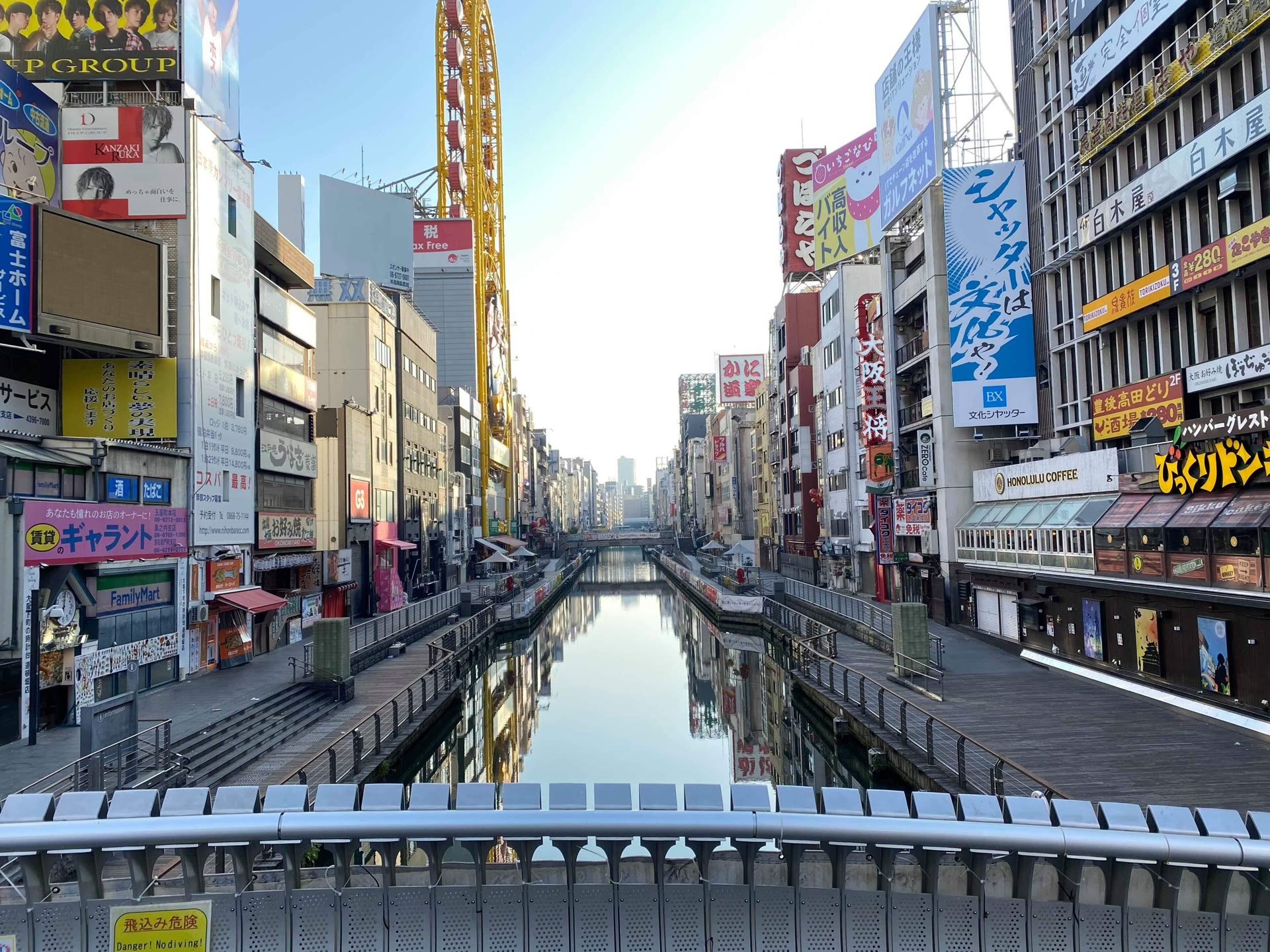
Dotonbori Osaka: food, the Glico sign and a practical evening visit
Contents
- 1. Choose the visit that suits your time and budget
- 2. Choose food from the actual menu, not the queue
- 3. Plan the Glico sign and river walk separately
- 4. Compare the cruise and Ferris wheel tickets
- 5. Find the correct cruise boarding point
- 6. Check Ebisu Tower operation before climbing to the entrance
- 7. Get to Namba, add the final walk and plan your return
- 8. Sources and background
- 9. Frequently Asked Questions
Choose Dotonbori for a canal-side walk, Osaka food and the illuminated Glico sign; add a cruise only if the water-level view matters to you. This is a district of separate businesses, not one attraction with a single opening time. You can build a useful visit without buying either a boat or Ferris wheel ticket.
Plan two to three hours for a walk and a meal, with extra time for a booked activity or a restaurant queue. Check your last train before you commit to a late evening.
Choose the visit that suits your time and budget
| Option | Why choose it | Main limitation |
|---|---|---|
| Walk and a meal | Flexible time for the signs, river and your own food choices | Menus, opening hours and queues vary by business |
| Tombori River Cruise | A short guided view from the water | A separate timed ticket, weather and available seats |
| Ebisu Tower Ferris wheel | An elevated view rather than a canal trip | Separate admission, maintenance and rider restrictions |
| Hozenji Yokocho | A stone-paved alley and temple context alongside the main district | A working neighbourhood, not a guaranteed quiet escape |
Dotonbori sits in Minami near Namba, and each shop sets its own hours and holidays (Osaka tourism guide).[1] The canal was begun in 1612 and completed in 1615, and theatres followed (local association's history).[2]
Things to Do
Offers are only loaded from GetYourGuide after you click. GetYourGuide can then process your IP address and set cookies. Privacy Policy
GetYourGuide partner offers. GoAsia may earn a commission if you book through these offers. Check whether tickets or transfers are included, and follow the attraction's official booking and admission rules.
Choose food from the actual menu, not the queue
Takoyaki, okonomiyaki and kushikatsu are among Osaka's characteristic dishes. Takoyaki contains octopus; okonomiyaki is a griddle-cooked batter dish with cabbage and chosen fillings; kushikatsu uses battered, breaded and fried skewered ingredients.[3] Pick what fits your appetite; no speciality is compulsory.
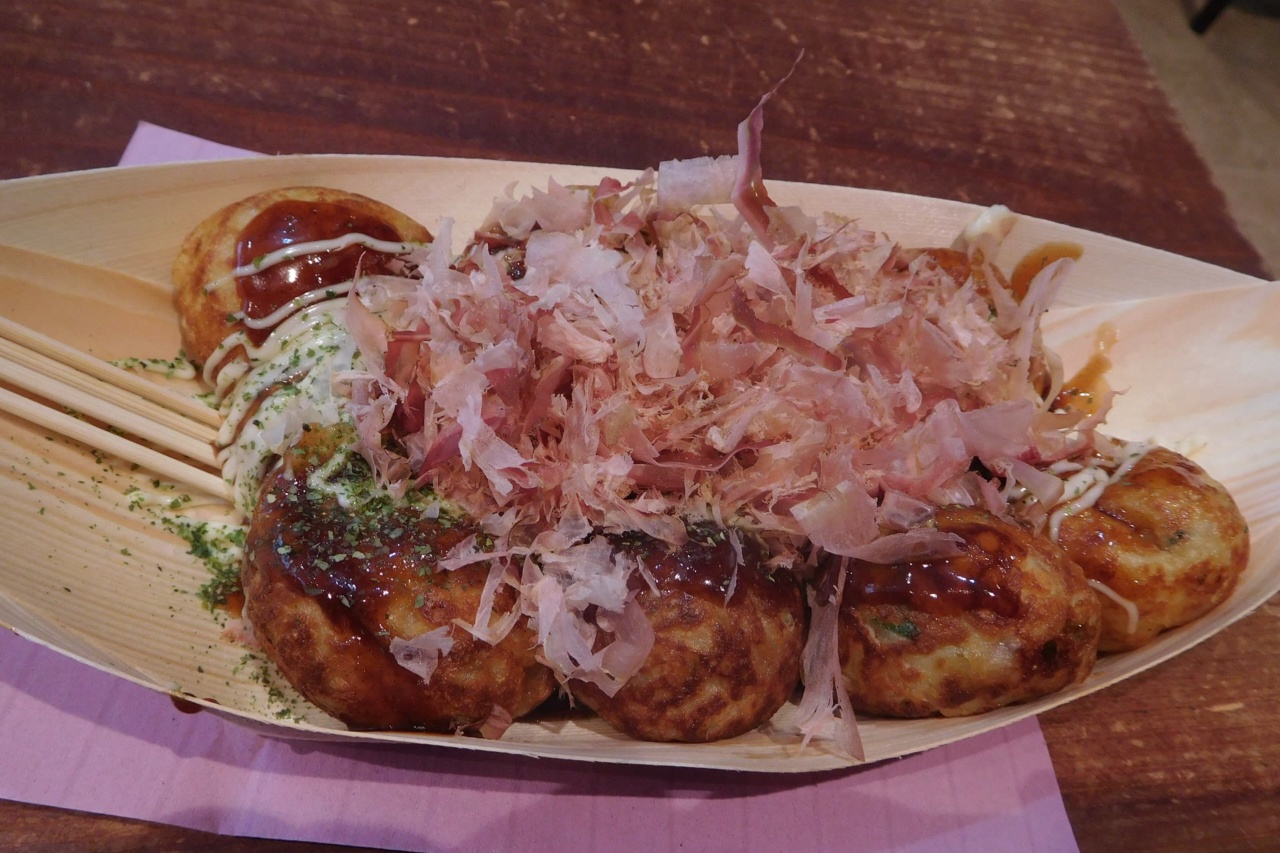
Compare the displayed price, portion size, drinks and any additional charge before you order. A long line is not proof of quality or value, and a restaurant with a promoter is not automatically bad: choose by the menu, your dietary needs and how long you are willing to wait.
If you avoid meat, fish or particular allergens, ask staff about the full recipe: a vegetable filling does not mean the broth, sauce or cooking equipment is free of them. Payment methods differ from shop to shop, so ask before you order and keep some cash as a backup.
Use the shop's dining space or a place it designates, keep entrances clear and ask where to dispose of packaging. For kushikatsu, the familiar no-double-dipping rule concerns a shared sauce container where one is provided.[3] Follow the restaurant's serving method, since not every shop uses a communal bowl.
Plan the Glico sign and river walk separately
The first Glico sign went up in 1935, and the present sixth version dates from October 2014. It uses LEDs and is lit from sunset until midnight, with shorter hours at times.[4] It does not switch on at a fixed hour, so check the day's sunset time, and do not expect it to stay lit all night.
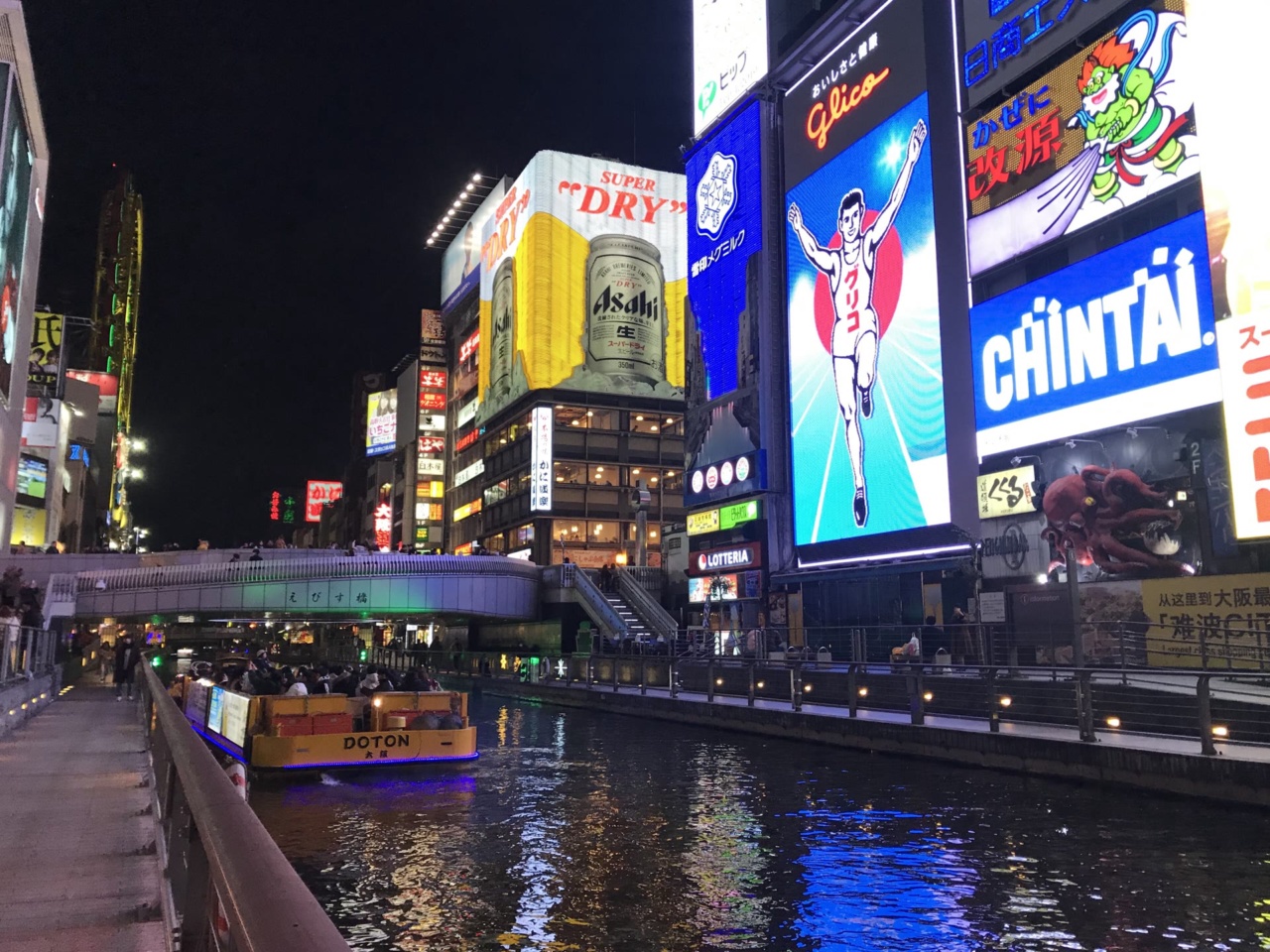
Walk the river-side promenade and choose a viewing position near Ebisubashi that does not block people. The sign is on a building beside the water, not mounted on the bridge itself. Expect a crowd in every photograph. Stay out of the water and do not climb barriers for a better view. Kani Doraku's large crab is another district landmark.
Compare the cruise and Ferris wheel tickets
| Paid activity | Published price, JPY per person | What to check |
|---|---|---|
| Tombori River Cruise | Adult 2,000; eligible student 1,000; elementary-school child 500[5] | Student identification, child category, chosen departure and availability |
| Ebisu Tower Ferris wheel | 1,000 for one ride[6] | Current operation, maintenance, rider rules and any applicable pass discount |
Prices as of 2026-10-16 from the cruise operator and the Ferris wheel operator.[5][6] The boat's student category includes junior-high, high-school, university and vocational students with identification. One preschool child per accompanying adult is free; additional preschool children need the child fare.[5] A pass discount may not apply to every product or date.
Find the correct cruise boarding point
The Tombori trip takes about 20 minutes and ordinarily departs on the hour and half hour from 11:00 to 21:00. Boarding is at Tazaemonbashi Pier. Reception is beside the river-facing entrance of Don Quijote on the north bank, with the pier directly in front.[5] Do not confuse it with the separate Minatomachi boarding points used by other cruise products.[7]
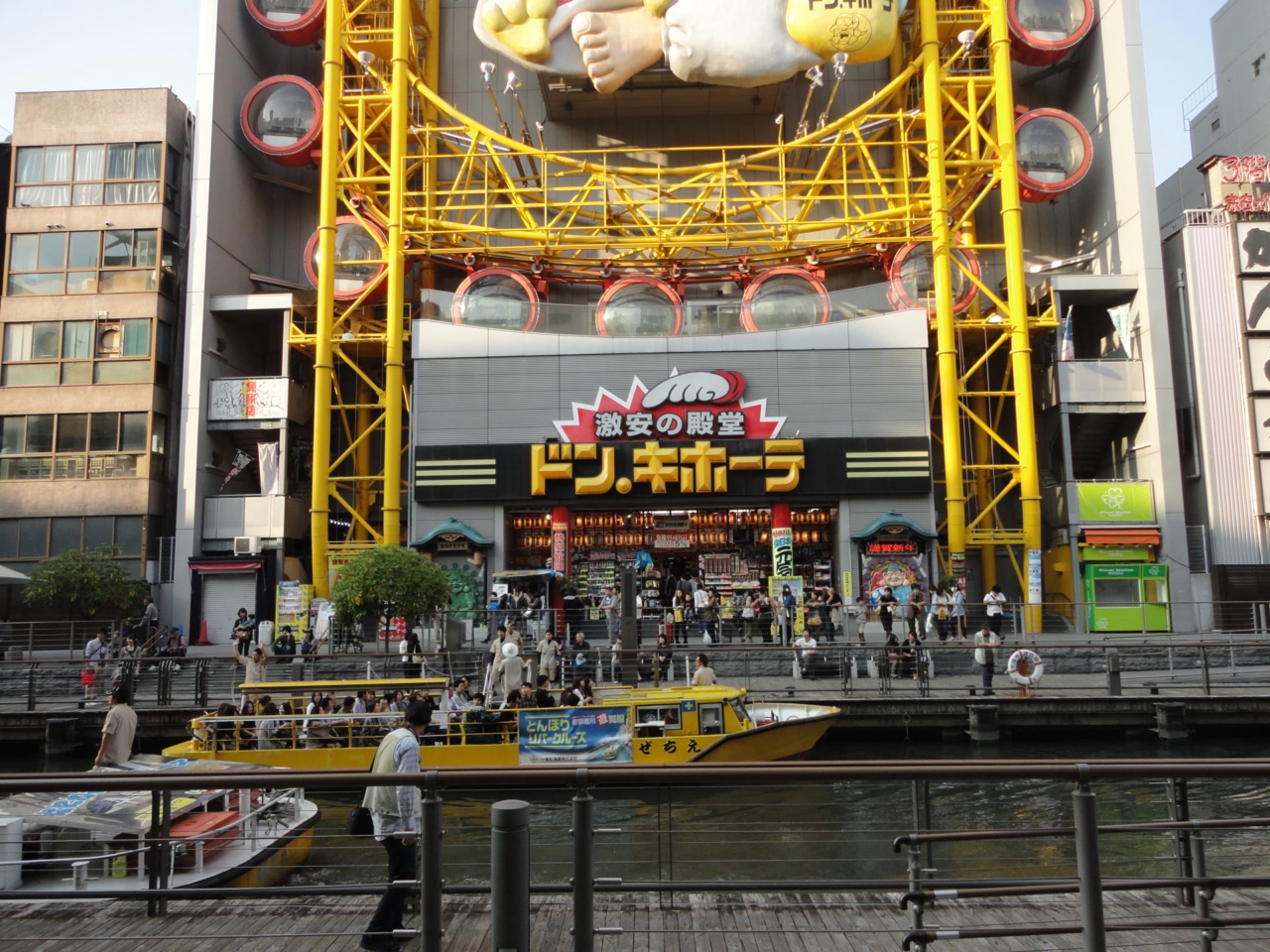
Counter tickets are sold on the day for a specific departure, and some departures can be reserved and prepaid online (ticket instructions).[7] Pick a departure with seats left; arriving early does not guarantee a place. The boat is open-air, and umbrellas are not allowed on board. Weather, water levels, river work and events can change or cancel sailings.[5] Confirm assistance and boarding suitability before paying if mobility support is essential.
Check Ebisu Tower operation before climbing to the entrance
The ride takes about 15 minutes, and you reach the third-floor entrance by stairs. The cabin doors close before the ride, so it is not an open-air gondola. Children under three may not ride, and other rider restrictions and accompaniment rules depend on age.[6] Ask staff about your circumstances.
Operation can start later for maintenance: on maintenance Tuesdays the wheel opens at 13:00, or on Wednesday when Tuesday is a public holiday.[6] Confirm today's status before you climb to the entrance. Do not assume step-free access or a late-night ride just because the shop is open.
Get to Namba, add the final walk and plan your return
Dotonbori is in the Namba area, where Osaka Metro, Nankai and Kintetsu each have their own station. Choose the station and exit closest to the part of the district you want. From Shin-Osaka, the Midosuji Line runs to Namba; from JR Osaka Station, plan a separate connection.
The Nankai Rapi:t limited express runs from Kansai Airport to Nankai Namba.[8] The limited-express ticket is not by itself the total rail fare, so check the full fare. Add the walk from Namba to your restaurant or pier.
For another local stop, Hozenji Yokocho is a stone-paved alley of restaurants around the moss-covered Fudoson, with business hours that vary by shop.[9] Treat the temple respectfully. Smoke only in designated areas (Osaka's visitor guidance).[10] For the wider itinerary, see our Japan travel overview.
Sources and background
Numbers in the text such as [1] refer to these sources.
- [1] Osaka Convention and Tourism Bureau: Dotonbori: district, access and individual shop hours. Retrieved October 16, 2026.
- [2] Dotonbori Store Association: Dotonbori Store Association: canal history and food culture. Retrieved October 16, 2026.
- [3] Osaka Convention and Tourism Bureau: Osaka local cuisine: takoyaki, okonomiyaki and kushikatsu. Retrieved October 16, 2026.
- [4] Ezaki Glico: Glico: Dotonbori sign history and lighting schedule. Retrieved October 16, 2026.
- [5] Ipponmatsu Shipping: Tombori River Cruise: fares, boarding and operating limitations. Retrieved October 16, 2026.
- [6] Don Quijote: Ebisu Tower: tickets, operation and riding restrictions. Retrieved October 16, 2026.
- [7] Ipponmatsu Shipping: Ipponmatsu: Tombori tickets and reservation procedure. Retrieved October 16, 2026.
- [8] Nankai Electric Railway: Nankai: Rapi:t airport route and limited-express tickets. Retrieved October 16, 2026.
- [9] Osaka Convention and Tourism Bureau: Hozenji Yokocho: alley, temple and visitor context. Retrieved October 16, 2026.
- [10] Osaka Convention and Tourism Bureau: Osaka visitor information and designated smoking guidance. Retrieved October 16, 2026.
Frequently Asked Questions
No. It is a district of streets, restaurants and separate attractions. Shop hours and holidays vary. A walk does not require a cruise or Ferris wheel ticket, but meals and paid activities have their own prices and conditions.
Glico publishes lighting after sunset until midnight, with possible shortened hours. The current sixth sign was installed in October 2014. Check sunset and current notices rather than expecting every sign to be lit all night.
As of 2026-10-16 the cruise costs 2,000 JPY per adult, 1,000 JPY for eligible students with identification and 500 JPY for elementary-school children. One preschool child per adult is free; additional preschool children pay the child fare. Confirm the exact category and departure.
Use Tazaemonbashi Pier, in front of reception beside the river-facing Don Quijote entrance on the north bank. Counter tickets are sold on the day for a specific departure, and some prepaid web reservations are available. Other cruise products use different piers. Pick a departure with seats left.
It is an open-air boat; umbrellas are not allowed on board. Weather, water levels, works and events can alter or cancel sailings. Ask the operator about boarding and your particular assistance needs rather than assuming universal step-free access.
A ride of about 15 minutes costs 1,000 JPY per person (as of 2026-10-16). Children under three may not ride; accompaniment and other rider restrictions apply. The entrance is up the stairs to the third floor. Confirm operation and suitability before buying.
Takoyaki, okonomiyaki and kushikatsu are characteristic choices, but none is compulsory. Compare the actual menu, portions, drinks and additional charges. Ask about ingredients and payment before ordering; a queue does not prove quality.
The Nankai Rapi:t connects Kansai Airport and Nankai Namba; compare the full fare and selected train. From Shin-Osaka, check a current Midosuji Line trip to Namba. JR Osaka Station is a different starting point. Add the correct final walk and confirm your return journey.