Fenghuang Ancient Town: Hunan's Riverside Stilt House Escape

Fenghuang Ancient Town: Hunan's Riverside Stilt House Escape

Last updated: June 9, 2026

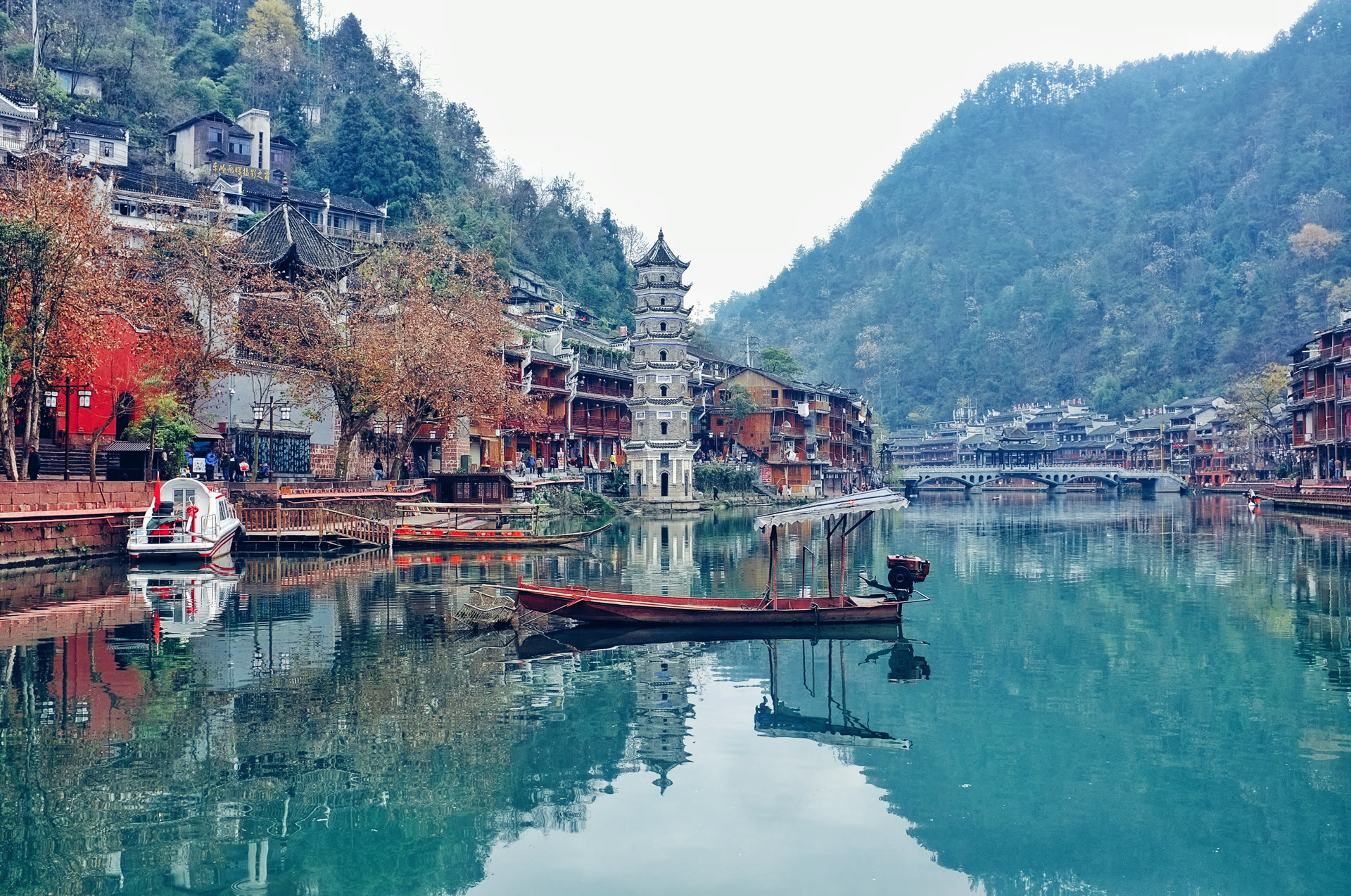
Fenghuang Ancient Town sits along the Tuojiang River in the mountainous southwest of Hunan Province, where rows of wooden stilt houses lean out over the water on slim timber legs. At dusk the riverbanks light up with red lanterns and neon, the bridges fill with people, and the whole scene reflects off the slow-moving river. It is one of the most photographed riverside towns in China, and for good reason.

This is also a town with a layered cultural identity. It lies in the Xiangxi Tujia and Miao Autonomous Prefecture, and both the Miao and Tujia ethnic groups have deep roots here. You will see traditional dress, silver jewelry, embroidery, and architectural details that reflect that heritage, even as much of the old town now caters to tourism.

That tension between authentic history and heavy commercialization is the single most important thing to understand before you go. Fenghuang is genuinely beautiful and worth the trip, but it is not a sleepy undiscovered village. Manage your expectations, plan an overnight stay, and time your visit well, and it can be one of the highlights of a southern China itinerary.

What Fenghuang Actually Is

Fenghuang means phoenix in Chinese, and the town carries an old, romantic reputation. Its core is the ancient town district along both banks of the Tuojiang River, a compact warren of stone-paved lanes, courtyard buildings, drum towers, ancestral halls, and the famous diaojiaolou, or hanging stilt houses, that rise directly from the riverbed.

The town was a regional administrative and military center for centuries, and fragments of an old defensive wall and gate still stand. It became widely famous in China partly through the writer Shen Congwen, who was born here and set much of his fiction in this landscape. His former residence is now a small museum and one of the more meaningful stops in the old town.

For an international traveler, the appeal is mostly atmospheric and visual rather than monumental. There is no single must-see blockbuster sight. Instead, the experience is about wandering the lanes, crossing the bridges, watching the river life, and absorbing the night atmosphere. If you arrive expecting a major standalone monument, you may be underwhelmed. If you come to soak in a riverside town with strong character, you will likely love it.

Things to Do

Why Fenghuang Is Worth Visiting

The strongest reason to visit is the riverfront itself. The combination of stilt houses, multiple distinctive bridges, the clear shallow river, and the surrounding green hills creates a setting that is hard to find elsewhere in such a concentrated form. Crossing the river on the stepping stones or the narrow wooden footbridges is a small adventure in itself.

The second reason is the night atmosphere. Fenghuang transforms after dark. Lanterns and lights line the eaves and reflect in the water, bars and teahouses open onto the river, and the bridges glow. This nightscape is the signature image of the town and the main reason an overnight stay pays off.

The third reason is cultural context. Miao and Tujia heritage shapes the food, the crafts, and the performances. You can buy hand-stamped batik and embroidery, eat distinctive sour and spicy Hunan dishes, and visit nearby Miao villages on day trips. It is worth treating the souvenir stalls with some skepticism, since plenty of goods are mass produced, but genuine local crafts do exist if you look.

The Commercialization Reality

Be honest with yourself before you go. Fenghuang is a major domestic tourist destination, and the central lanes are packed with shops, bars, snack stalls, and crowds, especially on weekends, public holidays, and during summer. Loud music spills from riverside bars at night. Touts and aggressive photo vendors operate in busy spots. Some of the charm has been polished and packaged for visitors.

None of this ruins the town, but it shapes the experience. The trick is to walk away from the busiest commercial stretches. Quieter lanes a few minutes back from the main river still feel like a real working town, and early mornings before the crowds wake up are genuinely peaceful. If you only see the central party strip at peak hour, you will get a distorted, overcrowded impression of the place.

What to See and Do

Walk the Tuojiang Riverfront

The riverfront is the heart of any visit. Walk both banks, cross several of the bridges, and find a spot to simply sit and watch the river. The stilt houses are best appreciated from across the water, so spend time on the opposite bank for the classic view.

Cross the Bridges and Stepping Stones

Fenghuang has several notable river crossings. The Rainbow Bridge is a covered wooden bridge with a tower that doubles as a viewpoint and a place to escape rain. There are also low stepping stones and a single-file wooden plank bridge that lets you cross right at water level. These crossings are popular photo spots and can get congested, so go early if you want them quiet.

Take a Wooden Boat

Short wooden boat rides drift down a stretch of the river, often with a boatman singing local folk songs. It is touristy and brief, but it gives you the riverbank view from the water and is inexpensive. Confirm the price and route before boarding.

Shen Congwen's Former Residence

The home of the celebrated writer is a modest courtyard house turned museum. Even if you have not read his work, it gives a sense of period domestic life and the literary fame that helped put Fenghuang on the map.

The Old Town Wall and Gates

Sections of the historic town wall and gate towers survive along the river. They are worth a look for the views over the water and the sense of the town's defensive past.

Night Lights

After sunset, walk the riverbanks and cross at least one lit bridge. This is when the town earns its postcard reputation. Bring a phone or camera that handles low light, and expect crowds at the prime viewpoints.

Day Trips to Miao Villages

Several Miao ethnic villages lie within driving distance, with terraced fields, traditional architecture, and cultural performances. Some are more staged than others. These make a worthwhile half day or full day if you want to see life beyond the tourist core.

How Much Time to Spend

Most travelers find one night and roughly a day and a half is the sweet spot. Arrive in the afternoon, settle in, explore the lanes in the late afternoon, experience the night atmosphere, then enjoy a quiet early morning before the crowds and a final wander before you leave.

A single day trip without an overnight stay misses the entire night scene, which is the best part, so it is usually a poor trade unless your schedule is very tight. Two nights makes sense if you also want a Miao village day trip or simply a slower pace.

Tickets and Access

Entry to walk the streets of the ancient town has generally been free in recent practice, while individual attractions inside, such as the writer's residence, museums, and certain towers, have used a combined entrance ticket. Boat rides are paid separately. Ticketing policies for Chinese scenic towns change periodically, so confirm the current arrangement, the price, and whether a combined ticket is required before you arrive.

If you plan to visit several of the paid indoor sights, a combined ticket can be worthwhile. If you mainly want to wander the lanes, cross the bridges, and enjoy the night views, you may not need much in the way of paid entry at all.

Getting to Fenghuang

Fenghuang's location in remote western Hunan means it takes some effort to reach, and there is no high-speed rail station in the town itself. Plan your connection carefully.

FromTypical approachRough travel time
ZhangjiajieBus or private car to FenghuangAbout 4 hours by road
JishouHigh-speed rail to Jishou, then bus or car to FenghuangAbout 1 hour from Jishou by road
GuilinHigh-speed rail toward Hunan, then transfer by roadMost of a day with connections
ChangshaHigh-speed rail to Jishou, then road to FenghuangHalf a day total

From Zhangjiajie

Fenghuang pairs naturally with Zhangjiajie, the famous national park with towering sandstone pillars. Direct buses and private transfers run between the two, taking roughly four hours by road. Many travelers do Zhangjiajie first for the dramatic scenery, then unwind in Fenghuang afterward, or the reverse.

Via Jishou

The most convenient rail gateway is Jishou, which sits on a high-speed line and is close to Fenghuang. From Jishou it is a short road transfer of about an hour. If you are coming by train from elsewhere in China, routing through Jishou is usually the smoothest option.

From Guilin

Guilin, with its own karst river scenery, is a logical pairing for travelers building a southern China loop. There is no quick direct route, so expect a combination of high-speed rail and a road transfer that consumes most of a day. Plan it as a travel day rather than something you squeeze in.

Once you arrive, the ancient town core is pedestrian and best explored on foot. Bus stations and drop-off points are typically a short distance from the old town, so be ready for a short walk or local transfer with your luggage over uneven, sometimes stepped streets.

Where to Stay and Overnight Value

Staying overnight inside or right beside the old town is the single best decision you can make in Fenghuang. A riverfront room with a view of the stilt houses and the night lights is the iconic experience, and prices for these guesthouses are often very reasonable compared with what you would pay for a comparable setting elsewhere.

There is a clear tradeoff with noise. River-facing rooms near the bar streets can be loud well into the night because of music and crowds. If you are a light sleeper, choose a guesthouse on a quieter lane set back from the main strip, or ask specifically for a quiet room, and accept that you may trade the direct river view for sleep.

Booking ahead is strongly advised during Chinese public holidays and summer, when the town fills up and prices climb. Outside those peaks, you can often find good value, and the overnight experience is what separates a memorable Fenghuang trip from a forgettable rushed one.

Food and Local Flavors

Hunan cuisine is bold, sour, and spicy, and Fenghuang reflects that. Look for local specialties such as river fish dishes, sour pickled vegetables, blood-and-rice sausage, ginger candy, and various rice cakes. Street snacks are everywhere along the main lanes, though quality and authenticity vary, so favor stalls that are busy with locals rather than only tourists.

Riverside restaurants charge a premium for the view, which can be worth it once for the setting. For better value and often better food, eat one lane back from the water. As always with heavily touristed areas, confirm prices before ordering, especially for fish sold by weight.

Best Time to Visit

Spring and autumn offer the most comfortable weather and the most pleasant walking conditions. Summer is hot, humid, and the busiest season, with the largest crowds and the highest prices. Winter is quieter and can be atmospheric with mist over the river, but it gets cold and damp, and some businesses scale back.

Whatever the season, avoid major Chinese public holidays if you can. During national holiday periods the town becomes extremely crowded, accommodation prices spike, and the central lanes can be unpleasant to move through. A regular weekday outside holidays gives you the best balance of atmosphere and breathing room.

Rain is common in this region, so pack a light waterproof layer. Wet stone lanes can be slippery, and footwear with grip is sensible given the uneven paving and the stepping stones across the river.

Practical Tips for a Smoother Visit

  • Go early for the bridges. The stepping stones and footbridges are jammed by mid-morning. Photograph them at dawn for both quiet and soft light.
  • Walk away from the bar street at night. The lights are beautiful, but the loudest party stretch is not the whole town. Quieter riverbank sections give you the same views with less chaos.
  • Choose your room for the right tradeoff. River view plus night noise, or quieter lane plus a calmer sleep. Decide which matters more and book accordingly.
  • Carry small cash and set up mobile payment. China runs heavily on mobile payment apps. Set these up in advance where possible, and keep some cash for small vendors and boat rides.
  • Confirm prices before you commit. Boat rides, ethnic-dress photo services, and weighed fish should all have a price agreed up front to avoid surprises.
  • Treat photo touts and staged scenes with skepticism. People in costume or animals offered for paid photos are a commercial operation. Decline politely if you are not interested.
  • Mind the steps with luggage. The old town has uneven, stepped lanes. A backpack or a wheeled bag with a carry handle is far easier than a heavy suitcase.
  • Build in transfer time. Connections from Zhangjiajie, Jishou, or Guilin take longer than you expect with transfers. Do not plan to arrive and depart on the same crowded day.

Common Mistakes to Avoid

The most frequent mistake is treating Fenghuang as a quick day trip. Without the overnight stay you miss the night lights, which are the best thing about the town. The second mistake is visiting only during a major holiday and then complaining about the crowds; timing is within your control, so plan around the busy periods.

A third mistake is staying glued to the central commercial strip and concluding the whole town is a tourist trap. Walk farther, go earlier, and explore the quieter lanes to see the more genuine side. Finally, do not underestimate the journey. The remote location is part of why the setting feels special, but it means transport days need real planning.

Fitting Fenghuang Into a Wider Trip

Fenghuang works beautifully as part of a western Hunan loop with Zhangjiajie, combining a riverside cultural town with one of China's most dramatic natural landscapes. It also pairs with Guilin and the karst scenery of Guangxi for travelers building a longer southern China route, though the road and rail connections take time.

For broader itinerary ideas across the region and help linking Fenghuang with other destinations, you can keep planning your trip on GoAsia.cc. With realistic expectations about crowds and commercialization, a well-timed overnight visit to Fenghuang rewards you with one of the most atmospheric riverside nights in China.

Frequently Asked Questions

How long should I spend in Fenghuang Ancient Town?

Plan at least one night and around a day and a half. Arrive in the afternoon, explore the lanes, experience the lit riverfront at night, then enjoy a quiet early morning before crowds arrive. A day trip without an overnight stay misses the night atmosphere, which is the highlight.

Do I need to buy a ticket to enter Fenghuang?

Walking the streets of the ancient town has generally been free in recent practice, while indoor attractions like museums and towers have used a combined entrance ticket, and boat rides cost extra. Ticketing rules for Chinese scenic towns change, so confirm the current price and whether a combined ticket is required before you go.

How do I get to Fenghuang from Zhangjiajie or Guilin?

From Zhangjiajie, take a bus or private car for roughly four hours by road. From Guilin, expect high-speed rail toward Hunan plus a road transfer, consuming most of a day. The smoothest rail gateway is Jishou, which is on a high-speed line about an hour from Fenghuang by road.

Is Fenghuang too commercialized to be worth visiting?

It is heavily touristed, with crowded central lanes, loud bars at night, and many souvenir shops. It is still worth visiting if you manage expectations, walk away from the busiest strip, and go early in the morning. The riverfront setting and night lights remain genuinely beautiful.

When is the best time to visit to avoid crowds?

Spring and autumn offer the best weather and fewer people. Avoid major Chinese public holidays and peak summer, when crowds and prices surge. A regular weekday outside holidays gives the best balance of atmosphere and space.

Should I stay in a riverfront guesthouse?

A river-view room with the stilt houses and night lights is the iconic experience and often good value. The tradeoff is noise from nearby bar streets. If you sleep lightly, pick a guesthouse on a quieter lane set back from the water, or request a quiet room.

What food should I try in Fenghuang?

Try Hunan specialties such as river fish, sour pickled vegetables, blood-and-rice sausage, ginger candy, and rice cakes. Eat where locals eat, often a lane back from the river, for better value and authenticity. Confirm prices in advance, especially for fish sold by weight.